
Font size
 Worksheets
TNReady Practice 3 24-25
Total questions: 28
Worksheet time: 14mins
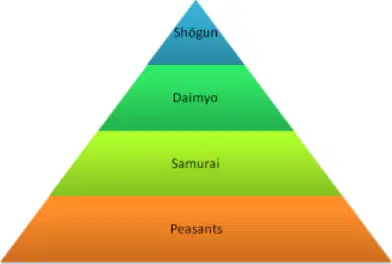
The Samurai and Shogun were part of which country's historical military class?
China
Japan
Korea
Vietnam
The characteristics below are true for which Asian country? Volcanos / Mountains; Taira and Minamoto people; Home of Shintoism
Japan
China
India
Korea
What country is between Japan and China?
Japan
Korea
China
India
What country is also a peninsula
Japan
China
Korean
Mongolia
Which religion would best fit the characteristics of animism?
Shintoism
Buddhism
Hinduism
Christianity
Read the source and answer the question: About 405 AD, the Japanese court officially adopted the Chinese writing system. During the sixth century, Buddhism was introduced. These two events revolutionized Japanese culture and marked the beginning of a long period of Chinese cultural influence. —U.S. Department of State. Which factor most contributed to the 405 AD events described in the source?
Invasion of Japan by Mongols during the Yuan Dynasty
Overseas expansion of China
Location of the Yangtze River
Diffusion of Chinese culture through the Korean peninsula
Which three statements reflect the influence of China and Korea upon Medieval Japan?
Buddhism spread to Japan through Chinese influence via the Korean peninsula.
Japan began printing paper money in reflection of the Chinese style.
Confucianism was used in Japan as a basis for how government should be conducted.
Shintoism had its origins in Ancient Korean religious practices.
Chinese writing was borrowed by Japan and influenced their writing system.
Basic laws of a state that define the role of government and guarantee its obligation to the people.
constitution
legislation
treaty
charter
Someone who is chosen to rule in place of the emperor/leader. ________
Regent
Vassal
Squire
Chancellor
A military governor who ruled Japan. ________
Shogun
Samurai
Daimyo
Emperor
Mental exercise to reach a greater spiritual awareness.
Meditation
Running
Reading
Cooking
The system of service between a lord and the vassals who have sworn loyalty to the lord.
Feudalism
Capitalism
Socialism
Monarchism
Read the source and answer the question: Decline in food production, growth of the population, and competition for resources among the great families all . . . gave rise to military disturbances in the mid-tenth and eleventh centuries. Members of the Fujiwara, Taira, and Minamoto families . . . attacked one another, claimed control over vast tracts of conquered land, set up rival regimes [governments], and generally broke the peace . . . The period from 1086 to 1156 was the age of supremacy of the . . . [Secluded Emperor] and of the rise of the military class throughout the country. Military might rather than civil authority dominated the government. —Japan: A Country Study, 1994. Which statement analyzes the effect of the conditions in Japan described in this source?
The emperor used the samurai to defeat foreign invaders
Military conflicts led the emperor to eliminate the shogun
Ongoing conflict led to the rise of the samurai and military rule
Samurai loyalty to the emperor weakened the shogun
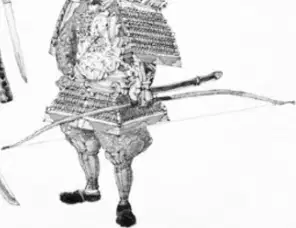
Using your knowledge of history, what events led to the empowerment of individuals like the one pictured in the image above?
Merchants like this one and professional people throughout Heian Japan gained great respect under the Code of Bushido
During the early Heian period, tailors like the one pictured above, gained a great reputation for dazzling fashions that they provided to the imperial regents
Farmers, like the one pictured here, used a variety of different tools to harvest large amounts of rice which was then used as currency instead of money
The power of the Shogun as a military leader greatly increased during the late Heian period, backed by warriors like the one pictured here, known as Samurai
The classes of Japanese military society from highest to lowest are:
Samurai, Peasants, Artisans, Merchants
Emperor, Shogun, Daimyo, Samurai
Shogun, Samurai, Peasants, Merchants
Emperor, Samurai, Artisans, Merchants
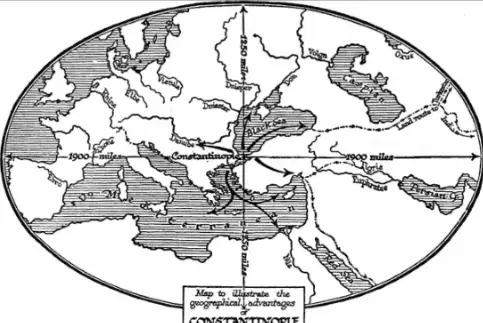
How was Constantinople’s location impacted by regional geography?
Trade originated in Constantinople and spread to Europe, Asia, and North Africa
Constantinople was at the highest point of elevation in the surrounding area
Constantinople was located at the intersection of several major bodies of water
Geographic features isolated Constantinople and protected it from attack
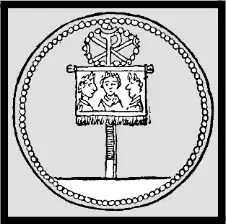
The Byzantine Empire was the continuation of the Eastern—
Persian Empire
Mongol Empire
Ottoman Empire
Roman Empire
The Byzantine Empire preserved and expanded the cultures of which civilizations?
Greek
China
The Hagia Sophia was a Christian cathedral that was commissioned by Justinian I and completed in 537. When the Ottoman Turks conquered the city in 1453, the Hagia Sofia—
was converted to a mosque.
was burned to the ground.
was redesigned as a defensive fort.
was made into a palace for Sultan Mehmed.
What was the significance of the Code of Justinian?
It defined the roles of leadership in the Christian church
It was a set of laws that influenced future Western legal systems
It created a democratic form of government for the first time in history
It outlined the individual rights of citizens in the Byzantine Empire
This Byzantine empress, the wife of Justinian I, was known for her powerful influence at court and for getting laws enacted which elevated the status of women. Who was she?
Cassandra
Eloise
Helena
Theodora
What was the Byzantine Empire formerly known as?
Western Roman Empire
Eastern Roman Empire
Ottoman Empire
Greek Empire
What language did many Byzantines speak?
Latin
Greek
Arabic
Persian
Which statement summarizes the importance of Constantinople?
Constantinople was the last city of the Western Roman Empire to fall under barbarian attack.
The people of Constantinople spoke Chinese and preserved Chinese language and literature.
Constantinople survived the fall of the Western Roman Empire and continued on as the capital of the Byzantine Empire.
Constantinople was able to mount a defense of the Western Roman Empire and saved the western Roman Empire from attack.
Based on the geographic location of Constantinople, infer how the Byzantine Empire was economically successful.
a. agriculture and learning advanced mathematics
b. raising livestock and inventing the compass
c. forestry and mining in the surrounding coal mines
d. trade and fishing in their surrounding bodies of water
Justinian was the ruler of the Byzantine Empire from 527 AD until 565 AD. During his rule, he created the Code of Justinian. It was significant because...
It organized and reformed Roman laws and was the foundation for modern law codes.
It was the first written treaty to protect the rights of men in Europe.
It created a strict hierarchy of laws that reinforced the roles of the social classes.
It established the principle the even the emperor was subject to the law of the land.
Identify a major political achievement of the rule of Justinian.
Updated and organized the legal code with new civil and criminal laws
Funded exploration efforts and sea-voyages to China
Built the Forbidden City in Constantinople
Transitioned the empire to a democracy
The Justinian Code has been the basis for what in many countries?
government organization
legal systems
religious order
the system for taxation

