
Font size
 Worksheets
Category 2
Total questions: 54
Worksheet time: 2hrs 32mins
Explain how energy is transformed when a ball is thrown into the air and then falls back to the ground.
The ball gains kinetic energy as it rises and loses potential energy as it falls.
The ball gains potential energy as it rises and gains kinetic energy as it falls.
The ball loses both kinetic and potential energy as it rises and falls.
The ball gains both kinetic and potential energy as it rises and falls.

Which position would have the most Potential energy?
1
2
3
4
5

Which pie chart represents the energy balance of the rollercoaster in this diagram?
Choice A
Choice B
Choice C
Choice D

Which pendulum position has 50% PE and 50% KE?
1
2
3
4

Which of the three springs represents increased potential energy?
The compressed spring only because potential energy is only gained when an object is squeezed.
The stretched spring only because potential energy is only gained when an object is stretched out.
The compressed and stretched spring both have elastic potential energy gained from being squeezed or stretched.
none of the springs possesses potential energy

How does a pole vault pole propel the athlete over the bar?
The running athlete converts chemical PE in its muscles into KE when the pole touches the ground.
The bent pole stores KE that is converted to PE when it straightens out, propelling the athlete into the air.
The bent pole stores PE that is converted to KE when it straightens out, propelling the athlete into the air.
The athletes speed is converted to KE that propels the athlete over the bar.
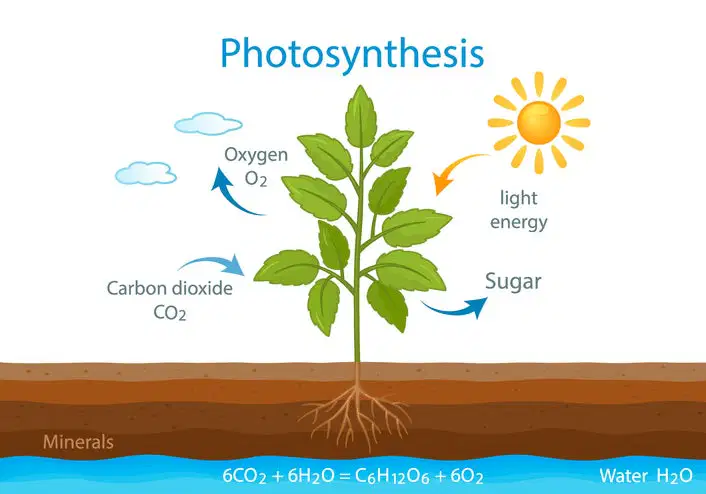
In photosynthesis, what type of energy is converted into chemical energy?
Electrical energy
Kinetic energy
Solar energy
Thermal energy
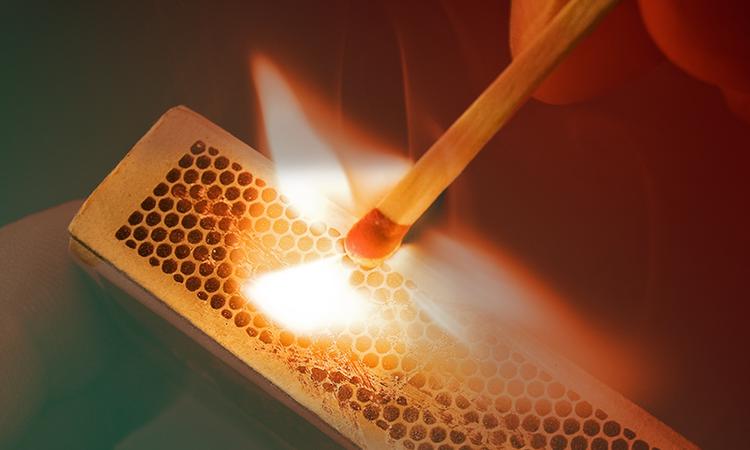
A teacher rubbed a match against a piece of sandpaper. The match started to burn. Which statement best describes the energy changes that occurred?
The chemical energy stored in the match changed to thermal energy and light energy.
The thermal energy stored in the match changed to light energy and chemical energy.
The light energy and thermal energy stored in the match changed to mechanical energy.
The light energy and thermal energy stored in the match changed to chemical energy.
Which of the following statements most accurately describes how a ipod is able to play music after it has been plugged in?
The ipod is able to play music because it is using up the electrical energy from the wall.
The electrical energy is transferred from the wall allowing the ipod to make sound energy as music.
The ipod is able to play music because the outlet is creating electrical energy that is transformed to sound energy.
The electrical energy from the outlet is transformed to chemical energy and then to sound and light energy when the ipod is used to play music.

The hand generator works by turning the handle which lights up the bulb. What energy transformation occurs as the handle is turned?
Thermal to electrical
Electrical to mechanical
Mechanical to electrical to light
Light to electrical
A car travelled 52 km in ½h. Find the speed of the car.
104 km/h
85 km/h
26 km/h
17 km/h

When was the object sitting still?
between 5 and 6 seconds
between 2 and 5 seconds
between 1 and 2 seconds
between 0 and 1 second
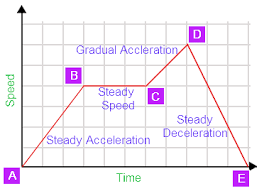
At what point is the speed the greatest?
C-D
B-C
A-B
D-E
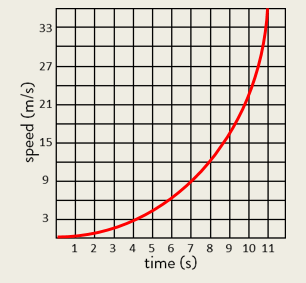
What is this graph showing?
Gradually slowing down
Gradually speeding up
Constant speed
Stopped

What line has the greatest speed?
Line A
Line B
Both
Neither

What is the acceleration during the first 5 seconds?
2 m/s2
4 m/s2
5 m/s2
10 m/s2

What is happening at E?
Stationary
Fast steady speed; moving away from the starting position
Steady speed; returning to start position
A train that travels 100 kilometers in 4 hours is traveling at what average speed?
25 km/h
100 km/h
2 km/h

How far is the person from the starting point after 3 seconds?
0 m
6 m
3 m

If a lizard can run 8 m across the water in 4 seconds, how fast is he traveling?
32 m/s
2 m/s
2 seconds
34 meters
What is the speed of a jet plane that travels 528 meters in 4 seconds ?
140 m/s
132 mph
142 mph
132 m/s
If a car has a force of 54 N forwards and the brakes have a force of 73 N backwards, what is the overall Net Force.
16 backwards
19 forwards
18 backwords
23 forwards

How do you find the net force of this image.
Add up all the arrows
Add a green arrow and the orange arrow.
Subtract all the arrows.
Add the green arrows and subtract the orange arrow.

What is the Overall Net Force and which side has a greater Net Force?
12, Right
0, Both are balanced
12, Both are balanced
0, Left
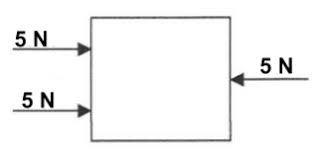
Is the Net Force balanced or Unbalanced?
Balanced
Unbalanced
8 N to the left , and 4 N to the right. Find the net force. Is this balanced
12 N Right No
12 N Right Yes
4 N Left Yes
4 N Left No
With unbalanced forces, the object will move in the direction of the _______ force.
equal
smaller
larger
You and your friend, are playing tug of war. Your friend pulls with a force of 55 N, to the rights. You pull with a force of 65 N, to the left. What is the net force on the rope?
20 N, to the left
20 N, to the right
10 N, to the right
10 N, to the left

If the boy is pulling with a force of 10 N and the girl is pushing with a force 20 N, what is the net force on the box?
10 N
20 N
30 N
0 N
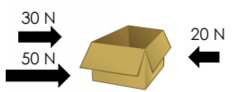
60N, Right


Johnpal punched his wall. his wall punched him back in the opposite direction. Which one f Newtons laws is this
2nd law
3rd law
1st law
4th law
Which one of these is the 2nd law
The harder I push this, the faster it will go
If I am in a car crash, and the car stops, why do I keep going forward?
When I push on my desk, it pushes back at me
When i drop a feather and a brick and there is no air resistance, they will land the same time
Mr. Haughey crashed his car. When he crashed, the car stops but he keeps going forward. Which one of newtons laws is this.
2nd law
1st law
3rd law
4th law
What is Newtons 1st law
Inertia
F=m*a
Mass and acceleration
force


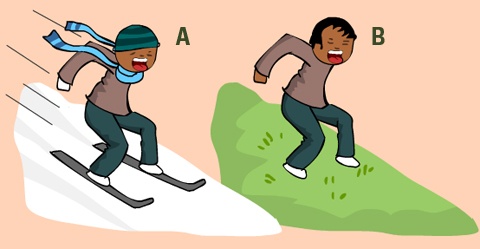
If the forces on an object are BALANCED can the object be moving?
No, because no forces are acting on it.
Yes, it can be moving at constant velocity - not changing its speed and direction.
No, because too many forces are acting on it.
Yes, because the forces are unbalanced.

Which law explains that it would take more force to push the car than the lawnmower?
1st
2nd
3rd

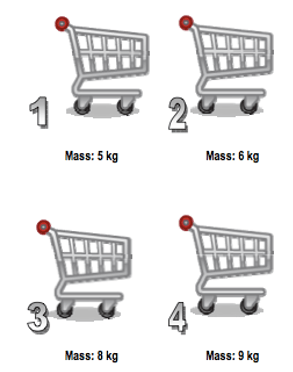
Click on the circle that best shows FAST SPEED.
Which of the following points has a slower, positive constant speed?
Match the following graphs to the right description.

Speeding up

No acceleration (constant velocity)

Slowing down

