
 Worksheets
Levels of Organization In Body Systems 4.10.2025
Total questions: 17
Worksheet time: 10mins
Explain how the structure of a cell contributes to its function within a tissue. Provide an example to support your explanation.
The structure of a cell is unrelated to its function within a tissue.
The structure of a cell is designed to support its specific function within a tissue, such as muscle cells having fibers for contraction.
All cells have the same structure regardless of their function within a tissue.
The structure of a cell is only important for its function in an organ, not within a tissue.
Analyze how tissues work together to form an organ. Use the heart as an example in your explanation.
Tissues do not work together; they function independently within an organ.
Tissues in an organ like the heart work together by each performing specific functions, such as muscle tissue contracting to pump blood.
Tissues in an organ are identical and perform the same function.
Tissues in an organ like the heart are randomly organized and do not have specific roles.
Evaluate the importance of organ systems working together to maintain homeostasis in the body. Provide an example involving the respiratory and circulatory systems.
Organ systems do not need to work together to maintain homeostasis.
Organ systems work together to maintain homeostasis, such as the respiratory and circulatory systems exchanging gases to regulate oxygen and carbon dioxide levels.
Only one organ system is responsible for maintaining homeostasis.
Homeostasis is maintained by individual cells, not organ systems.
Plan a simple experiment to demonstrate how different tissues contribute to the function of an organ. Describe the steps and expected outcomes.
Use a model of a plant to show tissue function.
Dissect a flower to observe its tissues.
Dissect a chicken wing to observe muscle, connective, and epithelial tissues, and explain how each contributes to movement.
Observe a leaf under a microscope.
Predict what might happen if one type of tissue in an organ system fails to function properly. Use the digestive system as an example.
The organ system will continue to function normally.
The failure of one tissue type, such as the epithelial tissue in the stomach, can lead to ulcers and affect the entire digestive process.
Other tissues will immediately take over the function of the failed tissue.
The organ system will become stronger.
Design a diagram that illustrates the levels of organization in the human body from cell to organism. Describe the key features of each level.
Draw a diagram of a plant cell.
Create a diagram showing cell, tissue, organ, organ system, and organism, with labels and descriptions for each level.
Sketch a diagram of a single organ.
Illustrate a diagram of a single tissue type.
Critique the statement: "All cells in the human body are identical in structure and function." Provide evidence to support your critique.
The statement is true; all cells are identical.
The statement is false; cells have different structures and functions, such as nerve cells transmitting signals and red blood cells carrying oxygen.
The statement is partially true; only some cells are identical.
The statement is irrelevant to human biology.
Assess the role of connective tissue in the human body and how it supports other tissues and organs.
Connective tissue has no role in supporting other tissues.
Connective tissue provides structural support, binds tissues together, and protects organs, such as tendons connecting muscles to bones.
Connective tissue only exists in the skin.
Connective tissue is the same as muscle tissue.
Formulate a hypothesis about how the failure of an organ system can impact the entire organism. Use the nervous system as an example.
The failure of an organ system has no impact on the organism.
If the nervous system fails, it can lead to loss of coordination and control, affecting the entire organism's ability to function.
The failure of an organ system only affects the specific organ.
The failure of an organ system makes the organism stronger.
Devise a plan to teach younger students about the levels of organization in the human body. Include activities and materials you would use.
Show a video about plants.
Use models and diagrams to explain each level, and have students build models of cells, tissues, and organs using clay.
Read a textbook chapter aloud.
Have students write an essay on the topic.
Interpret the relationship between the structure of an organ and its function, using the lungs as an example.
The structure of an organ is unrelated to its function.
The structure of the lungs, with alveoli providing a large surface area, is designed to maximize gas exchange.
All organs have the same structure regardless of their function.
The structure of an organ is only important for its appearance.
Analyze how the failure of a single cell type can affect the function of an entire organ. Use the pancreas as an example.
The failure of a single cell type has no effect on the organ.
The failure of insulin-producing cells in the pancreas can lead to diabetes, affecting the organ's ability to regulate blood sugar.
The failure of a single cell type makes the organ function better.
The failure of a single cell type only affects the cell itself.
Evaluate the impact of organ system interactions on the overall health of an organism. Use the immune and circulatory systems as an example.
Organ system interactions have no impact on health.
The immune and circulatory systems work together to transport immune cells throughout the body, impacting overall health by fighting infections.
Only one organ system is responsible for health.
Organ system interactions only affect individual cells.
Propose a method to investigate how different organ systems contribute to the survival of an organism. Describe the steps and expected outcomes.
Study a single cell under a microscope.
Conduct a research project comparing the roles of the respiratory and digestive systems in providing energy and oxygen to cells.
Observe a plant growing in a pot.
Write a poem about organ systems.
Synthesize information about the levels of organization in the human body to explain how they contribute to the complexity of life.
The levels of organization do not contribute to complexity.
The levels of organization, from cells to organisms, each add a layer of complexity, allowing for specialized functions and interactions that support life.
Only the organism level contributes to complexity.
Complexity is only determined by the number of cells.
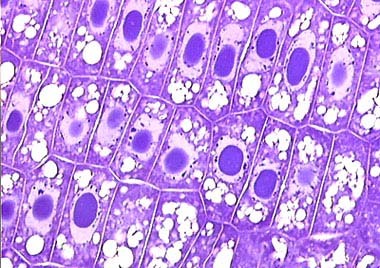
What is formed when multiple tissues work together to perform a function?
Cell
Tissue
Organ
Organ System

