
 Worksheets
TCAP SCIENCE PRACTICE
Total questions: 22
Worksheet time: 1hrs 1mins
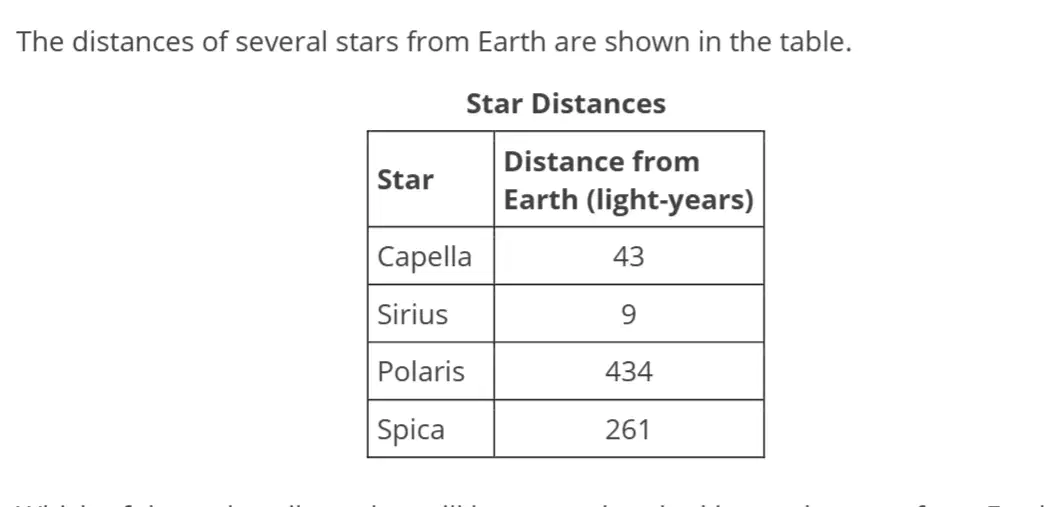
Which of these describes what will be seen when looking at the stars from Earth?
Capella appears brighter than Sirius but dimmer than Polaris when viewed from Earth.
Spica appears dimmer than Polaris but brighter than Capella when viewed from Earth.
Capella appears brighter than Spica but dimmer than Sirius when viewed from Earth.
Polaris appears brighter than Spica but dimmer than Capella when viewed from Earth.
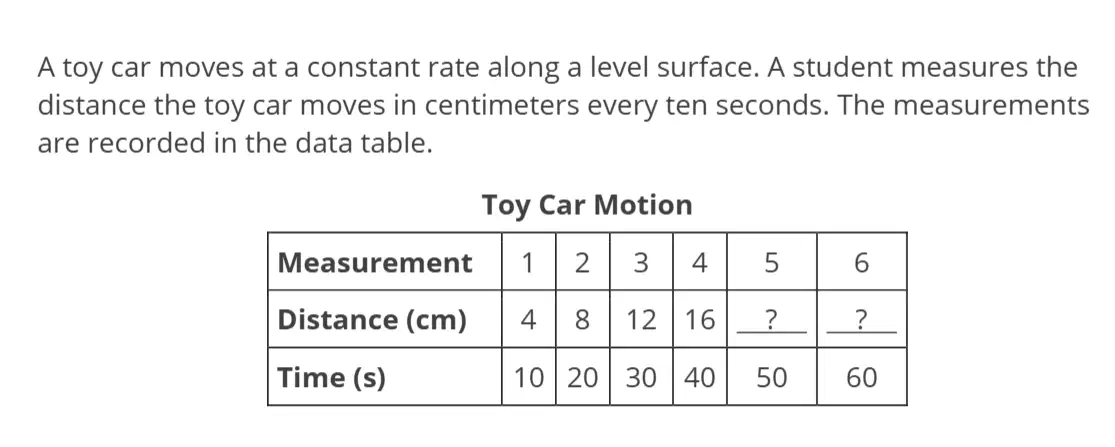
Which two distances are the best predictions to complete the table?
18 cm
20 cm
24 cm
28 cm
30 cm
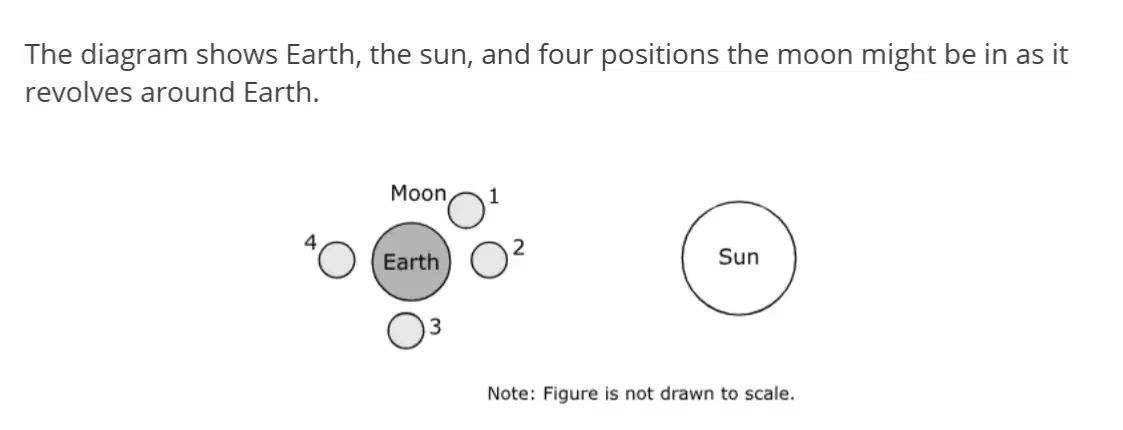
A solar eclipse is most likely to occur when the moon is in which position?
position 1
position 2
position 3
position 4
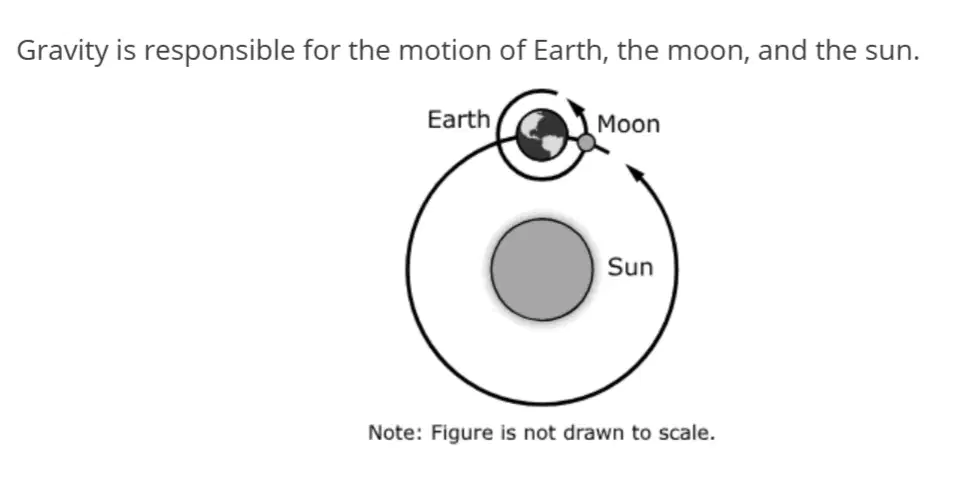
Which three statements correctly describe how gravity is affected by mass and distance?
The gravity between Earth and the moon would be stronger if the moon were closer to Earth.
The gravity between the sun and Earth would be weaker if Earth were closer to the sun.
The gravity between Earth and the moon would be stronger if the moon had more mass.
The gravity on the surface of the moon would be weaker if the moon stayed the same size but had more mass.
The gravity on the surface of Earth would be stronger if the distance to the center of Earth were smaller but had the same mass.
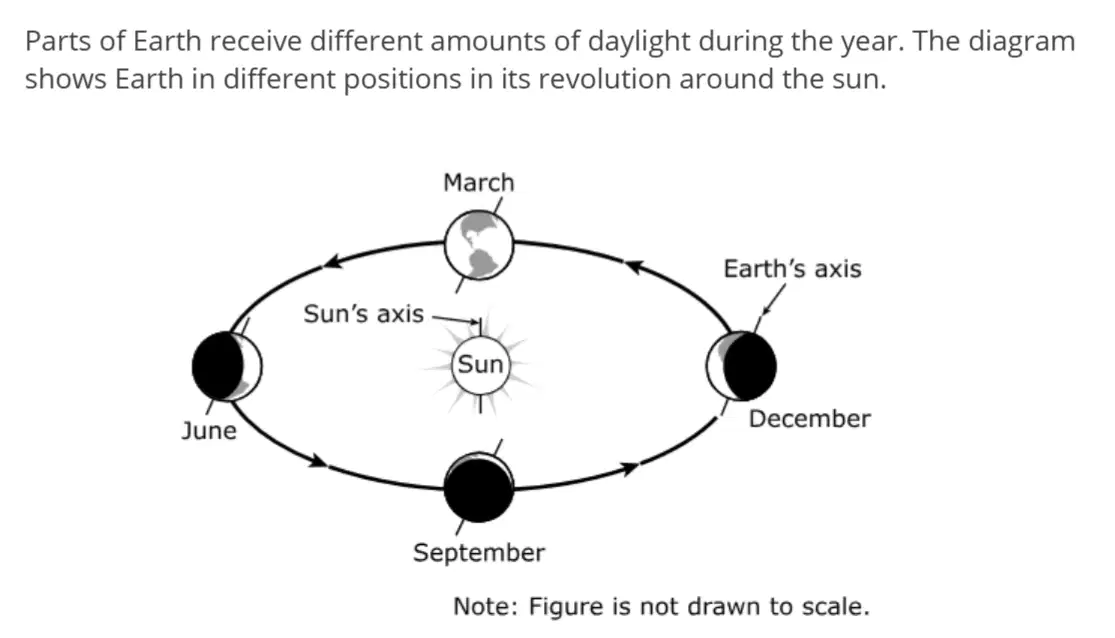
The changes in the number of daylight hours on Earth are caused by
the tilt of Earth’s axis.
the tilt of the sun’s axis.
the distance of Earth from the sun.
the movement of the sun around Earth.

Because Organism T was found in rock layers 4 and 5, what conclusion can be made?
Layer 1 is the oldest of the rock strata in the diagram.
Layer 3 was formed less than 250 million years ago.
The formation of layer 5 occurred less than 250 million years ago.
Organism T existed on Earth for only a few years.

Which three plant characteristics are most likely a result of interactions with the environment?
All of the seeds sprout roots that grow down.
If the plants are not watered, they start to droop.
The mature plants produce long green pods containing beans.
The plants have green stems, green leaves, and white flowers.
The shoots all bend to grow toward the only source of sunlight.
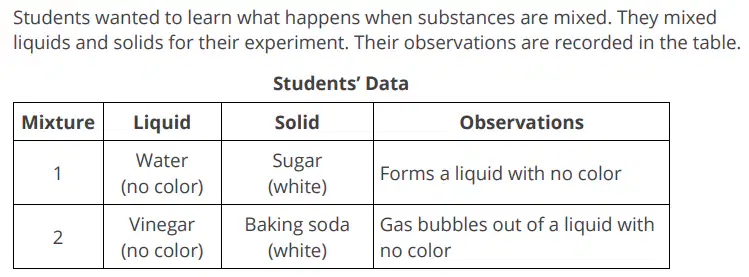
Which mixture went through changes that produced new substances?
Mixture 1, because it formed only a liquid
Mixture 1, because it had no color
Mixture 2, because bubbles formed
Mixture 2, because no solid formed
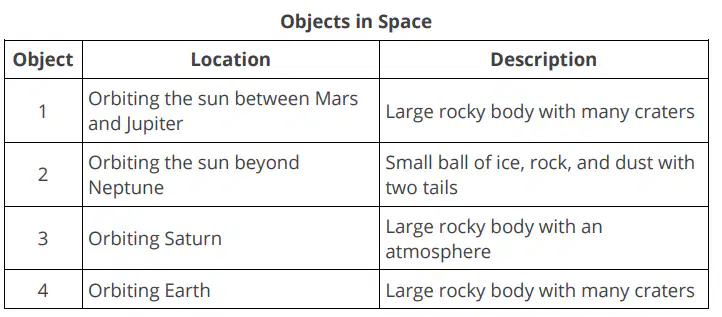
Which objects are most likely moons?
Objects 1 and 2.
Objects 2 and 4.
Objects 3 and 4.
Objects 1 and 3.
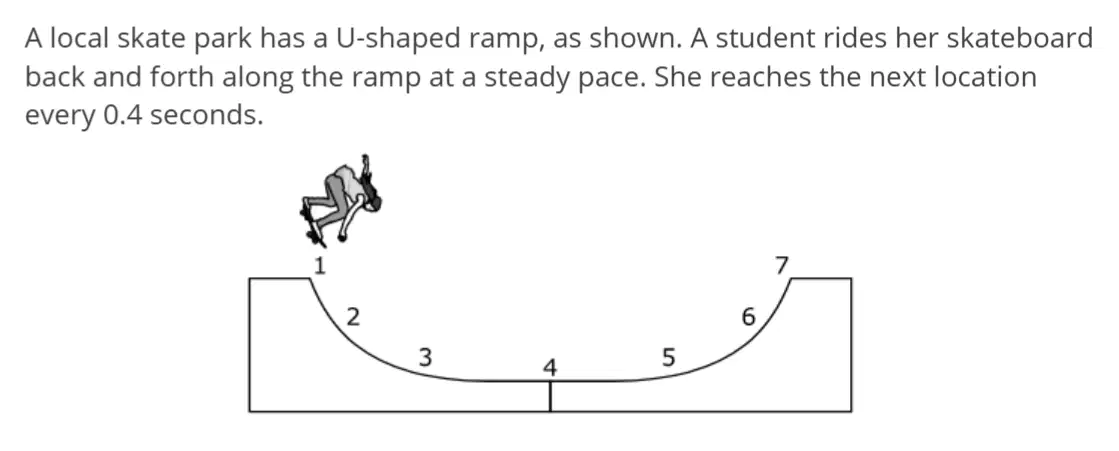
The student starts a timer when she leaves Location 1. How many seconds will it take her to return to Location 1?
4.4 seconds
4.6 seconds
4.8 seconds
5.6 seconds
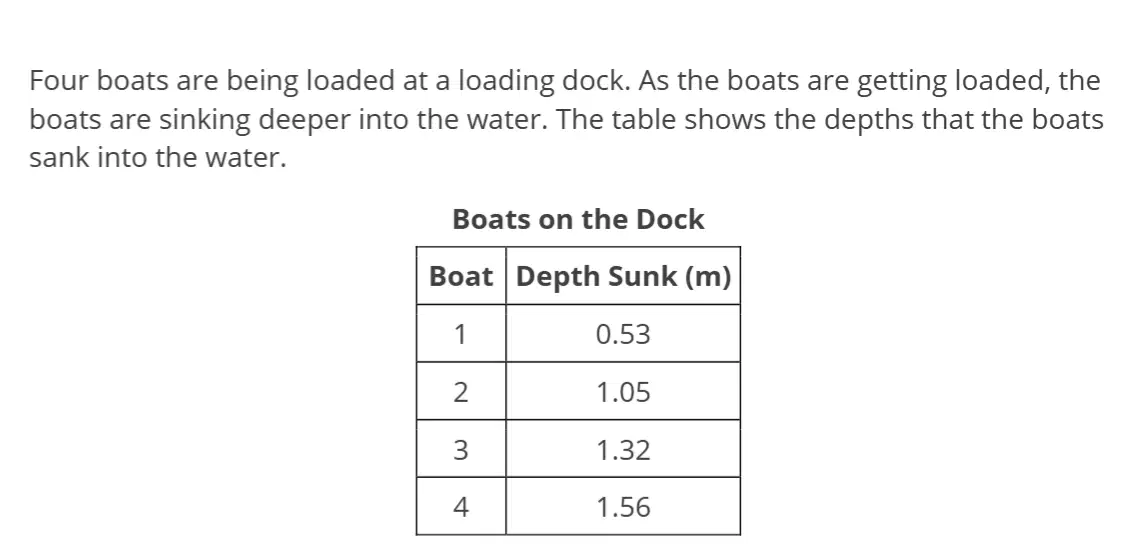
Which boat experiences the greatest force of gravity from Earth?
Boat 1
Boat 2
Boat 3
Boat 4

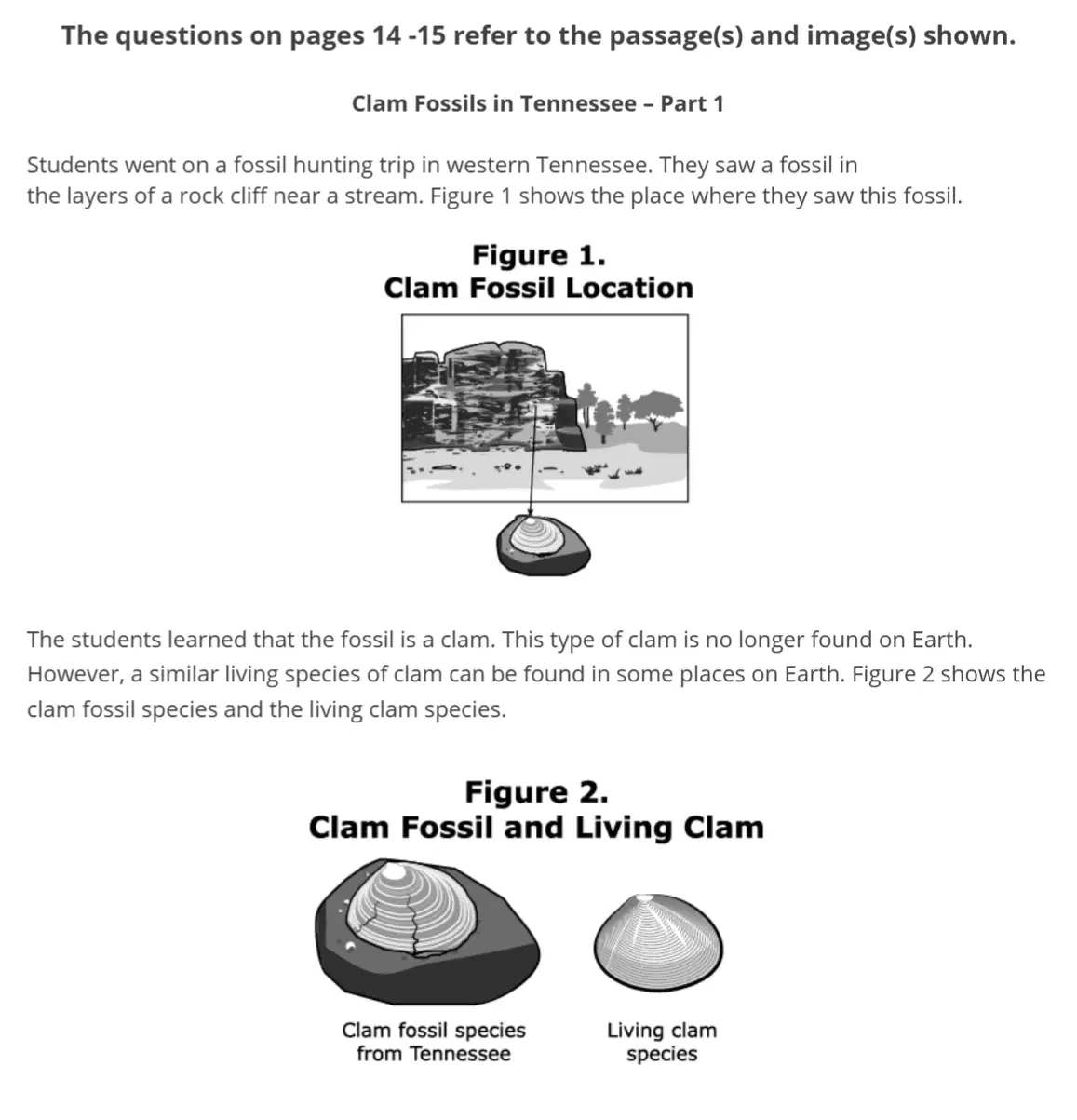
Where did the students find the clam fossil?
In a desert
In a forest
In the layers of a rock cliff near a stream
In a cave
What did the students learn about the clam fossil?
It is a type of fish
It is a type of clam no longer found on Earth
It is a type of bird
It is a type of tree
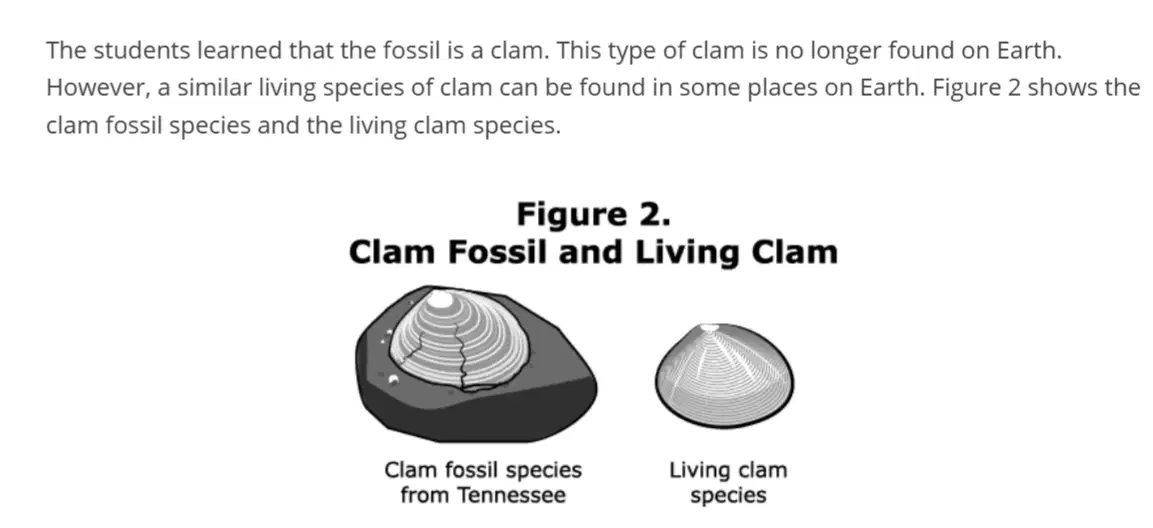
What does Figure 2 show?
Different types of rocks
Clam fossil species and living clam species
Types of trees
Different types of birds

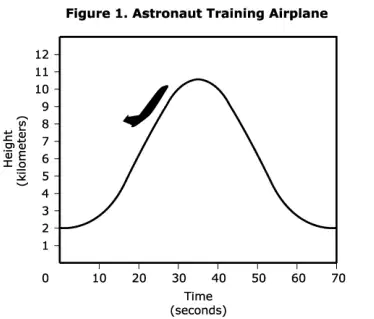
How do astronauts train for spaceflight according to the passage?
By swimming underwater
By flying on an airplane that goes up and down in steep curves
By running on a treadmill
By lifting weights in a gym
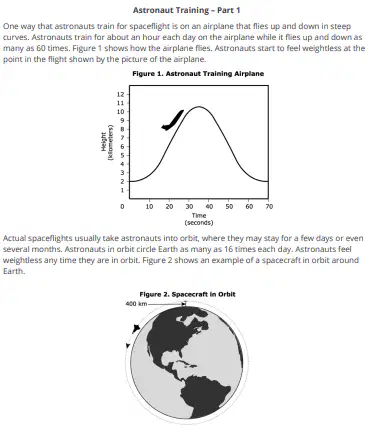
How many times can astronauts fly up and down on the training airplane in one session?
10 times
30 times
60 times
100 times
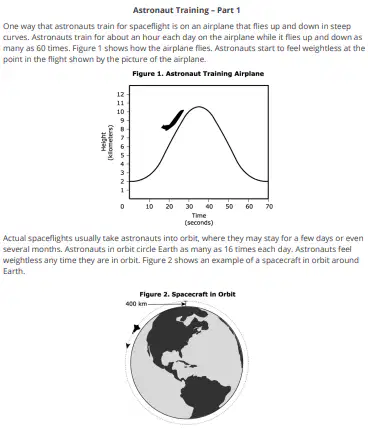
When do astronauts start to feel weightless during their training flight?
At the beginning of the flight
At the highest point of the flight
When the airplane lands
When the airplane takes off

How many times do astronauts in orbit circle Earth each day?
5 times
10 times
16 times
20 times
What is the altitude of a spacecraft in orbit around Earth as shown in the passage?
100 km
200 km
400 km
800 km
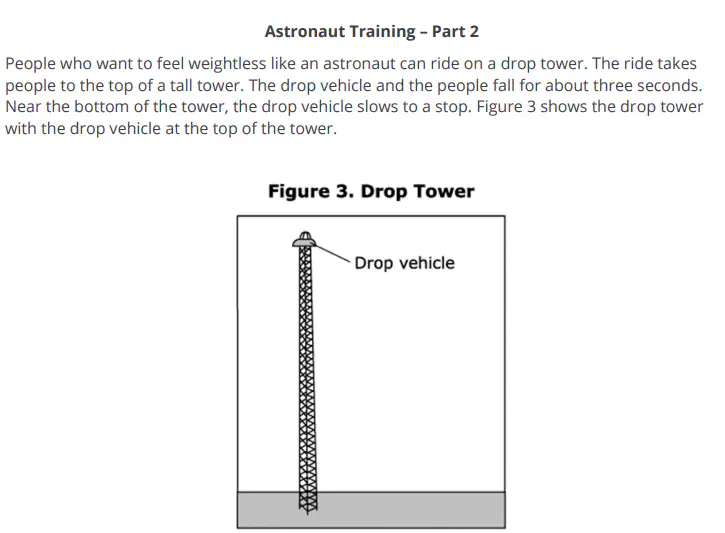
What is the purpose of riding on a drop tower?
To feel weightless like an astronaut
To learn how to fly a plane
To practice swimming
To study the stars
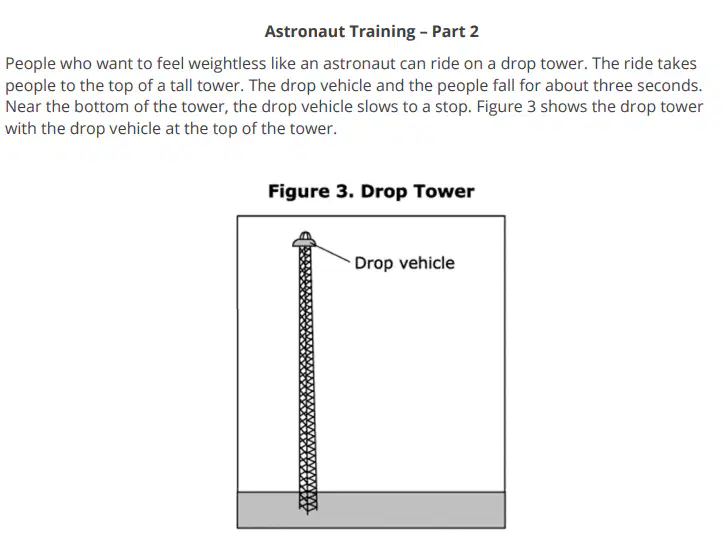
How long do people fall in the drop vehicle?
About three seconds
About ten seconds
About one minute
About five minutes

What happens to the drop vehicle near the bottom of the tower?
It slows to a stop
It speeds up
It turns around
It flies away

