
 Worksheets
Review US7
Total questions: 22
Worksheet time: 11mins
Which international organization was formed so that North America and Europe could consult over the field of defense and security, in addition to conducting multinational crisis-management operations?
United Nations
World Trade Organization
International Court of Justice
North Atlantic Treaty Organization
Which scenario would most likely result in a major change in U.S. foreign policy?
A freeze causes the United States to import more fruit
A country threatens the United States with a missile strike
CCitizens demand more public services from the government
Budget deficits lead to increased taxes for all income earners
Which scenario would most likely compel the United States to take military action?
A country has increased the size of its armed forces.
A country has begun production of nuclear weapons.
A country has raised tariffs on goods from the United States.
A country has elected a leader unfriendly to the United States.
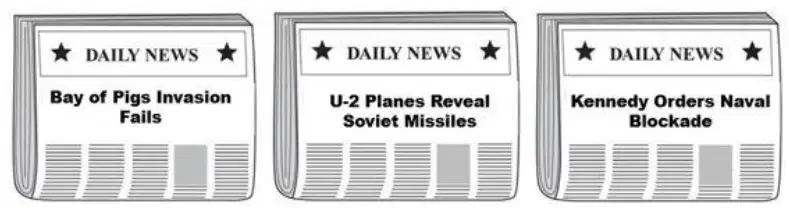
What country was the U.S. involved with in the headlines above?
Canada
Cuba
Mexico
Panama

When it joined this organization, what pledge did the United States make to uphold this idea?
to combine armed forces for effectiveness
to use diplomacy to avoid military conflicts
to promote the destruction of nuclear arms
to prevent the growth of military dictatorships
Read the following quote from President George H. W. Bush. Some may ask: Why act now? Why not wait? The answer is clear: The world could wait no longer. Sanctions, though having some effect, showed no signs of accomplishing their objective. Sanctions were tried for well over five months, and we and our allies concluded that sanctions alone would not force Saddam from Kuwait. George H. W. Bush said this in response to —
the Gulf War
the Iraqi War
the Kuwait War
the invasion of Panama
Which example best demonstrates the U.S. desire to remove protective tariffs during the late twentieth century?
the expansion of credit to foreign businesses
the increase in the trade deficits with China and Japan
the approval of a trade agreement with Canada and Mexico
the enforcement of economic sanctions against competitors
The information below describes a situation that might occur in a totalitarian state. A group of people organize to demand change in the government. The government schedules talks with them. Then the government cancels the talks, and protests occur all over the country. In the next election, the government wins, even though polls show that more people voted for other leaders. What principle of a constitutional government is absent from this country, as described in this example?
consent of the governed
checks and balances
individual rights
due process
Read the list. - Ruled by a family or dynasty - Leader is the most powerful authority in the country - Leader has unlimited power Which form of government is best described by the list?
autocracy
monarchy
oligarchy
theocracy
Under which system of government is power split between independent states and a central government?
confederal
federal
parliamentary
unitary
What is a disadvantage of a confederal system of government?
There are no state or local governments in a confederal system.
A strong central government reserves very few rights for the people.
Confederal systems must achieve unanimous consent to overturn any laws.
A weak central government makes confederations more likely to break apart.
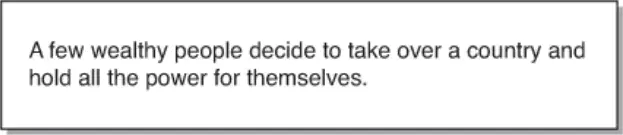
The scenario below relates to government: A few wealthy people decide to take over a country and hold all the power for themselves. What form of government does the scenario describe?
autocracy
oligarchy
republic
socialism
This political and economic theory supports public rather than private ownership of a country's means of production.
absolutism
capitalism
communism
socialism
What is the name of a government’s strategy when dealing with other nations?
Foreign Policy
Foreign Civics
Foreign Affairs
Foreign Beliefs
Who holds the power in a democracy?
The States
The Leaders
Other Countries
The People
What does "consent of the governed" mean?
The permission of the government
The permission of the people
The permission of North America
World Trade Organization
What are Sanctions?
A penalty for disobeying an international rule, law, or norm.
Spying on another country
A tax on imports or exports.
A form of government led by one sole leader, who is usually a dictator.
Which of the following is an example of Sanctions :
Increased focus on Educational Standards
Sending aid to another country to help citizens that have been impacted by a natural disaster
Embargo or a large ban on trade with another country
Socialism
Espionage can best be described as
An organization formed to regulate and facilitate trade in different countries
Someone that represents the United States in other countries
A form of government where a small group of people have control of the government
The act of spying on someone or another country
What does Foreign Policy encompass?
Domestic trade agreements only
Strategies and actions used when dealing with other countries
Internal security measures
Economic policies within the country
The statement below justifies an international action.
“The issue is the future of Southeast Asia as a whole. A threat to any nation in that region is a threat to all, and a threat to us.”
Which international action is President Johnson justifying with this speech?
Sending troops to stabilize a region
Using sanctions against a country
Sending humanitarian aid to a country
Using nuclear weapons to end a war
Economic measures that a country tries to take to persuade another country to change its policies.
Sanction
Treaty
Ambassador
War

