
NEW
Font size
 Worksheets
AGA: Photosynthesis, Transpiration, Respiration
Total questions: 15
Worksheet time: 8mins

An organelle found in plant and algae cells where photosynthesis occurs and energy is stored.
cell wall
What is the process where light energy is converted to simple sugars?
What 3 elements are abundant in the air and water around them and can be obtained directly from the atmosphere in large amounts?
(Don't forget that nitorgen cannot be obtained directly from the atmosphere: plants need nitorgen-fixing bacteria and mycorhizzal fungi to convert the N2 to a usable form underground.)
Calcium, magnesium, iron (Ca, Mg, Fe)
Helium, carbon, and oxygen (HeCO2)
Nitrogen, phosphorus, potassium (NPK)
Oxygen, carbon, hydrogen (CO2, H2O)
What is the process where WATER moves from an area of higher concentration to an area of lower concentration.
Example: after a good rainshower, water moves from the saturated capillary spaces between soil particles into the root hairs of the plant.

Loss of water vapor from leaves to the atmosphere (highest in rainforests).
The process by which a plant loses water vapor through its stomata.
Photosynthesis
Respiration
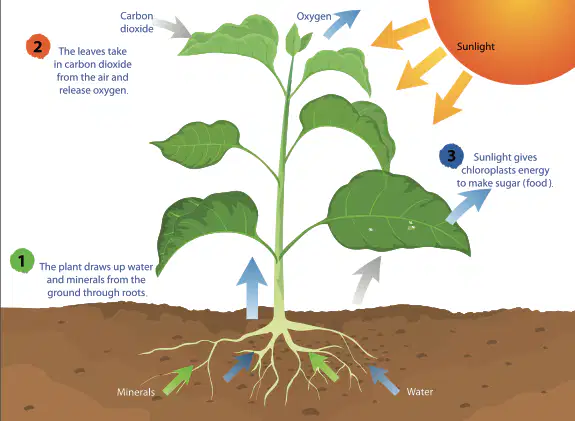
Plants using energy in sunlight to carry out chemical reactions like producing sugar to feed the plant.
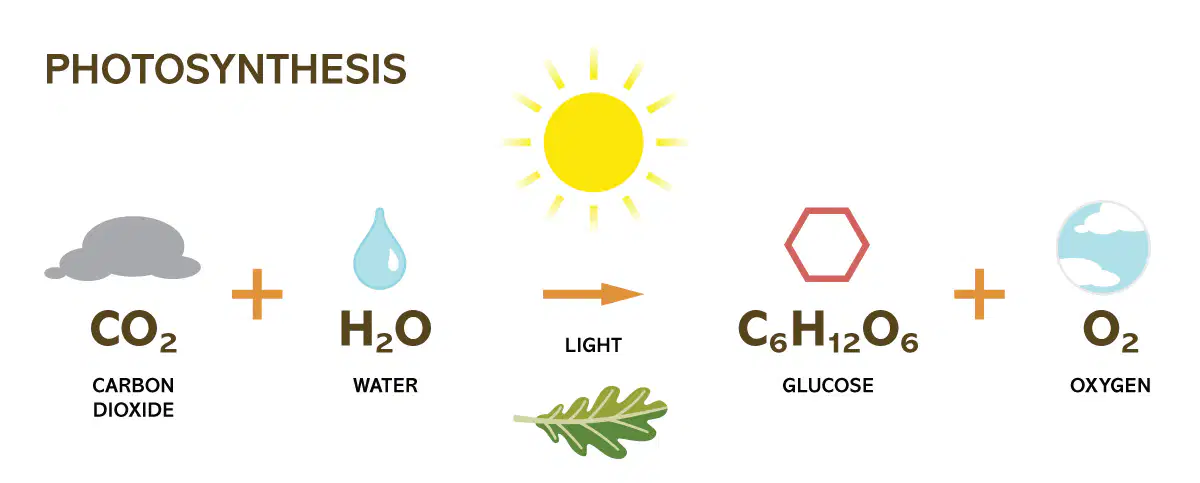
CO2 + H2O -> C6H12O6 + O2
carbon dioxide + water = carbohydrates (sugars) + oxygen
What does a plant need for photosynthesis?

What is the process when plants absorb/take in oxygen and release carbon dioxide, water, and energy?
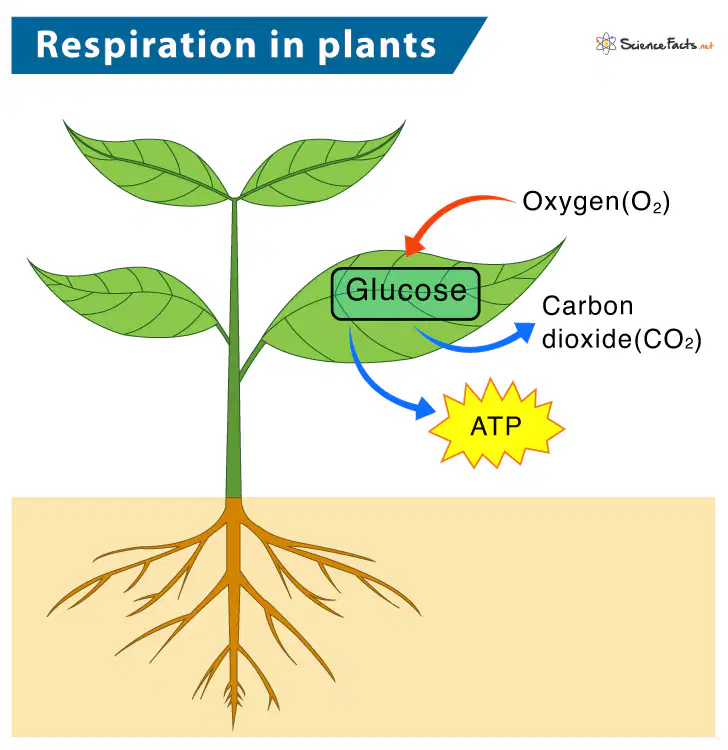
What is C6H12O6 + O2 → CO2 + H2O + energy (ATP)
carbohydrates (made during photosynthesis) + oxygen =
carbon dioxide + water + energy (ATP to run cellular functions, to replicate, grow, and repair...)

An organism that can make its own food through photosynthesis (plants, algae, some bacteria).
Producer/Autotroph
Scavenger
Consumer/Heterotroph
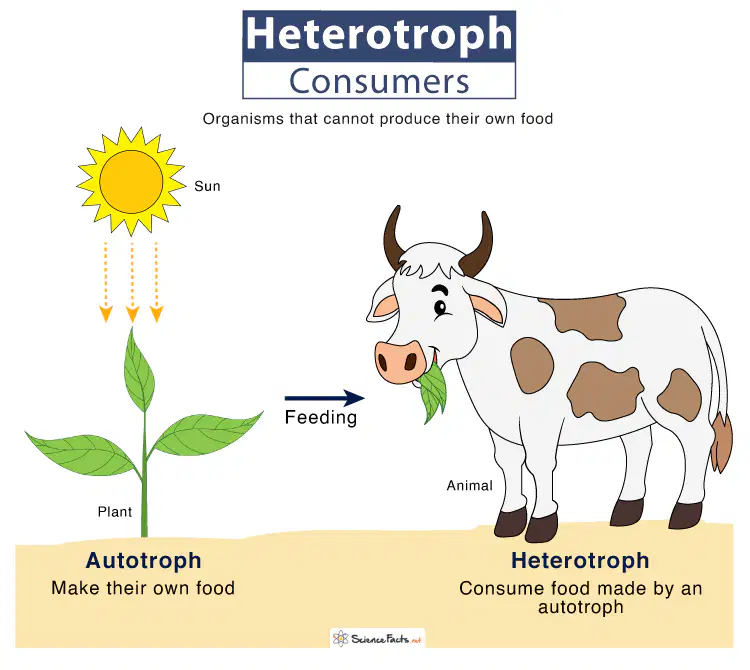
An organism that must eat other organisms to obtain energy (animals, fungi, most bacteria).
Consumer/Heterotroph
Producer/Autotroph
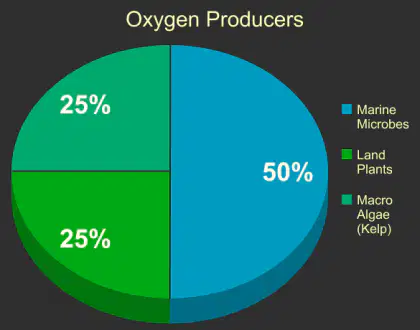
What produces the oxygen on planet Earth?
Photosynthesis by plants, algae, and some bacteria

What percent of the air is oxygen?
What is the most ABUNDANT (78 percent!) element in the atmosphere?

