
 Worksheets
MMT [S2025] - Mid-term Examination
Total questions: 71
Worksheet time: 1hrs 19mins
What is the role of the signal conditioner in a computer-aided measurement system for turning force?
To directly measure the turning force
To convert the digital signal from the sensor to analog for the computer
To amplify, filter, and convert the raw sensor signal into a suitable form for further processing
To store the measured force data
Mechanics, the study of _____ and its _____, has played a crucial role in the development and evolution of mechanical manufacturing technology. (Multiple correct answers)
Motion
Pressure
Forces
Masss
What was the primary use of waterwheels and windmills during the Middle Ages?
Generating electricity
Heating buildings
Grinding grain and sawing wood
Transportation of goods
Waterwheels during the Middle Ages operated mainly based on principles from which area of mechanics?
Choose and write on option in the blank
a) Solid mechanics
b) Fluid mechanics
c) Thermodynamics
d) Kinematics
(a)
What did the emerging engineering disciplines build upon for analysis and design?
A. The principles of art
B. The foundation of mechanics
C. The study of literature
D. The theories of music
A
B
C
D
Choose any three basic machine tools. Choose three correct options. (Multiple correct answers)
Lathe
Drilling
Drills
Milling
Mills
Name any four common machining operations. Choose four correct options. (Multiple correct answers)
Milling
Mills
Drilling
Grinding
Turning
Sheet metal forming techniques (choose any three answers). [Multiple correct answers]
Bending
Forging
Stamping
Rolling
Drawing
Bulk forming processes (choose any three answers). [Multiple correct answers]
Rolling
Extrusion
Forging
Rolling
Drawing
Classification of engineering materials (choose any three answers). [Multiple correct answers]
Metals
Strength
Plastics
Elasticity
Ceramics
Mechanical properties of materials (choose any three answers). [Multiple correct answers]
Ductility
Strength
Plastics
Elasticity
Ceramics
Which principle involves removing material to achieve the desired shape (哪种成形原理需要通过去除材料来获得所需形状)?
A. Δm=0
B. Δm<0
C. Δm>0
D. None
A
B
C
D
Which process is an example of additive manufacturing (Δm>0) (以下哪种工艺属于增材制造(Δm>0)的示例)?
A. Forging
B. Laser cutting
C. 3D printing
D. Injection molding
A
B
C
D
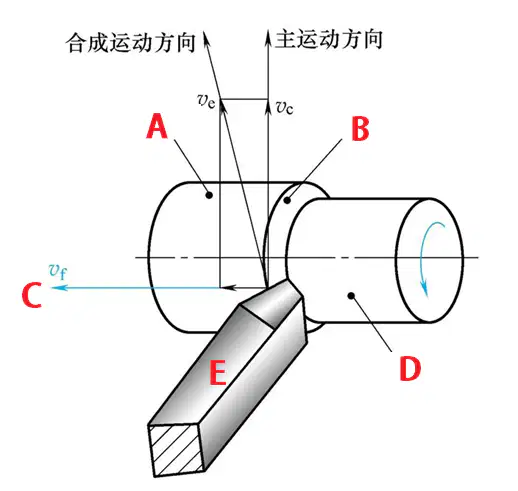
What is "A" called in the basic turning operation?
基本车削操作中的“A”是什么?
已加工表面
进给运动方向
过渡表面
待加工表面
What is "C" called in the basic turning operation?
在基本车削操作中,“C”叫什么?
已加工表面
进给运动方向
过渡表面
待加工表面
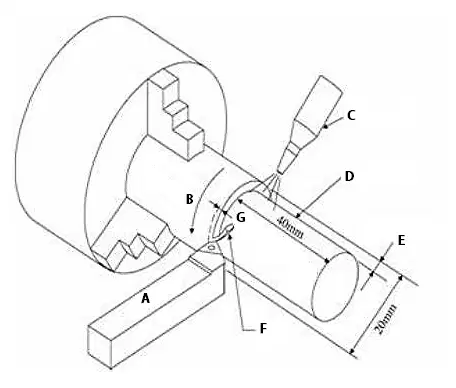
What is "C" called in the basic turning operation?
Cutting Speed
Cooling fluid
Workpiece
Cutting tool
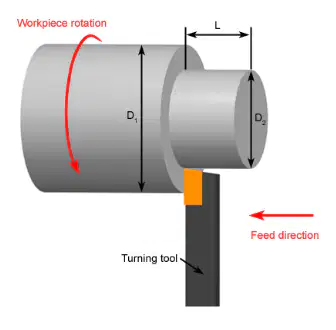
A lathe is capable of performing numerous machining operations to deliver parts with the desired features. What is the specific name for the turning process shown in the figure?
step turning
taper turning
champher turning
contour turning
spinning
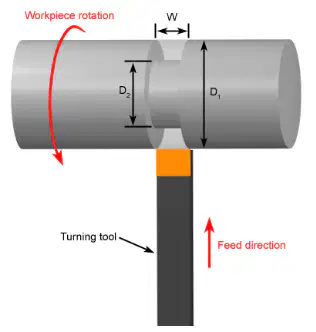
A lathe is capable of performing numerous machining operations to deliver parts with the desired features. What is the specific name for the turning process shown in the figure?
grooving
parting
threading
knurling
drilling

A lathe is capable of performing numerous machining operations to deliver parts with the desired features. What is the specific name for the turning process shown in the figure?
grooving
parting
threading
knurling
drilling
What is a common disadvantage of turning operations?
Limited to cylindrical shapes
High production speed
Low tool wear
Limited to cylindrical shapes

The relationship between the main cutting speed VC, feed speed vf, and cutting speed ve in the figure is
Ve = Vc + Vf
Ve = Vc - Vf
Vc = Ve + Vf
Vf = Ve + Ve
The depth of cut is represented by ____________.


In the composition of cutting tool, what the option "A" represents?
刀体
前面
刀头
副切削刃
In the composition of cutting tool, what the option "B" represents?
刀体
前面
刀头
副切削刃
In the composition of cutting tool, what the option "F" represents?
副后面
主后面
刀尖
主切削刃
In the composition of cutting tool, what the option "H" represents?
副后面
主后面
刀尖
主切削刃
In the composition of cutting tool, what the option "G" represents?
minor flank
back face
tool tip
main cutting edge

The cutting tool commonly used in figure belongs to which category of cutting tools?
直头外圆车刀
45°弯头外圆车刀
90°弯头外圆车刀
端面车刀
Which of the following is a disadvantage of turning operations in terms of cost?
Minimal material waste
High tooling and machine maintenance costs
Low energy consumption
Low setup cost
Which force-measuring instrument is known for its high sensitivity and quick response time, making it suitable for measuring rapidly changing forces?
Spring - balance
Hydraulic force gauge
Piezoelectric force sensor
Dead - weight tester
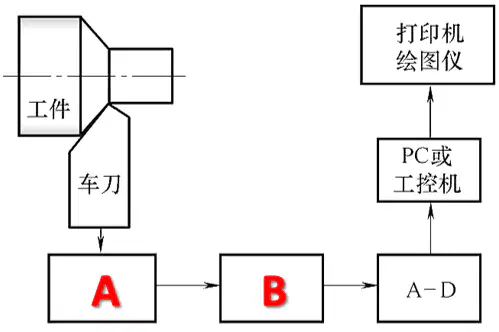
The image displays the block diagram of the computer-aided turning force measurement system. What "A-D" means.
Analog to Digital
Digital to Analog
Alternating to Direct
None of these

The cutting tool commonly used in the figure belongs to which category of cutting tools?
直头外圆车刀
45°弯头外圆车刀
90°弯头外圆车刀
端面车刀

What is the name of the adjustable turning tool for machine clamps shown in the picture?
刀片 (blade)
销轴 (Pin shaft)
楔块 (Wedge block)
螺钉 (screw)
"Depth of cut" is denoted by:


Subtractive manufacturing (Δm<0) includes processes like grinding and waterjet cutting (磨削和水射流加工属于减材制造(Δm<0)工艺).
True ✔️
False ❌
Casting and forging are classified under Δm=0 (判断题:铸造和锻造属于Δm=0的成形工艺).
True ✔️
False ❌
What percentage of mechanical/electrical parts are made using molds (Δm=0)? (统计数据表明,机电产品中约多少比例的零件是通过模具成形的?)
A. 20–30%
B. 30–40%
C. 40–50%
D. 50–60%
A
B
C
D
In a computer-aided measurement system for turning force, which component is responsible for initially sensing the turning force?
The computer
The signal conditioner
The force sensor
The data acquisition card
During turning operation, when the tool moves along a diagonal line intersecting the axis, a conical surface is formed.
TRUE ✅
FALSE ❌
车削还可以加工螺纹面、端平面及偏心轴等.
TRUE ✅
FALSE ❌
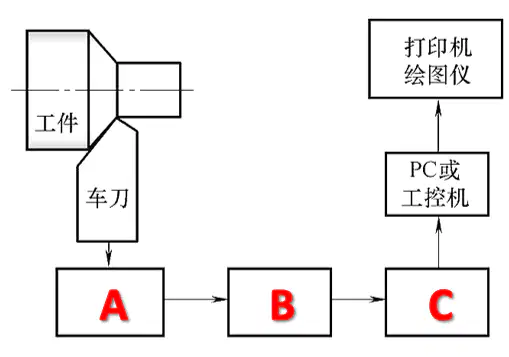
The image displays the block diagram of the computer-aided turning force measurement system. Please fill in the appropriate answer for block "A."
- - -
Note: Write your answer in Chinese.
(a)
The image displays the block diagram of the computer-aided turning force measurement system. Please fill in the appropriate answer for block "B."
- - -
Note: Write your answer in Chinese.
(a)
The image displays the block diagram of the computer-aided turning force measurement system. Please fill in the appropriate answer for block "C."
- - -
Note: Write your answer in Chinese.
(a)
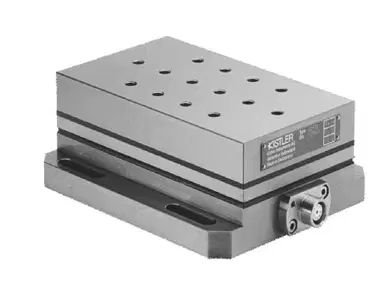
The frequently used force measurement tool is shown in the picture. Please fill in the name of this instrument.
- - -
Note: Write your answer in Chinese.
(a)
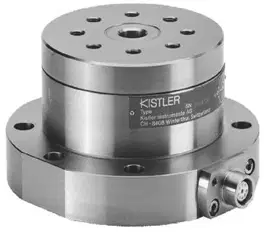
The frequently used force measurement tool is shown in the picture. Please fill in the name of this instrument.
- - -
Note: Write your answer in Chinese.
(a)
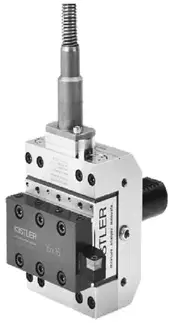
The frequently used force measurement tool is shown in the picture. Please fill in the name of this instrument.
- - -
Note: Write your answer in Chinese.
(a)
3D printing materials include metals, plastics, and even (a) . (用英语写下答案)
-
OPTIONS
Bio-materials || Single-unit || 3D CAD || Equal material || Electron beam machining
Specialized machining methods like (a) are suitable for brittle materials. (用英语写下答案)
-
OPTIONS
Bio-materials || Single-unit || 3D CAD || Equal material) || Electron beam machining
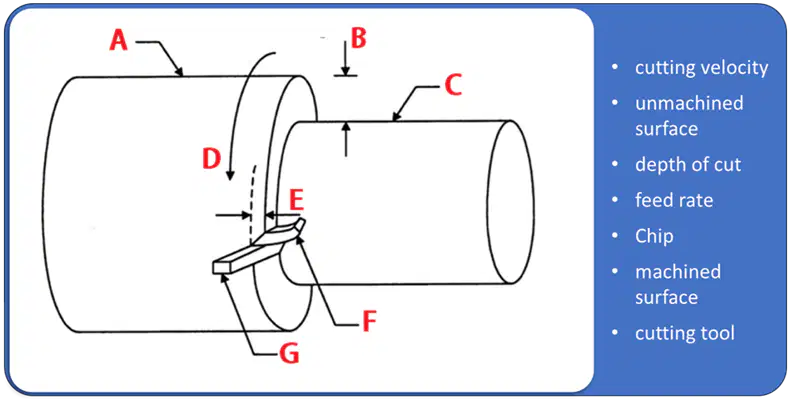
What is "A" called in the basic turning operation?
(a)

What is "B" called in the basic turning operation?
(a)
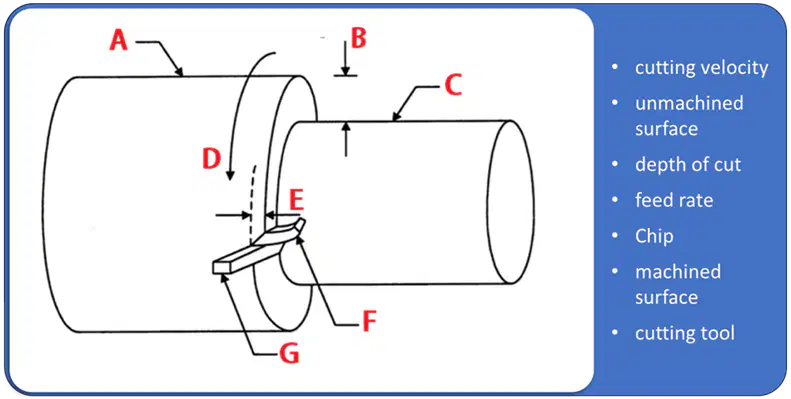
What is "D" called in the basic turning operation?
(a)
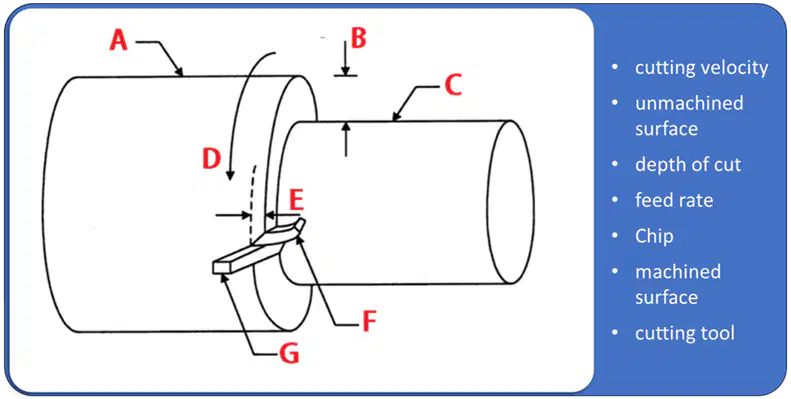
What is "E" called in the basic turning operation?
(a)

What is "F" called in the basic turning operation?
(a)
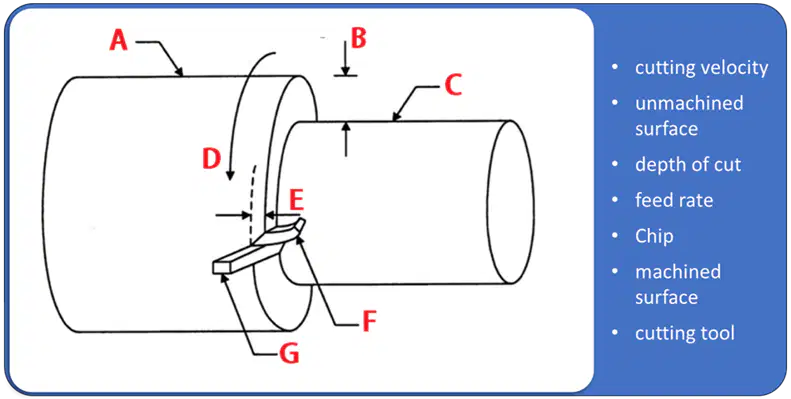
What is "G" called in the basic turning operation?
(a)
Calculate MRR for turning a 50 mm diameter steel rod at 300 RPM with 2 mm depth of cut and 0.2 mm/rev feed rate.
17.85 cm³/min
18.00 cm³/min
18.85 cm³/min
19.85 cm³/min
A 100 mm face mill with 6 teeth cuts 1.5 mm depth at 500 RPM with 0.1 mm/tooth feed. Find MRR.
44 cm³/min
45 cm³/min
46 cm³/min
47 cm³/min
A 10 mm drill at 800 RPM with 0.05 mm/rev feed. Calculate MRR.
4.74 cm³/min
4.05 cm³/min
3.14 cm³/min
4.17 cm³/min
A 12 mm end mill cuts full slot 8 mm deep at 1,200 RPM with 0.08 mm/tooth feed (4 teeth). Find MRR.
35.86 cm³/min
37.86 cm³/min
36.68 cm³/min
36.86 cm³/min
A 16 mm end mill (30% radial engagement) cuts 10 mm depth at 900 RPM with 0.07 mm/tooth feed (6 teeth). Calculate MRR.
16.14 cm³/min
17.14 cm³/min
18.14 cm³/min
19.14 cm³/min
What is the depth of cut if a turning operation reduces the diameter of a workpiece from 50 mm to 44 mm?
如果车削操作将工件的直径从50毫米减小到44毫米,切削深度是多少?
1 mm
2 mm
3 mm
4 mm
In a milling operation, if the initial workpiece height is 20 mm and the final height after machining is 17.5 mm, what is the depth of cut?
在铣削操作中,如果工件初始高度为20毫米,加工后高度为17.5毫米,切削深度是多少?
1.5 mm
2.0 mm
2.5 mm
3 mm
In a face milling operation, the depth of cut is 4 mm, and the cutting width is 30 mm. What is the cutting area?
在面铣加工中,切削深度为4毫米,切削宽度为30毫米,切削面积是多少?
119 mm2
120 mm2
121 mm2
122 mm2
In a turning operation, if the depth of cut is 1.5 mm and the feed rate is 0.25 mm/rev, what is the uncut chip area (assuming a square chip)?
0.375 mm2
0.751 mm2
0.850 mm2
0.804 mm2
In a milling operation, which element determines the direction of the cutting motion?
The shape of the milling cutter teeth
The rotation of the milling cutter spindle
The feed rate of the workpiece
The coolant flow direction
Which of the following represents the primary cutting motion in a machining operation?
The movement of the tool perpendicular to the workpiece surface for depth of cut
The rotational movement of the workpiece in turning
The linear movement of the tool relative to the workpiece that removes material
The reciprocating movement of the tool in shaping
What is the cutting edge in the context of cutting motion and elements?
The part of the tool that is held in the tool holder
The surface of the workpiece that is being machined
The sharp edge of the cutting tool that comes in contact with the workpiece to remove material
The angle between the tool face and the workpiece surface
Which of the following is an important element related to cutting motion that affects the surface finish of the machined part?
The type of cutting fluid used
The cutting speed
The tool material
The machine tool's power rating
What is the role of the rake angle in the elements of cutting motion?
It determines the strength of the cutting tool
It affects the depth of cut
It controls the direction of chip flow
It helps in clamping the tool in the tool holder
Which cutting tool material is known for its high hardness at elevated temperatures and is often used for high - speed machining of steels?
High - speed steel (HSS)
Carbide
Ceramics
Diamond
High-speed steel (HSS) cutting tools are preferred in which of the following situations?
When machining extremely hard materials at very high speeds
For general - purpose machining operations where cost is a factor and moderate cutting speeds are sufficient
When machining non - ferrous materials with high precision requirements
In high - volume production of hardened steel components
高速切削的概念与特点
1. 高速切削技术的概念
国际生产工程学会提出切削线速度500~7000m/min为高速切削加工;德国达姆斯塔特工业大学生产工程与机床研究所(PTW)提出高于普通切削速度5~10倍的切削加工为高速切削加工,并提出按主轴最高转速与最快移动速度构成的相应范围,划分成传统切削、高去除率切削(HVM)和高速切削(HSM)三个加工区域。
高速加工的概念由德国的切削物理学家萨洛蒙(Carl Salomon)博士首次提出,理论的核心是建立在一个设想基础上,即对于给定的工件材料都有一个临界切削速度,当切削速度超过临界切削速度时,切削温度会随切削速度增大而下降,而在达到该临界速度之前,随着切削速度增加,切削温度逐渐上升,如图所示。
参照此假设,可发现对于一种工件材料,一旦超过临界速度进行加工,其切削温度降低,刀具寿命增加,且切削时间大幅度减小,可以成倍提高生产率。
高速切削有如下主要特点
(1) 能获得很高的加工效率
随着自动化程度的提高,辅助时间、空行程时间已大大减少,有效切削时间仍占工件在制时间的主要部分
而切削时间的长短取决于进给速度或进给量的大小。高速加工虽然切削深度和厚度小,但由于主轴转速高,进给速度快,因此使单位时间内的金属切除量反而增加了,由此加工效率也提高了。
(2) 能获得较高的加工精度
高速切削具有较高的材料去除率并相应减小了切削力。对同样的切削层参数,高速切削的单位切削力明显减小。若在保持高效率的同时适当减小进给量,切削力的减幅还要加大。在加工过程中,切削力的降低对减小振动和偏差非常重要。这使工件在切削过程的受力变形显著减小,有利于提高加工精度
加工时可将粗加工、半精加工、精加工合为一体,全部在一台机床上完成,减少了机床台数,避免由于多次装夹使精度变差。特别对于大型框架件、薄板件、薄壁槽形件的高精度高效加工,高速铣削是很有效的方法。
(3) 能获得较高的加工表面质量
高速切削的力值及其变化幅度小,与主轴转速有关的激振频率也远远高于切削工艺系统的高阶固有频率,因此切削振动对加工质量的影响很小。
另一方面,高速切削使传入工件的切削热的比例大幅度减少,加工表面受热时间短、切削温度低,因此热影响区和热影响程度都较小,有利于获得低损伤的表面结构状态和保持良好的表面物理性能及力学性能。
如我们常用电火花加工模具型腔,但电火花加工后型腔内表面处于拉应力状态,而使用高速铣削加工后,零件表面是压应力状态。
(4) 加工能耗低、节省制造资源
高速切削时,单位功率所切削的切削层材料体积显著增大。以洛克希德飞机公司的铝合金高速铣削为例,主轴转速从4000r/min提高到20000r/min时,切削力下降30%,而材料切除率增加三倍。
由于切除率高、能耗低,工件在制的时间短,提高了能源和设备的利用率,降低了切削加工在制造系统资源总量中的比例。因此高速切削符合可持续发展的要求。高速加工机床振动小、噪声低,少用或不用冷却液,符合环保要求。
1: 国际生产工程学会提出高速切削加工的切削线速度范围是( )
500 - 7000 m/s
500 - 7000 m/min
50 - 700 m/min
5 - 70 m/min
2: 高速加工的概念由( )首次提出。
德国切削物理学家卡尔・萨洛蒙
国际生产工程学会
德国达姆施塔特工业大学
洛克希德飞机公司
3: 高速切削能获得高加工精度的原因不包括( ).
切削力降低,减小了工件受力变形
可在一台机床完成粗、半精、精加工,减少装夹误差
切削速度快
单位切削力明显减小
4: 高速切削时,切削深度和厚度大,所以加工效率高。
True ✅
False ❌
5: 高速切削时,传入工件的切削热比例大幅度增加
True ✅
False ❌
6: 高速切削的力值及其变化幅度大,会严重影响加工质量。
True ✅
False❌
7: 德国达姆斯塔特工业大学生产工程与机床研究所提出高于普通切削速度 (a) 倍的切削加工为高速切削加工
8: 高速切削时,单位功率所切削的切削层材料体积 (a) 。
--
注:答案为中文
9: 高速铣削加工后,零件表面是 (a) 应力状态。
- - -
注:答案为中文
10: 以洛克希德飞机公司的铝合金高速铣削为例,主轴转速从4000r/min提高到20000r/min时,切削力下降 (a) %,而材料切除率增加三倍