
 Worksheets
Objective
Total questions: 68
Worksheet time: 34mins
SDCB forklifts are known for their:
compact design and maneuverability
high fuel efficiency
advanced safety features
all of the above
Explain the difference between OSHA Class 1, Class 2, Class 4, and Class 5 forklifts.
Class 1 forklifts are electric motor rider trucks, Class 2 are electric motor narrow aisle trucks, Class 4 are internal combustion engine trucks with solid tires, and Class 5 are internal combustion engine trucks with pneumatic tires.
Class 1 forklifts are internal combustion engine trucks with pneumatic tires, Class 2 are electric motor narrow aisle trucks, Class 4 are electric motor rider trucks, and Class 5 are internal combustion engine trucks with solid tires.
Class 1 forklifts are electric motor narrow aisle trucks, Class 2 are electric motor rider trucks, Class 4 are internal combustion engine trucks with pneumatic tires, and Class 5 are internal combustion engine trucks with solid tires.
Class 1 forklifts are internal combustion engine trucks with solid tires, Class 2 are electric motor rider trucks, Class 4 are electric motor narrow aisle trucks, and Class 5 are internal combustion engine trucks with pneumatic tires.
Identify and describe basic features of vertical mast forklifts.
Vertical mast forklifts have a compact design and are ideal for narrow aisles.
Vertical mast forklifts are primarily used for outdoor heavy lifting.
Vertical mast forklifts are designed for high-speed operations.
Vertical mast forklifts are mainly used in construction sites.
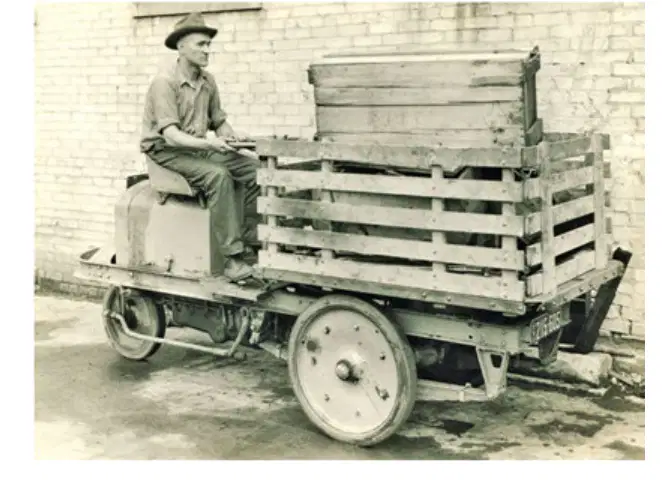
What year was the world's first mass-produced lift created?
1917
1920
1930
1940
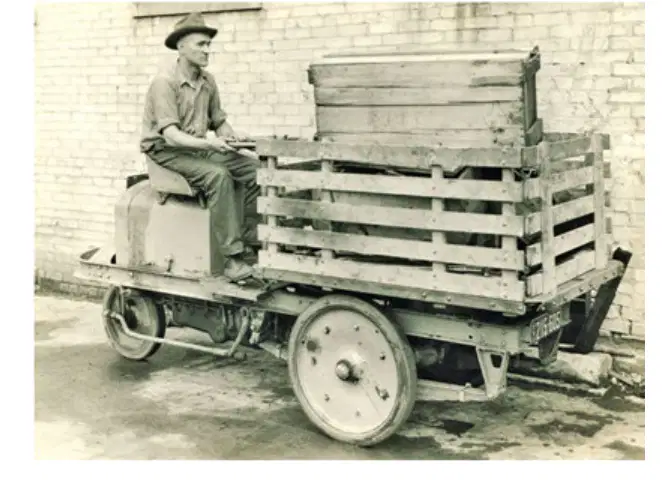
What powered the world's first mass-produced lift?
Internal-combustion (IC) engine
Electric motor
Steam engine
Hydraulic system
What is the function of the flat tines known as forks on modern forklifts?
To lift and move materials up and down on a vertical mast.
To dig holes in the ground.
To sweep the floor.
To cut materials into smaller pieces.
What does OSHA 1910.178 require for all forklift operators?
All forklift operators must be trained.
Forklift operators must have a college degree.
Forklift operators must be over 50 years old.
Forklift operators must work only during the day.
Which of the following is a requirement for forklift operators?
Proper use
How a forklift operates
Forklift controls and instrumentation
All of the above
Explain the proper use of a forklift.
A forklift should be used to lift and transport heavy loads safely.
A forklift is used for personal transportation.
A forklift is used to dig holes.
A forklift is used to paint walls.
A forklift operates by:
lifting and moving heavy loads using hydraulic systems and forks.
flying in the air to transport goods.
swimming through water to carry items.
digging into the ground to find buried objects.
What are some common hazards associated with forklift operation?
Falling loads
Slips and trips
Collisions
All of the above
Understanding load dynamics and balancing in forklift operation is important because:
it ensures safety and prevents accidents.
it increases the speed of operation.
it reduces the need for maintenance.
it allows for more cargo to be carried at once.
Inspections and maintenance should be performed on a forklift:
Daily
Weekly
Monthly
Annually
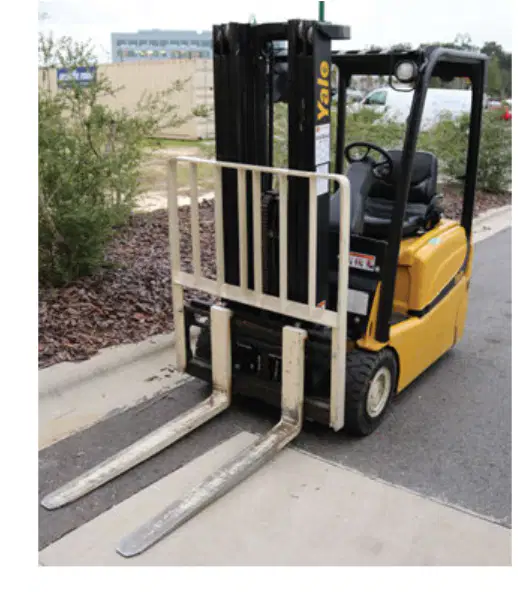
What are warehouse forklifts primarily designed for?
Outdoor use
Indoor use
Both indoor and outdoor use
Fill in the blank: Conventional forklifts have either pneumatic or hard rubber tires and cleaner emissions than ________ forklifts.
rough-terrain
electric
diesel
gasoline
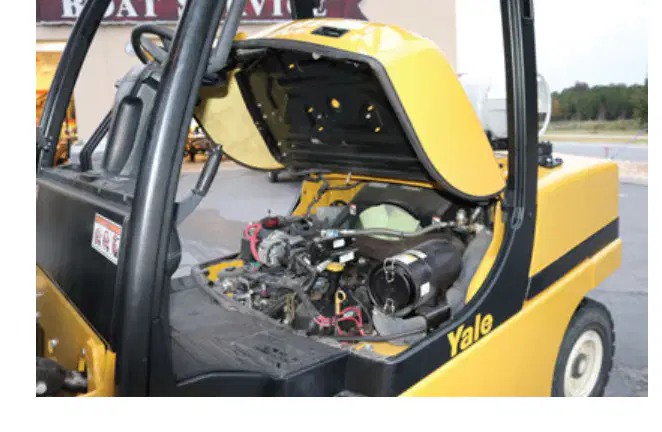
What is the position of the engine in IC-powered forklifts?
The engine is mounted low and underneath the operator’s seat.
The engine is mounted on the roof of the forklift.
The engine is located at the back of the forklift.
The engine is placed in front of the operator’s seat.
Where is the battery positioned in battery-powered forklifts?
The battery is positioned below the seat and far back.
The battery is positioned in the front compartment.
The battery is positioned on the roof of the forklift.
The battery is positioned on the side panels.
Which type of forklifts are typically used in open warehouses or well-ventilated areas?
IC-powered forklifts
Battery-powered forklifts
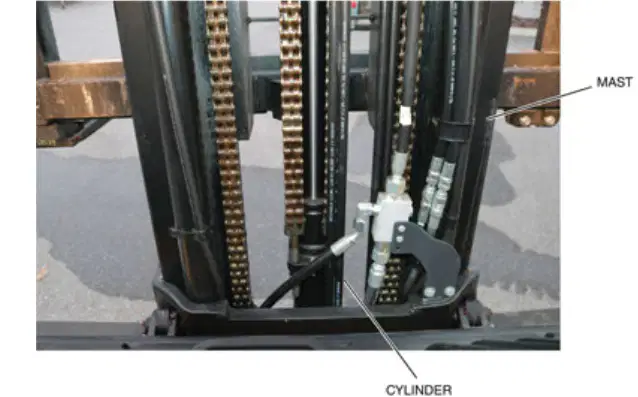
What is the vertical mast in a forklift?
A horizontal structure
An upright structure mounted to the chassis
A control lever
A hydraulic fluid reservoir
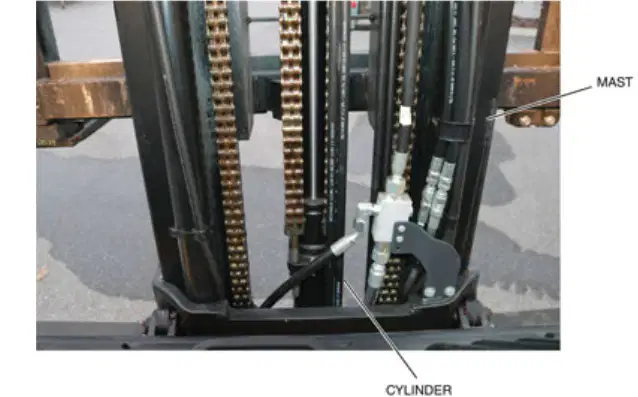
What provides the force that raises the carriage and load in a forklift?
Control lever
Hydraulic lift cylinder
Vertical mast
Return lines
To lower the carriage, a lever is pushed to open a _______.
control valve
pressure gauge
hydraulic pump
safety lock
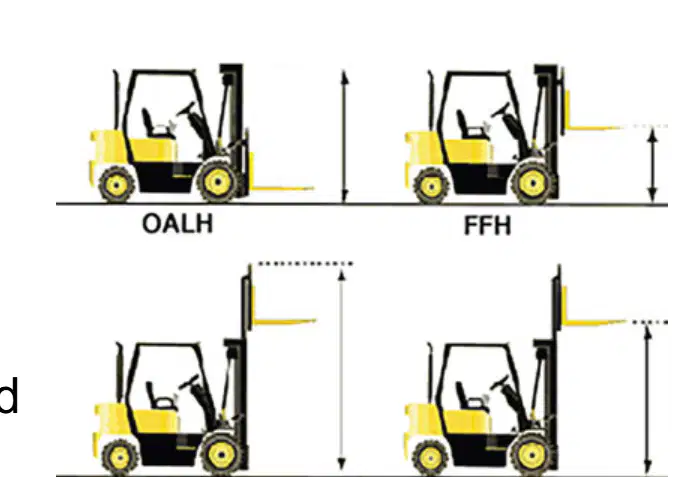
What does Free fork height (FFH) refer to?
The distance the forks can be raised without increasing the overall height of the mast.
The distance from the ground to the top of the mast when the mast is completely lowered.
The maximum height the mast can reach.
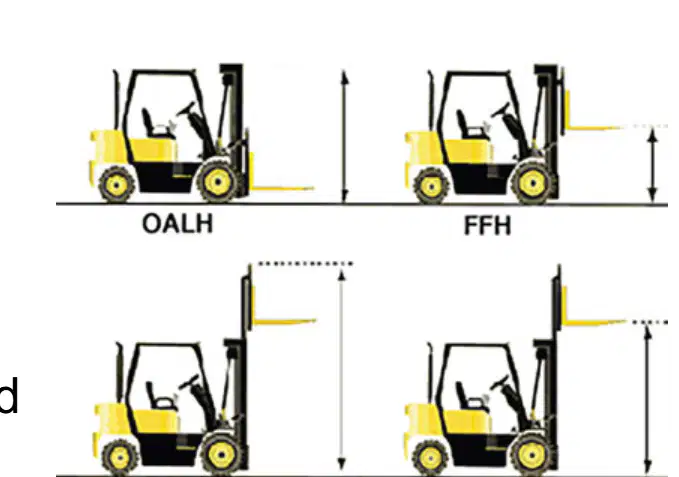
The overall lowered height (OALH) is the distance from the ground to the top of the mast when the mast is _________?
completely lowered.
partially raised.
fully extended.
at half height.
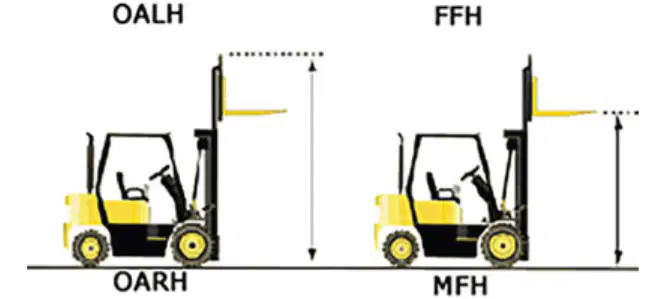
What does Maximum fork height (MFH) refer to?
The distance from the ground to the forks when the mast is fully extended.
The weight capacity of the forklift.
The speed at which the forklift can travel.
The type of fuel used by the forklift.
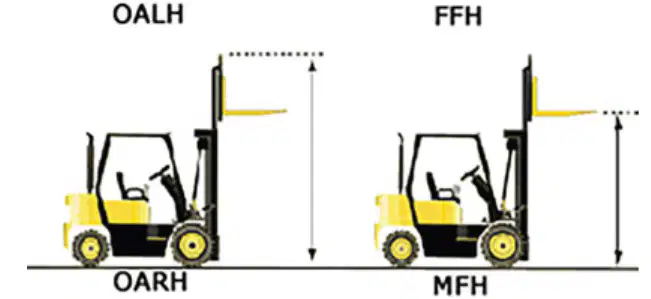
What is the Overall raised height (OARH)?
The distance from the floor to the top of the carriage backrest when the mast is fully extended.
The height of the forklift when the mast is retracted.
The distance from the ground to the top of the operator's cabin.
The maximum height the forks can reach when fully loaded.
What does Side shift allow the operator to do?
Move the carriage right or left using a hydraulic lever.
Lift the load vertically.
Tilt the mast forward or backward.
Rotate the load 360 degrees.
What is a characteristic of a Single (Simplex) Stage mast?
It has two sections
It is used for high lift heights
It has one channel with an outer rail and an inner rail that slides up and down
It is perfect for moving loads inside of tractor-trailers
The MFH for a Two (Duplex) Stage mast is approximately ____.
88 inches
90 inches
85 inches
92 inches
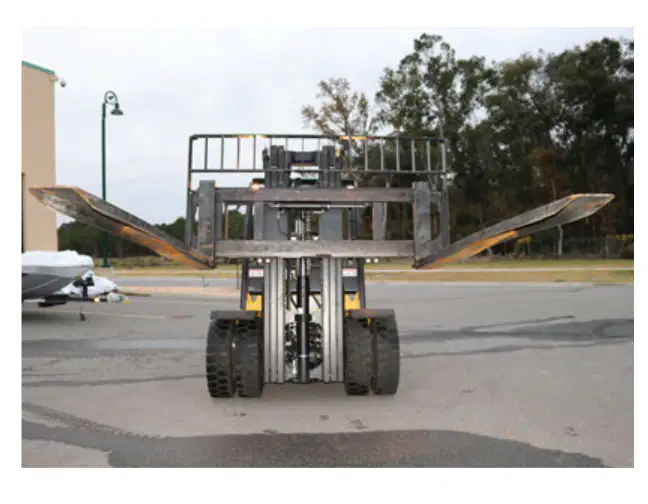
What is the maximum fork height (MFH) of a Three (Triplex) Stage mast?
189"
200"
240"
150"
A Four (Quad) Stage mast can lift loads up to an MFH of _______.
240
200
300
180
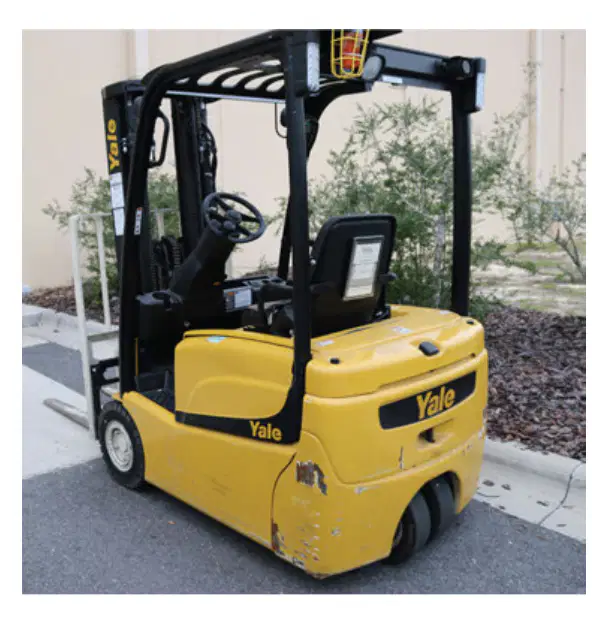
What powers a Class 1 vertical mast forklift?
An electric motor
A diesel engine
A gasoline engine
A propane engine
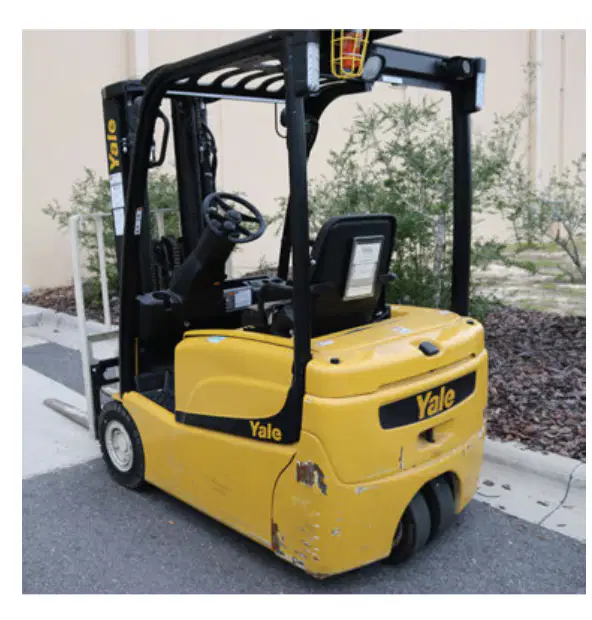
How many pneumatic or solid tires does a Class 1 vertical mast forklift have?
3 or 4
2
5
6
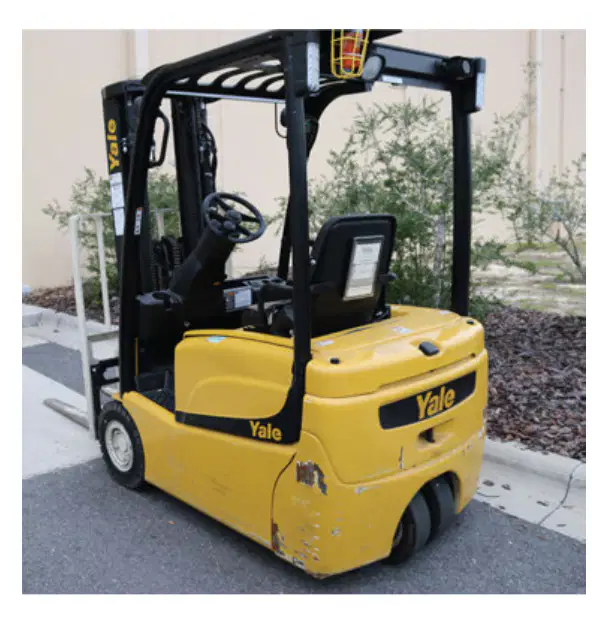
In what type of applications are Class 1 vertical mast forklifts used?
Warehouse applications where air quality and sound are a concern
Outdoor construction sites
Heavy-duty mining operations
Agricultural fields
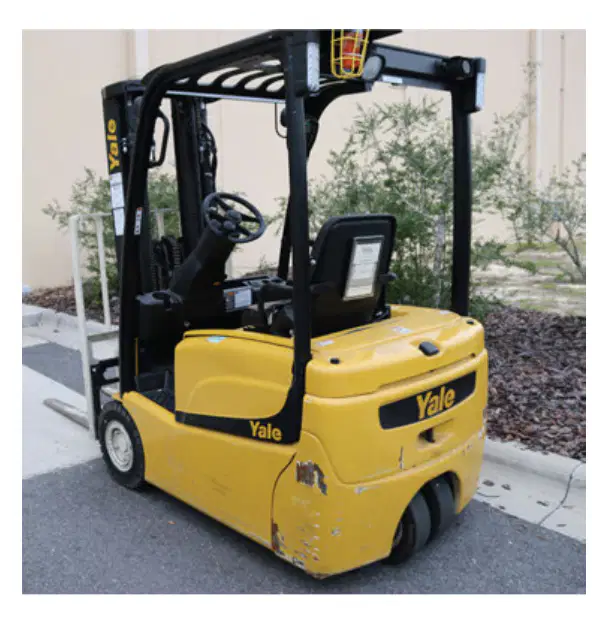
Where are Class 1 vertical mast forklifts commonly found?
Storage and retail warehouse environments
Construction sites
Outdoor lumber yards
Dockyards
What type of engine does a Class 4 forklift use?
Electric
IC engine (LPG, gasoline, or diesel)
Solar
Hybrid
Class 2 forklifts are ______ and are used in places that won’t accommodate larger lifts.
Electric
Gas-powered
Diesel
Hydraulic
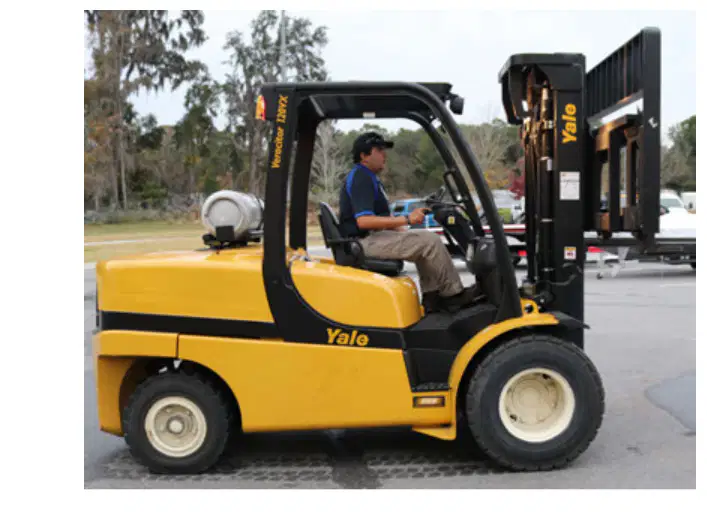
What type of engine does a Class 5 vertical mast forklift have?
Smaller IC engine
Larger IC engine
Electric engine
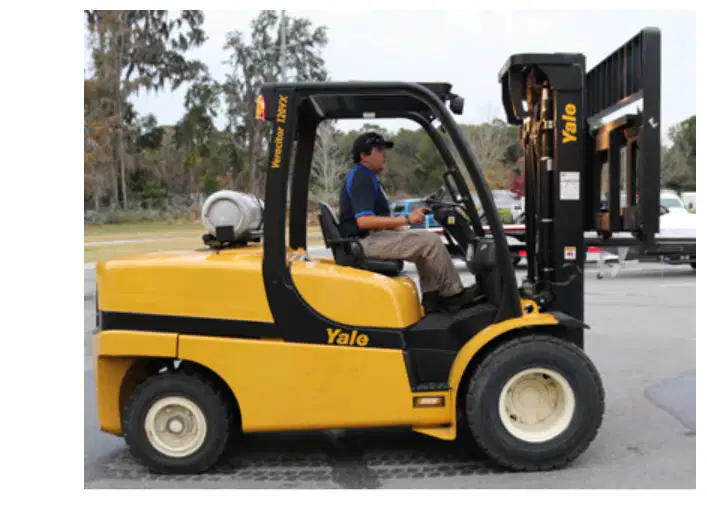
Class 5 forklifts have ______ tires.
Pneumatic
Solid
Foam-filled
Cushion
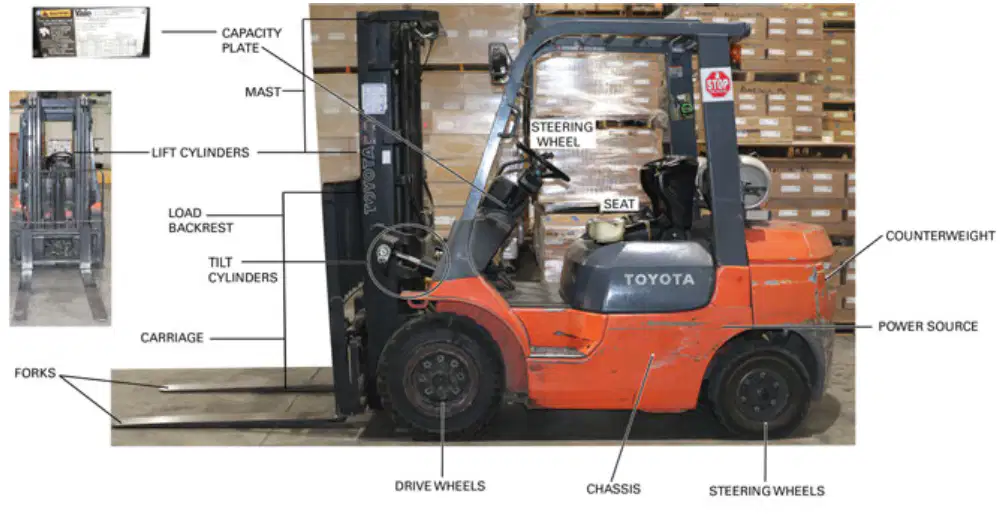
What is the part labeled as 'Mast' in the forklift diagram?
Mast
Fork
Cab
Counterweight
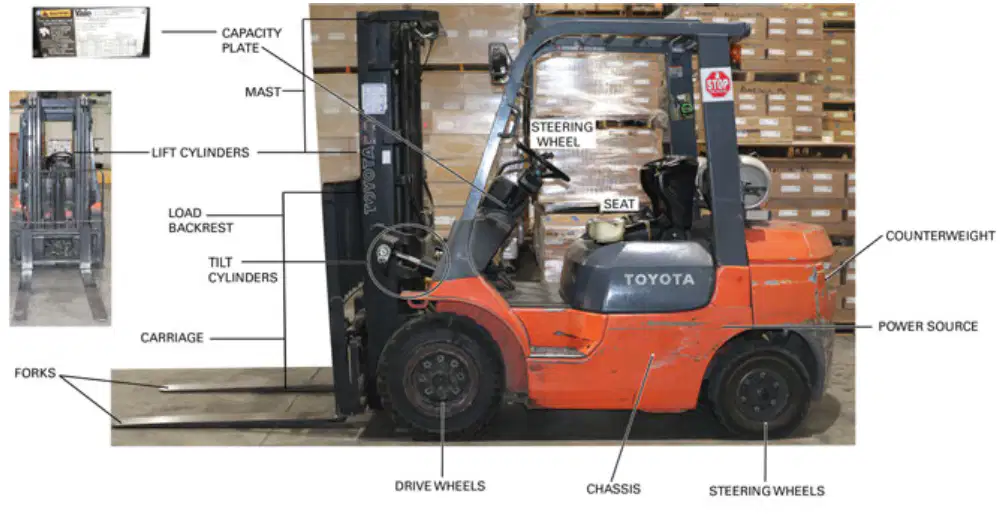
Which part of the forklift is responsible for lifting the load?
Lift Cylinders
Forks
Counterweight
Mast
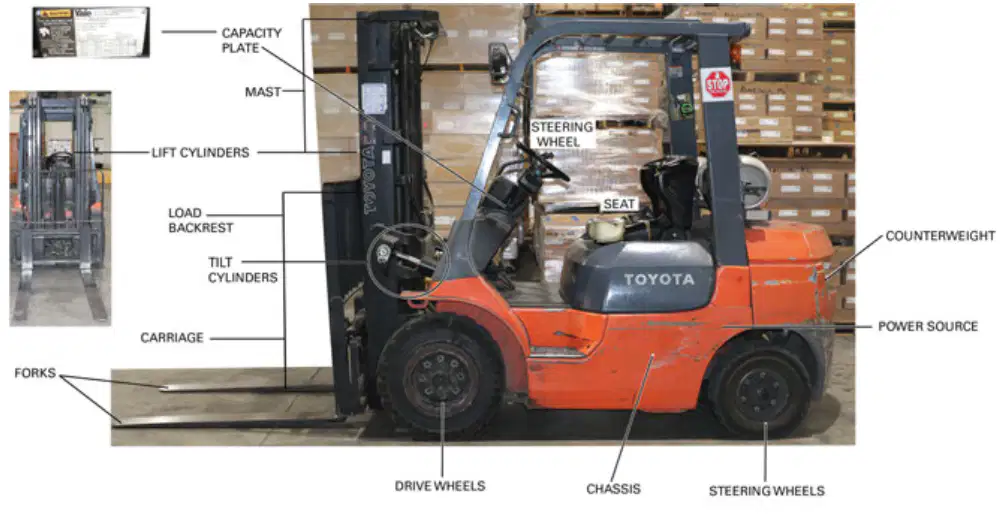
Identify the part labeled as 'Counterweight' in the forklift diagram.
Counterweight
Mast
Forks
Cab
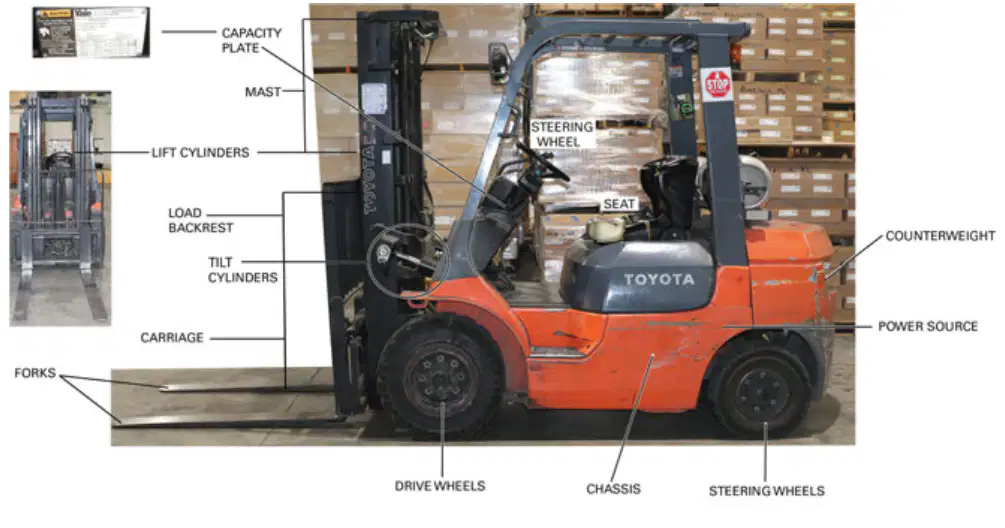
What is the function of the 'Tilt Cylinders' in a forklift?
To tilt the mast and load backrest.
To lift the load vertically.
To stabilize the forklift during operation.
To control the speed of the forklift.
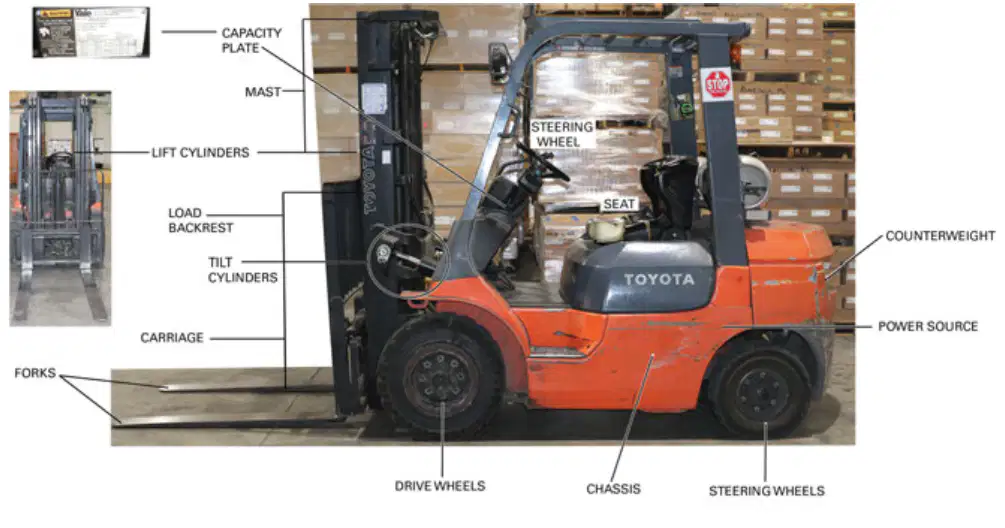
Which part of the forklift is labeled as 'Power Source'?
Power Source
Mast
Forks
Counterweight
What is the structure on which the forks are mounted?
Carriage
Counterbalance
Class
Carriage Backrest
What serves as a higher backstop for loads lifted with the forks?
Carriage
Counterbalance
Class
Carriage Backrest
A designation for Powered Industrial Trucks (PITs) is called a _______.
Class
Type
Model
Category
Fill in the blank: Any weight behind the fulcrum, or front axle, that serves to offset the load is called a _______.
Counterbalance
Lever
Fulcrum
Load
A _______ is a weight, usually mounted on the very rear of the forklift, that provides any additional weight needed to counterbalance the lifting capacity.
Counterweight
Ballast
Load
Anchor
A _______ is the roof of a ROPS, specifically engineered and designed to protect the forklift’s cab and operator from falling items.
Falling Object Protective Structure (FOPS)
Roll-Over Protective Structure (ROPS)
Cab Guard
Safety Roof
Fill in the blank: _______ is also known as Free Lift Height; the distance the forks can be raised without increasing the overall height of the mast.
Free Fork Height
Maximum Fork Height
Lift Extension Height
Mast Elevation Height
A _______ is a single-acting hydraulic cylinder on a SDCB forklift that can only lift the load.
Hydraulic Lift Cylinder
Hydraulic Tilt Cylinder
Hydraulic Steering Cylinder
Hydraulic Brake Cylinder
What is the designation given to forklifts that use the combustion of gasoline, diesel, or Liquid Petroleum Gas (LPG) to power the engine?
Electric Forklifts
Internal Combustion (IC)
Hydraulic Forklifts
Manual Forklifts
What is a control typically located to the right of the forklift’s steering wheel, which may have between two and four levers?
Pedal
Lever
Button
Switch
What is the term for the maximum weight the machine can lift based on a load’s center?
Load limit
Load capacity
Weight limit
Maximum load
What is the feature on SDCB forklifts that tilts the mast, normally limited to 20 degrees forward and 10 degrees rearward?
Mast Tilt
Mast Shift
Mast Angle
Mast Rotation
Fill in the blank: The distance from the ground to the top of the carrying surface of the forks when the mast is fully extended is called _______.
Maximum Fork Height
Minimum Fork Height
Average Fork Height
Standard Fork Height
The distance from the ground to the top of the mast when the mast is completely lowered is called _______.
Overall Lowered Height
Mast Base Height
Ground Clearance
Lower Mast Length
The distance from the floor to the top of the carriage backrest extension when the mast is fully extended is called _______.
Overall Raised Height
Maximum Fork Height
Lift Height
Mast Height
What is a Powered Industrial Truck (PIT)?
A stationary machine used for lifting
A mobile, power-propelled truck used to carry, lift, push, pull, stack, or tier materials
A type of crane
A manual cart
Fill in the blank: All PITs are regulated under _______.
OSHA 1910.178
OSHA 1926.602
OSHA 1910.120
OSHA 1910.147
What is the function of a Side Shift in a forklift?
To lift the load vertically
To move the carriage and load to the right or left
To increase speed
To stabilize the load
The (a) is a distinguishing feature of SDCB forklifts.
single-stage hydraulic
tilting mast
vertical mast
carriage side shift
The (a) is a distinguishing feature of SDCB forklifts.
single-stage hydraulic
tilting mast
vertical mast
carriage side shift
What is the primary difference between the different types of masts?
The number of hydraulic cylinders
Load capacity
The number of sections
The size and strength of the chains
What is the primary difference between the different types of masts?
The number of hydraulic cylinders
Load capacity
The number of sections
The size and strength of the chains
(a) are all factors that influence what mast type is chosen for a job.
Forklift class, load capacity, horsepower, and work surface
Workspace, ceiling height, shelf/rack height, and load size
Ceiling height, load capacity, landing surface, and load height
Ceiling height, shelf/rack height, forklift class, and workspace
______ are all factors that influence what mast type is chosen for a job.
Forklift class, load capacity, horsepower, and work surface
Workspace, ceiling height, shelf/rack height, and load size
Ceiling height, load capacity, landing surface, and load height
Ceiling height, shelf/rack height, forklift class, and workspace
The mast of a vertical-mast forklift can be tilted (a) .
5 degrees rearward
10 degrees rearward
15 degrees rearward
20 degrees rearward