
 Worksheets
2235 Procedures Review 1
Total questions: 13
Worksheet time: 7mins
How many degrees caudally do you angle the CR for the PA Axial (Caldwell)?
10°
15°
20°
25°

The dorsum sellae and the posterior clinoid processes are clearly demonstrated within the foramen magnum during an AP Axial (Towne) projection of the Skull.
TRUE
FALSE

How many inches above the EAM does the CR enter for a Lateral Skull?
1 inch
2 inches
3 inches
4 inches
The IOML is parallel to the front edge of the IR in Lateral Facial Bones.
TRUE; IOML is parallel
FALSE; IOML is perpendicular
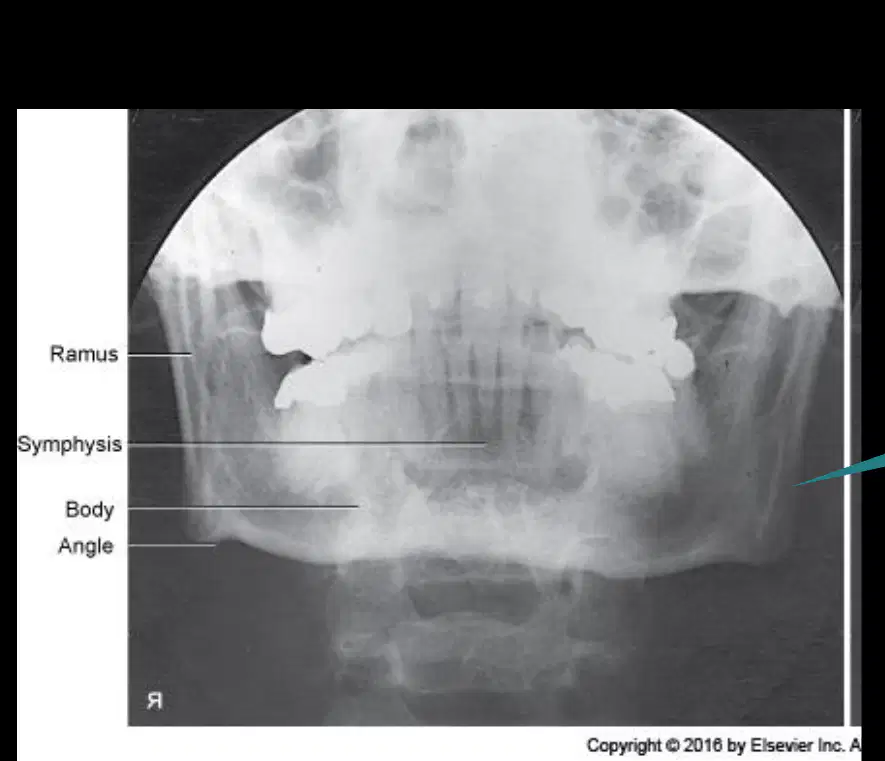
For the mandibular rami in a PA Mandible, the forehead and nose rest on the IR.
TRUE
FALSE
These radiographic approaches are usually employed to show medial or lateral displacement of fragments in fractures of the rami. What are the two approaches?
PA
PA Axial
Lateral
RPO

Where does your CR enter for the Lateral Nasal Bones?
½ inch distal to the nasion
1 inch distal to the nasion
At the nasion
½ inch proximal to the nasion
Where does your CR enter for the Lateral Orbits?
outer canthus
inner canthus
mid orbit
infraorbital margin
The Sphenoid sinus are immediately located below the sella turcica.
TRUE
FALSE
We usually perform Sinus exams upright to:
see air fluid levels
improve patient comfort
reduce examination time
enhance image clarity
For Ribs, adjust the IR position to project approximately _____ inch(es) above the upper border of the shoulders.
1½ inches
2 inches
1 inch
½ inch
In the Plantodorsal Calcaneus, the CR enters near the base of the 3rd metatarsal at an angle of _____ degrees.
40 degrees
30 degrees
50 degrees
60 degrees
The scaphoid bone is clearly seen in a PA Ulnar deviation Wrist exam.
TRUE
FALSE

