
 Worksheets
Math - G4-Q4
Total questions: 96
Worksheet time: 2hrs 35mins
Angle
is formed by two rays or line segments that have the same endpoint. The shared endpoint is called the vertex.
are lines in a plane that are always the same distance apart and never intersect.
a triangle with one (1) obtuse angle and two (2) acute angles.
measures between 90° and 180°.
Acute Angle:
measures between 0° and 90°.
measures at exactly 90°.
measures between 90° and 180°.
measures between 180° and 360°.
Right Angle:
measures between 0° and 90°.
measures at exactly 90°.
measures between 90° and 180°.
measures between 180° and 360°.
Obtuse Angle
measures between 0° and 90°.
measures at exactly 90°.
measures between 90° and 180°.
measures between 180° and 360°.
Reflex Angle
measures between 0° and 90°.
measures at exactly 90°.
measures between 90° and 180°.
measures between 180° and 360°.
Which of the following is NOT a characteristic of an acute angle?
a) Its measure is less than 90°.
b) Its measure is greater than 0°.
c) Its measure is exactly 90°.
d) It is smaller than a right angle.
Which of the following is NOT a characteristic of a right angle?
Its measure is 90°.
It is formed by perpendicular lines.
Its measure is less than 90°.
It is often indicated by a small square at the vertex.
Which of the following is NOT a possible measure of an obtuse angle?
100°
150°
85°
179°
Which of the following is NOT a characteristic of a reflex angle?
Its measure is greater than 180°.
Its measure is less than 360°.
Its measure is exactly 180°.
It is larger than a straight angle.
Which of the following is NOT true about an acute triangle?
All three of its angles are less than 90°.
It can have one angle greater than 90°.
It has three acute angles.
Each of its angles is smaller than a right angle.
Which of the following is NOT a characteristic of an obtuse triangle?
It has one angle measuring more than 90°.
It has two acute angles.
All three of its angles are less than 90°.
It contains one obtuse angle.
Which of the following is NOT true about a right triangle?
It has one 90° angle.
The sum of its two acute angles is 90°.
It can have an angle greater than 90°.
It contains one right angle.
An angle measuring 75° is NOT what type of angle?
a) An acute angle
b) Smaller than a right angle
c) Larger than 0°
d) An obtuse angle
An angle measuring 190° is NOT what type of angle?
a) A reflex angle
b) Larger than 180°
c) Smaller than 360°
d) An acute angle
A triangle with angles measuring 60°, 60°, and 60° is NOT what type of triangle?
a) An acute triangle
b) An equilateral triangle
c) A triangle with three acute angles
d) A right triangle
Parallel Lines:
are lines in a plane that are always the same distance apart and never intersect.
are lines that intersect to form four(4) right angles.
when a shape can be folded so that the two parts match exactly.
Perpendicular Lines:
are lines in a plane that are always the same distance apart and never intersect.
are lines that intersect to form four(4) right angles.
when a shape can be folded so that the two parts match exactly.
Line Symmetry
are lines in a plane that are always the same distance apart and never intersect.
are lines that intersect to form four(4) right angles.
when a shape can be folded so that the two parts match exactly.
Trapezoid
has one (1) pair of parallel sides.
has two (2) pairs of parallel sides and two (2) pairs of sides that are equal in length.
has four (4) right angles, two (2) pairs of parallel sides, and two (2) pairs of sides that are equal length.
has two (2) pairs of parallel sides and four (4) sides of equal length.
Parallelogram
has one (1) pair of parallel sides.
has two (2) pairs of parallel sides and two (2) pairs of sides that are equal in length.
has four (4) right angles, two (2) pairs of parallel sides, and two (2) pairs of sides that are equal length.
has two (2) pairs of parallel sides and four (4) sides of equal length.
Square:
a two-dimensional (2-D) shape with four (4) sides and four (4) angles.
has two (2) pairs of parallel sides, four (4) sides of equal length, and four (4) right angles.
has four (4) right angles, two (2) pairs of parallel sides, and two (2) pairs of sides that are equal length.
has two (2) pairs of parallel sides and four (4) sides of equal length.
Rectangle
has one (1) pair of parallel sides.
has two (2) pairs of parallel sides and two (2) pairs of sides that are equal in length.
has four (4) right angles, two (2) pairs of parallel sides, and two (2) pairs of sides that are equal length.
has two (2) pairs of parallel sides and four (4) sides of equal length.
Rhombus
has one (1) pair of parallel sides.
has two (2) pairs of parallel sides and two (2) pairs of sides that are equal in length.
has four (4) right angles, two (2) pairs of parallel sides, and two (2) pairs of sides that are equal length.
has two (2) pairs of parallel sides and four (4) sides of equal length.
Quadrilateral
a two-dimensional (2-D) shape with four (4) sides and four (4) angles.
has two (2) pairs of parallel sides and two (2) pairs of sides that are equal in length.
has four (4) right angles, two (2) pairs of parallel sides, and two (2) pairs of sides that are equal length.
has two (2) pairs of parallel sides and four (4) sides of equal length.
a two-dimensional (2-D) shape with four (4) sides and four (4) angles.
(a)
has two (2) pairs of parallel sides and two (2) pairs of sides that are equal in length.
(a)
Which of the following is NOT a characteristic of a quadrilateral?
a) It is a 2-D shape.
b) It has four sides.
c) It has four angles.
d) It does not have any sides.
Which of the following is NOT a defining feature of a parallelogram?
a) It has two pairs of parallel sides.
b) It has two pairs of sides equal in length.
c) It does not have any parallel sides.
d) It is a quadrilateral.
Which of the following is NOT true about a trapezoid?
a) It is a 2-D shape.
b) It has four sides.
c) It has one pair of parallel sides.
d) It has two pairs of parallel sides.
Which of the following is NOT a property of a rectangle?
It has four right angles.
It has two pairs of parallel sides.
It does not have any right angles.
It has two pairs of sides equal in length
Which of the following is NOT a characteristic of a rhombus?
a) It has four sides of equal length.
b) It has two pairs of parallel sides.
c) It does not have four sides of equal length.
d) It is a quadrilateral.
Which of the following is NOT always true for a rhombus?
Its opposite angles are equal.
Its diagonals bisect each other.
It has four right angles.
Its opposite sides are parallel.
Which of the following shapes does NOT necessarily have two pairs of sides equal in length?
Parallelogram
Rectangle
Trapezoid
Rhombus
Which of the following is NOT a defining feature of a square?
It has four sides of equal length.
It has four right angles.
It does not have any parallel sides.
It has two pairs of parallel sides.

Line AB is ____ to Line DC
parallel
perpendicular
Intersecting
Line AB is ____ to Line DC
parallel
perpendicular
Intersecting

Line EF is _______ to Line FG
Parallel
Perpendicular
Intersecting

Line JM is _________ to line KL
Parallel
Perpendicular
Intersecting

Line PS is _________ to line QR
parallel
perpendicular
intersecting
Line PS is _________ to line QR
parallel
perpendicular
intersecting

Line UV is ______ to line WV
parallel
perpendicular
intersecting

Line FE is ___________ to line BC
parallel
perpendicular
intersecting

Line ST is _______ to Line SW
parallel
perpendicular
intersecting

Line QR is ______ to Line UT
parallel
perpendicular
intersecting

Line KN is ____ to line NM
parallel
perpendicular
intersecting
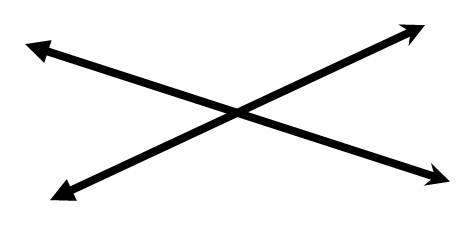
Two parallel lines _________ intersect each other.
Do not
Always
Sometimes
Rarely
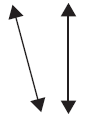
Parallel
Perpendicular
Intersecting
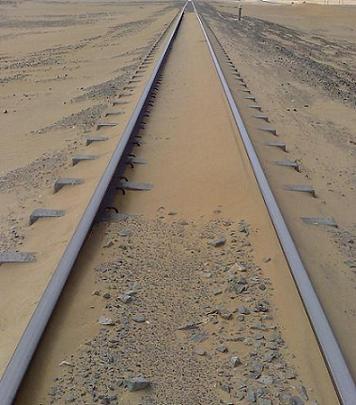

What type of line does the picture represent?
Parallel
Intersecting
Perpendicular
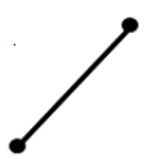
What is this?
parallel
vertex
Line
Line segment
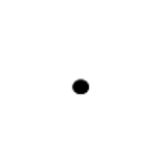
What is this?
Line
Parallel
Point
Line Segment
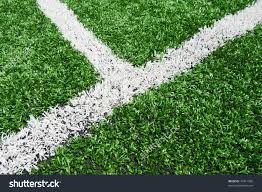
What type of line does the picture represent?
Parallel
Intersecting
Perpendicular

What are intersecting lines?
Lines that never cross
lines that from square corners
lines that pass through the same point
Lines that curve on an angle

Parallel
Perpendicular
Intersecting
Parallel lines cross one another, or intersect.
true
false

Choose the most precise answer: These streets are
Parallel
Perpendicular
Intersecting

Choose the most precise answer: These roads are
Intersecting
Perpendicular
Parallel

Name of angle
ACB
ABC
CBA

Name of angle
PNO
PON
NOP

Name of angle
MKL
KML
KLM


Which angle type is pictured?
Acute
Right angle
Obtuse
Straight line
An angle that measures 34° is what type of angle?
right angle
acute angle
obtuse angle
An angle that measures 132° is what type of angle?
right angle
acute angle
obtuse angle

Select the (2) correct ways to name this angle.
∠ I J K
∠ J K I
∠ J I K
∠ K J I

What are ALL the names for this Quadrilateral?
Square
Rectangle
Rhombus
Parallelogram
trapezoid
Which Quadrilateral has "opposite congruent sides and 4 right angles?"
Square
Rhombus
Rectangle
Parallelogram
What is the biggest difference between a Trapezoid and a Parallelogram?
The Quadrilateral family tree has them split
One is a Quadrilateral and one is a Polygon
A Trapezoid has 2 acute angles and a Parallelogram has 2 Obtuse angles
A Trapezoid has 1 pair of parallel lines and a Parallelogram has 2 pairs of parallel sides
Which quadrilateral is considered a parallelogram with all sides the same length, but with no right angles?
Rhombus
Rectangle
Square
Trapezoid
A rectangle can also be called a...(select two other names)
Parallelogram
Trapezoid
Rhombus
Quadrilateral
Square
True or False: Trapezoids are quadrilaterals
True
False


What is this shape?
triangle
circle
quadrilateral
hexagon
All rhombuses are squares
True
False
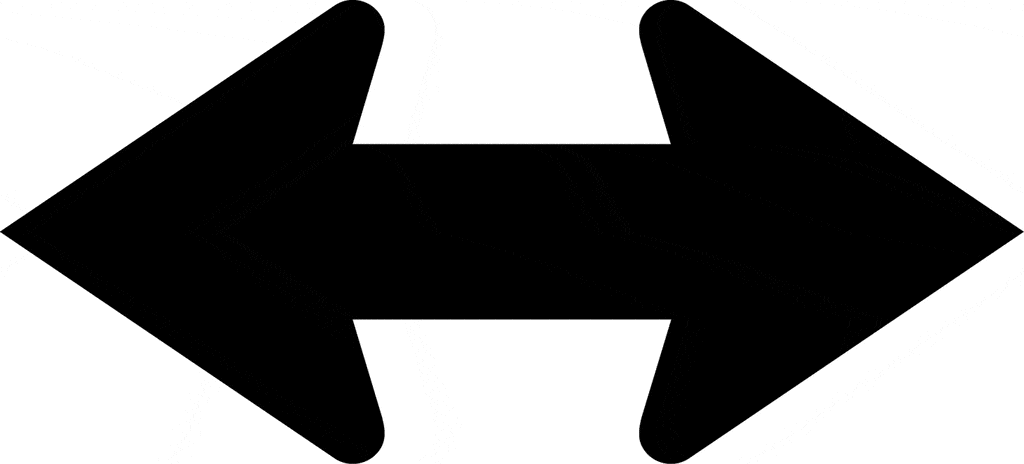



is symmetrical
not symmetrical

Symmetrical?
Is symmetrical
not symmetrical
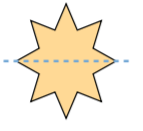
Symmetrical?
Is symmetrical
not symmetrical

Symmetrical?
Is symmetrical
not symmetrical

