
 Worksheets
Funda2 U4 Review lesson 2-7
Total questions: 81
Worksheet time: 1hrs 24mins
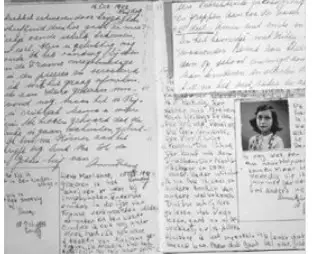
Complete each sentence. Tell about the picture. Use words from the list.
newspaper historian diary history book photographs
In a (a) ,you can read about what a person’s life was like in the past.
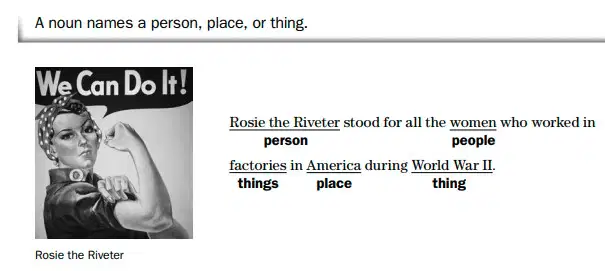
Join Nora, Abigail, and Aiden on a historical adventure! Read each sentence and decide if the underlined word is a person, place, or thing.
During World War II, many American men had to go to war.
(a)

Look at the noun in the first sentence. Add the pronoun that refers to, or goes with, the noun.
Otto Frank, Anne's father, had and office. The family hid above (a) .
Leader of Germany During WWII
A leader or ruler with total power over the people.
People who follow Judaism, the Jewish religion or who claim Jewish ancestry.
A place where people are held as prisoners.
prison camp
Where did all these people (a) from?
They (a) the end of the war.
They wave the (a) flag.
to find out what is happening
news
words
much
along
what you use to make sentences and tell your ideas
news
words
much
along
a lot of
news
words
much
along
next to, or together with
news
words
much
along
what you ask when you want to know something
news
question
much
along
Complete each sentence. Tell about the picture. Use words from the list.
newspaper historian diary history book photographs
In a (a) ,you can read about what a person’s life was like in the past.
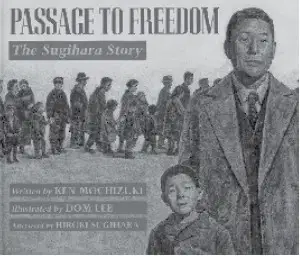
Complete each sentence. Tell about the picture.
A (a) is written by a (b) .
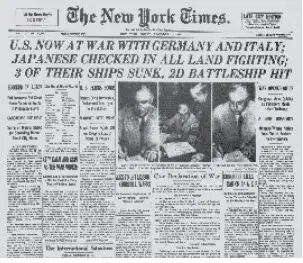
Complete each sentence. Tell about the picture.
A (a) has (b) that make the news come alive.
Complete each sentence. Compare the historical records.
Both a newspaper and a (a) give facts about events.
Complete each sentence. Compare the historical records.
A (a) reports events as they happen, but a (b) reports events after they have happened.
Complete each sentence. Compare the historical records.
A (a) the events in one person’s life, but a (b) tells about events in the lives of many people
Journals and diaries are (a) because they both tell personal stories, (b) they are different because diaries are more private.
History books tell about the past in a serious way, and magazines share fun and interesting stories, so they are (a) .
(a) journals and history books help us learn about things that happened before, but they share (b) kinds of information.
Magazines and diaries can (a) show what people like, but magazines have pictures and stories for everyone to read.
History books (a) journals are alike because they both have important information, (b) they are different because history books are for learning.
(a) diaries and journals keep memories, (b) diaries are usually written just for one person.
Magazines and history books both have pictures, (a) magazines have colorful pictures for fun, while history books have pictures to teach us.
Journals and history books help us remember important things, but they tell stories in (a) ways.
Join Nora, Abigail, and Aiden on a historical adventure! Read each sentence and decide if the underlined word is a person, place, or thing.
During World War II, many American men had to go to war.
(a)
Join Priya, Liam, and Abigail on their exciting adventure! Can you tell if the underlined word is a person, place, or thing?
They traveled to Europe, Africa, and Asia.
(a)
Join Nora, Grace, and Kai on a fun word adventure! Can you help them figure out if the underlined word is a person, place, or thing?
They had to leave their jobs in the factories.
(a)
Imagine you're in a history class with Anika and Aiden. Read each sentence and decide if the underlined word is a person, place, or thing.
Soon women went to work in the factories, just like Anika and Aiden learned about in their project.
(a)
Join Jackson, Nora, and Hannah on a fun quest! Read each sentence and decide if the underlined word is a person, place, or thing.
They wanted to help America win the war.
(a)
Join Anika and David on a fun word adventure! Read each sentence and decide if the underlined word is a person, place, or thing.
Some workers helped build airplanes. Can you guess what it is?
(a)
Join Zoe on an adventure through history! Can you help her identify if the underlined word is a person, place, or thing?
Other women helped build ships.
(a)
Join Ethan, Arjun, and Benjamin on a mission! Read each sentence and decide if the underlined word is a person, place, or thing.
The American soldiers were thankful for their work.
(a)
Let's play a fun game! Read each sentence and decide if the underlined word is a person, place, or thing. Can you help Rohan and Emma figure it out?
The workers were proud to help their country.
(a)
Join Grace and Isla on a fun grammar adventure! Read each sentence and decide if the underlined word is a person, place, or thing.
They proved that women can do any job.
(a)
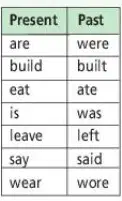
Say each sentence. Add the past tense of the verb.
Change: In the United States, people's lives (a) a lot during World War II
Say each sentence. Add the past tense of the verb.
are: There (a) not many things to buy.
Say each sentence. Add the past tense of the verb.
print: The government (a) special stamps.
Say each sentence. Add the past tense of the verb.
use: Everyone (a) the stamps to get things like sugar and cheese.
Say each sentence. Add the past tense of the verb.
plant: Families (a) gardens to grow food.
Say each sentence. Add the past tense of the verb.
wear: Women (a) simple dresses and shoes.
Say each sentence. Add the past tense of the verb.
collect: Children (a) old rubber, paper, and aluminum.
Say each sentence. Add the past tense of the verb.
collect: Children (a) old rubber, paper, and aluminum.
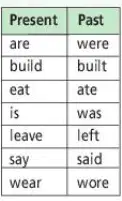
Say each sentence. Add the past tense of the verb.
build: Factories (a) bombs and airplanes.
Say each sentence. Add the past tense of the verb.
eat: People (a) food like powdered eggs and potatoes.
Say each sentence. Add the past tense of the verb.
is: There (a) not much gasoline either.
Say each sentence. Add the past tense of the verb.
say: Everyone (a) that life was hard.
Say each sentence. Add the past tense of the verb.
leave: The hardest part was when someone (a) to go to war.
Nazis did not (a) Jews.
Nazis did not (a) Jews.
Jewish children had to (a) each other.
The children did not (a) much food.
Sooner than
miss
before
example
ever
back
to feel sad when certain people are not with you
miss
before
example
ever
back
shows how something should look
miss
before
example
ever
back
to be better than before
miss
before
example
ever
back
to return to a place
miss
before
example
ever
back
spell the word in the recording
(a)
spell the word in the recording
(a)
spell the word in the recording
(a)
spell the word in the recording
(a)
spell the word in the recording
(a)
spell the word in the recording
(a)
spell the word in the recording
(a)
spell the word in the recording
(a)
spell the word in the recording
(a)
spell the word in the recording
(a)
spell the word in the recording
(a)
spell the word in the recording
(a)
spell the word in the recording
(a)
spell the word in the recording
(a)
spell the word in the recording
(a)
spell the word in the recording
(a)
spell the word in the recording
(a)
spell the word in the recording
(a)
spell the word in the recording
(a)
spell the word in the recording
(a)

