
 Worksheets
Grade 4
Total questions: 20
Worksheet time: 10mins

Organic and inorganic matter are found in our everyday lives. Organic matter is matter that is usually derived from living tissues, they can usually be broken down into simpler substances, whereas inorganic matter is not derived from living tissues.
Dead prawn - Clam
Sandstone - Clam
Yeast - Salt
Cotton - Fluoride
Which of the following phenomena shows that living things respond to changes?
Bread rising while in the oven.
A glass rod bending and breaking under pressure.
Wind blowing onto your face.
A plant growing out of the window.
Four students made comments about 3 animals they saw at the zoo.
Betty: Animal A can fly.
John: Animal B feeds its young with milk.
Adam: Animal C lays eggs.
Carol: Animal C has hair on its body.
Which of the following statements is/are true?
1) Animal A is definitely a bird.
2) Animal C may be a mammal.
3) Animal B is a warm blooded animal.
4) Animal A is definitely an insect.
Option 1 and 3 only
Option 3 only
Option 2 and 3 only
Option 2, 3, and 4.
Which of the following statements are true about the bracket fungus, staghorn fern and hornwort?
1) They do not bear flowers.
2) They are living things.
3) They reproduce by bearing fruits.
4) They need moisture to survive.
Option 2 and 4
Option 2 and 3
Option 1, 2 and 4
All of the above
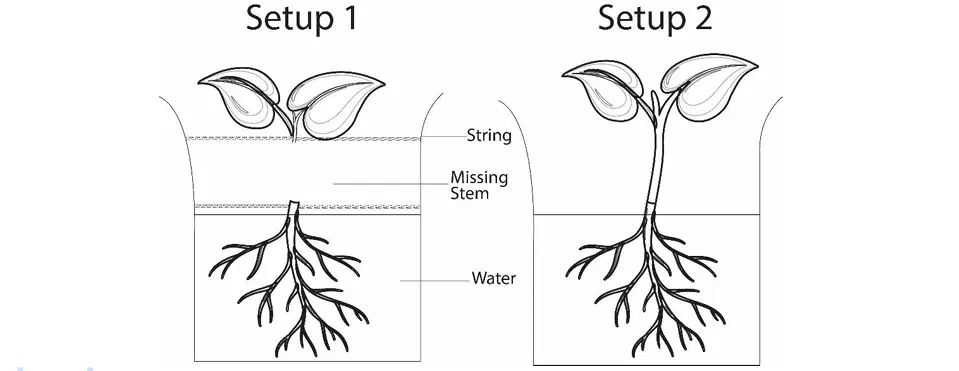
Alit set up 2 experiments as shown below. He placed both set-ups in an area which was brightly lit and well-ventilated. One of them is the control set-up. He removed part of the plant for setup 1.
After a few days, he noticed that the plant in Set-up 2 was healthy but the plant in Set-up 1 had died.
What do you think he was trying to find out through this experiment?
To find out if the stem is crucial in photosynthesis.
To find out if the leaves are crucial in photosynthesis.
To find out if the roots can absorb water.
To find out the function of the roots.
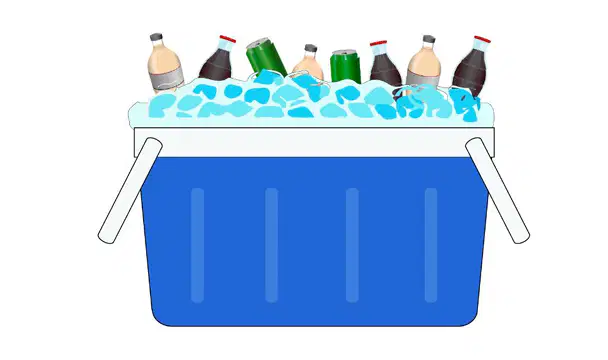
Sarah and her family love to go on picnics. They make their own sandwiches and prepare their own drinks before setting out to the picnic. To keep the drinks cold, they use a cooler box to keep their drinks cold. An example of a cooler box is shown below.
What is a key property of the material chosen to make the cooler?
It is a good conductor of heat.
It is a poor conductor of heat.
It is strong and heavy.
It is colourful.
Which of the following statements describe how the cooler keeps the drinks cold?
The cooler allows heat from the inside of the cooler to conduct quickly and so, heat reaches the drinks in the cooler faster, therefore keeping it cold.
The cooler prevents heat from the surrounding air from passing through quickly and reaching the drinks inside, therefore keeping the drinks inside the cooler cold.
The cooler allows heat from the surrounding air to pass through quickly and reach the drinks inside, allowing a heat gain in the drinks keeping it warm.
The cooler prevents heat from the surrounding air from passing through quickly and reaching the drinks inside, which causes the cooler to gain heat and the drinks stay cold.
Which of the following is not an example of matter?
Wind
Rice
Stone
Shadow
Lily brewed a cup of tea and covered it with a glass lid. She noticed after a few mins there were water droplets forming on the underside of the glass lid.
Which process(es) were involved in this observation, from the moment she has poured the hot water into the cup until she covers the lid?
1) Melting 2) Condensation 3) Evaporation 4) Sublimation
Option 2 and 3
Option 1 and 2
Option 1, 2 and 3
Option 1, 2, 3 and 4
Which of the following does not involve heat gain?
Formation of clouds
Boiling water
Dry Ice solid becoming gas
Dry Ice solid becoming gas
Which of the following is incorrect about the life cycles of a dolphin and a shark?
Dolphins give birth to young alive.
Both sharks and dolphins have a 3-stage life cycle.
All sharks lay eggs.
The mother nurses and cares for the new-born calf.
The young of some sharks, like the shortfin mako and the sand tiger shark, eat their siblings while in their mother’s womb.
Female sand tiger sharks, like many animals, mate with multiple males. This results in young being fathered by different males. In order to ensure that the young being born is one of maximum fitness, nature selects the first-hatched embryo to cannibalise its siblings when in the womb, so that it can grow exponentially.
Why is there a need for this to happen?
There are specific nutrients provided by the other embryos which the first hatched embryo requires for survival.
There is insufficient space in the mother shark’s womb.
There is absolutely no nutrition provided by the mother shark.
This is to ensure the species’ continuity, as the fittest offspring will pass down its DNA which is considered the ‘best’ quality to future offspring.
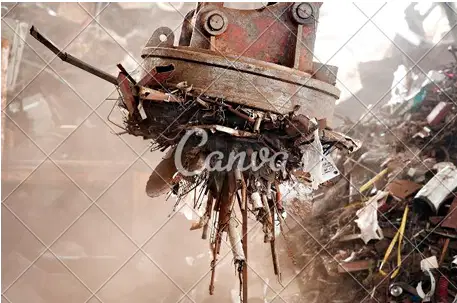
Would it be possible to use a permanent magnet instead of an electromagnet in a junkyard, as shown below? Why?
Yes, as the permanent magnet is stronger and is able to hold more junk items at one time.
No, it is permanent and cannot fulfil its purpose of moving junk items to its respective areas.
No, it is permanent and cannot fulfil its purpose of moving junk items to its respective areas.
No, it is permanent and cannot fulfil its purpose of moving junk items to its respective areas.

A scientist collected samples from different parts of a human digestive tract and studied the presence of digestive juices in that part of the body.
A scientist collected samples from different parts of a human digestive tract and studied the presence of digestive juices in that part of the body.


Which of the following is a natural source of light?
Torchlight
Moon
Sky
A star
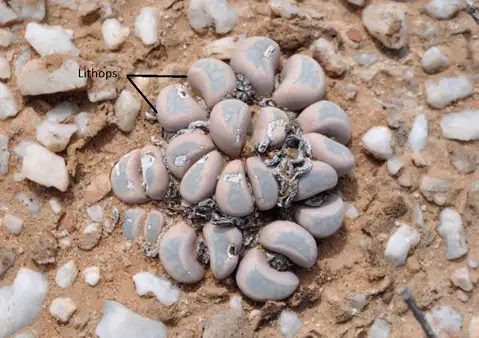
Succulents are plants which have parts of them, usually their leaves, that are thick and fleshy, for storage of water. A commonly known succulent is the cactus. Succulents usually grow in arid conditions. Lithops are a type of succulent, stemless and each plant has 2 leaves that are conical and connect directly to tap roots. They grow in clusters. Most of the plant is underground with only the top exposed at the surface of the soil. Because of the way they look, they camouflage and are known as ‘living stones’. They originate from southern Africa. Below is a picture of Lithops.
Based on the information above and the picture shown, which of the following statements are true about Lithops?
1) They do not have leaves to minimise water loss through transpiration.
2) The ‘flat tops’ on the plant are cells that act like windows, allowing sunlight to enter deep into the plant where there is more chlorophyll.
3) They draw moisture from mist or fog.
4) They are flowering plants.
Option 1 and 3
Option 2, 3 and 4
Option 1, 2 and 3
All of the above
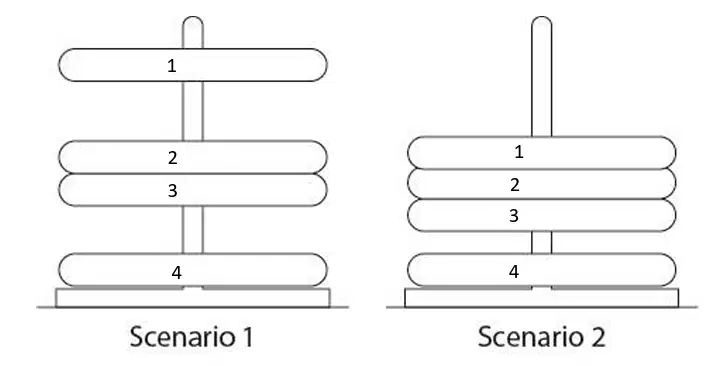
Jessie placed 4 rings onto the levitation tower as shown in the diagrams below, she arranged it differently in 2 separate scenarios.
She says that one of the discs used is a non-magnetic material. Which disc is this?
2
1
3
4
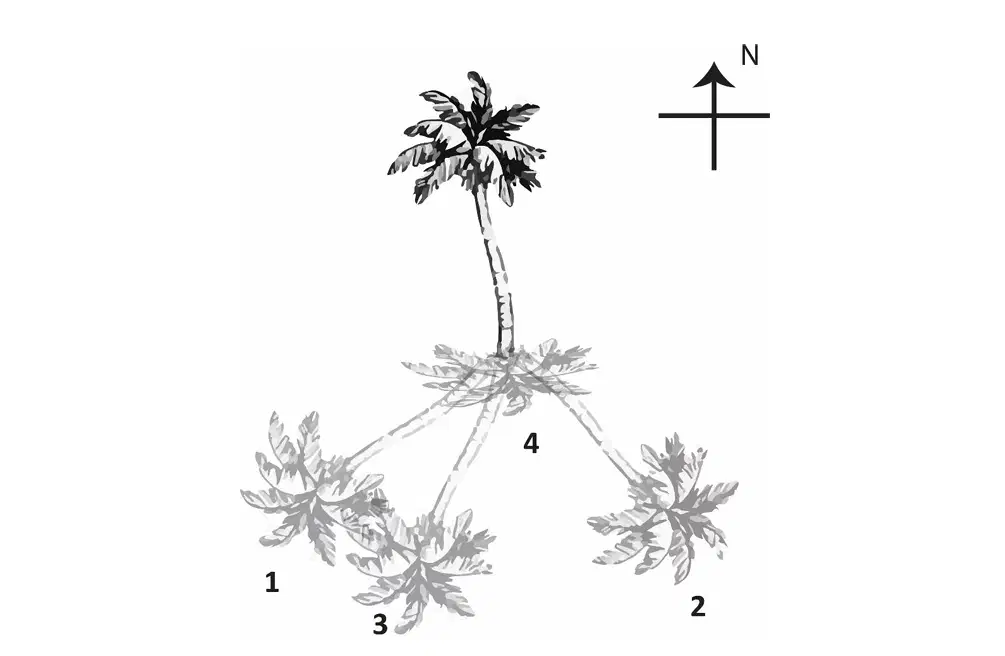
A coconut tree is under the sun in the day time as shown in the diagram below.
Which positions of the shadows correctly match their time of the day?
10am, 11:30am, 12 noon, 2:30pm


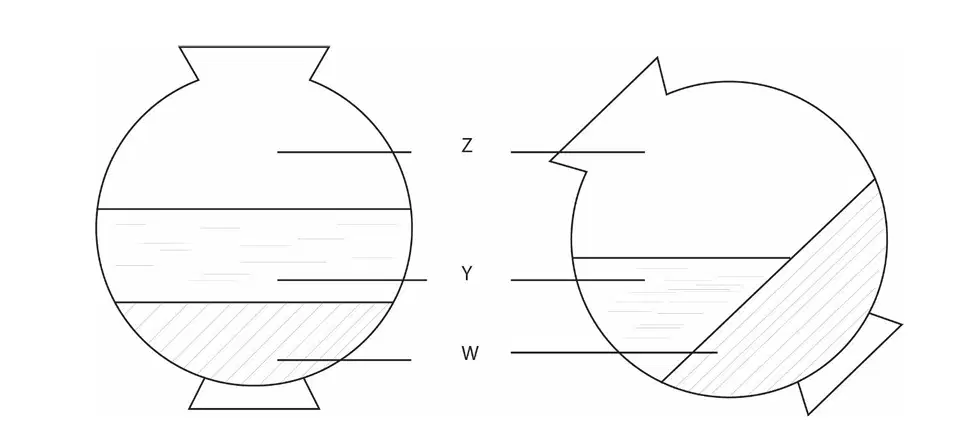
Meng Xi has two vases filled with 3 substances W, Y and Z. Both vases are sealed with an airtight lid. What could these substances be?
Snow - Thick jelly - Hydrogen
Ice - Mud - Mercury
Coffee - Molten iron - Water vapour
Cement - Milk - Air
Prema filled up a kettle with water and put it to boil on the stove. When the water was boiling, she observed that there are white ‘clouds’ forming further away from the spout of the kettle. What are these white ‘clouds’?
Dry steam
Air
Water droplets
None of the above

