
NEW
Font size
 Worksheets
Gov_Units 5 and 6 Review
Total questions: 22
Worksheet time: 11mins
What is the role of the judicial system in interpreting laws and the Constitution?
It creates laws.
It enforces laws.
It interprets laws.
It amends laws.
What does Judicial Review allow the Supreme Court to do?
Create new laws
Decide if a law is constitutional
Enforce laws
Amend the Constitution
Which landmark case established the principle of judicial review?
Brown v Board of Education
Marbury v Madison
Roe v Wade
Plessy v Ferguson
What do the 5th and 14th Amendments primarily address?
Freedom of speech
Due process
Right to bear arms
Freedom of religion
Which case is associated with the rights of individuals during police interrogations?
Marbury v Madison
Miranda v Arizona
Brown v Board of Education
Plessy v Ferguson
What is the main idea behind Judicial Activism?
Judges should strictly follow the Constitution without interpretation.
Judges should use their power to promote justice and social progress.
Judges should avoid making any changes to existing laws.
Judges should focus only on criminal cases.

How does Judicial Activism differ from Judicial Restraint according to the diagram?
Judicial Activism involves strict interpretation of the Constitution.
Judicial Activism avoids changes based on ongoing values.
Judicial Activism involves loosely interpreting the Constitution based on changes and values.
Judicial Activism strictly follows legal precedents.
What does "Due Process" require the government to do when dealing with people accused of crimes?
Follow fair procedures
Ignore the accused
Assume guilt
Delay the trial
What is a civil case?
A dispute between private parties or organizations in court
A criminal offense prosecuted by the government
A case involving international law
A dispute resolved by arbitration
Which amendment protects individuals from being forced to testify against themselves and ensures due process?
5th Amendment
6th Amendment
14th Amendment
19th Amendment
What does the 6th Amendment guarantee?
Right to vote
Right to a speedy and public trial
Prohibition of poll taxes
Equal protection of the laws
The 19th Amendment, ratified in 1920, granted which group the right to vote?
Former slaves
Women
Immigrants
Minors
What did the 24th Amendment, ratified in 1964, prohibit in federal elections?
Literacy tests
Poll taxes
Property requirements
Age restrictions
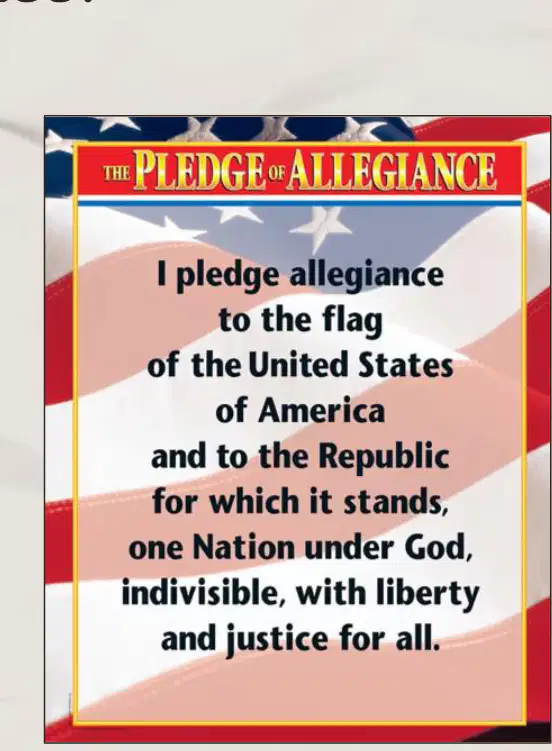
What words have been added to the Pledge of Allegiance?
under God
with liberty
for which it stands
indivisible
Which of the following is an example of a civic responsibility?
Obey the law
Pay taxes
Voting
Serve on juries
Which of the following is considered a duty of citizens?
Petitioning the government
Running for office
Serve on juries
Attending civic meetings
What is the Georgia General Assembly?
The state's executive branch
The state's legislative branch
The state's judicial branch
The state's educational branch
What is a referendum?
A type of election for government officials
A direct vote by citizens on a specific issue or law
A meeting of local government leaders
A survey conducted by the state
In Georgia, which of the following is NOT a use of referendums?
Amend the state constitution
Approve or reject certain local laws
Decide on important community issues
Elect a new governor
Which of the following is a responsibility of county governments in Georgia?
Police and fire protection
Maintaining local roads and bridges
Waste management
Local zoning and building codes
What is one of the responsibilities of city governments in Georgia?
Operating county jails
Conducting elections
Waste management
Providing public health services
Who establishes local governments in Georgia?
Federal government
State government
County government
City government

