
NEW
Font size
 Worksheets
Ecosystem
Total questions: 27
Worksheet time: 1hrs 25mins
Biotic can be defined as
the living part of the environment
the non-living part of the environment
rocks and water
snakes and water
The habitat of a squirrel in dead wood is considered a factor _____
Biotic
Abiotic
cool
secret
Temperature is a factor _________
Biotic
Abiotic
living
cold

In the image, the position of the snake is as ....
Consumer level 2
Producer
Consumer level 1
Decomposer

If the snake becomes extinct, what will happen is ...
The eagle will increase in number
The snake will not get food
The rats will increase in number
The eagle will eat grass
Observe the following food chain!
Plants --> insects --> frogs --> snakes
Based on this food chain, the correct statement is...
plants act as consumer I
insects act as consumer II
frogs act as producers
snakes act as consumer III

What happens to the components of the ecosystem if the population of mice decreases due to farmers carrying out extermination?
Population of plants and foxes increases.
Population of plants and eagles increases.
Population of plants increases and rabbits decrease.
Population of seed-eating birds increases and spiders decrease.
a system of food chains that shows the transfer of energy is termed
food web
food chain
prey
predator
a system of food chains that shows the transfer of energy is termed
food web
food chain
prey
predator

a system of food chains that shows the transfer of energy is termed
food web
food chain
prey
predator

Which of the following animals is a herbivore?
grasshopper
frog
hawk
shrew
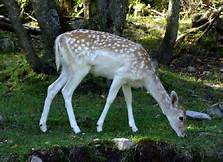
What is a herbivore?
an animal that gets energy by eating other animals
an organism that gets energy only by eating plants
an animal that gets energy by eating both plants and other animals
an animal that only eats herbs

Communities of living and non-living things in their natural environment form
food web
ecosystem
food chain
population

What is a producer?
an organism that obtains energy by consuming other organisms
an organism that uses sunlight to make its own food
an organism that obtains energy by consuming dead organisms, non-living materials, or waste
an organism that uses chemical energy to make its own food

What is a carnivore?
an animal that gets energy by eating other animals
an animal that gets energy by only eating plants
an animal that gets energy by eating both plants and animals
an animal that makes its own energy through photosynthesis
If someone eats salmon (which eats small fish, which eat algae) that person acts as...
primary producer
primary consumer
secondary consumer
tertiary consumer
What is the 1st trophic level of the food chain?
primary producer
primary consumer
secondary consumer
tertiary consumer
Detrivora...
is autotrophic
feeds on dead organisms
kills animals
all are correct
When someone eats steak (from a cow), that person acts as...
primary producer
primary consumer
secondary consumer
tertiary consumer
When nutritional energy passes through the food chain, energy...
is lost
increases
remains constant
increases, then decreases
Heterotroph...
is autotroph
eats other organisms
is a primary producer
is autotroph & primary producer
What is the 1st trophic level of the food chain?
primary producer
primary consumer
secondary consumer
tertiary consumer
Commensalism is
one species benefits, the other is not affected
both species benefit
both species are harmed
one species benefits, the other is harmed

What is an ecosystem?
A community of organisms that do not interact with each other and their physical environment.
A biological community of organisms that interact with each other and their chemical environment.
A biological community of organisms that interact with each other and their physical environment.
A community of organisms that do not interact with each other and their chemical environment.
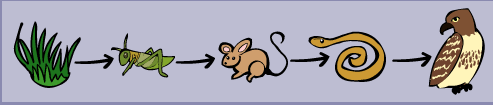
Explain the flow of energy in this food chain (who provides energy to whom).
The eagle provides energy to the snake. The snake provides energy to the mouse. The mouse provides energy to the grasshopper, which provides energy to the grass.
The mouse provides energy to the eagle. The snake provides energy to the grasshopper. The grass provides energy to the snake.
The grass provides energy to the grasshopper. The grasshopper provides energy to the mouse. The mouse provides energy to the snake, which provides energy to the eagle.
The grass provides energy to the grasshopper. The mouse provides energy to the grasshopper. The mouse provides energy to the snake and to the eagle.

