
Font size
 Worksheets
Unit 5 Primary Source Quiz
Total questions: 12
Worksheet time: 17mins
“That which I deplore, and which is a sober, just, and reasonable cause of deep national concern, is that the nation neither has nor cares to have its sea frontier so defended, and its navy of such power, as shall suffice, with the advantages of our position, to weigh seriously when inevitable discussions arise.”
— Alfred Thayer Mahan, “The United States Looking Outward,” Atlantic Monthly, December 1890
How did Alfred Thayer Mahan's advocacy for a strong navy influence U.S. foreign policy at the turn of the 20th century?
It led to the immediate withdrawal of U.S. forces from overseas territories.
It prompted the U.S. to focus solely on land-based military strategies.
It influenced the U.S. to expand its naval capabilities and pursue overseas colonies.
It resulted in the U.S. adopting a policy of complete isolationism.
In what way did Mahan's theories on naval power contribute to the global naval arms race prior to World War I?
They had little to no impact on international naval strategies
They led to disarmament agreements among major world powers
They inspired nations to build larger navies to compete for global influence
They caused countries to abandon naval development in favor of air power
"Right here let me make as vigorous a plea as I know how in favor of saying nothing that we do not mean, and of acting without hesitation up to whatever we say. A good many of you are probably acquainted with the old proverb: 'Speak softly and carry a big stick—you will go far.' If a man continually blusters, if he lacks civility, a big stick will not save him from trouble; and neither will speaking softly avail, if back of the softness there does not lie strength, power."
— Theodore Roosevelt, Minnesota State Fair Speech, September 2, 1901
In what way did Roosevelt's Big Stick Diplomacy alter the interpretation of the Monroe Doctrine?
It limited U.S. intervention in Latin American affairs.
It expanded the doctrine to justify proactive U.S. intervention in the Western Hemisphere.
It transformed the doctrine into a policy of economic isolationism.
It led to the dissolution of the Monroe Doctrine in favor of new international alliances.
How did Theodore Roosevelt's Big Stick Diplomacy influence the construction of the Panama Canal?
It led to the U.S. purchasing the canal zone peacefully from Colombia.
It involved U.S. support for Panamanian independence to facilitate canal construction.
It resulted in a joint U.S.-Colombian venture to build the canal.
It caused the U.S. to abandon plans for a canal in favor of overland routes
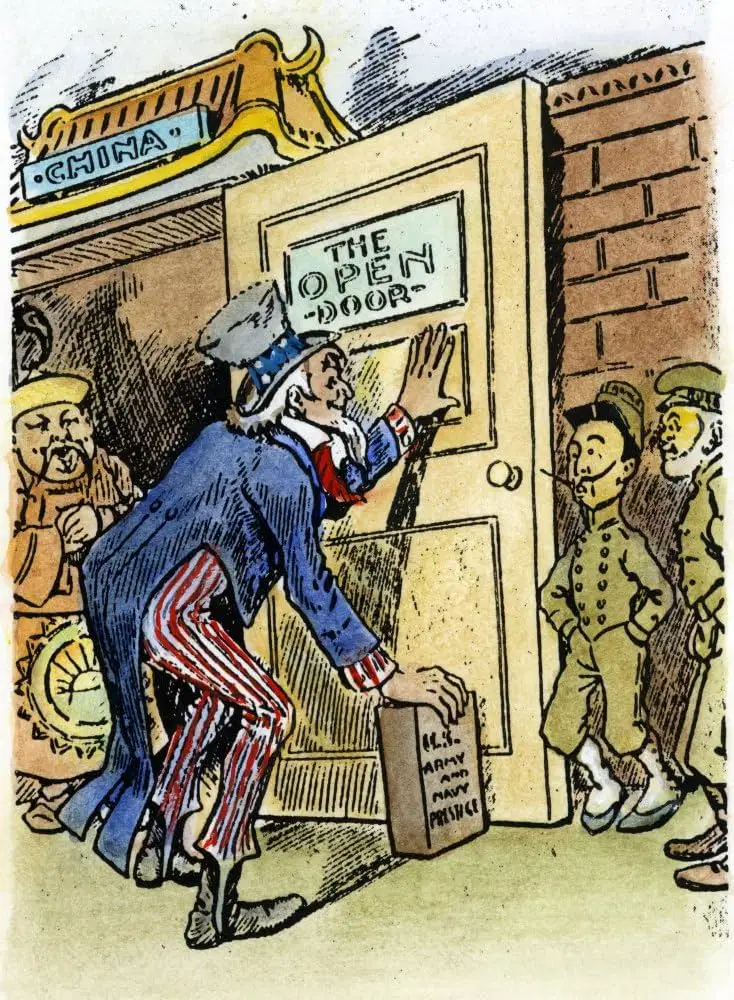
How did the Open Door Policy reflect broader trends in U.S. foreign policy at the turn of the 20th century, and what were its long-term implications for U.S.-China relations?
It showed the U.S. rejecting global trade in favor of isolationism, reducing future diplomatic influence.
It marked a shift toward economic imperialism, establishing a precedent for future U.S. intervention to protect trade interests.
It led directly to military occupation of Chinese ports by American forces.
It reflected American support for European colonization in Asia, aligning with imperial powers.
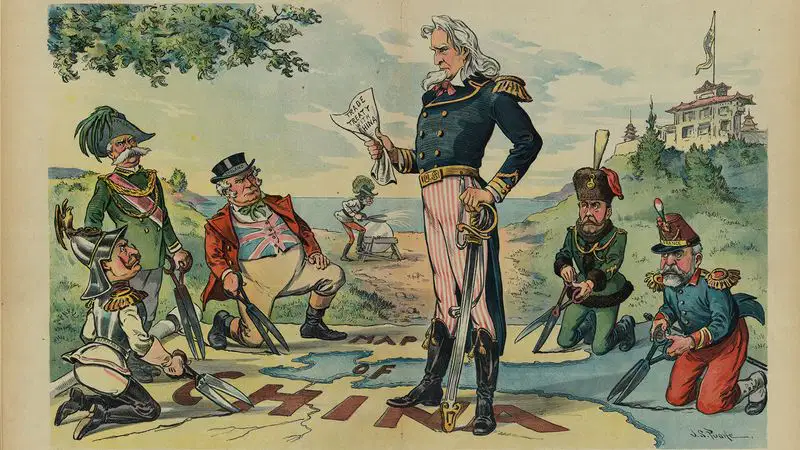
In what way did the Open Door Policy illustrate the tension between American democratic ideals and the realities of imperialism during the era of U.S. expansionism?
It demonstrated how the U.S. fully abandoned democratic values in favor of authoritarian control in China.
It reconciled U.S. domestic policy with its foreign policy, ensuring total transparency in global negotiations.
It highlighted the contradiction of promoting open markets while ignoring Chinese sovereignty and self-determination.
It allowed the U.S. to promote democracy directly within the Chinese political system.
“A general association of nations must be formed under specific covenants for the purpose of affording mutual guarantees of political independence and territorial integrity to great and small states alike.”
— President Woodrow Wilson, Point 14, January 1918
How did Wilson's proposal for a League of Nations reflect a shift in U.S. foreign policy, and what implications did this have for the nation's global role?
It signaled a continuation of U.S. isolationism by rejecting entangling alliances.
It represented a shift toward internationalism, envisioning a leading role for the U.S. in global peacekeeping.
It proposed a return to colonial expansion to prevent future conflicts.
It focused entirely on rebuilding domestic infrastructure rather than engaging in international affairs.
How did opposition to the Fourteen Points, particularly Point 14, reveal broader tensions within American political ideology about the balance between national sovereignty and international cooperation?
The opposition was rooted in fears that the League would interfere with domestic laws and limit American independence in foreign affairs.
Critics feared the League would not go far enough in promoting global empire for the U.S.
Congress rejected the Fourteen Points because they believed isolationism was no longer viable.
There was strong bipartisan support for abandoning the Constitution in favor of international law.
“The Allied and Associated Governments affirm and Germany accepts the responsibility of Germany and her allies for causing all the loss and damage to which the Allied and Associated Governments and their nationals have been subjected as a consequence of the war imposed upon them by the aggression of Germany and her allies.”
— Treaty of Versailles, 1919, Article 231
How did Article 231 of the Treaty of Versailles contribute to political and social instability in Germany in the interwar period?
It strengthened Germany’s economy by encouraging foreign investment.
It led to the rise of nationalist resentment, contributing to the eventual rise of the Nazi Party.
It reduced tensions in Europe by fostering reconciliation among nations.
It helped Germany form stronger democratic institutions through international cooperation.
Evaluate the long-term impact of the War Guilt Clause on international relations leading up to World War II.
It created a stable peace system that prevented future wars in Europe.
It justified future Allied neutrality policies during the rise of fascist regimes.
It fostered economic cooperation between Germany and the Allies.
It contributed to the erosion of diplomatic trust and the rise of aggressive totalitarian regimes.
What does the M stand for in MAIN
Militarism
Militia
Money
Monacrcy
What does the A stand for in MAIN
Alliances
Anarchy
Attendance
Anti-Imperialism
What does the I stand for in MAIN
Independence
Industrialization
Imperialism
Intercolonialism
Match the following causes of the US entering WW1 to their name
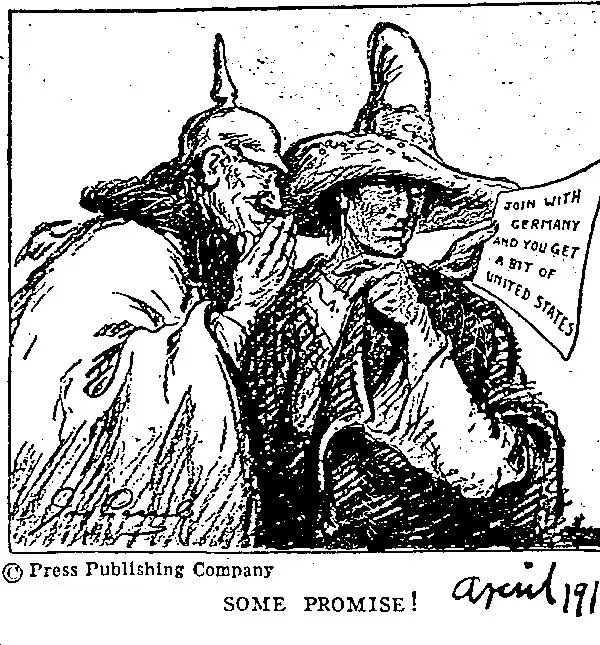
Zimmerman Telegram

Sinking of the Lusitania
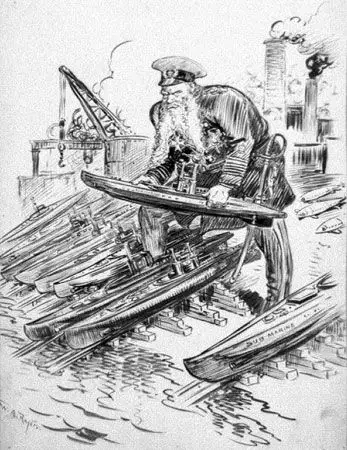
Unrestricted submarine warfare
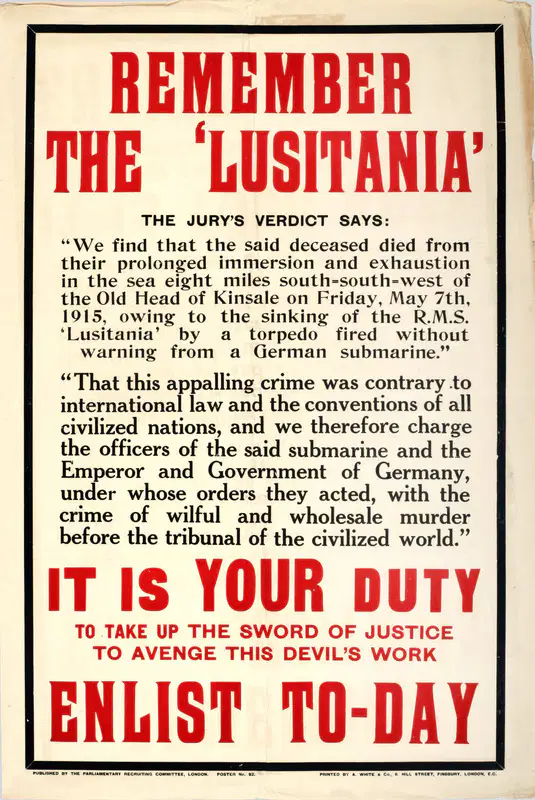
Yellow Journalism
Taft's foreign policy, known as ________________, refers to the idea that through financial investment in foreign nations, the United States would develop a scope of influence that would provide both stability and economic opportunity for trade.
Roosevelt Corollary
Dollar diplomacy
Open Door Policy
Interventionist
Gave US the right to be the "policemen of the Western Hemisphere"
Roosevelt Corollary
Good Neighbor Policy
Open Door Policy
Marshall Plan

