
 Worksheets
Econony: Government & the Economy
Total questions: 15
Worksheet time: 7mins
What type of economy does the U.S. have, where most goods and services, such as cellular service, are offered by private companies?
Command economy
Market economy
Mixed economy
Free economy
In a market economy, who offers most goods and services?
Private companies
The government
Charities
Foreign governments
What is a command economy?
An economy where the government owns and offers all goods and services and decides what those goods and services will cost.
An economy where private companies compete for business.
An economy with no government interference at all.
An economy where only one company provides all services.
In a command economy, there is only one choice and one set of prices for goods and services.
True
False
What is a mixed economy?
An economy with no government involvement.
An economy where the government owns all property.
A market economy in which the government owns some property, offers some goods and services, and makes some rules that affect how businesses can compete.
An economy where only one company provides all services.
In a mixed economy, who is responsible for providing certain goods and services to the public?
The government
Private individuals
Foreign companies
Non-profit organizations
Why is it illegal for one company to buy up all the phone companies and become the only provider?
Because it would create a monopoly, allowing the company to set any prices it wanted, which would be a bad deal for consumers.
Because it would make phone service free for everyone, which is not allowed by law.
Because it would require the company to use only landline phones, not mobile phones.
Because it would force all employees to work for the government.
Which law prohibits companies from any activity 'in restraint of trade,' meaning activity that reduces competition?
Sherman Anti-Trust Act of 1890
Clayton Antitrust Act of 1914
Federal Trade Commission Act
Tariff Act
The Clayton Antitrust Act of 1914 gives the U.S. government the power to prevent companies from merging together if the merger will reduce competition.
True
False
What are tariffs?
Tariffs are taxes on goods from other countries.
Tariffs are discounts given to local businesses.
Tariffs are subsidies for farmers.
Tariffs are free trade agreements.
How does the government protect consumers in a mixed economy?
The government takes action against companies that deceive people and researches things that could put people's health at risk, making rules to keep people safe.
The government allows companies to operate without any regulations or oversight.
The government only protects businesses and not consumers.
The government does not get involved in consumer protection at all.
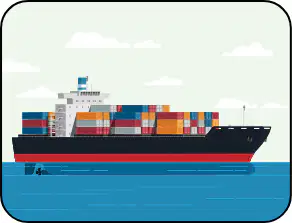
The U.S. and many other countries have agreed to have zero tariffs on cell phones.
True
False

In a market economy, who primarily decides what goods and services should be produced?
The government
Consumers
Large corporations
International trade partners

Which of the following best describes a mixed economy?
An economy where all decisions are made by the government.
An economy that operates without any government intervention.
An economy that incorporates elements of both market (people) and command (government) economies.
An economy where decisions are made solely through market forces without any regulation.
In a market economy, who primarily decides what goods and services should be produced?
The government
Consumers/the people
Large corporations
International trade partners

