
 Worksheets
Science Benchmark 2024-2025
Total questions: 25
Worksheet time: 13mins
Name
Class
Date
1.
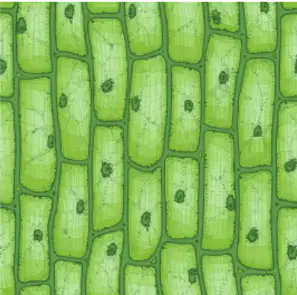
1. Sofia used a microscope to get a closer look at some cells. She made an image similar to the one below based on what she saw. Sofia concluded that these cells were from a plant instead of an animal. What did she see that led her to this conclusion?
a)
* A. cytoplasm
b)
* B. cell walls
c)
* C. cell membranes
d)
* D. nuclei
2.
2. A student finds a puddle of water in a garden and takes a sample. He wants to perform an experiment to determine if there are living things in the water. How could he collect data that would provide evidence of living things?
a)
* A. measure the weight of the sample over several days to see if the weight increases
b)
* B. examine the sample under a microscope to see if cells are present
c)
* C. determine the amount of oxygen and carbon dioxide present in the water
d)
* D. observe the water closely to look for particles that are large enough to be seen
3.
3. In an organism, how are cells related to tissues?
a)
* A. Groups of tissues cooperate to form cells.
b)
* B. Cells make up organs, which make up tissues.
c)
* C. Groups of cells cooperate to form tissues.
d)
* D. Tissues make up organs, which make up cells.
4.
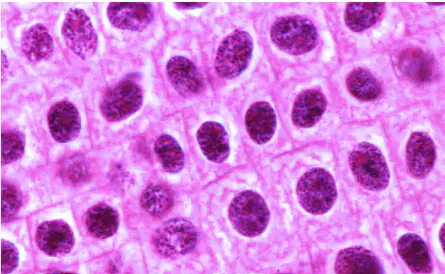
4. The image below shows an onion root viewed under a microscope. What does this image best demonstrate?
a)
* A. New cells only arise from pre-existing cells.
b)
* B. Living organisms are composed of one or more cells.
c)
* C. Each cell can perform all functions necessary for life.
d)
* D. Cells of different organisms have a similar composition.
5.
5. In many multicellular organisms, organ systems interact in order to achieve a stable internal
environment within the organism. Which of the following choices correctly describes how the nervous and muscular system work together?
a)
processing nutrients and expelling wastes from the body
b)
processing and responding to sensory information
c)
taking in nutrients and moving them through the body
d)
taking in gases and moving them through the body
6.
6. Which type of cell is most responsible for relaying information to the brain about external stimuli such as heat?
a)
* A. muscle cells
b)
* B. white blood cells
c)
* C. nerve cells
d)
* D. red blood cells
7.
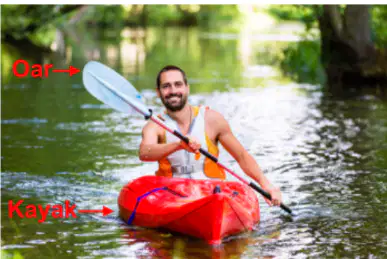
7. John enjoys kayaking in the river by his house, as shown in the picture below. John changes the position of the oars in the water to steer the kayak and avoid rocks in his path. Which statement correctly describes how John is able to steer the kayak?
a)
* A. John's arms send a signal directly to his brain to change the position of the oars.
b)
* B. John's eyes send a signal to his brain; his brain processes this information and sends a signal to his arms to change the position of the oars.
c)
* C. John's brain sends a signal to his eyes; his eyes transmit this signal to his arms to change the position of the oars.
d)
* D. John's eyes send a signal directly to his arms to change the position of the oars.
8.
8. Which organelle is the control center of the cell?
a)
* A. nucleus
b)
* B. chloroplasts
c)
* C. cell membrane
d)
* D. mitochondria
9.
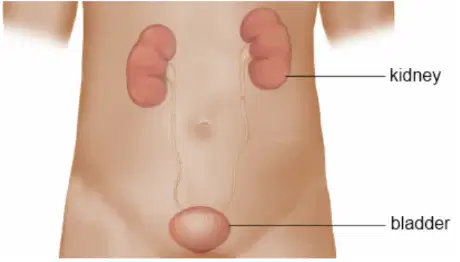
9. Cells produce waste as part of their normal activities. Cellular waste is collected by blood in the circulatory system. The kidneys are organs that filter cellular waste from the blood. This waste is stored in the bladder until it can be excreted from the body. In this example, which system is the circulatory system interacting with?
a)
* A. nervous
b)
* B. digestive
c)
* C. excretory
d)
* D. respiratory
10.
10. A________ is a rigid layer that surrounds a plant cell, providing structural support.
a)
* A. nucleus
b)
* B. cell wall
c)
* C. chloroplast
d)
* D. cell membrane
11.
11. Which of the following life processes requires specialized cells in multicellular organisms?
a)
* A. respiration
b)
* B. digestion
c)
* C. circulation
d)
* D. all of these
12.
12. What body systems interact and work to expel wastes from the body?
a)
* A. nervous and excretory
b)
* B. nervous and circulatory
c)
* C. digestive and circulatory
d)
* D. digestive and excretory
13.
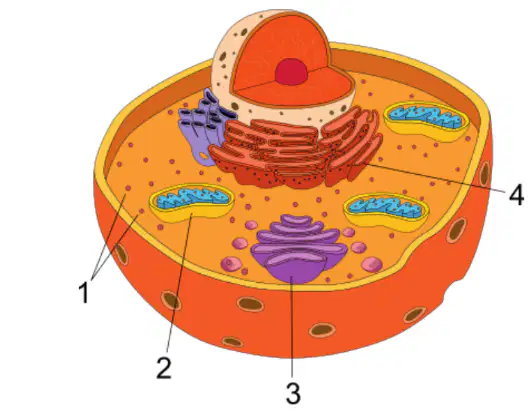
13. A diagram of an animal cell is shown below. What is the function of organelle 2?
a)
* A. to supply the cell with energy
b)
* B. to break down the cell's wastes
c)
* C. to make proteins for the cell
d)
* D. to control the cell's activities
14.
14. What kind of cells send and receive messages?
a)
* A. nerve cells
b)
* B. muscle sells
c)
* C. blood cells
d)
* D. bone cells
15.
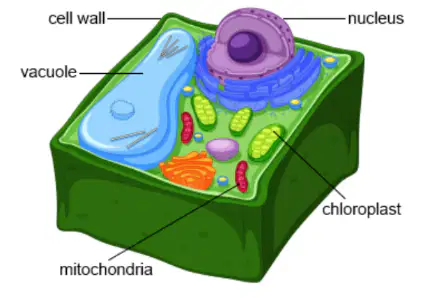
15. The image below shows a model of a plant cell. All cells need energy to live. How do the organelles in the plant cell above work together to get and use this energy?
a)
* A. The vacuole takes in energy from the environment, and chloroplasts change this energy into a form the cell can use.
b)
* B. Chloroplasts make food using energy from the Sun, and mitochondria break down this food to release energy for the cell.
c)
* C. Mitochondria take in food from the environment, and the nucleus breaks down this food to release its energy to the cell.
d)
* D. The nucleus makes energy from materials in the cell, and the vacuole stores this energy until the cell needs to use it.
16.
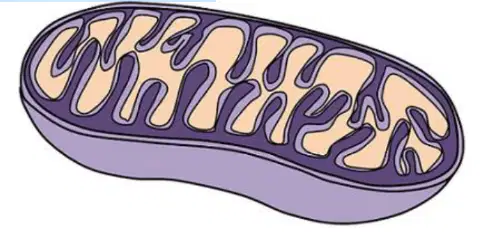
16. The cell organelle below is a mitochondrion. What important life function takes place here?
a)
* A. Proteins are created and packaged for transport.
b)
* B. Sunlight is collected and converted to chemical energy.
c)
* C. Important parts of the cell membrane are manufactured.
d)
* D. Food molecules are broken down to release energy.
17.
17. Cells routinely release wastes as they perform their functions. In the human body, this waste is often released into the bloodstream.
Which organ removes much of this waste from the bloodstream so that it can then also be removed from the body?
a)
* A. the stomach
b)
* B. the kidneys
c)
* C. the heart
d)
* D. the lungs
18.
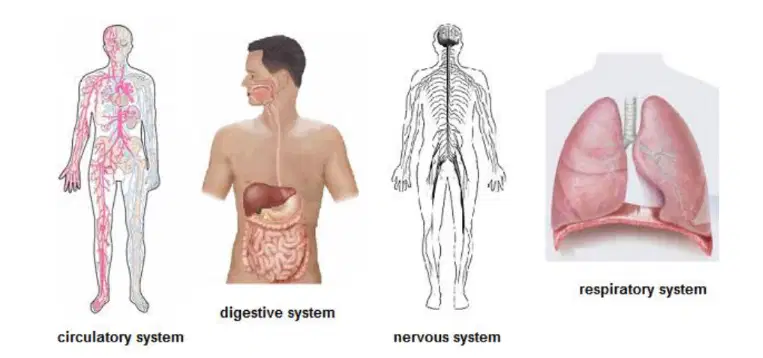
18. Which two body systems pictured above interact with each other to break down and transport the nutrients found in food?
a)
* A. the nervous system and the respiratory system
b)
* B. the respiratory system and the circulatory system
c)
* C. the digestive system and the nervous system
d)
* D. the circulatory system and the digestive system
19.
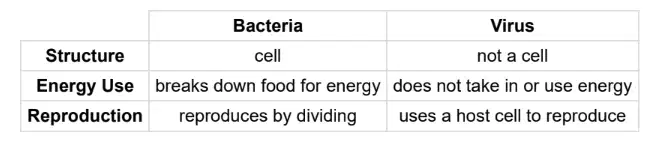
19. While studying a sample of seawater, a researcher identifies a new type of bacteria and a new type of virus. The table below describes some features of each.
a)
* A. Viruses are living because they can reproduce in a host cell.
b)
* B. Bacteria are living because they can survive without food.
c)
* C. Bacteria are nonliving because they have to divide to reproduce.
d)
* D. Viruses are nonliving because they are not made up of cells.
20.
20. Which of the following organelles is found in most plant cells, but is never found in animal cells?
a)
* A. cell membrane
b)
* B. chloroplasts
c)
* C. mitochondria
d)
* D. nuclei
21.
21. In order for the body to respond to external stimuli, it must first receive the stimuli through
the _______.
a)
* A. kidneys
b)
* B. senses
c)
* C. brain
d)
* D. heart
22.
22. Systems in the body interact to carry out life functions. The muscles of the body are part of the muscular system. Which system provides the impulses that cause the muscles to contract?
a)
* A. nervous
b)
* B. digestive
c)
* C. respiratory
d)
* D. circulatory
23.
23. The _______________ system breaks down food, and the _______________ system transports nutrients to the cells of the body.
a)
Digestive, Circulatory
b)
Circulatory, Nervous
c)
Muscular, Skeletal
d)
Digestive, Excretory
24.
24. In which list are body structures arranged from least complex to most complex?
a)
* A. cell → organ → tissue → organ system → organism
b)
* B. tissue organ organism → cell → organ system
c)
* C. tissue → cell → organism → organ → organ system
d)
* D. cell → tissue → organ → organ system → organism
25.
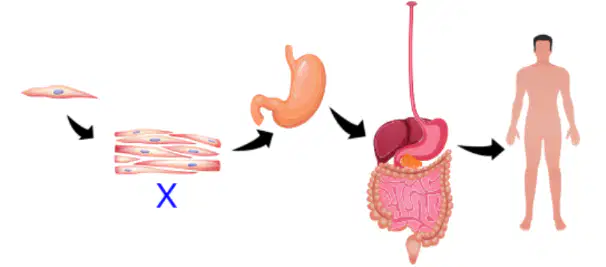
25. The diagram below shows levels of organization in the human body. Which level of organization is the structure labeled with the blue X?
a)
* A. organ
b)
* B. cell
c)
* C. tissue
d)
* D. organism
100 %

