Worksheets
Topic 10, Lesson 3
Total questions: 20
Worksheet time: 10mins

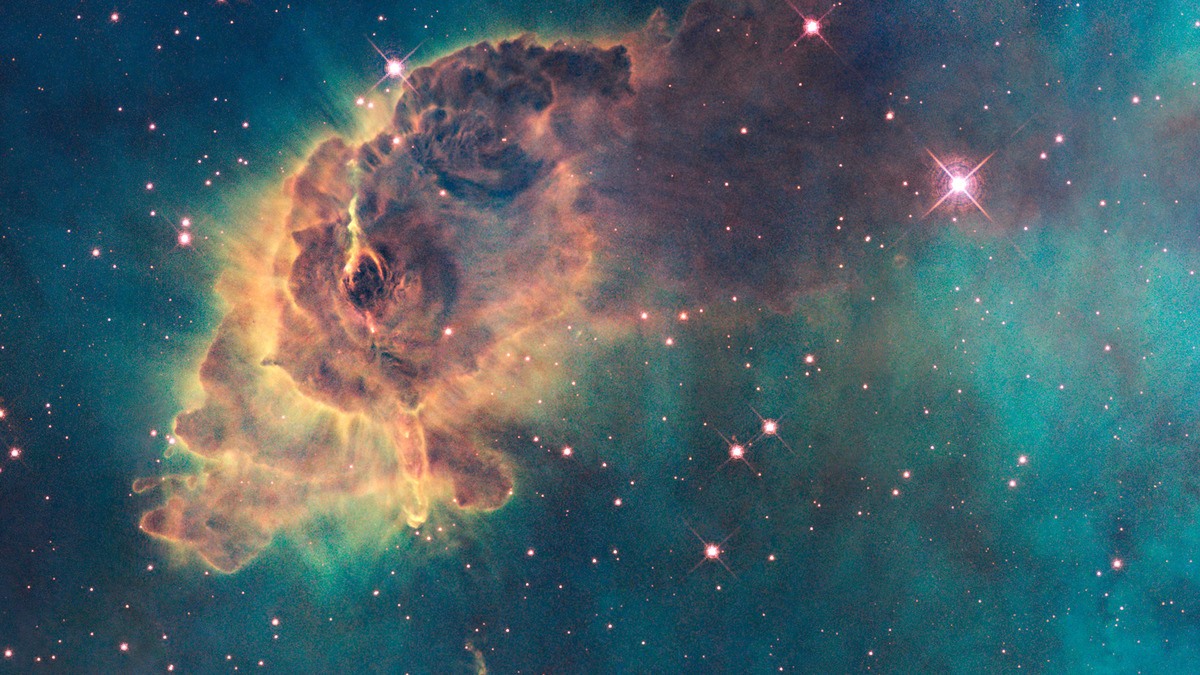
Why are nebulae called "stellar nurseries"?
stars die there
stars live there
stars form there
Larger volume
nebula
star
planet
moon
What force is responsible for star formation?
Fogle force
weight
gravity
no force
"Proto" means _______________ in Greek
first
second
middle
last

Which star will "die" faster and why?
blue star, it has more mass
yellow star, it has less mass
Our Sun is 4.6 billion years old. Where is it in its life cycle?
very young
middle-aged
old

Our sun is an "average" star. What is its life cycle?
nebula, star, red giant, nebula, white dwarf
nebula, star, supergiant, supernova, black hole or neutron star

Betelgeuse is a large star. What is its life cycle?
nebula, star, red giant, nebula, white dwarf
nebula, star, supergiant, supernova, black hole or neutron star
A star's initial mass controls its fate.
True
False

Where is the white dwarf star?
left
right
bottom
center
When stars combine hydrogen and helium it creates energy.
fission
fusion

The sun is around 5500 Kelvins. What color is it?
Red
Orange
Yellow
Blue

After a star runs out of hydrogen, it will fuse helium into....
Oxygen
Nitrogen
Silicon
Carbon

Star A has (2).
hydrogen
helium
sodium
calcium

Star B has (Check all that apply):
hydrogen
helium
sodium
calcium

How bright a star appears from Earth
apparent brightness
absolute brightness

How bright a star actually is. Mark only one oval.
apparent brightness
absolute brightness
Generally, the hotter the star the .............
brighter
dimmer

Place the following stars on the H-R diagram and record their classifications below.
Star A: Supergiant or Giant Star B: Main Sequence Star C: White Dwarf
Star A: Main Sequence Star B: White Dwarf Star C: Supergiant or Giant
Star A: White Dwarf Star B: Supergiant or Giant Star C: Main Sequence
Star A: Main Sequence Star B: Supergiant or Giant Star C: White Dwarf