
 Worksheets
Adv.Sci:Universe
Total questions: 48
Worksheet time: 16mins
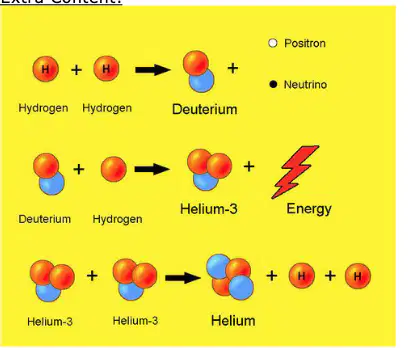
Below is a diagram representing nuclear fusion that occurs in a sun's core. What will happen to the relative amounts of hydrogen and helium in the sun over the next few billion years?
Hydrogen will increase and helium will decrease.
Hydrogen will decrease and helium will increase.
Both hydrogen and helium will decrease.
Both hydrogen and helium will remain the same.
The absolute brightness of a star does not depend on how far it is from Earth. In contrast, the apparent brightness of a star
varies with the position from which it is viewed.
can be calculated from its absolute brightness and mass.
is greater as distance from the sun increases.
is a measure of its light viewed from any position.
Astronomers classify stars according to their
distance from Earth.
color, size, and absolute brightness.
age and parallax.
all of the above.
The distance between stars is typically measured in
Kelvin.
astronomical units.
light-years.
kilometers.
Astronomers can use a spectrograph to determine the various elements in a star's atmosphere because each element absorbs different light wavelengths.
True
False
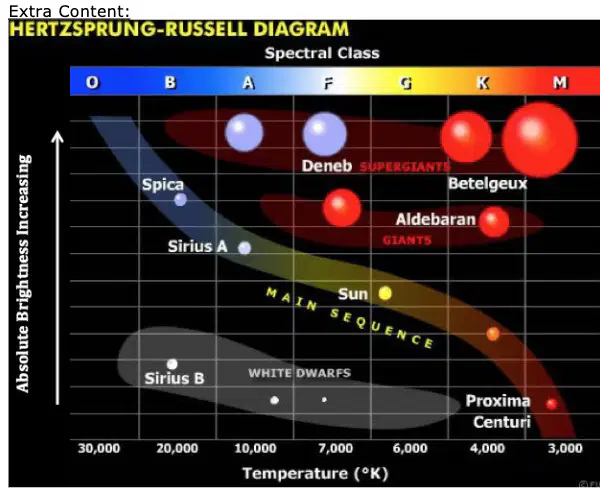
The two characteristics of stars used to plot a Hertzsprung-Russell (H-R) diagram are
color and apparent brightness.
apparent brightness and temperature.
absolute brightness and mass.
color and size.
absolute brightness and temperature.
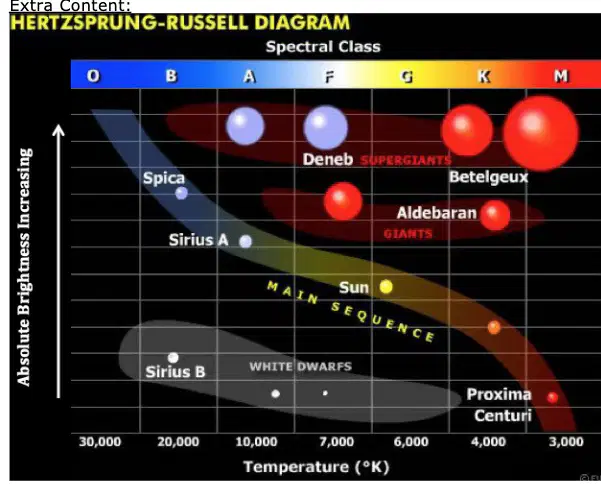
A cool, bright star would appear in which section of an H-R diagram?
lower left
upper left
lower right
upper right
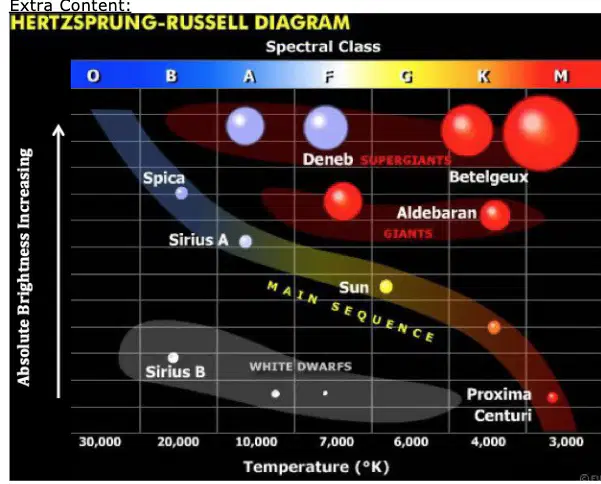
Which star is brighter, Spica or Aldebaran?
Spica
Aldebaran
Unable to determine with this information
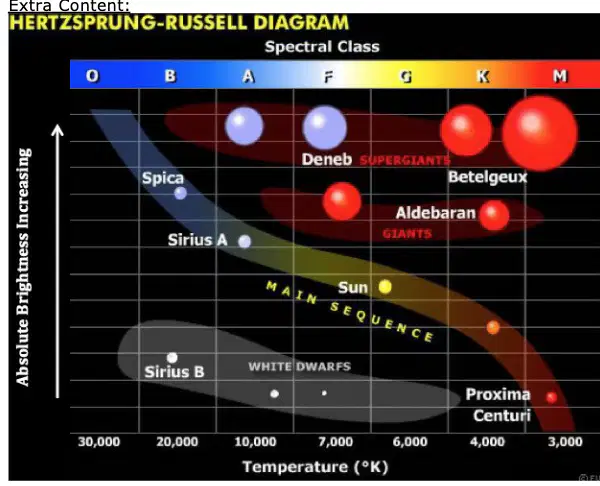
Which star has a higher surface temperature than our star, the sun?
Sirius A
Both A and B
Both B and C
Proxima Centuri
Spica
Hubble's Law states that the speed at which a galaxy is moving away is proportional to
mass of the galaxy.
number of stars in the galaxy.
galaxy's distance from Earth.
age of the galaxy.
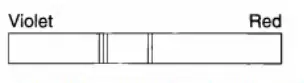
Base your answer to the following question on the diagram below. The diagram represents the bright-line spectrum for an element. A shift in spectral lines indicates that the star is moving
away from Earth.
towards Earth.
in an orbit around the sun.
in orbit around the Milky Way.
Which of the following provides support for the big bang theory?
red shift
cosmic microwave background radiation
elliptical galaxies
all of the above
both a and b
The Milky Way is an example of a (an)
nebula.
elliptical galaxy.
irregular galaxy.
spiral galaxy.
The main sequence lifetime of a star is dependent upon the star's
composition
mass
absolute brightness
distance to another star
The most abundant element in most stars is
hydrogen.
helium.
argon.
oxygen.
nitrogen.
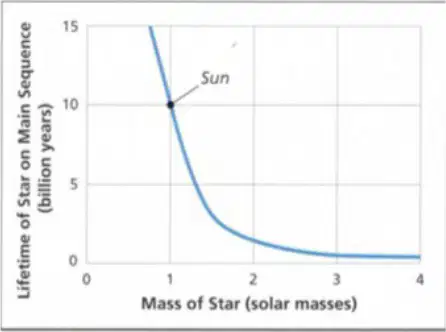
About how long will the sun spend on the main sequence?
10 million years
500 million years
1.0 billion years
10 billion years
15 billion years.
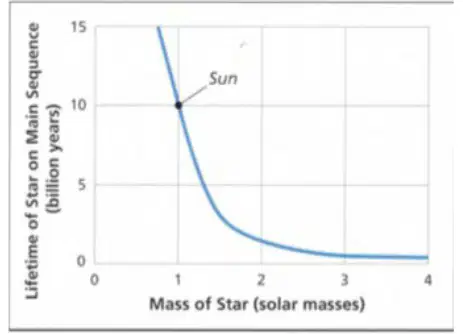
Use the graph to answer the question. A star with 3 times the sun's mass has a main sequence lifetime of about
500 million years.
1.5 billion years.
7.5 billion years.
10 billion years.
15 billion years.
Which sequence of events describes the big bang theory? Begin with the earliest event.
Explosion; atoms form; stars form; all matter concentrated at a single point.
All matter concentrated at a single point; explosion; atoms form; stars form.
Explosion; stars form; all matter concentrated at a single point; atoms form.
All matter concentrated at a single point; atoms form, explosion; stars form.
Explosion; all matter concentrated at a single point; atoms form, stars form.
Stars form from
planets.
black holes.
white dwarfs.
nebulas.
quasars.
Place the following events in the evolution of a high-mass star in the correct sequence, beginning with the earliest event.
A. red giant; planetary nebula; protostar; white dwarf; main-sequence star
B. neutron star; supernova; nebula; protostar; main sequence star
C. nebula; red supergiant; planetary nebula; main sequence star; black hole
D. protostar; main sequence star; red supergiant; supernova; black hole
The sun will eventually use up its hydrogen fuel and become a
neutron star.
white dwarf.
black hole.
supernova.
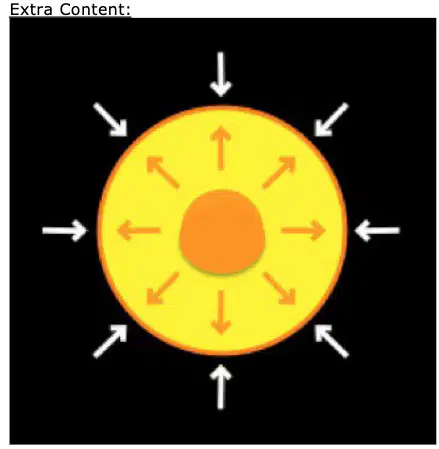
A star remains stable due to two forces that are in balance. Use the diagram to describe those forces.
The white arrows represent pressure and the orange arrows represent gravity.
The white arrows represent pulsars and the orange arrows represent gravity.
The white arrows represent gravity and the orange arrows represent pressure.
The white arrows represent gravity and the orange arrows represent pulsars.
Galaxies are classified into four groups based on their
shapes.
sizes.
number of stars.
brightness.
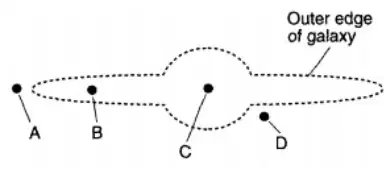
The diagram represents a side view of the Milky Way Galaxy. At approximately which position is Earth's solar system located?
A
B
C
D
The big bang theory explains the
origin of the universe.
life cycle of a star.
red shift.
arrangement of constellations.
all of the above.
What is located between Mars and Jupiter?
Kuiper Belt
Oort Cloud
Reservoir of comets
Asteroid Belt
What increases as one heads out from Mercury to Uranus?
Number of Moons
Period of Revolution
AU
Diameter
All of the above
What is the reservoir of comets called in our solar system?
Asteroid Belt
Comet Alley
Kuiper Belt
Oort Cloud
Which of the following objects does NOT orbit directly around the sun?
planets
comets
asteroids
moons
all of the above
How much of any planet or moon will be illuminated by sunlight at any one time?
100%
75%
50%
Depends on the location of the objects to the sun.
The phases of the moon are caused by
the Earth's shadow on the moon.
the Earth and Moon being tidally locked.
the relative position of the moon as it orbits around the Earth.
the position of the Earth as it orbits around the Sun.
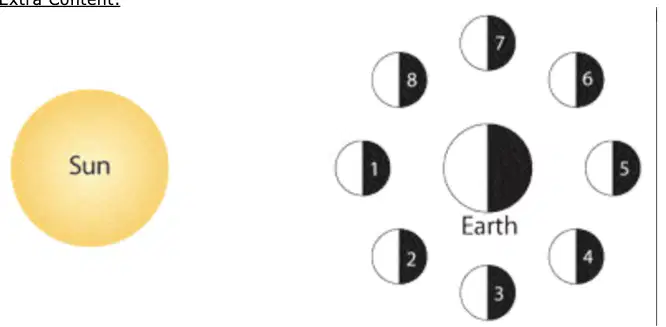
Which moon phase is at position 4?
Waxing Crescent
Waning Crescent
Waxing Gibbous
Waning Gibbous
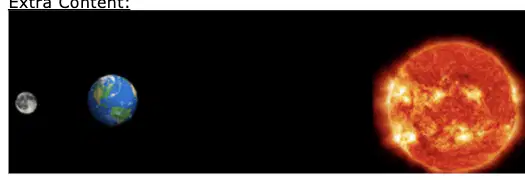
What moon phase does the diagram show?
New Moon
First Quarter
Full Moon
Second Quarter
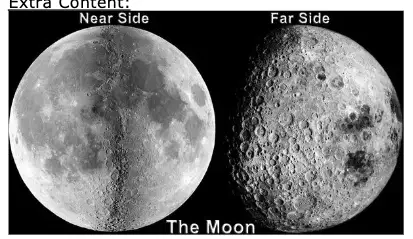
Why do people on Earth only see the near side of the moon and will never see the far side?
Sunlight never reaches the far side.
During the Earth and moon's orbit around the sun, shadows block the moon.
Earth's period of rotation matches the moon's period of revolution.
The moon's period of rotation matches the moon's period of revolution.
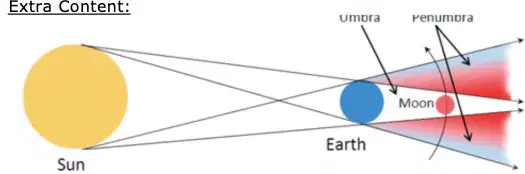
Which type of eclipse is being modeled?
Solar
Lunar
Why does Earth have seasons?
Seasons are caused by the distance that Earth is from the Sun.
Seasons are caused by Earth rotating on its axis.
Seasons are caused by the amount of incoming solar radiation received on Earth.
Seasons are caused due to Earth being tilted on its axis.
Neptune.
A (a) is an object whose surface gravity is so great that even electromagnetic waves, including light, cannot escape.
Answer choices
Black Hole
Parralax
Star Cluster
Quasars
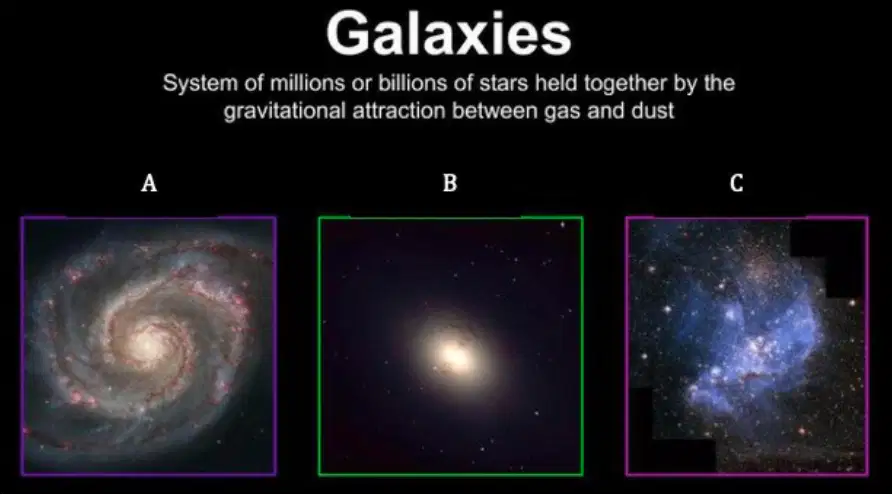
Which image represents an irregular galaxy?
A
B
C
Nobody Knows
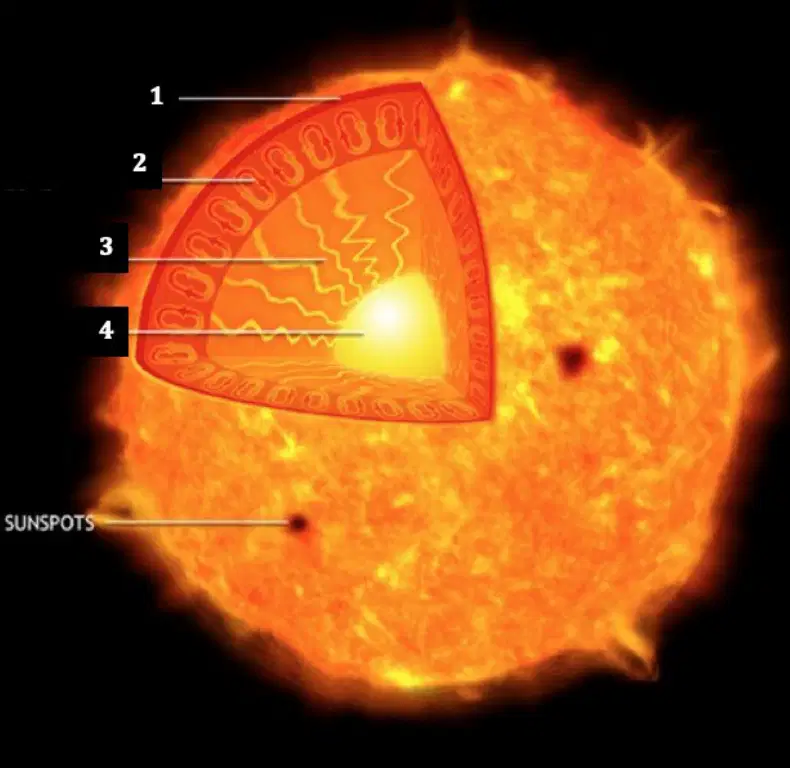
Which number represents the convection zone?
1
2
3
4
Which number represents the radiative zone?
1
2
3
4
Which number represents the core?
1
2
3
4
Which number represents the photosphere?
1
2
3
4
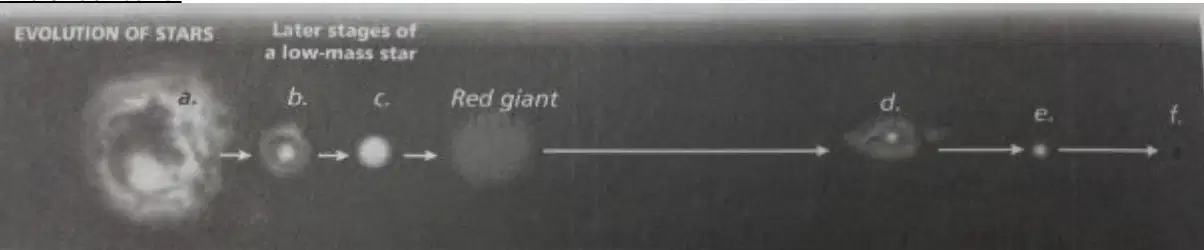
Which letter is a main sequence star?
B
C
D
E
Which letter is a planetary nebula?
A
C
D
E
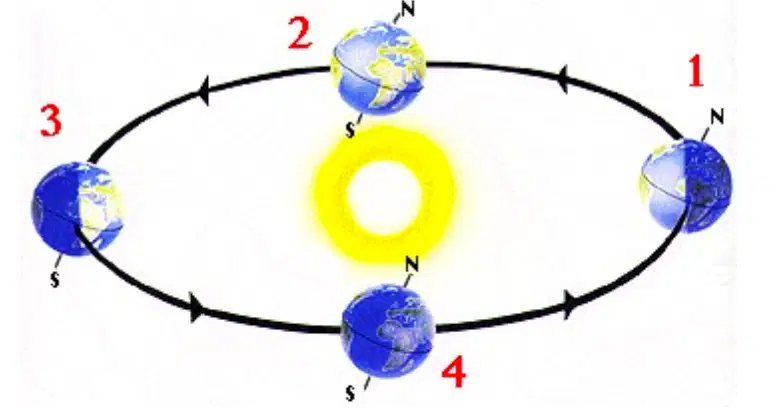
Which positions shows fall in the Northern Hemisphere?
1
2
3
4
Which positions shows summer in the Northern Hemisphere?
1
2
3
4
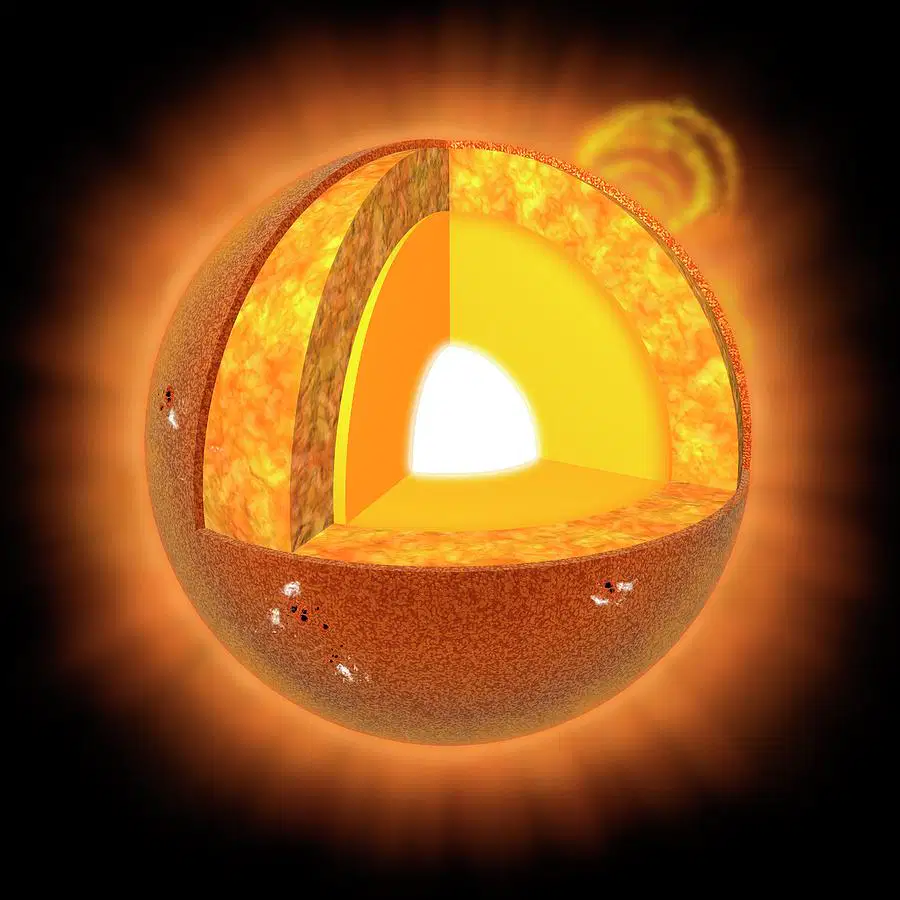
The outer most layer of the sun's atmosphere that looks like a halo during an eclipse.
chromosphere
photosphere
prominence
corona
Reddish loops of gas that link parts of sunspot regions.
sunspots
prominence
solar flare
photosphere

