
Font size
 Worksheets
Kingdom of Living Things
Total questions: 143
Worksheet time: 2hrs 48mins
There are different kingdom of living things:
There are two kingdoms: animals and plants.
There are five kingdoms: animal; plants; monera; protista and fungi.
There are four kingdoms: plants; animals; monera and protista.
There are three kingdoms: animals; plants and fungi.
Which animal belongs to vertebrate animal kingdom? Why?
A snake which is a reptile.
A snake which is an amphibian.
A snail which is a mollusc.
An scorpion which is an arthropods.
Which vertebrate animal lives under the water and breaths through gills?
(a)
In the vertebrate animals we can find the mammals. What do mammals have in common?
Most of them are oviparous and they have got fur.
They are viviparous. Most of them are covered with fur and they produce milk for their babies.Most of them have got lungs.
Most of them live in the land.
They breathe with lungs and they are oviparous.

Whales and dolphins are a type of mammals called:
(a)
Invertebrate animals don´t have any interior skeleton. Nevertheless, some invertebrate have an exterior skeleton like scorpions. This is called:
(a)
Starfish and sea urchins are invertebrate animals. They belong to:
Cnidarians.
Sponges.
Echinoderms.
Arthropods.
Snails, clams and mussels. Apart from being invertebrates they all are eatable. They belong to:
Echinoderms.
Arthropods.
Cnidarians.
Molluscs
This type of invertebrate haven´t got any legs. They are very sticky. They can be terrestrial or aquatic.
Myriapods.
Insects.
Worms.
Sea urchin
Jellyfishes and corals are invertebrate animals that belomg to:
Echinodems.
Sponges.
Cnidarians
Arthropods.
The lobster and the crab belong to:
Crustaceans (a type of arthropod). They have got 10 legs.
They are myriapods (a type of arthropod).
They are insects (a type of arthropod).
They are arachnids (a type of arthropod).
Insects; arachnids, crustaceans and myriapods are all:
Echinoderms.
Cnidarians.
Mollusc.
Arthropods.
Which kind of plant is a pine tree?
A spore-producing plant.
A seed-producing plant.
A seed-producing plant, gimnosperm (because it doesn´t have flowers).
Angiosperm plant.

Which type of seed-producing plant is a sunflower?
Angiosperm or gymnosperm.
(a)

Which type of plant are mosses?
Mosses are seed-producing plants they reproduce by seeds.
Mosses are spore-producing plants and non-vascular, they don´t have roots.
They are sprore-producing plants and vascular.
They are angiosperms.

The mould is a type of fungy:
It is a parasite, causing diseases in animals or plants.
It is a decomposer, feeding on decomposing plants or remains of food. It is multicellular.
It is multicellular.
It is unicellular.

Is the yeast an unicellular or multicellular fungi? Give your reasons...
(a)
Some fungi produce...
(a)
They belong to protista kingdom and they can be unicellular or multicellular. They are very similar to plants because they make their own food through photosynthesis. They live in the water.
Amoebas
Diatoms.
Marine algae.

Bacterias can be beneficial or harmful. They are unicellular and belong to:
The protista kingdom
The Monera Kingdom.
The fungi kingdom.
Which one is the member of kingdom monera?
bacteria
protozoa
mushroom
moulds
Bacteria is a single cell or called _________ organism.
eucaryotes
multicellular
protozoa
uncellular
What is the other name of Cyanobacteria?
algae
blue-green algae
fungi
amoeba
Which one is not the member of kingdom fungi?
yeast
paramecium
mushroom
moulds
Which one is not the examples of kingdom Protista?
bacteria
paramecium
amoeba
euglena
Which of fungi is the unicellular organism?
yeast
mushroom
hyphae
moulds
Why fungi is not grouped in kingdom Plantae?
all fungi do photosynthesis
Fungi have chlorophyl in their body
all fungi does not do photosynthesis
Fungi could process their own food
All living things below are plants, except?
Mosses
Conifers
ferns
yeast
Which of the following is not found in prokaryotes?
complete nucleus
genetic materials
cell wall
cytoplasm
which of the following is autotroph?
kingdom animalia
kingdom plantae
kingdom protista
kingdom monera
Tigers, Jellyfish, Gorillas and Sponges are all part of kingdom _______.
Animalia
Plantae
Fungi
Monera
You would find mushrooms in which kingdom?
fungi
animalia
monera
protista
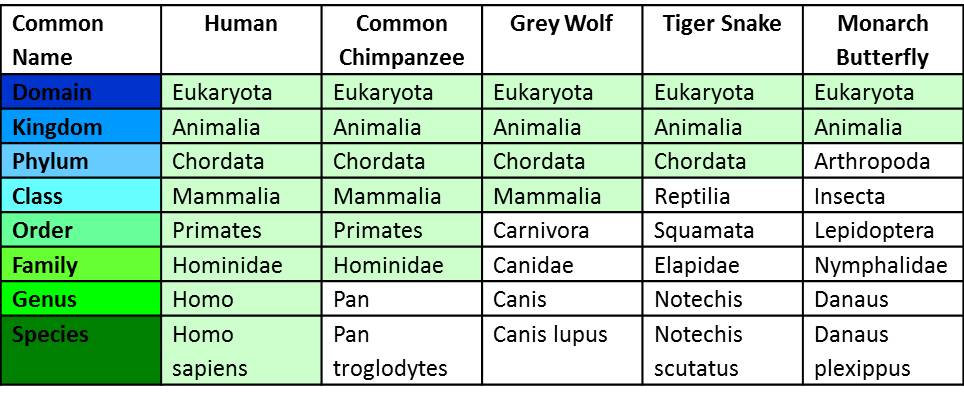
The correct arrangement of classification group is _____.
Kingdom - phylum - order - class - family - species - genus
Kingdom - phylum - class - order - family - genus - species
Kingdom - class - phylum - order - family - genus - species
Kingdom - phylum - class - family - order - genus - species
The correct way to write binomial nomenclature is ____.
Pan Troglodytes
Pan Troglodytes
pan trolodytes
Pan troglodytes

Fagus sylvatica
Ulmus minor
Fraxinus americana
Sorbus aucuparia
Which kind of organism that unicellular, microorganism, and can causing disease is ...
bacteria
mushroom
ferns
mosses
Term given to describe the 2 name naming system is ______.
binomial nomenclature
dichotomous key
binomial key
species name
Which of the following organisms are MOST closely related?
organisms that share a kingdom
organisms that share a genus
organisms that share a family
organisms that share a order
organism that their body covered with fur and breath with lungs is ____.
mammal
pisces
reptile
bird

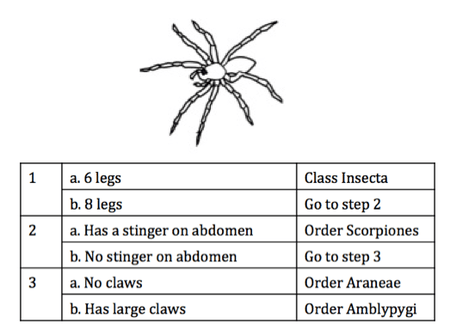
An illustration and a dichotomous key are given. What is the correct classification for this organism?
insecta
scorpiones
aranae
amblypigy
What step do we always start with when using dichotomous keys?
1
2
3
4
When using a dichotomous key to identify organisms, what do we look at?
physical features
environment
weather patterns
diet

The organism below belongs to group ______.
echinodermata
cnidaria
porifera
arthropoda
The scientific name for a kangaroo is Macropus rufus, which indicates the kangaroo’s _______.
Class and genus
Kingdom and class
Genus and species
Class and species

Which phrase best describes the two organisms in the diagram?
same kingdom, same species
different kingdom, different species
same kingdom, different species
different kingdom, same species
Which kingdom includes organisms such as bacteria and archaea?
Kingdom Animalia
Kingdom Plantae
Kingdom Monera
Kingdom Fungi
Which kingdom includes organisms such as mushrooms and molds?
Protists
Fungi
Animals
Plants
Which kingdom includes organisms such as roses and daisies?
Fungi
Protista
Plantae
Animalia
Which kingdom includes organisms such as jellyfish and sea anemones?
Protista
Animalia
Fungi
Plantae
Which kingdom includes organisms such as humans and dogs?
Animalia
Fungi
Plantae
Protista
Which kingdom includes organisms such as oak trees and pine trees?
Animalia
Fungi
Protista
Plantae
Which kingdom includes organisms such as algae and seaweed?
Protista
Fungi
Plantae
Animalia
Which kingdom includes organisms such as insects and spiders?
Kingdom Fungi
Kingdom Animalia
Kingdom Plantae
Kingdom Protista
Which kingdom includes organisms such as frogs and snakes?
Animalia
Plantae
Fungi
Protista
Which kingdom includes organisms such as sponges and corals?
Kingdom Fungi
Kingdom Animalia
Kingdom Protista
Kingdom Plantae
Which kingdom includes organisms such as grasshoppers and crickets?
Plantae
Protista
Animalia
Fungi
Which kingdom includes organisms such as lions and tigers?
Plantae
Fungi
Protista
Animalia
Which kingdom includes organisms such as whales and dolphins?
Mammal Kingdom
Whale Kingdom
Animal Kingdom
Aquatic Kingdom
Which kingdom includes organisms such as eagles and sparrows?
Animalia
Fungi
Plantae
Protista
Which kingdom includes organisms such as sharks and rays?
Protista
Animalia
Plantae
Fungi

The scientific name of asian elephant is Elephas maximus. The genus of asian elephant is….
Elephas
Maximus
Elephant
Animal

Which of the following is the correct organization of the seven taxon of animal classification?
SPECIES –> FAMILY –> GENUS –> ORDER –> CLASS -> PHYLUM –> KINGDOM
SPECIES –> GENUS –> ORDER –> FAMILY –> CLASS -> PHYLUM – KINGDOM
SPECIES –> GENUS –> FAMILY – ORDER –> CLASS –> PHYLUM -> KINGDOM
SPECIES –> FAMILY –> ORDER –> GENUS –> CLASS –> PHYLUM – KINGDOM

The system of Binomial Nomenclature was developed by….
Aristotle
Carolus Linnaeus
Robert Whittaker


Plants make their own energy molecules (food) using photosynthesis. What do we call this type of organism?
Prokaryote
Eukaryote
Autotroph
Heterotroph

Unicellular organisms that lack a nucleus and other cellular organelles are known as...
Prokaryote
Eukaryote
Heterotroph
Autotroph

The most specific level of biological classification is...
kingdom
genus
phylum
species

Kelp (seaweed) is in the ________ kingdom.
Archaea
Protista
Bacteria
Fungi
plant
protist
bacteria
animal
The examples of this kingdom are tomato plants and oak trees. What kingdom is this?
Which kingdom is missing from the following list?
Protista, Fungi, Animalia, Plantae
Monera
Amoeba
Mycelium
Archaea
An organism is made of many eukaryotic cells and eats other, living organisms. To which kingdom does it belong?
Monera
Protista
Fungi
Animalia
This organism spends its day taking in carbon dioxide and releasing oxygen through its stomata. It never eats but can grow many meters tall.
Fungi
Plantae
Protista
Animalia
Which of the following is a unique feature of Kingdom fungi ?
cell wall made up of chitin
cell wall made up of cellulose
autrotrophic mode of nutrition
autotrophic or heterotrophic mode of nutrition
What two parts of the classification system are used for the naming of organisms?
Domain and Kingdom
Genus and Species
Class and Family
Kingdom and Phylum
What kingdom contains multicellular organisms that use photosynthesis to meet their energy demands?
Plants
Animals
Fungi
Protista
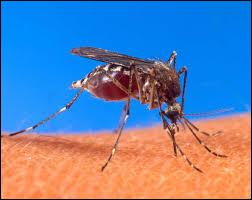
consumers are...
heterotrops
autotrophs
producers are called...
autotrophs
heterotrophs
What is the smallest and most specific group in the classification system?
species
domain
kingdom
Genus
Why do we classify living things
To keep information private
To make finding information easier
To confuse students
To make animals healthier
What is taxonomy?
The study of naming and classifying things
Preserving dead organisms
The science of paying your taxes
My cat's name
In a scientific name, what group does the FIRST name identify?
Genus
Species
Kingdom
Domain
In a scientific name, what does the SECOND name identify?
Genus
Species
Kingdom
Domain

To what genus does a Banana tree belong to?
Musa
Ficus
paradisicum
Bamboosa
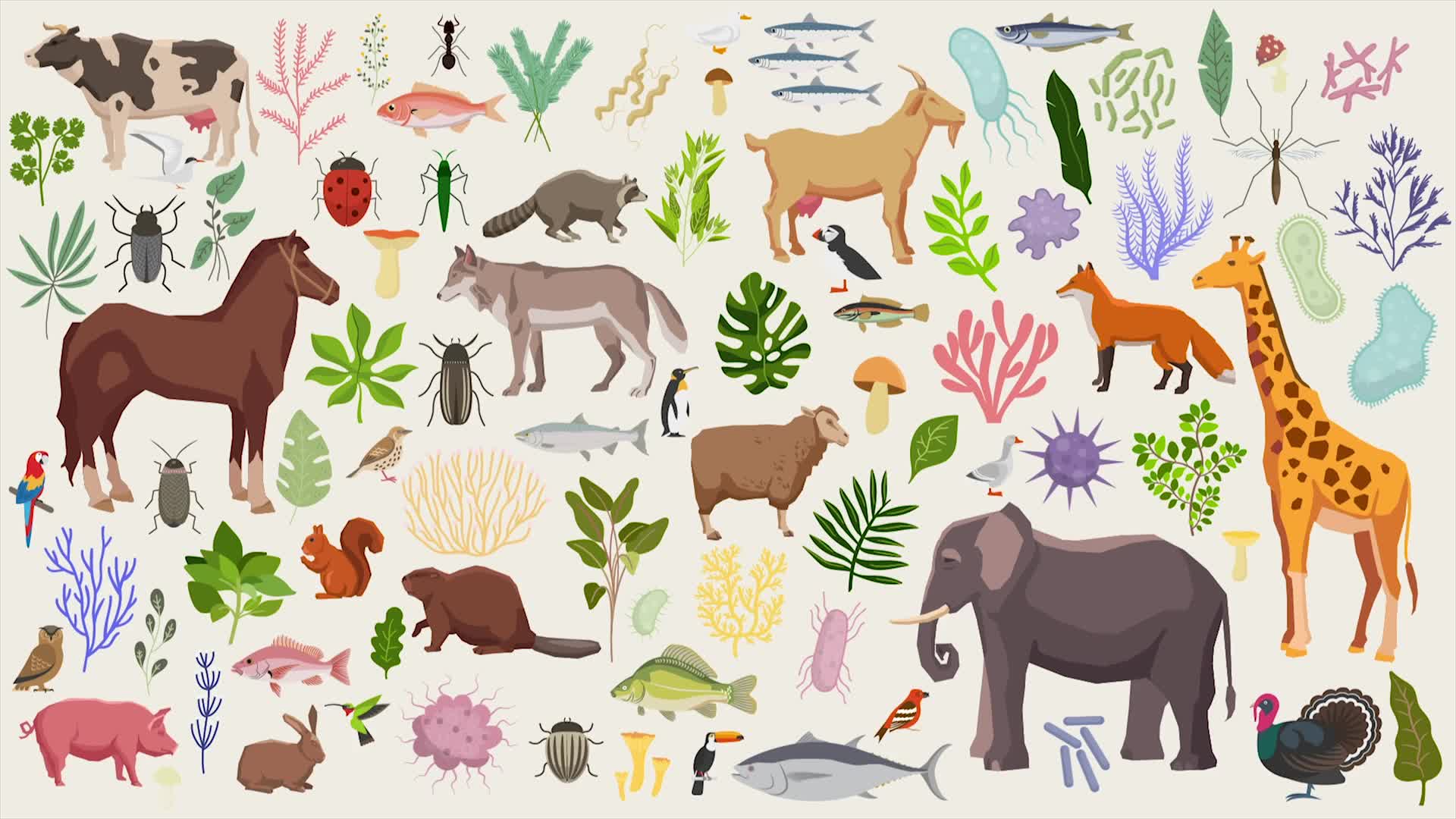

The modern Biological classification system is based on the pioneering work of:
Carl Linnaeus
Isaac Newton
Charles Darwin
John Meritus
Unicellular organisms that lack a nucleus and other cellular organelles are known as...
Prokaryote
Eukaryote
Heterotroph
Autotroph
Plants make their own energy molecules (food) using photosynthesis. What do we call this type of organism?
Prokaryote
Eukaryote
Autotroph
Heterotroph

The two-name naming system used in modern classification of living organisms is called...
cladogram
binomial nomenclature
genetics
phylogeny
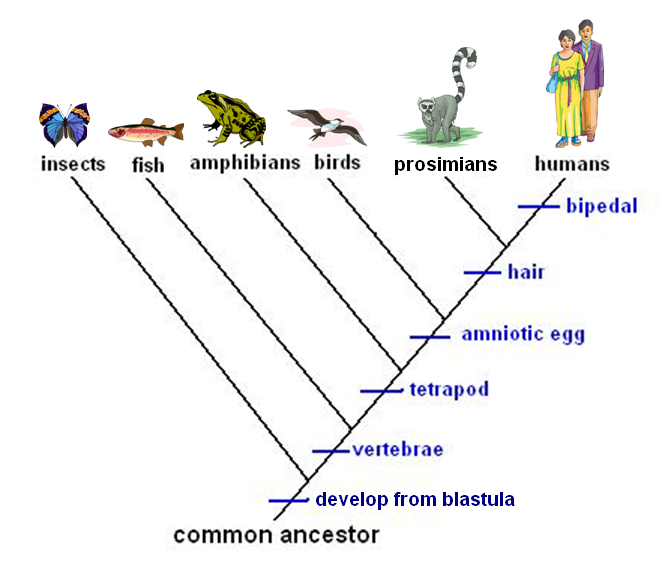

An example of an unicellular organism would be:
monkey
bacteria
spider
human

What is the correct order of taxonomy?
Kingdom, pylum, class, species, genus, family, class
Species, genus, family, order, class, phylum, kingdom
Kingdom, phylum, class, order, family, genus, species
species, phylum, order, class, kingdom, family, genus

Viruses can only reproduce inside a host cell.
True
False

A single celled prokaryote that lives in extremely hot thermal springs in Yellowstone National Park would be in which kingdom?
Virus
Protista
Archaebacteria
Eubacteria
Plants make their own energy molecules (food) using photosynthesis. What do we call this type of organism?
Prokaryote
Eukaryote
Autotroph
Heterotroph
Unicellular organisms that lack a nucleus and other cellular organelles are known as...
Prokaryote
Eukaryote
Heterotroph
Autotroph

The most specific level of biological classification is...
kingdom
genus
phylum
species

The order of the levels of classification is:
Domain, kingdom, phylum, class, order, genus, family, species
Domain, class, kingdom, phylum, order, genus, family, species
Domain, class, kingdom, phylum, order, genus, species, family
Domain, kingdom, phylum, class, order, family, genus, species

Which kingdoms make up the domain Eukarya?
Protista, Fungi, Plantae, Animalia
Archaebacteria, Eubacteria, Protista, Fungi
Plantae, Animalia, Archaebacteria
Eubacteria, Archaebacteria

arachnids and insects?
What kingdoms are prokaryotic?
animalia
fungi
eubacteria
archeabacteria


Protista
In science, grouping objects or organisms to similar characteristics is called
characterizing
classifying
ordering
clustering
Grouping living thing in an orderly way is the job of a
microscopist
chemist
taxonomist
computer specialist
The science of classification is called
taxonomy
botany
astronomy
chemistry
In binomial nomenclature, the name of any organism is made up of its
kingdom and phylum
family and genus
class and order
genus and species
The method of scientific classification used today is based on the classification system developed by
Carolus Linnaeus
M. Courtney Latimer
John Ray
Charles Darwin
A group of similar organisms that can mate with each other and produce offspring is called a
kingdom
phylum
species
genus
A classification system
groups animals according to the way they move
consists of only one species of organism
groups living things according to similar characteristics
The study of how animals have change over time is called
biology
evolution
taxonomy
astrology
The scientist who first understood that animals change over time to adapt to their environment was
Socrates
Galileo
Carolus Linnacus
Charles Darwin
The process by which unrelated organism evolve similar characteristics is called
biology
convergent evolution
ordering
classification

