
 Worksheets
HCS Chemistry sem 2 Final Exam Review
Total questions: 184
Worksheet time: 3hrs 59mins
What is the first thing you must do to solve a stoichiometry problem?
Write a Balanced Equation
Panic
Write an Unbalanced Equation
Ask for help
Look for the same reaction in my notes
What is a Limiting Reagent?
speeds up a reaction
what you run out of first
what you have left over
slows down a reaction
What is a Excess Reagent?
amount you end with
what you run out of first
what you have left over
what you start with
You are driving your car down the road and you have a full tank of gas. You know that your car mixes gasoline with oxygen from the air and ignites it in the engine in a Combustion Reaction. What is the limiting reagent?
Gasoline
Oxygen
Water
Air.
If a chemist calculates the maximum amount of product that could be obtained in a chemical reaction, he or she is calculating the
theoretical yield
mole ratio
actual yield
percentage yield
Fe (s) + S (l) --> FeS (s)
In a similar experiment, 5.00 g of Fe are allowed to react with 6.00 g of S.
What is the mass of FeS formed?
(Hint: Consider the limiting reactant.)
10.0 g
8.0 g
9.5 g
11.0 g
When does a chemical reaction stop?
When the lab is finished
When the excess reactant is used up
When the limiting reactant is used up
Chemical reactions never stop
Mole ratios are obtained from the
balanced chemical equation
periodic table
molar mass

Honors:You react iron with excess oxygen. You collect 350 grams of iron (III) oxide, but your calculations show that you should have collected 375g. What is your % yield?
93.33% yield of iron (III) oxide
375 gram of iron (III) oxide
105% yield of iron (III) oxide
6.67 % yield of Iron (III) oxide
2 H2 + O2 → 2 H2O
What is the mass of water formed when 8 grams of hydrogen gas completely reacts with oxygen gas?
72 grams
144 grams
36 grams
18 grams
What is the percent by mass of oxygen in MgO?
20%
40%
50%
60%
How many molecules are in 7.22 moles of NaCl?
Avg number is 6.022x10²³)
4.35 molec NaCl
4.35x1024 molec NaCl
1.15 molec NaCl
1.15x10²³ molec NaCl
How many moles of magnesium are in 6.02x10²² atoms of magnesium?
(Avg number is 6.022 x 10²³)
1.00x1044 moles Mg
0.100 moles Mg
3.02x1046 moles Mg
10 moles Mg
A student conducted an experiment and observed that the percent yield was only 60%. What could be some reasons for the percent yield being less than expected? Select all that apply.
Some of the product might have evaporated during heating.
Some of the product might have been lost during transfer.
Some of the product might have reacted with impurities.
Some of the product might have been converted into light.
3 Mg + 1 Fe2O3 → 3 MgO + 2 Fe
Identify the mole ratios for the following pairs:
(a) Mg : (b) Fe
(c) Fe2O3 : (d) Fe
1 Fe2O3 : (e) MgO
3
2
1
When reacting Na with Cl2, we calculated that the theoretical yield should be 13 grams. Our actual yield was 12.5 grams. What is the percent yield?
90.4%
104%
96.15%
1.04%
It refers to the substance(s) that are considered to be "ingredients" of a chemical reaction.
reactants
products
catalysts
enhancers

The Formula to make S'mores is:
2C + 1M + G2 → C2MG2. If you have 5 Marshmallows (M), 9 Chocolate Pieces (C), and 9 Graham Cracker Halves (G), how many S'mores can you make?
5
4
8
42
Identify the limiting reagent when 6.00 g HCl combines with 5.00 g Mg to form MgCl2.
Mg + 2HCl --> MgCl2 + H2
Mg
H2
MgCl2
HCl

The amount of moles in CuBr that are in 276.9 g of the compound is (a) .

Balance this equation:
(a) Fe + (b) O2 --> (c) Fe2O3
4
3
2
1
0
What is the first thing you must do to solve a stoichiometry problem?
Write a Balanced Equation
Panic
Write an Unbalanced Equation
Ask for help
What is a Limiting Reagent?
speeds up a reaction
what you run out of first
what you have left over
slows down a reaction
What is a Excess Reagent?
amount you end with
what you run out of first
what you have left over
what you start with
For the Balanced Reaction: 3 Mg + 1 Fe2O3 → 3 MgO + 2 Fe; What is the Ratio of moles of Mg to moles Fe?
3mol Mg / 2 mol Fe
2 mol Mg/ 3 mol Fe
1 mol Fe/ 2 mol Fe
3 mol MgO / 2 mol Fe
Use the equation 2 Al + 3 Cl2 ---> 2 AlCl3. If 2 moles of aluminum and 2 moles of chlorine are reacted, identify the limiting reactant.
AlCl3
Cl2
Al
Gary Busey
If you predicted that 1.5 moles of Magnessium are used in a reaction, and you have 2.0 moles of Magnessium, what type of reactant is Magnessium?
Limiting Reactant
Excess Reactant
Fast Reacter
Non-Reactant
If a chemist calculates the maximum amount of product that could be obtained in a chemical reaction, he or she is calculating the
theoretical yield
mole ratio
actual yield
percentage yield
2 KClO3 → 2 KCl + 3 O2
How many moles of oxygen are produced when 6.7 moles of KClO3 decompose completely?
6.7 mol
1.0 mol
10.1 mol
4.5 mol
2Na + 2H2O → 2NaOH+ H2
How many grams of hydrogen are produced if 120 g of Na are reacted with excess water?
5.2 g
2.6 g
690 g
45 g
2 CO (g) + O2(g) → 2 CO2 (g)
In the formation of CO2 from CO and oxygen, how many Liters of CO2 are produced by the reaction of 8 mols of O2 with an excess of carbon monoxide?
0.178 L
358.4 Liters
704 grams
0.36 grams
Cl2 + 2 KBr → Br2 + 2 KCl
How many grams of potassium chloride can be produced from 356 g of chlorine and 356 g of potassium bromide?
749 g
223 g
479 g
814 g
CH4 + 2 O2 → CO2 + 2 H2O
How many moles of carbon dioxide are produced from the combustion of 110 g of CH4?
13.7 mol
2.75 mol
6.11 mol
6.85 mol
Fe (s) + S (l) --> FeS (s)
In the experiment above, 7.62 g of Fe are allowed to react with 8.67 g of S.
How much FeS is formed?
14.8 g
12.2 g
13.7 g
19.9 g
Identify the limiting reagent when 6.00 g HCl combines with 5.00 g Mg to form MgCl2.
Mg + 2HCl --> MgCl2 + H2
Mg
H2
MgCl2
HCl
When does a chemical reaction stop?
When the lab is finished
When the excess reactant is used up
When the limiting reactant is used up
Chemical reactions never stop
Mole ratios are obtained from the
balanced chemical equation
periodic table
molar mass

How many moles of water could form from 5.00 moles of hydrogen?
5.00 moles
10.00 moles
2.50 moles
No Reaction

How many grams of potassium nitrate would you need to react with 0.901 moles of sulfuric acid?
182 grams of potassium nitrate
901 grams of potassium nitrate
91 grams of potassium nitrate
364 grams of potassium nitrate

How many liters of carbon dioxide at STP are formed from 8.00 liters of oxygen at STP reacting with methane (CH4)?
4.00 liters of carbon dioxide
22.4 liters of carbon dioxide
0.357 liters of carbon dioxide
0.179 liters of carbon dioxide
How many molecules of benzene (C6H6) are combusted if there are 134.4 liters of carbon dioxide produced at STP?
6.02 x 10²³ molecules of benzene
1 mole of benzene
78.1 grams of benzene
22.4 liters of benzene
You react 5.00 moles of iron with excess oxygen and collect 385 grams of iron (III) oxide. What is your % yield?
96.5% yield of iron (III) oxide
399 gram of iron (III) oxide
104% yield of iron (III) oxide
82.4% yield of iron (III) oxide
2 H2 + O2 → 2 H2O
How many grams of water are produced from the complete reaction of 4 grams of hydrogen gas?
36 grams
72 grams
18 grams
9 grams
For the reaction: N2 + 3 H2 → 2 NH3, if 5 moles of nitrogen react with 15 moles of hydrogen, what is the limiting reactant?
None
H2
N2
NH3
How many moles of oxygen are required to completely react with 8 moles of propane (C3H8) in the combustion reaction: C3H8 + 5 O2 → 3 CO2 + 4 H2O?
8 moles
40 moles
16 moles
32 moles
the H in pH stands for
helium
henry
hydrogen
hydroxide
An acid has a pH
higher than 7
lower than 7
7
greater than 14
a base has a pH of
lower than 7
higher than 7
7
it only has a pOH
Human blood has a pH between 7.35 and 7.45. Which of the following best describes human blood?
strongly acidic
slightly acidic
strongly basic
slightly basic
What kind of acid does not completely dissociate?
weak
strong
ionic
pH
In a test of pH levels, a baking soda has a pH of 9 and bleach has a pH of 12. What is true about there relationship?
Both of the solution are Bases
Both of the solution are Acids
The Baking soda is an acid and the Bleach is a base
The baking soda is a base and the Bleach is an Acid.

What color is a neutral pH
Green
Red
Orange
Purple
Many cleaning solutions are bases. Which of the following is a property of most bases?
feels slippery
tastes sour
On the pH scale what numbers are bases?
8-14
0-7
7
1
If the pH of a solution is 5.6 the pOH is
6.5
12.4
8.4
5.6
A pH and a pOH will add up to:
0
7
14
1.0 x 10⁻¹⁴
What is the pH of a solution with a [H+] concentration of 2.5x10⁻⁹?
8.6
5.4
9.6
4.4

Which food is the most acidic?
bananas
lemon juice
orange juice
If a solution has a pOH of 3.7, the [OH-] of the solution is
5.0 x 10⁻¹¹
2.0 x 10⁻⁴
10.3
14
Oranges have a [H3O+] of 1.7 x 10⁻² M. Their pOH is
1.77
12.23
10.91
3.09
If an acid has a pH of 1.4 will it be strong or weak?
strong
weak
Which is the strongest base?
human blood (8)
broccoli (10)
bleach (12)
sodium hydroxide (14)
What is the pH of a neutral solution at 25°C?
0
7
14
1
Which of the following is a characteristic of a strong acid?
Partially dissociates in water
Feels slippery
Has a high pH
Completely dissociates in water
What is the pH of a solution with a hydrogen ion concentration of 1 x 10⁻³ M?
3
11
1
7
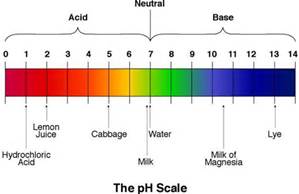
Match the following substances with their acidity level according to the pH range
Hydrochloric acid
Substance with pH less than lemon juice
cabbage
Substance with pH similar to neutral
milk
Substance with pH slightly acidic
When the hydrogen ion concentration goes up, the pH (a) .
gets lower
stays the same
gets higher
goes toward 7
Orange is _______.
acidic (pH < 7)
Basic (pH > 7)
neutral (pH = 0)
Depends on how it is tested.
Many medicines are bitter tasting so are most likely ______
Basic (pH>7)
Acidic (pH<7)
Neutral
Depends on the testing device
Kids often like to simulate a volcano with baking soda and vinegar. Based on our testing in class, what is probably happening?
The acid and base are reacting, releasing gas.
What is the molarity of 3 mole of hydrochloric acid in 3 L of water.
3
1
6
9
The ___ is the thing being dissolved
solute
solvent
What is the formula for molarity?
moles/grams
moles/kilograms
moles/milliliters
moles/liters
Calculate the molarity of the following solution: 1.0 mole of KCl in 750.0 mL of solution.
0.750 M
99 M
1.3 M
2.0 M
How many moles of NaCl are present in a solution with a molarity of 8.59 M and a volume of 125 mL?
1074 mol
0.069 mol
1.07 mol
62.7 mol
How many grams of solute are dissolved in 125.0 mL of 5.00 M NaCl (MM = 58.45)?
0.625 g NaCl
625 g NaCl
36.5 g NaCl
0.04 mol NaCl
How many liters would you need to make a 1 M solution if you have 6 mol of Sodium Hydroxide?
2
3
4
6
What is the molarity of a solution made by adding 1.565 moles of PbNO3 to 500 mL?
300. M
31.3 M
3.13 M
1.56 M
When a solvent contains as much of the solute as it can hold, the solution is said to be
supersaturated
diluted
saturated
unsaturated
Solution where more solute can still be dissolved at the given temperature.
Saturated
Unsaturated
Supersaturated
Homogeneous solution

When 20 grams of potassium chlorate, KClO3, is dissolved in 100 grams of water at 80 ºC, the solution can be correctly described as:
supersaturated
saturated
unsaturated

Which solute is the most soluble at 10 ⁰C?
KI
KClO3
NH4Cl
NH3

How many grams of NaCl are needed to 100 grams of water at 500C? Hover over the graph to see it better.
25
15
38
50
The solute is given in grams. How do you get moles?
Divide by 1,000
Multiply by 1,000
Nothing
Divide by molar mass
What would be the freezing point of a 1 molar solution of NaCl in water? (The Kf = 1.56 oC/mole)
ΔT=i⋅m⋅Kf
-1.56 oC
-3.12 oC
+1.56 oC
+3.12 oC
What happens to the Molarity if the same number of moles are used, but the volume is reduced by half?
It remains the same
It is reduced by half
It is doubled
It is quadrupled
How many L are required to make 3.5 M hydrochloric acid using 1.1 moles?
3.18 L
0.31 L
3.85 L
4.6 L
What is the molarity in 650. ml of solution containing 63 grams of sodium chloride?
2.4 M
0.86 M
1.7 M
0.54 M
Which solution is more diluted?
Solution 1:
1000 mL of water
60g of salt
Solution 2:
500 mL of water
60 g of salt
Not enough information to tell
Solution 1
Solution 2
They are equally diluted
What is the concentration of a solution in parts per million (ppm) if 0.02 grams of NaCl is dissolved in 1 Liter of water?
1.000L of water = 1000g of water and 1000g = 1.000Kg
2 ppm
20 ppm
200 pm
0.2 ppm

What is the percent by mass of a solution made by dissolving 10.0 g of NaCl into 180.0 g of water?
5.26 %
5.56 %
180.0 %
20.0 %

What is the percent concentration of sugar in pink lemonade if 28.0 g of sugar is added to 209 g of water?
14.7 %
5.14 %
13.4 %
11.8 %
The amount of solute actually dissolved in a given amount of solvent is called (a) .
During an epic Fortnite battle, Casey needs to determine the parts per million (ppm) of a health potion containing 0.005 grams of a special ingredient in 1 liter of the potion.
5 ppm
50 ppm
500 ppm
0.5 ppm
Why did the chemistry student fail the concentration test? check only the best answer.
Because he couldn’t handle the pressure!
Because his solutions were too diluted!
Because he lost his molarity!
Because he lost his molarity!
What reaction has the following general formula:
CxHy + O2 −>CO2 + H2O
Combination
Decomposition
Single Replacement
Double Replacement
Combustion
What type of reaction is the following:
BaCl2+2KI −> 2KCl + BaI2
Combination
Decomposition
Single Replacement
Double Replacement
Combustion
What type of reaction is the following:
2KI −> 2K + I2
Combination
Decomposition
Single Replacement
Double Replacement
Combustion
What type of reaction is the following:
C11H24+17O2−> 11CO2 + 12H2O
Combination
Decomposition
Single Replacement
Double Replacement
Combustion
What type of reaction is the following:
2NaHCO3−> Na2CO3+CO2+H2O
Combination
Decomposition
Single Replacement
Double Replacement
Combustion
What type of reaction is the following:
Zn + 2HCl −> ZnCl2+H2
Combination
Decomposition
Single Replacement
Double Replacement
Combustion

Match the type of chemical reaction below.
Synthesis reaction
Na+ Cl2 → NaCl
Decomposition reaction
2KI −> 2K + I2
Single displacement reaction
Pb + FeSO4 ----> PbSO4 + Fe
Double displacement reaction
BaCl2+2KI −> 2KCl + BaI2
Combustion reaction
CH4+O2→CO2+H2O

H2 + O → H2O
-->
mean?
H2 + O → H2O

Matter and mass can not be
Shaken or stirred
Made
created or destroyed
Transferred

The Law of Conservation of Mass states that the total mass of the reactants should be
More than the mass of the products
Equal to the mass of the products
Ignored during the reaction
Less than the mass of the products
How many of each type of atom are in Na2SO4?
(a) Na
(b) S
(c) O
(d) atoms total
Balanced or unbalanced:
2H2 + O2 --> 2H2O
unbalanced
balanced
What the name of the single bond compounds that formed saturated hydrocarbons?
Alkanes
Alkenes
Alkynes
Alkones
Which statement is correct?
All organic compounds contain carbon
All organic compounds contain hydrogen
How many carbon atoms are in propane?
1
2
3
4
____________ groups are atoms, groups of atoms or bond that determine the characteristic of an organic compound.
Aliphatic
Aromatic
Functional
Hydrocarbon
What are Carbohydrates made from?
Carbon
Hydrogen
Oxygen
Nitrogen
Phosphorus
What is the function of a lipid?
store genetic information
long term energy storage
short term energy storage
many many many things...muscle growth, cell transport, lower activation energy...
What is the function of a protein?
store genetic information
long term energy storage
short term energy storage
many many many things...muscle growth, cell transport, lower activation energy...
Which of the following statement(s) is/are true.
The molecules in a gas take up a negligible amount of space in relation to the container they occupy.
Collisions are elastaic, so energy is gained or lost when molecules collide.
The molecules are in constant, linear motion.
All are true
What happens to the Pressure if the Temperature is held constant and the Volume is increased?
Direct, pressure increased
Indirect, pressure decreased
Direct, pressure decreased
Indirect, pressure increased
What happens to the Pressure if the Volume is held constant and the Temperature is decreased?
Indirect, Pressure decreased
Direct, Pressure decreased
Indirect, Pressure increased
Direct, Pressure increased
What happens to the Temperature if the Volume is held constant and the Pressure is increased?
indirect, temperature increased
direct, temperature increased
indirect, temperature decreased
direct, temperature decreased
The volume of a sample of nitrogen is 6.00 L at 35°C and 740. mmHg. What volume will it occupy at STP?
6.59 L
5.46 L
6.95 L
5.18 L
What is the molar mass of NaCl?
50.00 g/mol
55.00 g/mol
60.00 g/mol
58.44 g/mol
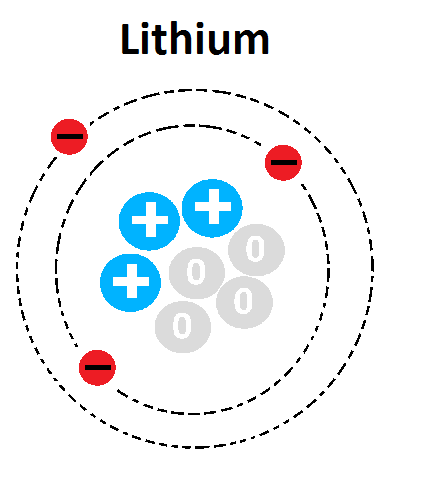
What is the atomic number of this atom?
1
3
4
7
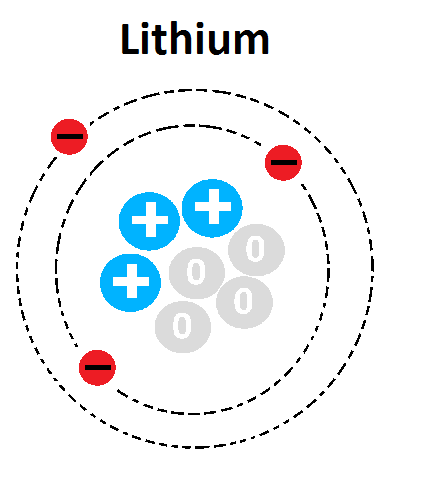
What is the mass number of this atom?
1
3
4
7

What does the 6 represent?
Atomic mass
atomic number
chemical symbol
element name
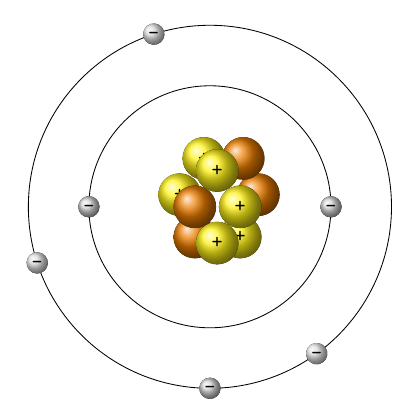
How many electrons does this atom have?
2
4
6
10

What is the mass of 0.75 moles of potassium permanganate (KMnO4)?
0.75 g
118.5 g
82.5 g
0.0084 g

What is the family name of this group of elements?
Alkali metals
Halogens
Noble Gases
Alkali Earth Metals

Which principle explains the recurring trends in the properties of elements when arranged by increasing atomic number?
periodic law
transition metals
lanthanide series
atomic theory
What is the relationship between electronegativity and atomic radius
Larger radius=Larger electronegativity
Smaller Radius= Smaller electronegativity
These are not related
Smaller Radius= Higher electronegativity
According to the octet rule most elements need _______ valence electrons. (H and He need two)
2
8
6
18
How many of each type of atom are in Ca(OH)2?
(a) Ca
(b) O
2 (c)
(d) atoms total
Label the parts of the reaction.
Reactants
Products
Balance this equation:
(a) Fe + (b) O2 --> (c) Fe2O3
In the reaction 2 H2 + O2 → 2 H2O, if you start with 3 moles of H2 and 2 moles of O2, what is the limiting reactant?
H2
O2
None
H2O
What is the percent yield if the theoretical yield is 20 grams and the actual yield is 18 grams?
100%
95%
85%
90%

Read the graduated cylinder to the nearest 0.1 of a milliliter.
76.00 mL
76 mL
76.0 mL
78.0 mL

What is the volume of the ring? In other words, how much water did it displace?
64 mL
68 mL
8 mL
4 mL
How many centimeters are in a meter
1000
10
100
1
kilo is the prefix with a value of
10
100
1000
1
Which is longer one millimeter or one centimeter?
millimeter
centimeter
H2O is an example of a(n):
Element
Compound
Homogeneous Mixture
Heterogeneous Mixture
a substance that cannot be broken down into other substances
matter
mixture
element
solid
solution
a change to a substance that does NOT change the identity of the substance
physical change
physical property
chemical change
chemical property
an example of a chemical change
breaking glass
boiling water
stretching copper into wire
rusting
Anything that has mass and volume.
solid
liquid
gas
matter
mixture
ideal behavior of gases
kinetic molecular theory (KMT)
temperature
Particles move ____ as the temperature increases.
faster
slower
What is the chemical formula for Nitrogen triiodide?
NI
N3I
NI3
None of these
What is the name of C3Cl8 ?
Carbon octachloride
Tricarbon octachloride
Carbon trichloride
Octacarbon trichloride
A covalent bond results from _________ valence electrons.
exchanging
gaining
sharing
trading

Choose the correct shape for this molecule:
Trigonal planar
Trigonal pyramidal
Tetrahedral
Linear

What is the the shape of this molecule according to VSPER theory?
Linear
Tetrahedral
Trigonal Planar
Trigonal pyramidal

A sample of sulfur dioxide occupies a volume of 652 mL at 313 K and 150 kPa. What volume will the sulfur dioxide occupy at STP?
STP = 273 K, 101.3 kPa
1682.6 mL
20.7 mL
492.3 mL
842.1 mL

What type of diagram is this?
Lewis Dot Structure
Bohr Model
Alkali Diagram
Chemical Diagram

When naming covalent compounds,
roman numerals are needed but no prefixes required
both roman numerals or prefixes are not required
both roman numerals and prefixes must be included
prefixes are needed but roman numerals are not required

What experiment was Ernest Rutherford famous for?
The oxygen combustion model
The Definite Proportion Experiment
The Cathode Ray-Tube Dixon Theorum
The Gold Foil Experiment
2H2 + O2 → 2H2O
How many moles of water, H2O, can be produced if 8.00 moles of H2 are used? (Show your work and answer)
Balance this equation:
(a) Fe + (b) O2 --> (c) Fe2O3
1. Which of the following is a physical change?
A. Burning wood
B. Baking a cake
C. Boiling water
D. Rusting iron
2. Which common item is a mixture, not a pure substance?
A. Distilled water
B. Table salt (NaCl)
C. Aluminum foil
D. Orange juice with pulp
4. What is the main ingredient in table salt?
A. Sodium hydroxide
B. Sodium chloride
C. Potassium nitrate
D. Calcium carbonate
5. Which of the following best describes the atoms in a solid?
A. Moving randomly and far apart
B. Packed closely and vibrating in place
C. Flowing past each other freely
D. Breaking apart into ions
6. Why does salt melt ice on sidewalks in the winter?
A. It generates heat
B. It lowers the freezing point of water
C. It absorbs sunlight
D. It prevents water from sticking to surfaces
What common household product contains acetic acid?
A. Baking soda
B. Vinegar
C. Bleach
D. Soap
What does a chemical reaction always involve?
A. Change in color only
B. A physical change in state
C. Production of new substances
D. Change in size of the material
10. Why does soda fizz when opened?
A. Heat escapes from the can
B. The liquid boils
C. Air gets sucked in
D. Carbon dioxide gas is released
Poll 1:
Why do chemists like nitrates so much?
A. Because they’re cheaper than day rates!
B. Because they’re always bonding!
C. Because they blow up the competition!
D. Because they make salty comments!

