
 Worksheets
EOC Prep: 3.1, 3.15, 3.12, 3.13, 2.10, 4.1, 4.2, 4.3
Total questions: 91
Worksheet time: 1hrs 6mins

Example: United States; citizens vote for representatives on local, state and national levels who make laws.
Monarchy
Anarchy
Theocracy
Representative Democracy

Example: Ancient Greece; citizens gathered to make decisions for their city-states and voted directly on issues.
Monarchy
Republic
Totalitarian
Direct Democracy


When the central government is run by a small group of people who all have similar beliefs on how to control the nation.
Autocracy
Democracy
Oligarchy
Parliamentary

Which type of government best fits the attached description?
Dictatorship
Monarchy
Theocracy
Oligarchy

Which type of government best fits the description?
Dictatorship
Monarchy
Theocracy
Oligarchy

Which type of government best fits the description?
Dictatorship
Monarchy
Theocracy
Oligarchy
A government that has rules it has to follow and can not do whatever it wants
Dictatorship
Absolute Monarchy
Unlimited Government
Limited Government
Low Complexity
How does monarchy differ from other forms of government?

The picture below shows a government leader.
Which form of government would have this type of leader?
The scenario below describes a government decision.
-----A self-appointed council amends the country’s constitution.-----
Based on the scenario, which form of government is taking action?

Within this small country, each citizen attends the governmental meetings and each citizen has one vote on all matters. Which form of government is being used?
Socialism
Representative Democracy
Direct Democracy
Oligarchy
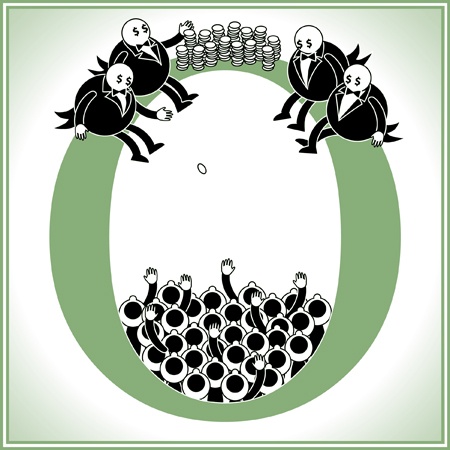
This country is run be a small group who makes all
decisions regarding the laws
and enforcement of the laws. Which form of government is being represented?
Unitary
Monarchy
Autocracy
Oligarchy


In a communist society...
the government controls the means of production
the individual owns the means of production
wealth is distributed evenly amongst society
there is no wealth or private property
Part of FL Constitution that lists basics rights that are guaranteed to all
citizens who live the state
State of the State
Bill of Rights
FL Declaration of Rights
Preamble
What is a similarity between the Florida Constitution and the U.S. Constitution?
both include an amendment process
both include a nine member Supreme Court
neither protects individual rights
neither has an amendment process
Which answer below is a true statement about a difference between the two Constitutions?
The FL Constitution only contains 4,400 words where the US Constitution has over 10,000 words.
The US Constitution is very specific with detailed explanations.
The U.S. Constitution has been amended more than 100 times, where the FL Constitution has only been amended 27 times.
FL is on it's 6th Constitution where the US is only on it's 2nd.
Which Constitution is the Supreme Law of the Land?
Florida Constitution
US Constitution
Neither
They are equal in supremacy
Taylor took notes during his civics class comparing the U.S. Constitution with the state of Florida’s Constitution. However, he forgot to write down which set of features applied to which constitution. How can he tell the difference between them?
He remembers that the Florida Constitution does not contain rights for its citizens, but the U.S. Constitution does.
He remembers that the Florida Constitution does not have an Executive Branch but the U.S. Constitution does
He remembers that there are more ways to amend the Florida Constitution than the U.S. Constitution.
He remembers that the Florida Constitution gives the Judicial Branch power over military forces, while the U.S. Constitution does not.
What part of the U.S. Constitution outlines rights for the people?
Article V
19th Amendment
Bill of Rights
Declaration of Human Rights
Why are both Constitutions considered "living documents"?
Because they really take on a life of their own!
So they can change as times and needs change and evolve
That is what the founders called the first Constitution and it just stuck.
How are the FL and the U.S. Constitution similar?
they both have a preamble
they both have articles
they both have amendments
all of the above
Why do both the U.S. and the Florida Constitutions begin with "We the people"?
to show that the people can vote during elections
to show that the people can write constitutions
to show that power for government comes from citizens
to show that power for government comes from a few citizens
How does the process for amending the Constitution of FL compare to that of amending the US Constitution?
It is more difficult to amend the FL Constitution than the US Constitution
It is more difficult to amend the US Constitution than the FL Constitution
The Florida Constitution and the US Constitution follow the same procedures for amending.
The US Constitution requires two steps for amendments and the FL Constitution can be amended in one.
These are powers shared by the national, state or local government.
Concurrent Powers
Enumerated Powers
implied powers
Reserved Powers
Delegated Powers are also known as this: _______________________
Reserved Powers
Concurrent Powers
Enumerated Powers
Implied Powers
A system of government where powers are divided and "shared" between different levels of government is called?
Nationalism
Socialism
Federalism
Communism
A "municipality", a city, a town and a village are all names given to this type of government.
Federal Government
State Government
A Confederal Government
A local government
These are the powers that are not written into the constitution and so they are "given" to the states as part of the 10th Amendment to the US Constitution. These powers are called__________________________.
Concurrent Powers
National Powers
Reserved Powers
Local Powers
This clause within the US Constitution states that national laws that are passed by the national government are supreme over laws that may be passed by the state governments. This clause is referred to as the?
Elastic Clause
The Necessary and Proper Clause
The Supremacy Clause
The Notwithstanding Clause
This is the final amendment in the Bill of Rights, it states:
”The powers not delegated to the United States by the Constitution, nor prohibited by it to the States, are reserved to the States respectively, or to the people.”
9th Amendment
10th Amendment
1st Amendment
14th Amendment
Laying and collecting taxes, Providing for the common defense, Borrowing money on the credit of the United States...
These powers are found in which article of the US Constitution?
Article 2
Article 3
Article 1
Article 4
What is the main role of local governments?
Governing the entire country
Governing cities, counties, towns, and other local jurisdictions
Overseeing foreign relations
Managing state parks
Which of the following is a service provided by local governments?
Managing local schools
Maintaining national defense
Funding and overseeing public education at a national level
Regulating international trade
Which service is provided by the national government?
Ensuring public safety through local police
Issuing permits for local businesses
Collecting local taxes
Maintaining a strong military
Who is responsible for funding and overseeing public education?
Local governments
International bodies
Private organizations
State governments
What is a key responsibility of the national government?
Managing local infrastructure
Providing public parks and recreation areas
Regulating zoning and land use
Overseeing foreign relations
Which level of government has the highest level of authority?
Local government
State government
National (federal) government
International government
Which of the following is a responsibility of local governments?
Establishing laws that apply to the entire nation
Ensuring public safety through police and fire departments
Administering state healthcare programs
Maintaining state parks
How do state governments differ from local governments in terms of responsibility?
State governments oversee foreign relations
State governments are responsible for local taxes
State governments only manage local parks
State governments have more authority and responsibility
Which level of government is responsible for fixing potholes on your street?
International
Local
State
Federal
What does public policy refer to?
Policies made by private companies
Rules within schools and universities
Decisions by the government to address societal problems
Laws about public spaces
What is the first step in addressing a state or local problem?
Organizing a protest
Identifying the appropriate level of government
Writing a letter to a politician
Starting a petition
What might be a course of action to address a problem?
Moving to a different city
Ignoring the issue
Reaching out to the appropriate government agency
Complaining on social media
How can citizens contribute to positive change in their communities?
By watching the news
By staying indoors
By voting once every four years
By researching public policy alternatives and taking action
Why is it important to take action beyond just identifying problems?
To appear smart
To make a difference and find solutions
To avoid responsibility
To gain social media followers
Any issues that happens inside the United states is called?
Domestic
Foreign
middle earth
on the ground
When it comes to foreign policies, who signs treaties, appoints ambassadors, appoints secretary of state, serve as commander in chief and is chief diplomat?
City Council
President
Governor
Mayor
When it comes to Foreign Policy, who confirms treaties(Senate), Declares war, Provides funding, confirms ambassadors and Secretary of State?
President
congress
Mayor
City Council
National Security, Promoting peace around the world, Spreading Democracy, Promoting Trade, and Providing Aide are the goals of?
the goals of foreign policy
the goals of domestic policy
the goals of Chic Fila policy
the goals of Ms Yanes policy
The Executive department that is responsible for foreign relations is called?
State Department
Army Department
Starbucks Department
Country Department
A formal Agreement between two or more countries is called?
May Flower Compact
Treaty
Common Sense
Thomas Paine
Education is example of?
Foreign Policy
Domestic Policy
Starbuck's Policy
Ms Yanes
Military Alliances between U.S Canada and European countries is
NAFTA
NATO
WTO
MIA
What is an example of a foreign policy issue?
Education funding
Infrastructure development
Healthcare reform
Diplomatic negotiations
What kind of organization is made up of volunteer citizens and not connected directly to any country or government?
International Organization (IOs)
Intergovernmental Organizations (IGOs)
Governmental Organizations (GOs)
Non-governmental Organizations (NGOs)
Which organization keeps peace, develops friendly relations, and works to improve quality of life?
North Atlantic Treaty Organization
United Nations
World Trade Organization
International Court of Justice/World Court
Which organization works to get rid of obstacles to international trade for the benefit of all?
North Atlantic Treaty Organization
United Nations
World Trade Organization
International Court of Justice/World Court
Which organizations are NGOs?
Salvation Army
Red Cross
Action Against Hunger
WTO
United Nations
What was the main reason for U.S. involvement in the Korean War?
To support North Korea
To promote trade with South Korea
To explore new territories
To prevent the spread of communism
What was the outcome of the Vietnam War?
The U.S. gained control over Vietnam
The U.S. established a new government in Vietnam
Vietnam was divided into North and South
Vietnam was reunified under communist rule
What was one of the aims of the Iraq War in 2003?
To prevent a civil war in Iraq
To support the government of Iraq
To find and destroy weapons of mass destruction
To establish a new currency in Iraq
Which method is NOT used by the United States in dealing with international conflicts?
Sanctions
Espionage
Diplomacy
Time travel
What is the role of peacekeeping operations?
To start new conflicts
To maintain peace and security
To gather intelligence
To impose sanctions
How does the United States use diplomacy in international conflicts?
By using economic measures only
By deploying troops
Through negotiations and treaties
By providing military aid to all parties
What is the purpose of humanitarian efforts by the United States in conflict zones?
To promote U.S. culture
To gather intelligence
To establish U.S. military bases
To alleviate suffering and promote stability
Which method of action during conflict is defined below?
Efforts to maintain/improve relations between different countries.
diplomacy
peacekeeping operations
humanitarian aid
sanctions
Which method of action during conflict is defined below?
Spying on or stealing information from another country for political or military advantage.
diplomacy
war
espionage
sanctions
Which method of action during conflict is defined below?
Help focused on improving the health and wellbeing of others.
diplomacy
humanitarian aid
peacekeeping operations
sanctions
Which method of action during conflict is defined below?
Utilizing military forces to wage war, defend our nation or others, and maintain peace.
espionage
military action
war
sanctions
Which method of action during conflict is defined below?
A penalty for disobeying an international rule or law.
diplomacy
military action
war
sanctions
Which U.S. involved conflict is described below?
-Germany proposed Mexico ally with them in exchange for help in recovering lost territories
-Methods used included diplomacy and war
World War I
World War II
Gulf War I
Gulf War II
Which U.S. involved conflict is described below?
-The U.S. sent financial and military support to the Allies
-Japan attacked the U.S. naval base at Pearl Harbor
-Methods used included diplomacy and war
World War I
World War II
Gulf War I
Gulf War II
Which U.S. involved conflict is described below?
-The Soviet Union put nuclear missiles in Cuba within striking range of the United States
-Methods used included military action, diplomacy, espionage and peacekeeping
Cuban Missile Crisis
Bay of Pigs
Kosovo Conflict
Gulf War I
When did the U.S. officially declare war?
World War I & II
Korean War
Vietnam War
Gulf War I & II

