
NEW
Font size
 Worksheets
Basics of India Review
Total questions: 45
Worksheet time: 23mins
Which continent is India a part of?
Africa
Europe
Asia
South America
What geographical feature in the center of India is used for farming?
Thar Desert
Deccan Plateau
Western Ghats
Eastern Ghats
Which mountain range forms the northern border of India?
Himalayas
Andes
Rockies
Alps
What is the Khyber Pass used for?
Skiing
Trade
Fishing
Agriculture
Which river in India is considered very important in Indian culture?
Amazon
Nile
Ganges
Mississippi
What is a monsoon?
A type of storm
A seasonal wind that brings lots of rain
A dry wind
A type of cloud
What is Mohenjo Daro also known as?
City of the Sun
Mound of the Dead
Valley of the Kings
Land of the Ancients
Which of the following was a feature of Mohenjo Daro's advanced society?
Electricity
Water Supply (wells)
Internet
Automobiles
Which of the following was NOT a part of Mohenjo Daro's infrastructure?
Toilets
Public Baths
Skyscrapers
Drainage systems
What is the main religion in India?
Buddhism
Islam
Hinduism
Christianity
What percentage of Indians are Hindu?
50%
80%
13%
25%
Which festival is connected to Hinduism and is considered the Indian New Year?
Holi
Diwali
Eid
Christmas
Which animal is considered sacred in India and often allowed to wander through city streets?
Elephant
Tiger
Cow
Monkey
What is the role of Brahmins in the caste system?
Warriors and Kings
Merchants and Landowners
Priests and Academics
Commoners and Servants
Which caste is responsible for being warriors and kings?
Vaishyas
Shudras
Brahmins
Kshatriyas
Who are considered outcasts in the caste system?
Vaishyas
Untouchables
Brahmins
Kshatriyas
What is the primary occupation of Vaishyas?
Priests and Academics
Warriors and Kings
Merchants and Landowners
Commoners and Servants
Hinduism is the oldest what?
Religion
Language
Culture
Civilization
Who is the founder of Hinduism?
No single founder
Buddha
Mahavira
Guru Nanak
What is the first text for Hindus?
Vedas
Bible
Quran
Torah
What is Karma?
The law of cause and effect
A type of meditation
A Hindu festival
A sacred river
What is reincarnation?
Rebirth of the soul
A type of prayer
A Hindu temple
A sacred text
What is the caste system in India primarily based on?
Wealth
Birth
Education
Religion
In which year did India's constitution ban discrimination based on caste?
1947
1950
1965
1972
What measures were announced in 1950 to help overcome caste-based segregation?
Tax incentives
Quotas in government jobs and educational institutions
Free education for all
Land distribution
Buddhism is mainly practiced where?
Western Europe
South America
Southeast Asia
Northern Africa
Who is the founder of Buddhism?
Confucius
Siddhartha Gautama
Laozi
Mahavira
What is the sacred language for Buddhism?
Sanskrit
Latin
Hebrew
Pali
What was Buddha himself believed to be born as?
A prince
A farmer
A merchant
A warrior
What is the ultimate goal in Buddhism?
Wealth
Nirvana
Moksha
Reincarnation
Where did Buddhism originate?
China
Japan
India
Thailand
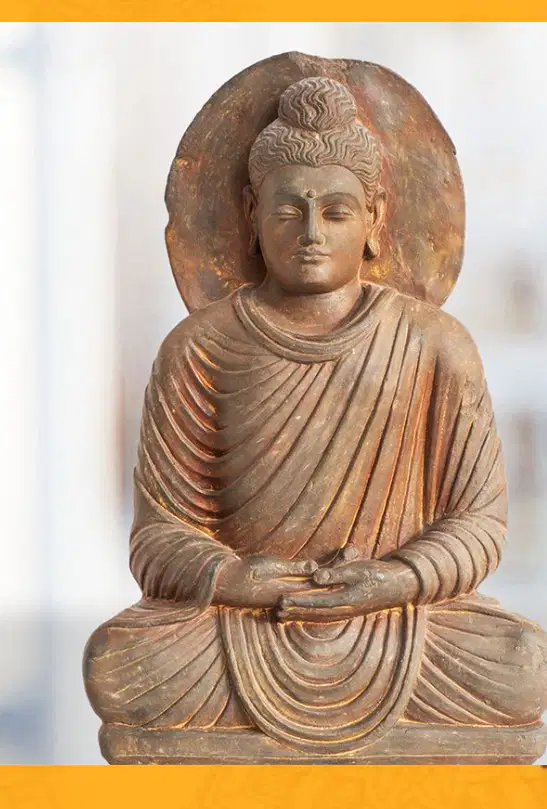
What is another name for Siddhartha Gautama?
The Enlightened One
The Warrior King
The Great Philosopher
The Wise Sage
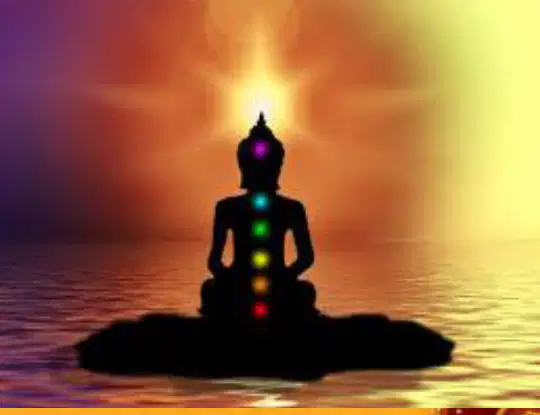
What is the main focus of the Eightfold Path?
Accumulating wealth
Being aware of thoughts and actions
Practicing extreme behaviors
Avoiding meditation
What is the 'Middle Way' as described in the Eightfold Path?
A path of extreme indulgence
A path of extreme asceticism
A balanced approach avoiding extremes
A path focused solely on meditation
When did India gain independence from British rule?
1945
1947
1950
1960
Who founded the Mauryan Empire?
Ashoka the Great
Chandragupta Maurya
Alexander the Great
Harsha
Which ruler of the Mauryan Empire promoted Buddhism and social welfare?
Chandragupta Maurya
Bindusara
Ashoka the Great
Harsha
What was Ashoka known for after the Kalinga War?
Continuing violent conquests
Expanding his empire aggressively
Using a nonviolent and peaceful approach
Ignoring local communities
What did Ashoka do to spread Buddhism?
Built large temples
Sent out missionaries
Wrote religious texts
Held grand festivals
What was the Gupta period in India known as?
The Bronze Age
The Silver Age
The Golden Age
The Iron Age
What significant astronomical theory was determined during the Gupta period?
The Earth is flat
The Earth revolves around the sun
The sun revolves around the Earth
The moon is made of cheese
What mathematical concept, crucial for calculations, was developed as part of these achievements?
Algebra
Geometry
Concept of zero
Trigonometry
Who began nonviolent protests against British rule in 1920?
Jawaharlal Nehru
Subhas Chandra Bose
Mahatma Gandhi
Bhagat Singh
What was the result of India's independence in 1947?
Formation of a single Hindu state
Partition into Muslim and Hindu states
Complete British control
Establishment of a monarchy
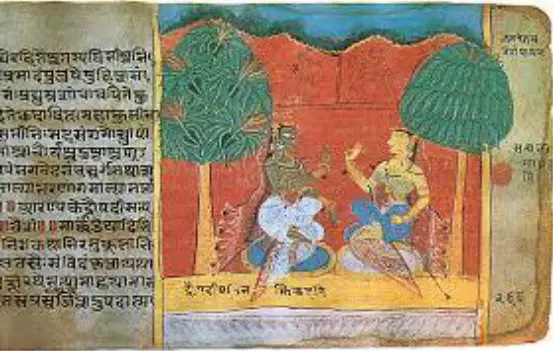
What language was used to write stories during the Gupta period?
Hindi
Sanskrit
Tamil
English

