
 Worksheets
seam quality and stitching techniques
Total questions: 10
Worksheet time: 5mins
Way of treating a seam edge to prevent raveling and to make the seam stronger and longer wearing.
Turned and Stitch Finish
Seam Finish
Plain Seam
Topstitched Seam
At the start of a stitch you should...............
Tie a knot
Locking stitch
Thread a needle
Use a pin
Why might you use a decorative stitch?
To make your work more aesthetically pleasing.
To seal the edge of fabric
To attach some lining material
To sew buttons on
A sewist might choose different stitch lengths for various fabric types because:
different fabrics require different tension settings
it affects the durability and appearance of the seam
it helps in saving thread
it makes the sewing process faster
Which of the following best describes the difference between topstitching and edgestitching?
Topstitching is done on the edge of the fabric, while edgestitching is done away from the edge.
Topstitching is decorative, while edgestitching is functional.
Topstitching is done away from the edge, while edgestitching is done on the edge.
Topstitching and edgestitching are the same.
Reinforcement stitching is used in specific garment areas because:
it enhances the aesthetic appeal of the garment.
it strengthens areas that experience more stress and wear.
it reduces the cost of production.
it makes the garment waterproof.
How do stitch lengths differ between fine and heavy fabrics?
Stitch lengths are longer for fine fabrics and shorter for heavy fabrics.
Stitch lengths are shorter for fine fabrics and longer for heavy fabrics.
Stitch lengths are the same for both fine and heavy fabrics.
Stitch lengths vary randomly for both fine and heavy fabrics.
Stay-stitching prevents:
fraying of fabric edges
stretching of fabric edges
color fading
shrinkage after washing

List three purposes of basting stitches..
To temporarily hold fabric in place, to mark guidelines, and to ease fabric into place.
To permanently sew seams, to add decorative elements, and to reinforce edges.
To create buttonholes, to attach zippers, and to hem garments.
To finish raw edges, to add pleats, and to create gathers.
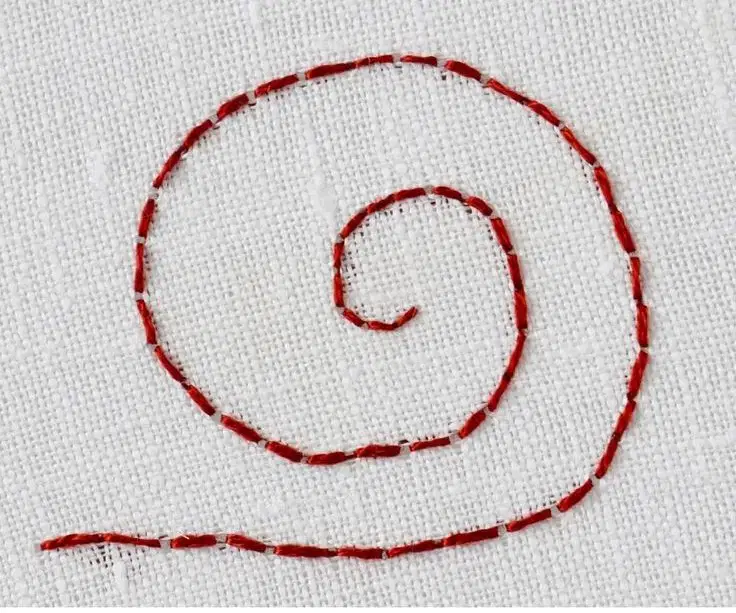
Which stitch is shown above
Running stitch
Chain stitch
Uneven tacking
Backstitch

