
 Worksheets
World War II: Battles and Events
Total questions: 30
Worksheet time: 18mins

Based on the photograph and your knowledge of U.S. history, how did battles such as Okinawa influence U.S. strategy in World War II?
The United States chose to drop the atomic bomb rather than invade Japan to end the war.
The United States chose to focus on winning the war against Germany before winning the war against Japan.
The United States chose to allow forces of the Soviet Union to invade Japan in order to reduce casualties.
The United States chose to intern some of its citizens in the hope that Japan would surrender.
Read the excerpt and answer the question that follows. Yesterday, December 7, 1941—a date which will live in infamy—the United States of America was suddenly and deliberately attacked. . . . —President Franklin D. Roosevelt, address to Congress, December 8, 1941 Which statement correctly summarizes the reason for this speech?
Axis violations of international law caused the United States to hold criminal trials.
German expansion in Western Europe caused the United States to assist France.
Japanese aggression in the Pacific caused the United States to declare war.
Allied defeats on the battlefield caused the United States to develop new weapons.
Which situation influenced Harry S. Truman’s decision to use atomic weapons against Japan?
The U.S. military’s island-hopping campaign against Japan was unsuccessful, and U.S. public opinion was turning against the war.
Strong resistance by the Japanese showed that an invasion of Japan would result in a large number of U.S. casualties.
Many U.S. navy ships were destroyed during battles in the Pacific, and the Allies were not ready to send reinforcements.
The U.S. military needed to move supplies from the Pacific to help with fighting in Europe.
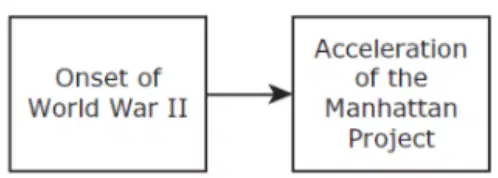
This diagram indicates that during World War II the federal government —
provided technological training for soldiers on the battlefield
developed a new weapon designed to gain a strategic advantage over enemies
instituted a disaster-preparedness program for the civilian population
nationalized industries considered essential to national security
Which event prompted the United States to enter World War II?
The German annexation of Austria
The Soviet occupation of Germany
The landing of Allied soldiers on Normandy Beach
The Japanese attack on Pearl Harbor
What was the PRIMARY objective of the actions represented in this 1945 cartoon?
To stop Japan from cutting off supply lines into China
To prevent Japan from invading China for natural resources
To force Japan to accept terms of unconditional surrender
To punish Japan for its treatment of soldiers at Bataan
Read the list and answer the question that follows. • Japan invades Korea and China. • Germany invades Poland. • Japan attacks Pearl Harbor. Which title correctly replaces the question mark?
Events That Encouraged the United States to Join NATO
Events That Inspired U.S. Nationalism during World War I
Events That Contributed to U.S. Rejection of the League of Nations
Events That Led to U.S. Involvement in World War II
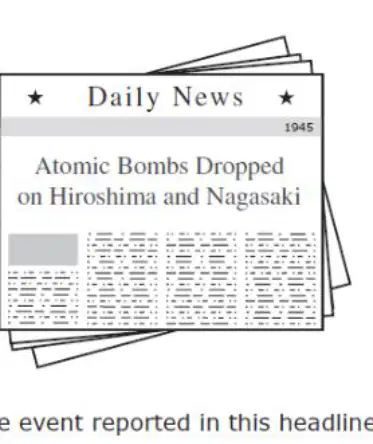
What was the main effect of the event reported in this headline?
The Soviet Union invaded Japan to gain access to natural resources.
The United States initiated the Marshall Plan to help with the rebuilding of Japan.
Germany surrendered to the Allies and promised to help in the fight against Japan.
World War II ended with Japan surrendering to the Allies.

In this excerpt, General Eisenhower is describing his reaction to —
the Bataan Death March
Nazi concentration camps
Japanese American internment camps
the bombing of Hiroshima

Which technological advancement was developed in installations near these cities during World War II?
Long-range submarines
Radio navigation
Atomic bombs
Jet engines

This list highlights some acts of aggression by a European dictator in the 1930s. - invaded and annexed Austria - demanded Czechoslovakia hand over the Sudetenland - invaded Poland in 1939 Which European leader is associated with these acts that led to World War II?
Benito Mussolini
Adolf Hitler
Francisco Franco
Joseph Stalin
Which action prompted the United States to officially enter World War II?
The German use of blitzkrieg tactics in Europe
Japanese military actions in Indochina
German submarine attacks on U.S. merchant ships
The Japanese bombing of a U.S. military base
Which event prompted the United States to enter World War II?
The German annexation of Austria
The Soviet occupation of Germany
The landing of Allied soldiers on Normandy Beach
The Japanese attack on Pearl Harbor
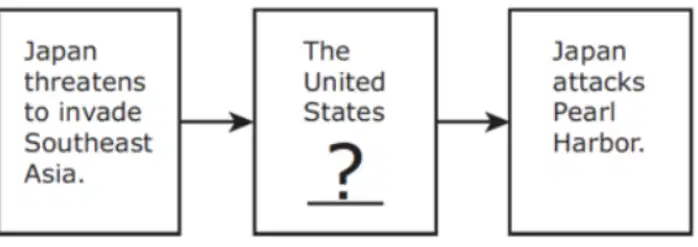
Refer to the cause-and-effect diagram: 'Japan threatens to invade Southeast Asia' → 'The United States ?' → 'Japan attacks Pearl Harbor.' Which action replaces the question mark on this cause-and-effect diagram?
implements an embargo against Japan
sends ground troops to fight the Chinese
bans the sale of weapons to China
appeases Japanese demands for new territory

Read the passage below and answer the question that follows: "There is a solidarity and interdependence about the modern world . . . which makes it impossible for any nation completely to isolate itself from economic and political upheavals in the rest of the world, especially when such upheavals appear to be spreading and not declining. . . . International anarchy destroys every foundation for peace. It jeopardizes . . . the future security of every nation, large or small. It is, therefore, a matter of vital interest and concern to the people of the United States that the sanctity of international treaties and the maintenance of international morality be restored." —President Franklin D. Roosevelt, 1937 President Roosevelt later used similar reasoning as one justification for —
the implementation of the Marshall Plan
dropping atomic bombs on Japan
U.S. involvement in World War II
U.S. participation in the League of Nations

This naval dispatch reads "AIR RAID ON PEARL HARBOR X THIS IS NOT DRILL." The event reported in this dispatch led directly to —
the implementation of sanctions against Japan
U.S. entry into World War II
the establishment of the Truman Doctrine
U.S. annexation of Hawaii
This excerpt is about the development of the atomic bomb during the 1940s. Not all the scientists of the Manhattan Project were satisfied that their voices had been heard in decision-making about the bomb. . . . The Scientific Panel of the Interim Committee was supposed to be the connection between the scientists and the policymakers, but after the scientists of the Met Lab were briefed . . . [the Met Lab scientists] decided to create a “second opinion.” . . . [The Franck] report argued that postwar international control of atomic power was the only way to stop the arms race that would be inevitable if the United States bombed Japan without first demonstrating the weapon in an uninhabited area. . . . [Policymakers] disagreed with the Franck Report.
Concerns were raised over the potential long-term effects of changes in relations between countries.
Prominent scientists were united in agreement about how to proceed.
A postwar scientific alliance with Russia would be guaranteed after a successful demonstration.
Additional testing on smaller Japanese communities would be necessary.
What was one reason Japan attacked the U.S. naval base at Pearl Harbor?
The U.S. strategy of island hopping had disturbed Pacific trade routes.
The Japanese naval fleet had been defeated at the Battle of Midway.
Japanese Americans had been relocated to internment camps.
U.S. trade sanctions had caused shortages of oil, gas, and rubber.
Which phrase best defines the Holocaust?
The U.S. plan to relocate Japanese Americans to internment camps
The Allied plan to liberate concentration camps in Eastern Europe
The Nazi campaign to use genocide to eliminate European Jews
The Japanese military strategy to destroy U.S. aircraft carriers
What was one reason Japan attacked the U.S. naval base at Pearl Harbor?
The U.S. strategy of island hopping had disturbed Pacific trade routes.
The Japanese naval fleet had been defeated at the Battle of Midway.
Japanese Americans had been relocated to internment camps.
U.S. trade sanctions had caused shortages of oil, gas, and rubber.
How did President Harry S. Truman’s decision to drop the atomic bomb affect international relations?
It initiated the arms race with the Soviet Union.
It prompted other nations to begin investigations of war crimes.
It enabled the United Nations to administer territory in Japan.
It led to the establishment of the first global peacekeeping force.
Which situation influenced Harry S. Truman’s decision to use atomic weapons against Japan?
The U.S. military’s island-hopping campaign against Japan was unsuccessful, and U.S. public opinion was turning against the war.
Strong resistance by the Japanese showed that an invasion of Japan would result in a large number of U.S. casualties.
Many U.S. navy ships were destroyed during battles in the Pacific, and the Allies were not ready to send reinforcements.
The U.S. military needed to move supplies from the Pacific to help with fighting in Europe.
Which action prompted the United States to officially enter World War II?
The German use of blitzkrieg tactics in Europe
Japanese military actions in Indochina
German submarine attacks on U.S. merchant ships
The Japanese bombing of a U.S. military base
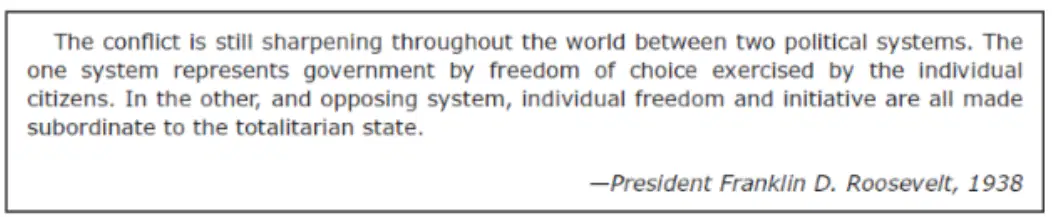
What was the ultimate result of the situation President Roosevelt refers to in this excerpt?
A. A surge of social unrest in South America
B. The outbreak of World War II
C. A shift in favor of the policy of appeasement
D. The overthrow of the monarchy in Russia
In the World War II era, what was the major reason for Jewish immigration to the United States?
To seek guaranteed universal suffrage
To escape famine and drought caused by natural disaster
To seek better educational opportunities
To escape state-sponsored genocide
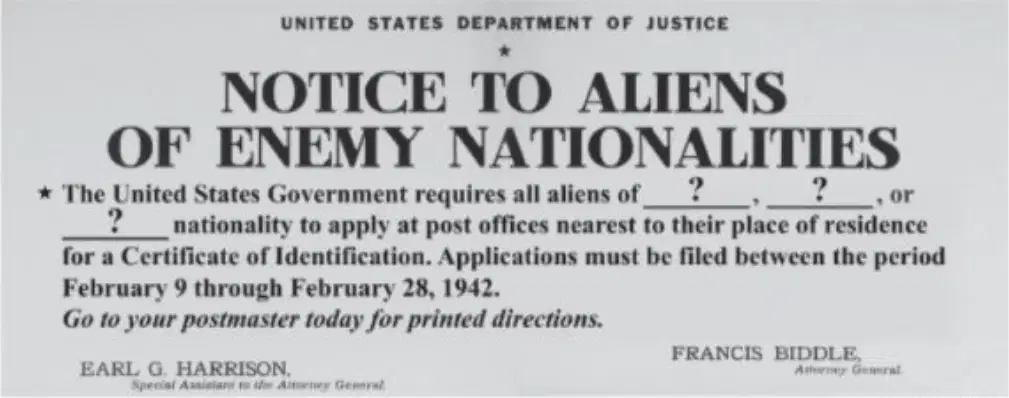
Refer to the notice from the United States Department of Justice: 'NOTICE TO ALIENS OF ENEMY NATIONALITIES. The United States Government requires all aliens of _____?_____, _____?_____, _____?_____, or _____ nationality to apply at post offices nearest to their place of residence for a Certificate of Identification. Applications must be filed between the period February 9 through February 28, 1942.' Which nationalities correctly replace the three question marks on this notice?
Polish, Romanian, Russian
Mexican, Spanish, Portuguese
Irish, Israeli, Turkish
German, Italian, Japanese
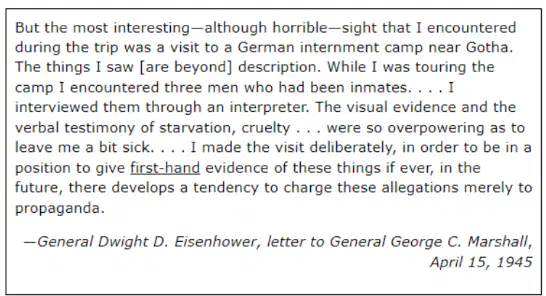
What major event of World War II does General Eisenhower’s letter refer to?
How did the Battle of Midway alter the course of the war in the Pacific?
By stopping the Japanese attack on Pearl Harbor
By halting the progress of Japanese expansion
By preventing the continued use of Japanese kamikaze planes
By defending the Philippines from Japanese conquest
The rights of citizens under the Fourth and Fourteenth Amendments of the Constitution were violated by the U.S. government when it authorized the establishment of —
internment camps for Japanese Americans
the Office of War Mobilization
nuclear test sites in Nevada
the Office of Price Administration
Soldiers, Sailors, and Airmen of the Allied Expeditionary Force! You are about to embark upon the Great Crusade, toward which we have striven these many months. The eyes of the world are upon you. The hopes and prayers of liberty-loving people everywhere march with you. In company with our brave Allies and brothers-in-arms on other Fronts, you will bring about the destruction of the German war machine, the elimination of Nazi tyranny over the oppressed peoples of Europe, and security for ourselves in a free world. This 1944 order was addressed to U.S. troops sent to —
capture the Italian mainland
transport weapons to Great Britain
invade the beaches at Normandy
repel an attack on Stalingrad

