
Font size
 Worksheets
Body Systems and Movement
Total questions: 89
Worksheet time: 47mins
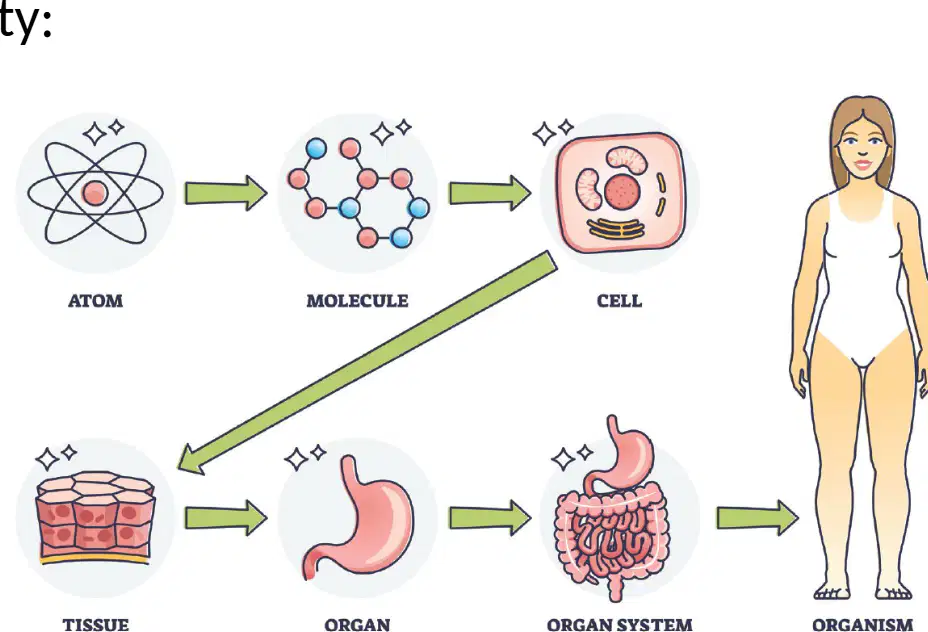
Fill in the blank: The first level of structural organisation in the human body is the _______ level.
Chemical
Cellular
Tissue
Organ
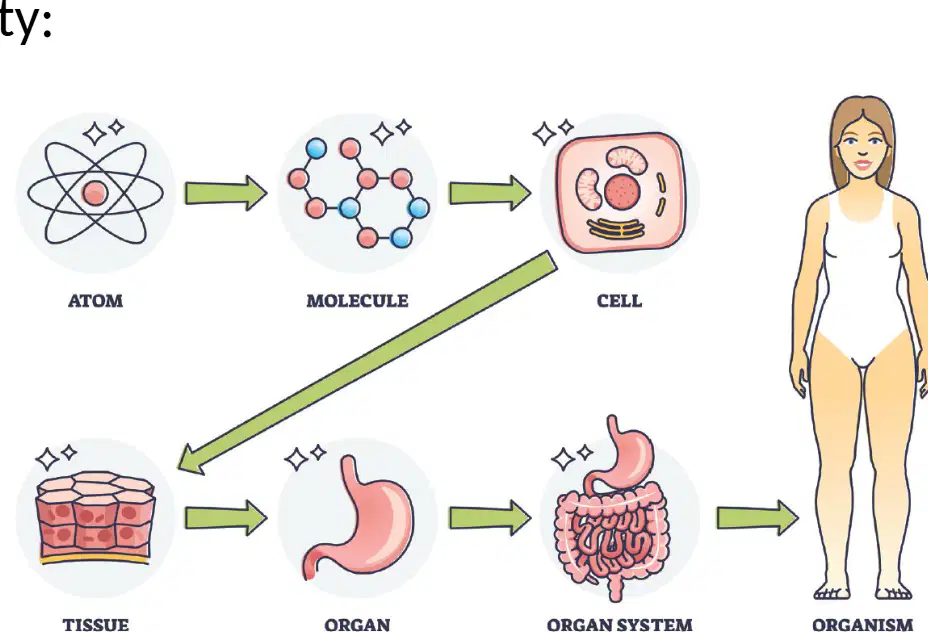
Fill in the blank: The second level of structural organisation in the human body is the _______ level.
Cellular
Tissue
Organ
System
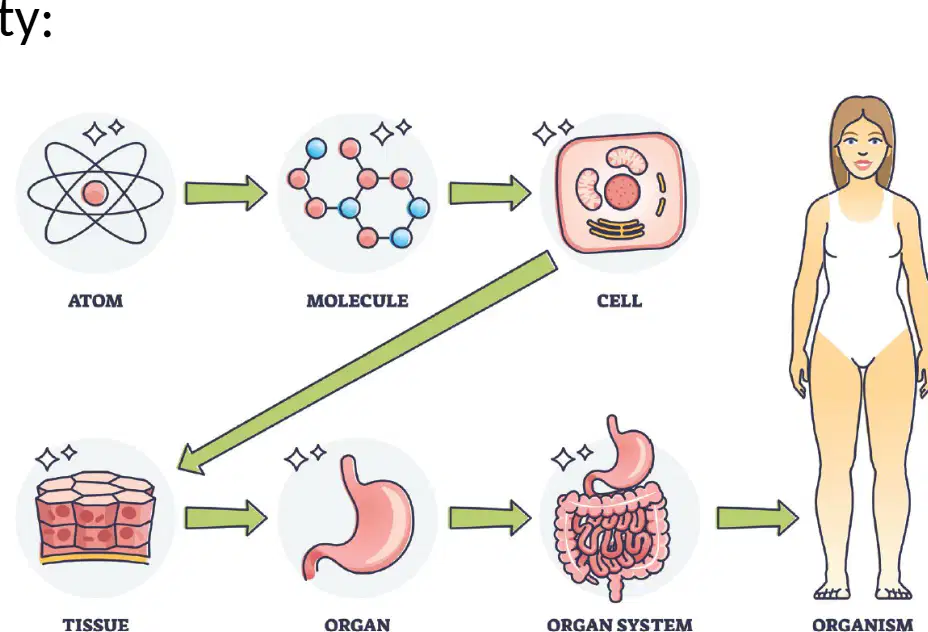
Fill in the blank: The third level of structural organisation in the human body is the _______ level.
Tissue
Cellular
Organ
Organism

Fill in the blank: The fourth level of structural organisation in the human body is the _______ level.
Organ
Cellular
Tissue
Chemical

Fill in the blank: The fifth level of structural organisation in the human body is the _______ level.
Body system
Cellular
Tissue
Organ
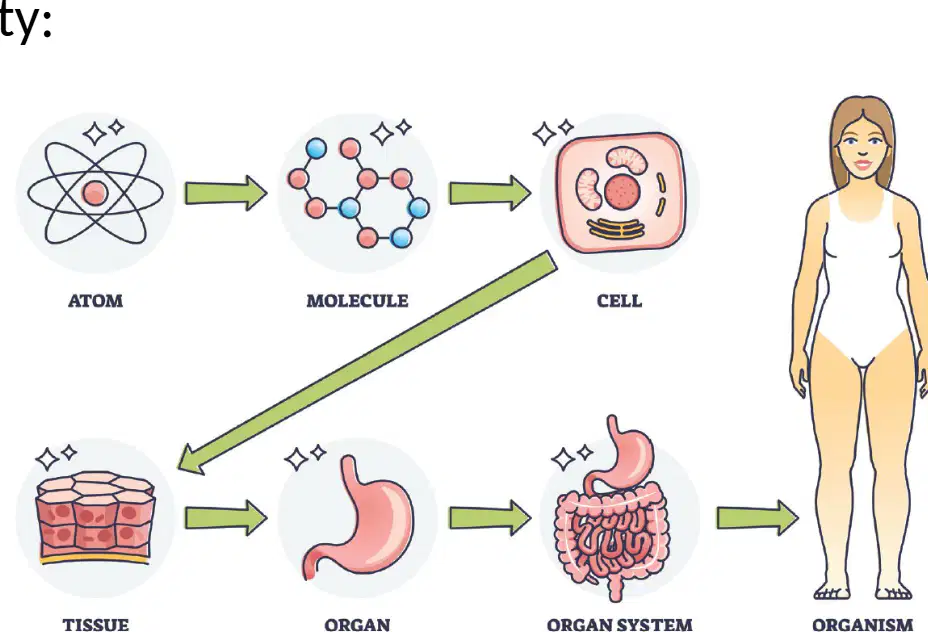
Fill in the blank: The sixth level of structural organisation in the human body is the _______ level.
Human body
Tissue
Organ
Cellular
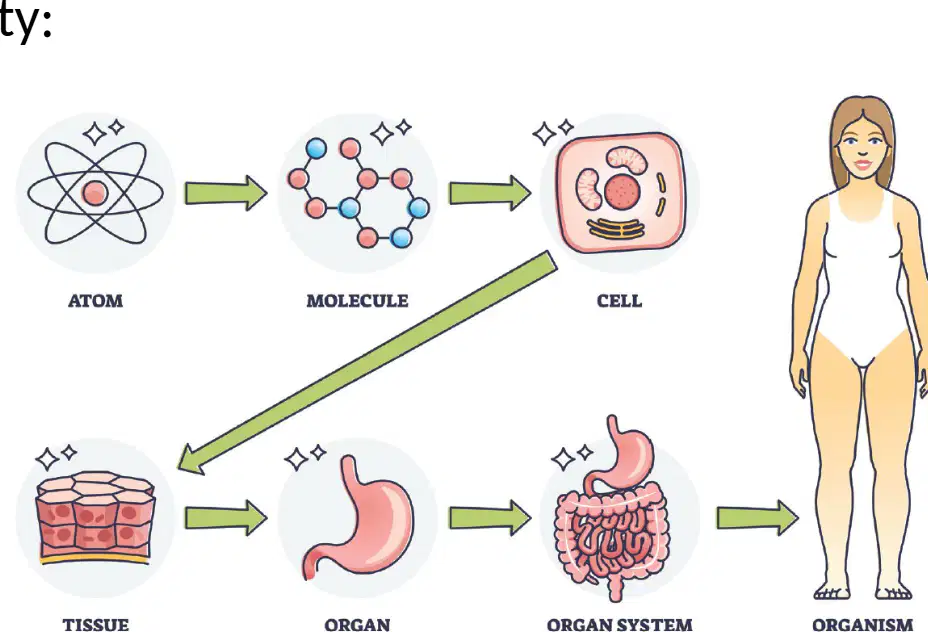
Which of the following is the correct order of the six levels of structural organisation in the human body, from smallest to largest?
A) Organ, Tissue, Cellular, Chemical, Body system, Human body
B) Chemical, Cellular, Tissue, Organ, Body system, Human body
C) Tissue, Organ, Chemical, Cellular, Human body, Body system
D) Cellular, Chemical, Organ, Tissue, Body system, Human body
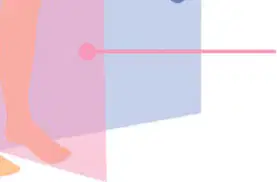
The body can be divided up into three planes of reference. Fill in the blank: The sagittal plane is also known as the _______ plane.
lateral
transverse
coronal
horizontal
The body can be divided up into three planes of reference. Fill in the blank: The coronal plane is also known as the _______ plane.
frontal
sagittal
transverse
oblique
The body can be divided up into three planes of reference. Fill in the blank: The transverse plane is also known as the _______ plane.
axial
sagittal
coronal
frontal
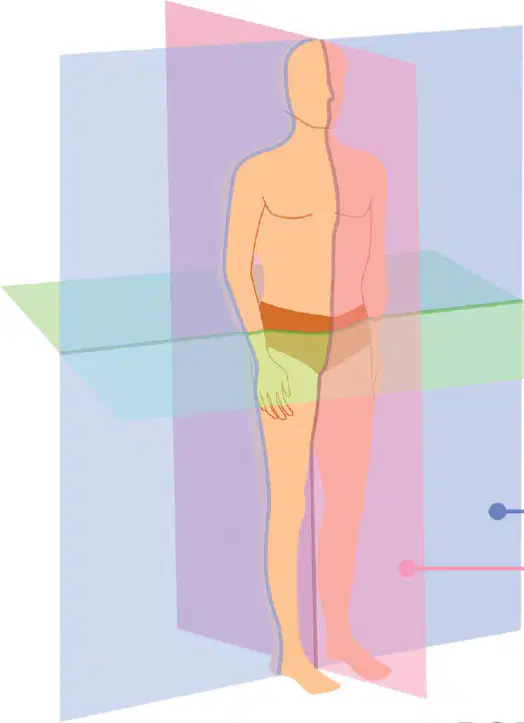
The body can be divided up into how many planes of reference?
Two
Three
Four
Five
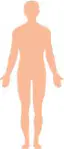
What does the directional term 'Superior' mean?
Towards the head
Towards the feet
Towards the side
Towards the back

What does the directional term 'Inferior' mean?
Away from the head
Towards the front of the body
Closer to the midline of the body
Away from the midline of the body

What does the directional term 'Anterior (ventral)' mean?
Nearer to the front of the body
Nearer to the back of the body
Closer to the head
Farther from the midline
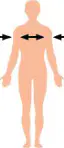
What does the directional term 'Posterior (dorsal)' mean?
Nearer to the back of the body
Nearer to the front of the body
Closer to the head
Farther from the midline of the body
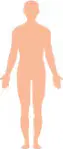
What does the directional term 'Medial' mean?
Nearer to the midline of the body
Farther from the midline of the body
Towards the surface of the body
Away from the surface of the body

What does the directional term 'Lateral' mean?
Further from the midline of the body
Closer to the midline of the body
Towards the head
Away from the surface of the body
What does the directional term 'Proximal' mean?
Nearer to the attachment of an extremity
Farther from the attachment of an extremity
Toward the surface of the body
Away from the midline of the body
What does the directional term 'Distal' mean?
Further from the attachment of an extremity
Closer to the midline of the body
Toward the surface of the body
Closer to the attachment of an extremity
What does the directional term 'Superficial' mean?
Towards the surface of the body
Away from the midline of the body
Closer to the point of attachment
Towards the interior of the body
What does the directional term 'Deep' mean?
Away from the surface towards the centre
Towards the surface of the body
On the opposite side of the body
Closer to the head
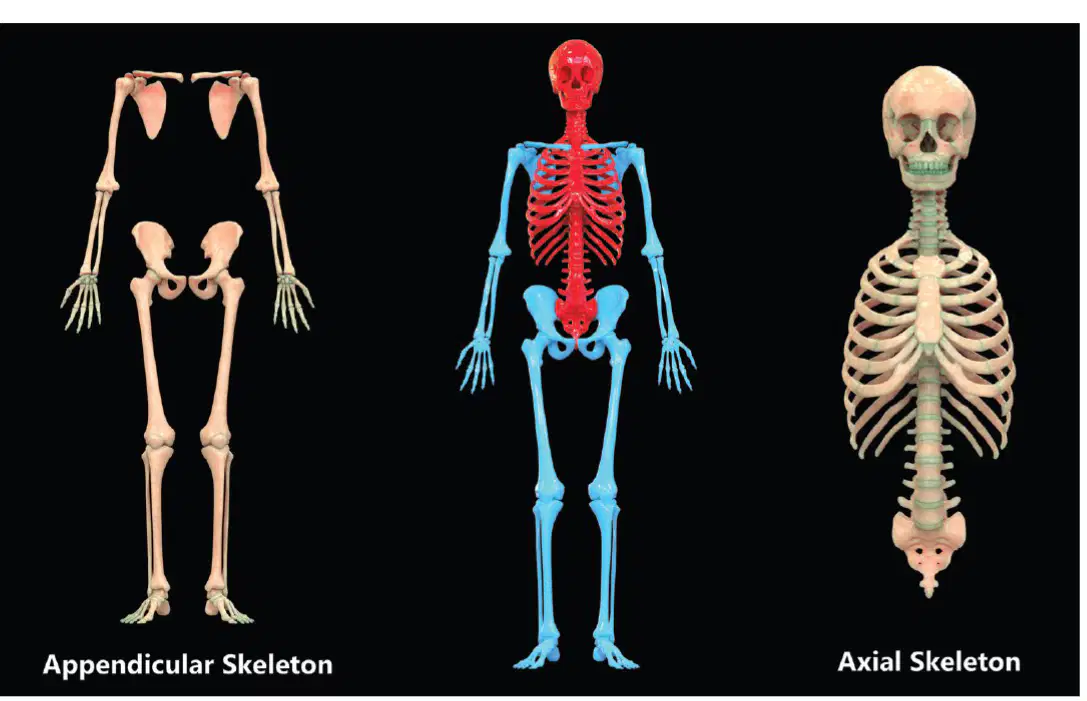
What is the main function of the axial skeleton?
Largely designed for movement
Protects the vital organs of the human body
Produces blood cells
Stores minerals
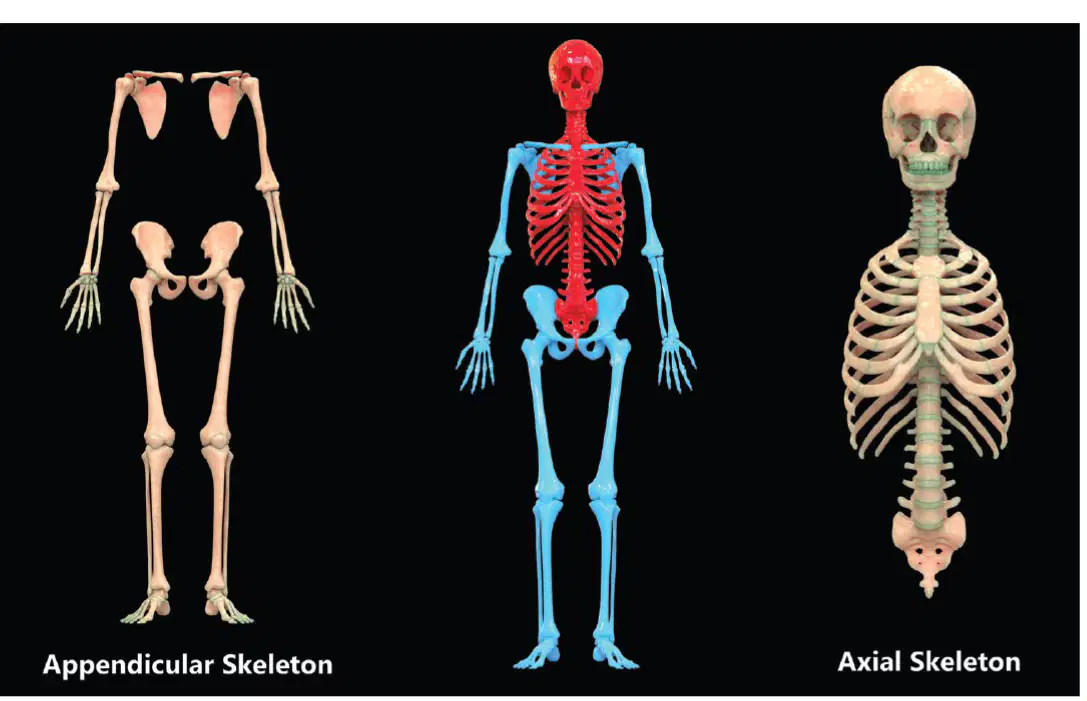
The appendicular skeleton is largely designed for ________.
movement
protection
support
digestion
Which of the following is a function of the skeletal system?
Digestion
Support
Respiration
Circulation
Fill in the blank: One of the functions of the skeletal system is _________.
Protection
Digestion
Photosynthesis
Respiration
Fill in the blank: The skeletal system helps with ________, allowing the body to change position.
Movement
Digestion
Respiration
Circulation
Fill in the blank: The skeletal system is responsible for the storage of ________ and minerals.
energy
proteins
vitamins
carbohydrates
Fill in the blank: The skeletal system is involved in blood cell _________.
production
digestion
respiration
absorption
There are five types of bones, classified based on their shape. Fill in the blank: The five types of bones are ________, short bones, flat bones, irregular bones, and sesamoid bones.
long bones
round bones
circular bones
triangular bones
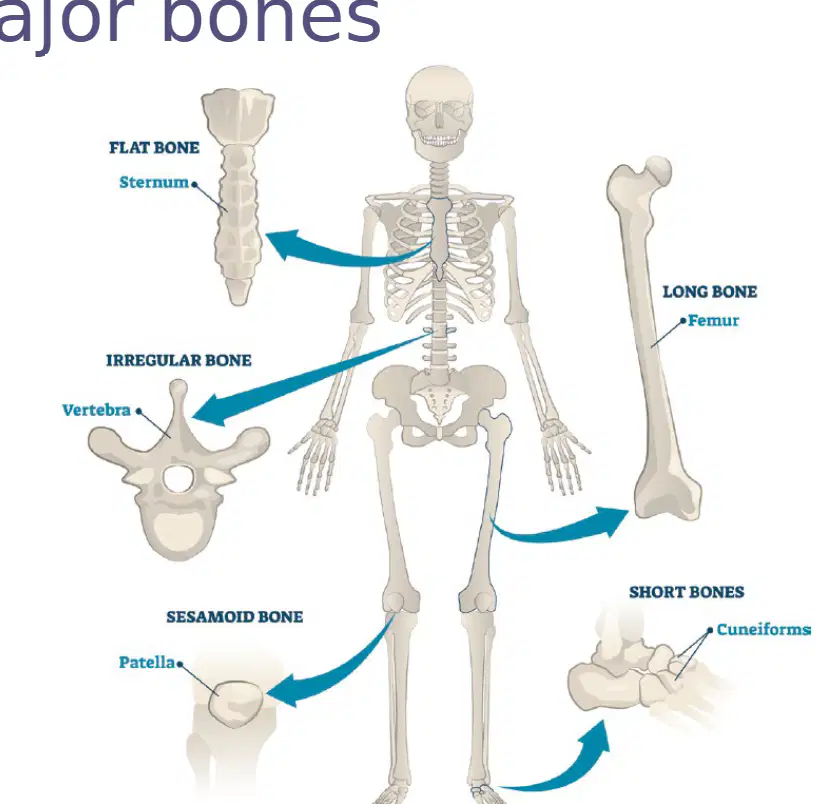
There are five types of bones, classified based on their shape. Which of the following is an example of a long bone?
Sternum
Femur
Vertebra
Patella

There are five types of bones, classified based on their shape. Which bone is classified as a flat bone?
Sternum
Femur
Cuneiforms
Patella
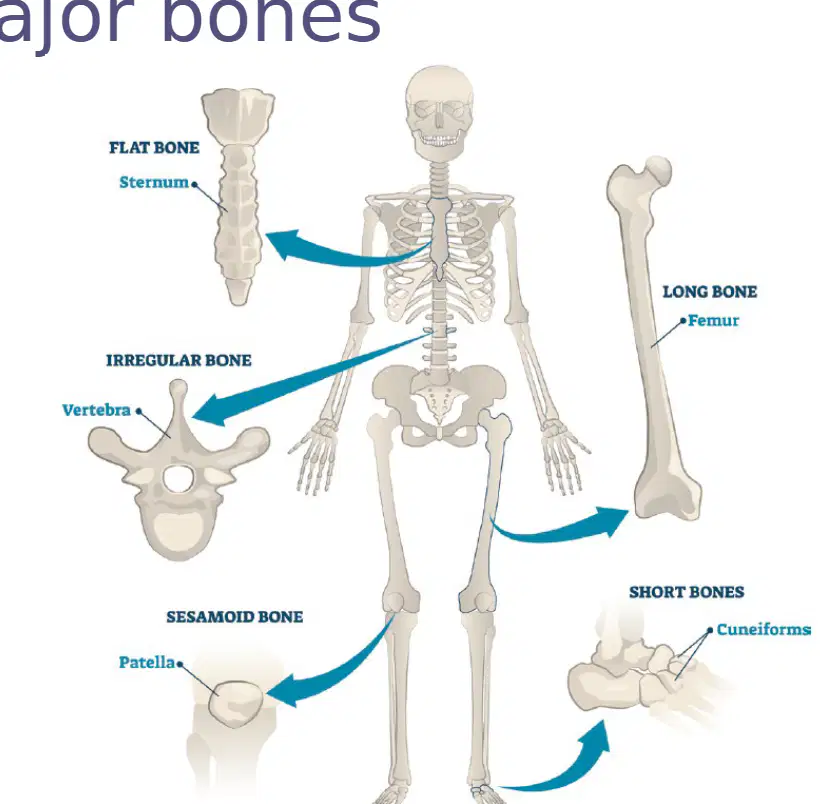
There are five types of bones, classified based on their shape. Fill in the blank: The vertebra is an example of an ________ bone.
irregular
long
flat
short
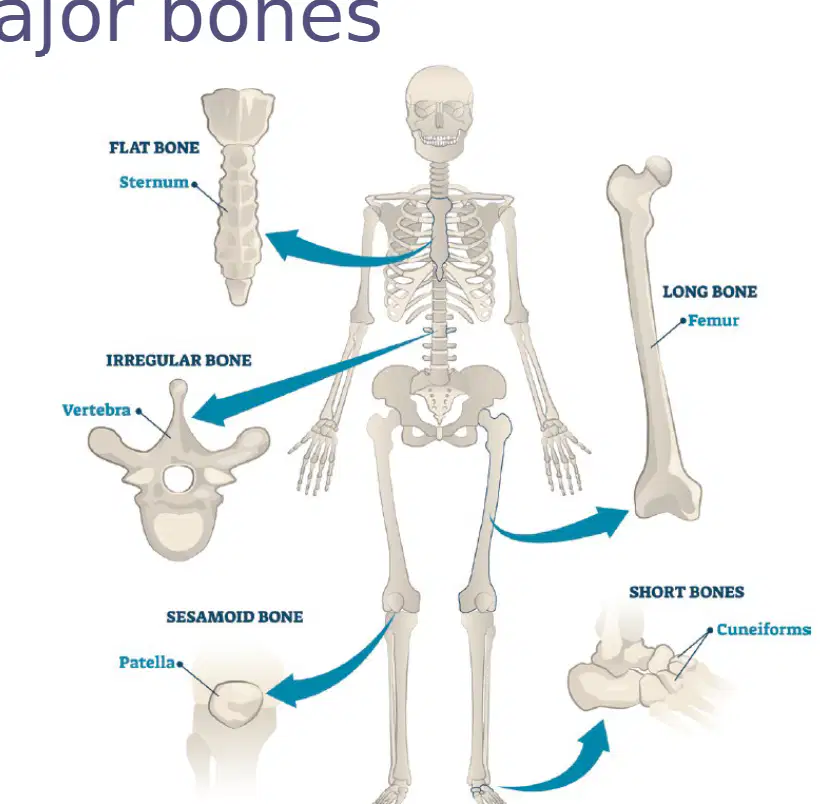
There are five types of bones, classified based on their shape. Which of the following is an example of a sesamoid bone?
A) Patella
B) Femur
C) Sternum
D) Cuneiforms
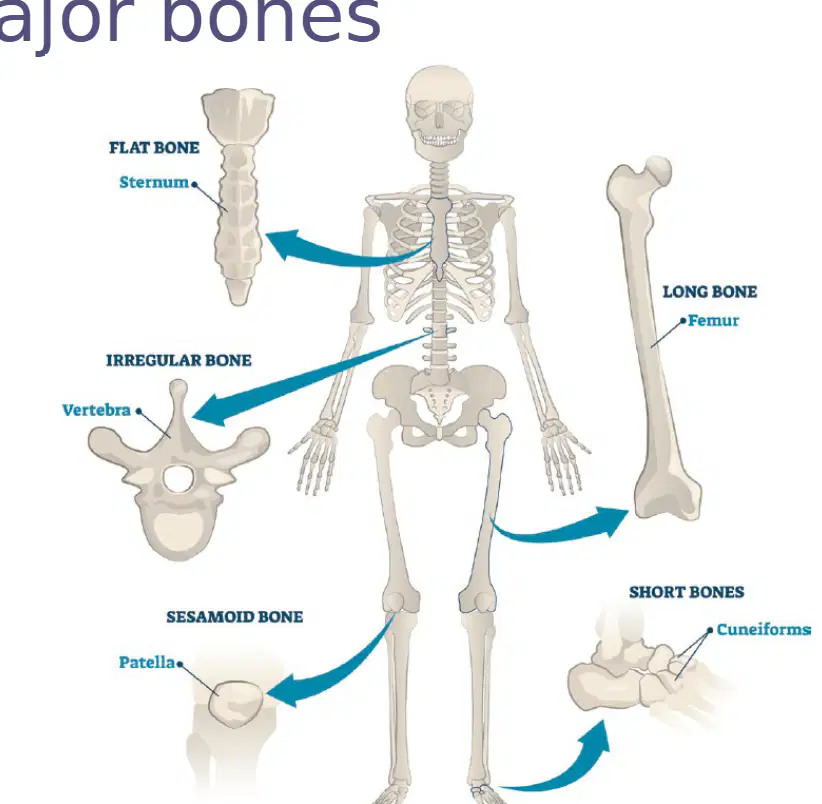
There are five types of bones, classified based on their shape. Fill in the blank: The cuneiforms are examples of ________ bones.
short
long
flat
irregular
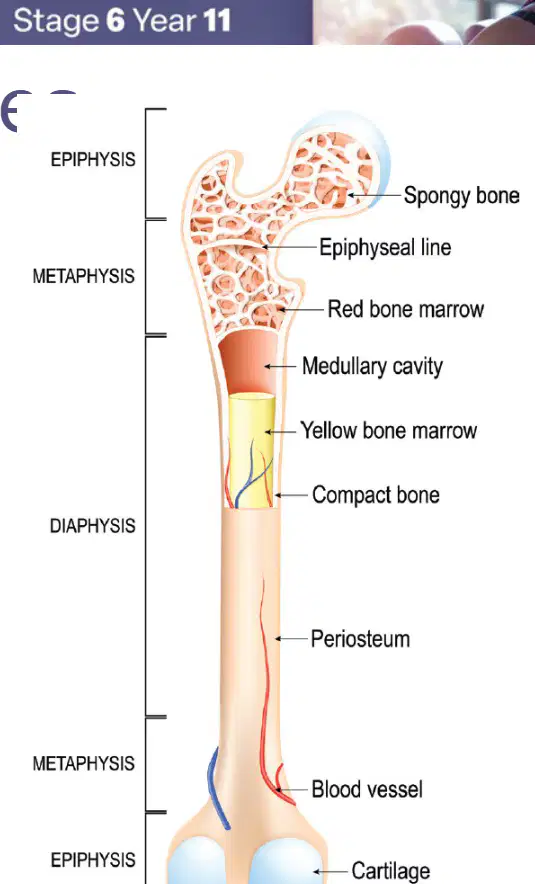
What is the shaft or long portion of a typical long bone called?
Diaphysis
Epiphysis
Metaphysis
Periosteum
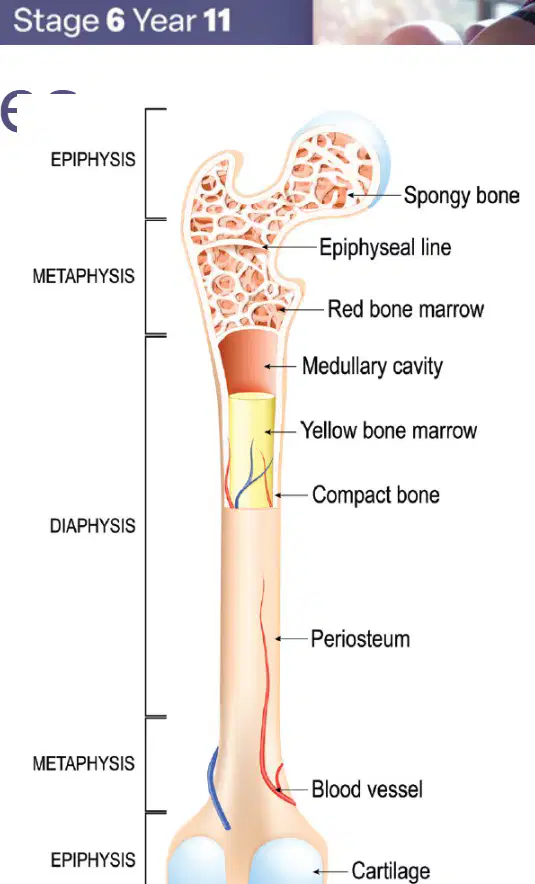
Which part of a typical long bone contains spongy bone at the ends?
Epiphyses
Diaphysis
Periosteum
Medullary cavity
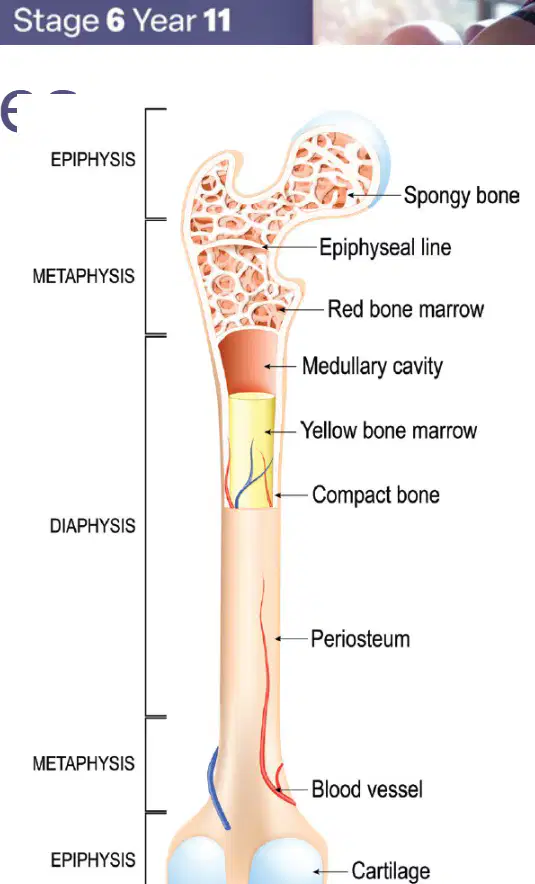
What is the thin layer of cartilage covering the epiphysis where two bones meet and join called?
Articular cartilage
Periosteum
Synovial membrane
Endosteum
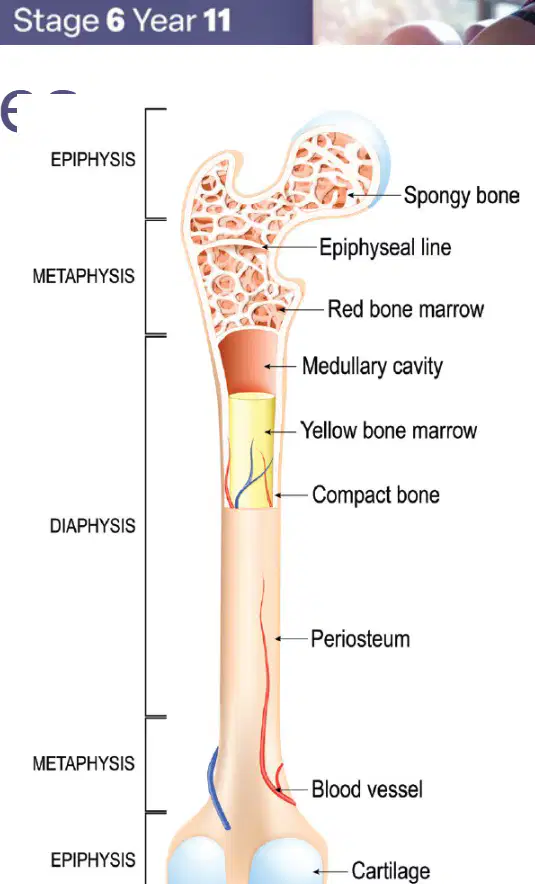
What is the hard outer casing around the surface of a typical long bone called?
Compact bone
Spongy bone
Marrow
Cartilage
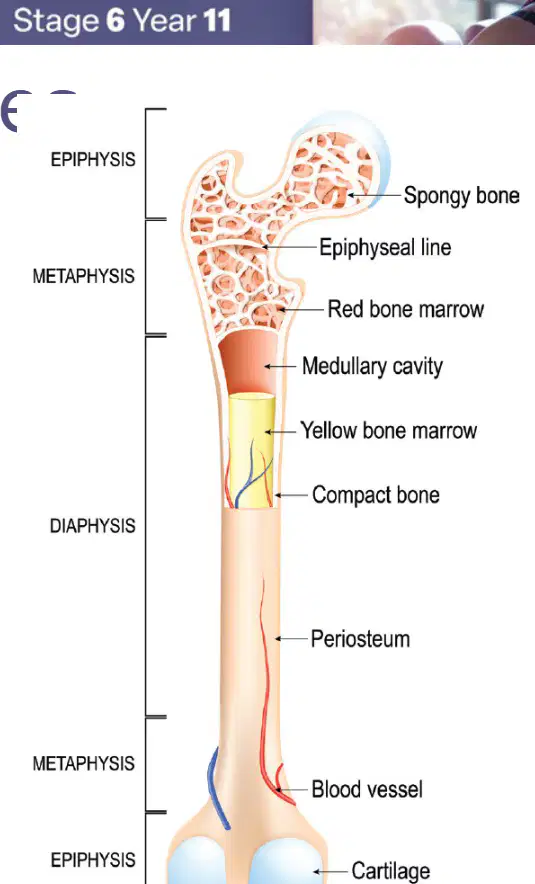
What is the space within the diaphysis that contains the bone marrow called?
Medullary
Epiphysis
Periosteum
Endosteum
What are synovial joints?
Joints that are immovable
Joints that are highly moveable and are found where two bones meet to allow for movement
Joints that are only found in the skull
Joints that do not allow for movement
How many types of synovial joints are there in the human body?
Four
Five
Six
Seven
Fill in the blank: The six types of synovial joints in the human body are ________, hinge joint, gliding joint, condyloid (ellipsoidal) joint, saddle joint, and pivot joint.
Ball-and-socket joint
Fixed joint
Cartilaginous joint
Fibrous joint
Which type of synovial joint allows for the greatest range of movement?
Hinge joint
Ball-and-socket joint
Saddle joint
Pivot joint

The saddle joint is found at the trapeziometacarpal location in the hand.
True
False

Fill in the blank: The ________ joint is found at the radioulnar location and allows for rotational movement.
Pivot
Hinge
Ball-and-socket
Saddle
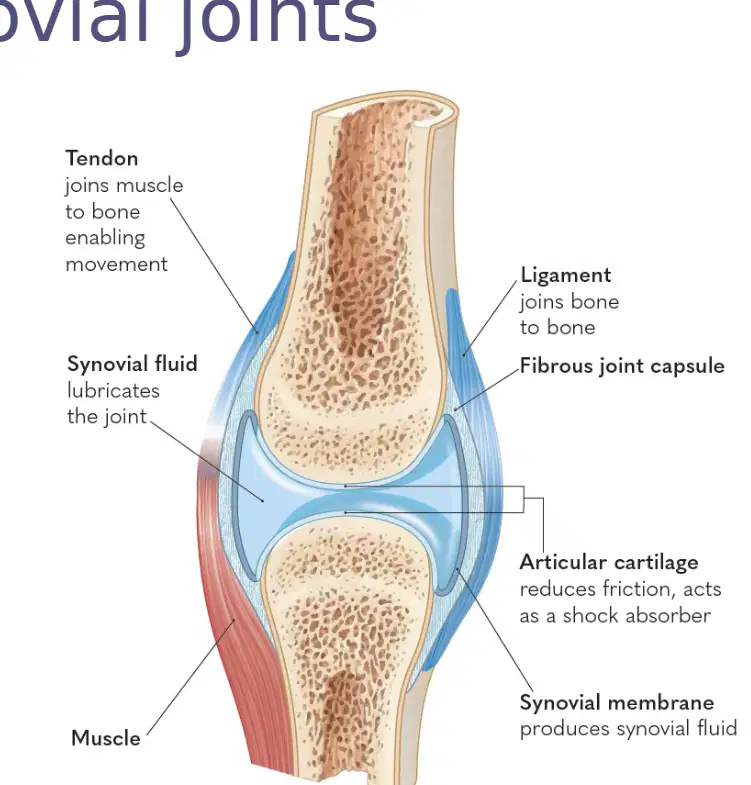
What is the function of the tendon in a synovial joint?
Joins muscle to bone enabling movement.
Connects bone to bone for stability.
Produces synovial fluid for lubrication.
Cushions the joint to absorb shock.
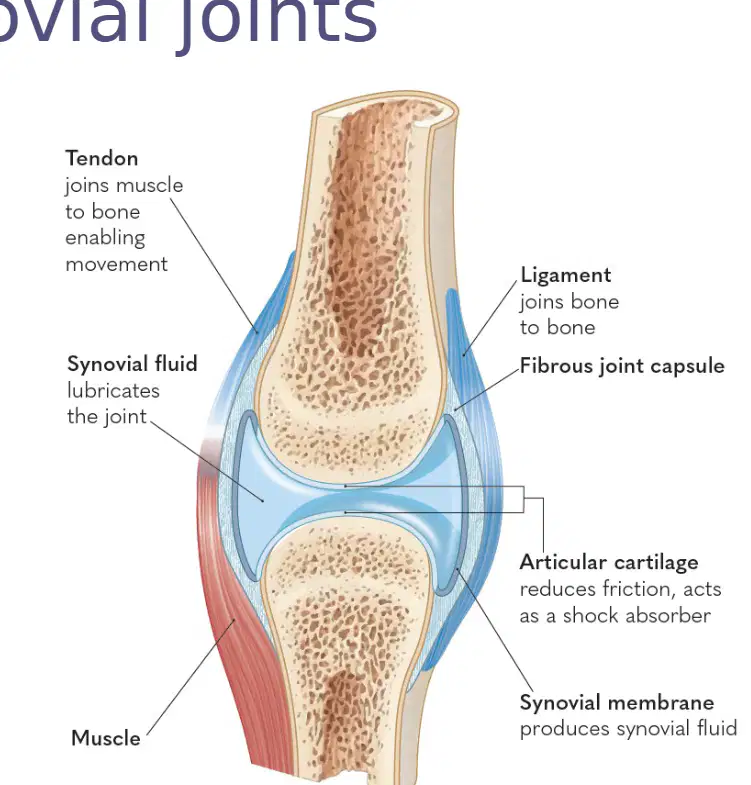
What is the function of synovial fluid in a synovial joint?
Lubricates the joint.
Transmits nerve impulses.
Stores calcium.
Produces red blood cells.

What is the function of a ligament in a synovial joint?
Joins bone to bone.
Joins muscle to bone.
Produces synovial fluid.
Cushions the joint.

What is the function of articular cartilage in a synovial joint?
Reduces friction, acts as a shock absorber.
Produces synovial fluid for lubrication.
Connects muscles to bones for movement.
Stores minerals for bone growth.
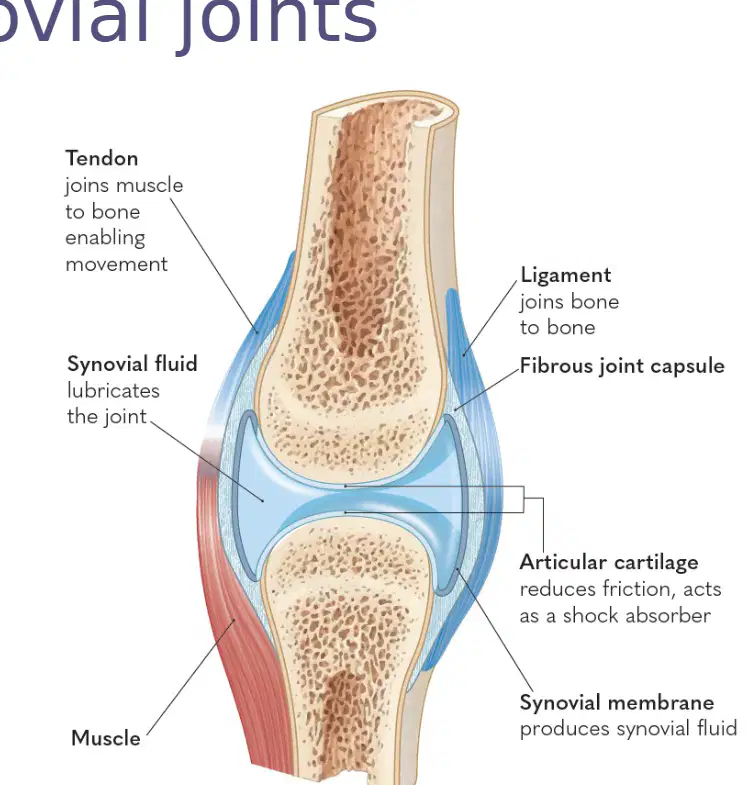
What is the function of the synovial membrane in a synovial joint?
Which of the following is a typical feature of synovial joints?
Structures that allow for smooth movement and shock absorption
Structures that prevent all movement
Hard tissue structures only
Structures that reduce joint integrity
Which of the following is a typical feature of synovial joints?
Hard tissue structures only
Soft tissue structures that maintain joint integrity
Structures that prevent all movement
Structures that increase friction
There are five types of bones, classified based on their shape. Fill in the blank: Long _______.
bones
muscles
cells
joints
There are five types of bones, classified based on their shape. Fill in the blank: Short _______.
bones
muscles
cells
joints
There are five types of bones, classified based on their shape. Fill in the blank: Flat _______.
bones
muscles
cells
joints
There are five types of bones, classified based on their shape. Fill in the blank: Irregular _______.
bones
muscles
cells
joints
There are five types of bones, classified based on their shape. Fill in the blank: Sesamoid _______.
bones
muscles
joints
ligaments
What is the term for the movement at the joint that reduces the angle between the bones?
Flexion
Extension
Abduction
Rotation
What is the term for the movement at the joint that increases the angle between the bones?
Extension
Flexion
Rotation
Abduction
Which of the following best describes 'Flexion'?
Movement at the joint increases the angle between the bones
Movement at the joint reduces the angle between the bones
Movement at the joint does not change the angle between the bones
Movement at the joint rotates the bones
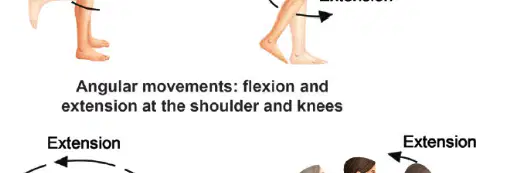
Refer to the diagram showing angular movements at the shoulder and knees. Which movement is occurring when the angle at the knee decreases?
A) Flexion
B) Extension
Refer to the diagram showing angular movements of the vertebral column. What is the movement called when the body bends backward at the waist?
A) Flexion
B) Extension
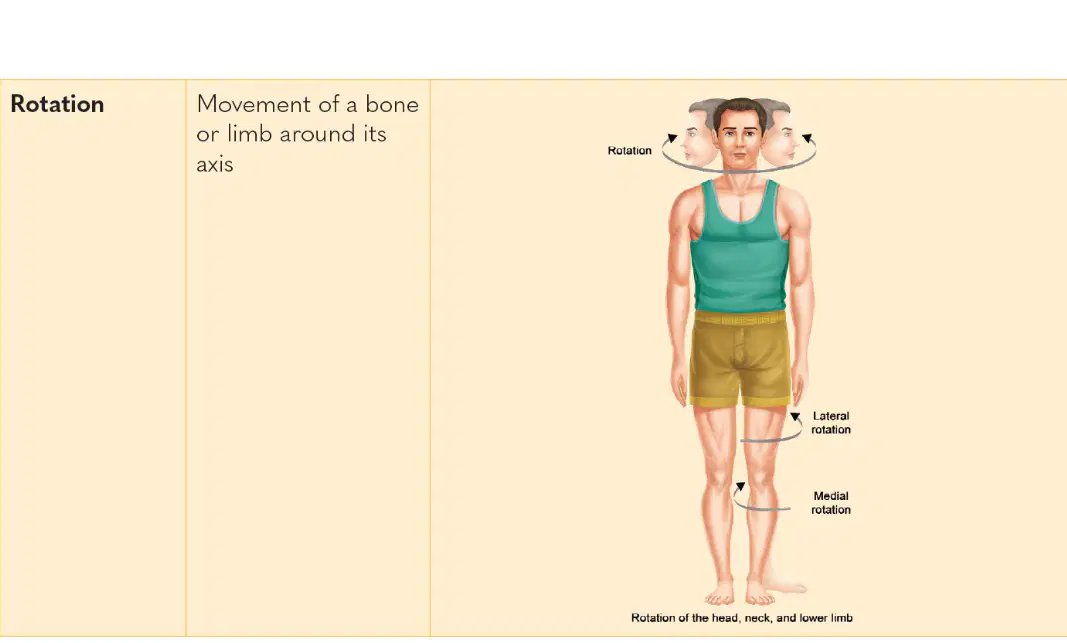
What is the definition of 'Rotation' in the context of joint actions in the skeletal system?
Movement of a bone or limb around its axis
Bending a joint to decrease the angle between two bones
Straightening a joint to increase the angle between two bones
Moving a limb away from the midline of the body
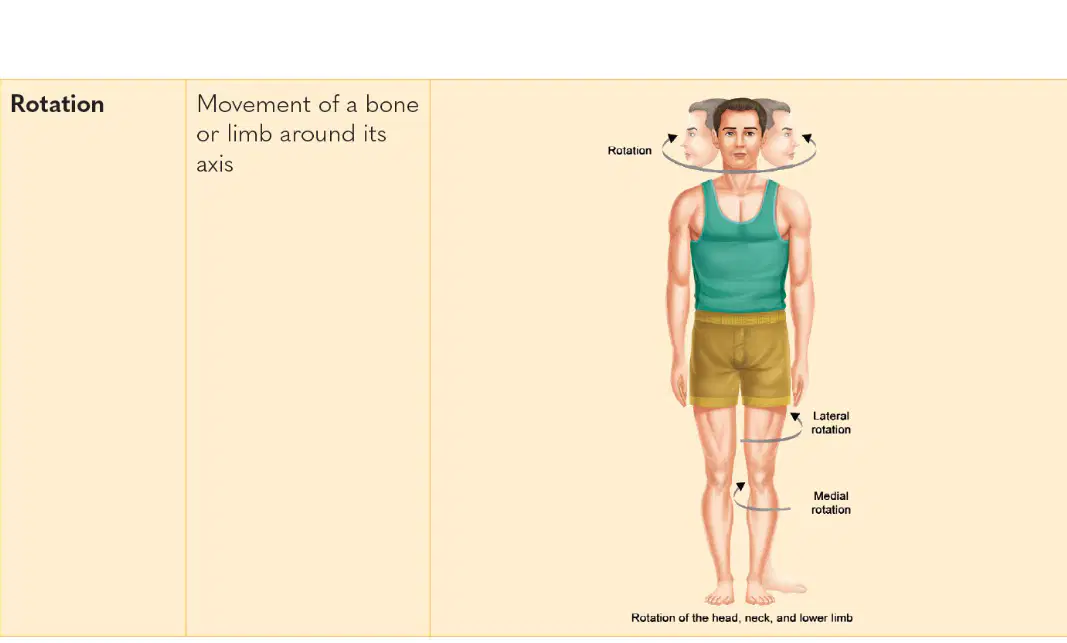
Which type of joint action is shown in the diagram where the head turns from side to side?
Flexion
Extension
Rotation
Abduction
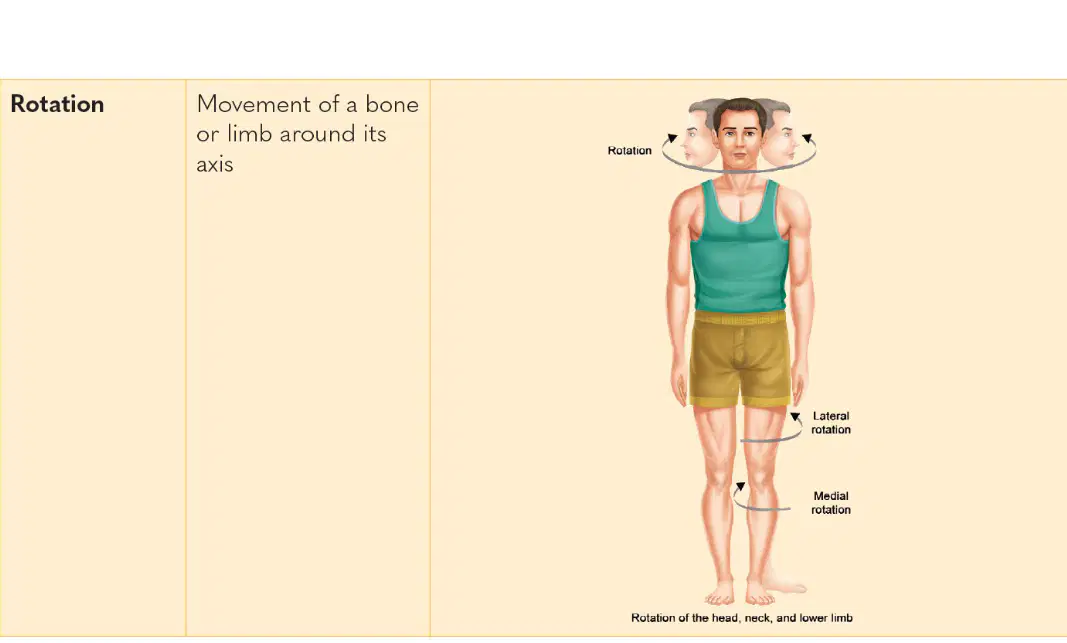
In the diagram, what is the movement called when the lower limb turns outward?
Medial rotation
Lateral rotation
Flexion
Extension
What is the definition of Circumduction?
Movement of a bone or limb away from the midline of the body (lateral)
Movement of a bone or limb towards the midline of the body (medial)
Moving the distal (far) end of the body or limb in a circle
What is the definition of Abduction?
Movement of a bone or limb away from the midline of the body (lateral)
Movement of a bone or limb towards the midline of the body (medial)
Moving the distal (far) end of the body or limb in a circle
What is the definition of Adduction?
Movement of a bone or limb away from the midline of the body (lateral)
Movement of a bone or limb towards the midline of the body (medial)
Moving the distal (far) end of the body or limb in a circle

Refer to the diagram showing angular movements of the upper limb at the shoulder. Which movement is represented by moving the arm in a circular motion?
A) Abduction
B) Adduction
C) Circumduction
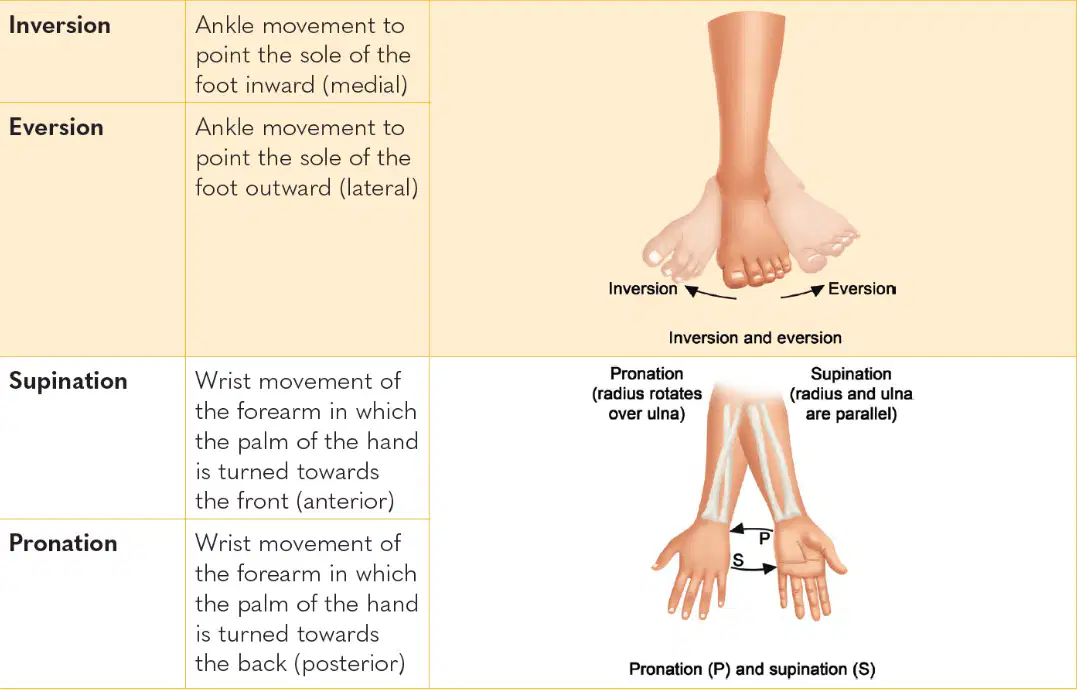
What is the term for the ankle movement to point the sole of the foot inward (medial)?
Eversion
Inversion
Supination
Pronation
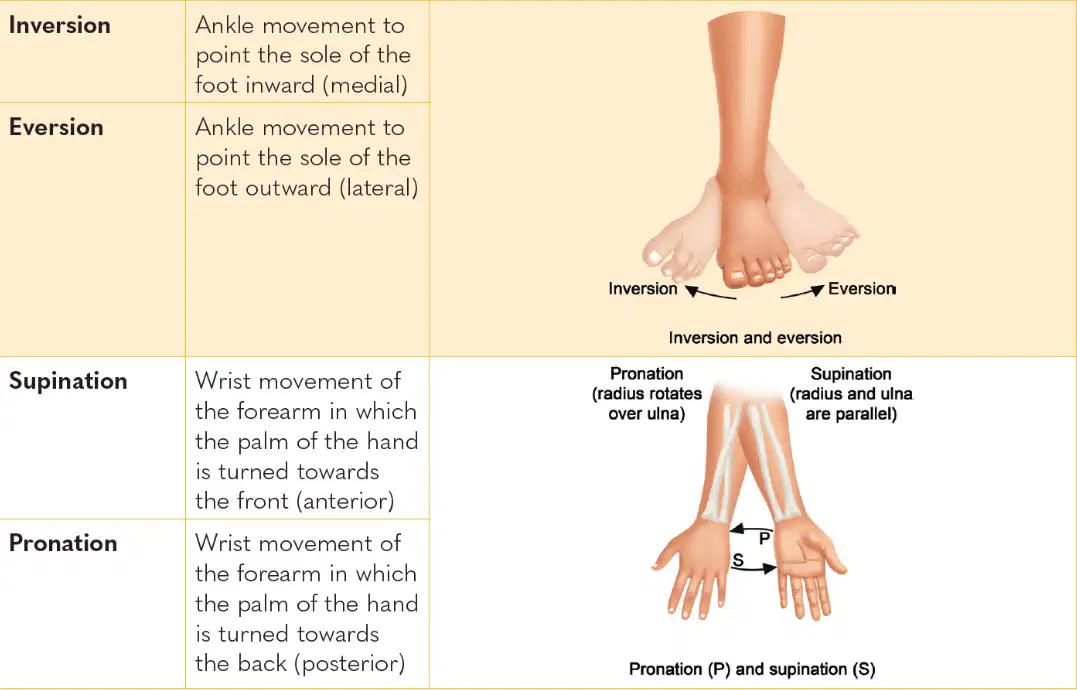
What is the term for the ankle movement to point the sole of the foot outward (lateral)?
Eversion
Inversion
Supination
Pronation

What is the term for the wrist movement of the forearm in which the palm of the hand is turned towards the front (anterior)?
Pronation
Supination
Inversion
Eversion

What is the term for the wrist movement of the forearm in which the palm of the hand is turned towards the back (posterior)?
Pronation
Supination
Inversion
Eversion
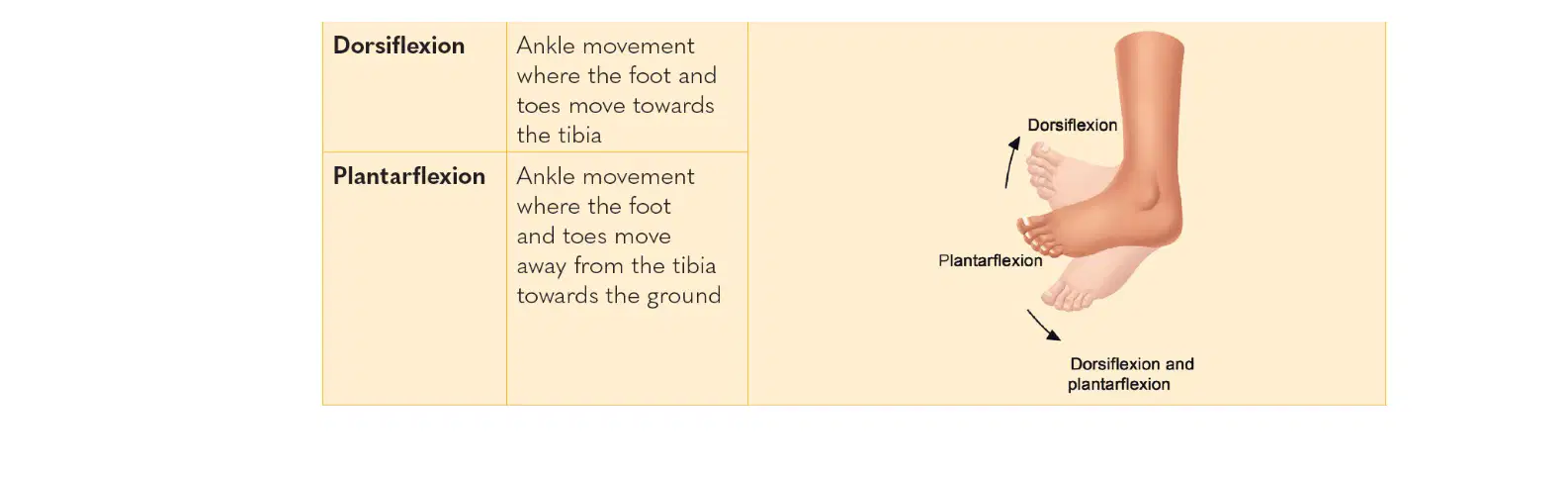
What is dorsiflexion? Fill in the blank: Dorsiflexion is an ankle movement where the foot and toes move ______ the tibia.
towards
away from
parallel to
beneath
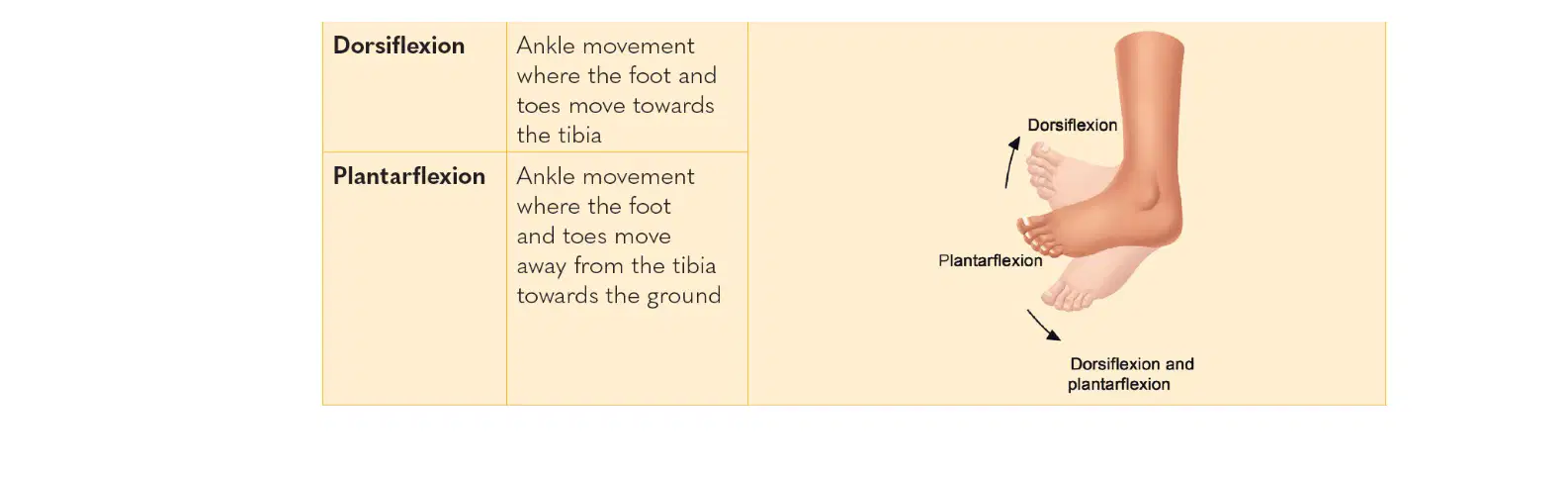
What is plantarflexion? Fill in the blank: Plantarflexion is an ankle movement where the foot and toes move ______ from the tibia towards the ground.
away
towards
above
behind
Which of the following is NOT one of the three types of muscle in the human body?
Cardiac muscle
Smooth muscle
Skeletal muscle
Nervous muscle
Fill in the blank: ________ muscle is found in the heart.
Cardiac
Smooth
Skeletal
Voluntary
Fill in the blank: ________ muscle lines the digestive system.
Smooth
Skeletal
Cardiac
Striated
Fill in the blank: ________ muscle connects to bones and crosses joints.
Skeletal
Cardiac
Smooth
Visceral
All skeletal muscles have the following four properties. Fill in the blank: The ability of a muscle to respond to a stimulus is called _________.
Excitability
Contractility
Elasticity
Flexibility
All skeletal muscles have the following four properties. Fill in the blank: The ability of a muscle to contract and shorten is called (a) .
All skeletal muscles have the following four properties. Fill in the blank: The ability of a muscle to be stretched is called _________.
Extensibility
Contractility
Elasticity
Irritability
The ability of a muscle to return to its original length after being stretched is called _________?
Elasticity
Flexibility
Contractility
Extensibility

Refer to the diagram labeled 'Structure of skeletal muscles'. Which of the following is NOT a part labeled in the diagram?
Fascia
Muscle fibres
Blood vessels
Ligament
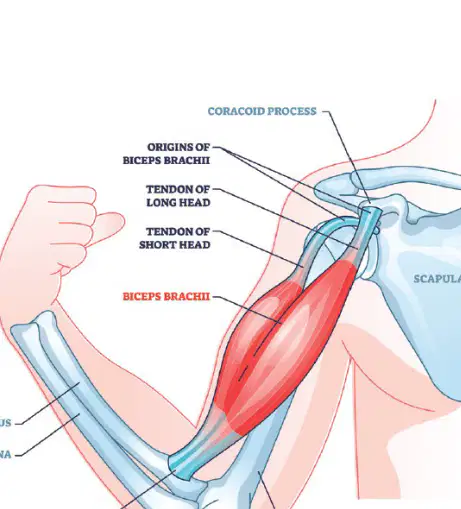
Refer to the diagram labeled 'Origin and insertion of skeletal muscles'. Which bone is shown as the insertion point for the biceps brachii?
Humerus
Radius
Ulna
Scapula
Fill in the blank: The three types of skeletal muscle fibres are ________, fast twitch oxidative fibres (Type IIa fibres), and fast twitch glycolytic fibres (Type IIb fibres).
slow twitch fibres (Type I muscle fibres)
cardiac muscle fibres
smooth muscle fibres
intermediate muscle fibres
Fill in the blank: Fast twitch oxidative fibres are also known as ________.
Type IIa fibres
Type I fibres
Type IIb fibres
Type III fibres
Fill in the blank: Fast twitch glycolytic fibres are also known as ________.
Type IIb fibres
Type I fibres
Type IIa fibres
Type III fibres
Which type of muscle fibre is associated with endurance training?
Slow-twitch muscle fibre
Fast-twitch muscle fibre
Both
Neither