
 Worksheets
BEEE QUIZ
Total questions: 120
Worksheet time: 20mins
If the conductor resistance is 50 ohm and the current passing through it is 5 A. What is the value of potential difference?
50V
150 V
250V
15V
A potential difference of 10 V is applied across a conductor whose resistance is 2.5 ohm. What is the value of current flowing through it?
10A
4A
6A
2A
The algebraic sum of voltages around any closed path in a network is equal to ____________
1
0
Infinity
All _____________ are loops but _______________ are not meshes
Loops, Meshes
Meshes, loops
Branches, loops
A path which contains more than two meshes is called___
mesh
loop
A circuit has three incoming currents having values 5 A, 9 A, and 1 A and two outgoing currents passing through two parallel resistors having equals values of resistance. The outgoing current flowing through first parallel resistor will be
5A
7.5A
1A
9A
Every____________ is a ____________ but every __________ is not a __________
Loop, mesh, mesh, loop
Mesh, loop, loop, mesh
Loop, mesh, loop, mesh
Find R for the circuit given.
C.120
B.68
A.34
D.154
A 12 mA current source has an internal resistance, R, of 1.2 k. The equivalent voltage source is
A.144 V
D.72 mV
B.14.4 V
C.7.2 V
What techniques used to find the currents circulating around a loop or mesh with in any closed path of a circuit?
Kirchhoffs Current Law
Nodal Voltage Analysis
Mesh current Analysis
Kirchhoffs Voltage Law
A closed loop conducting path in which an electrical current flows.
Circuit
Loop
Node
Branch
A single closed path in a circuit in which no circuit element or node is encountered more than once.
Circuit
Loop
Node
Branch
What is Thevenin's Theorem about?
Thevenin's Theorem is used to calculate the power factor in AC circuits.
Thevenin's Theorem states that all circuits can be simplified to a single current source.
Thevenin's Theorem provides a method to simplify complex linear circuits into a single voltage source and resistor.
Thevenin's Theorem applies only to non-linear circuits.
What does the Superposition Theorem help us do?
It simplifies the design of non-linear circuits.
It helps us calculate the total resistance in a circuit.
It helps us analyze linear circuits by considering one source at a time.
It allows us to measure current flow in real-time.
How do we find the maximum power transfer?
Set load resistance to zero.
Set load resistance equal to Thevenin resistance.
Use a capacitor in series with the load.
Increase the voltage across the load.
What is a simple example of the Superposition Theorem?
In a circuit with two voltage sources, the total current through a resistor is the sum of the currents from each voltage source acting independently.
The total voltage across a resistor is the sum of the voltages from each source acting together.
The Superposition Theorem states that the total power in a circuit is the sum of the powers from each source.
In a circuit with one voltage source, the total current is equal to the voltage divided by the resistance.
Why is the maximum power transfer theorem important?
It maximizes power transfer to the load.
It simplifies the circuit design process.
It ensures the circuit operates at maximum voltage.
It reduces energy consumption in the circuit.
Power that is transferred to load when load resistance equals Thevenin resistance is
Equal power
Minimum power
Maximum power
Zero Power
Efficiency of power transfer when maximum transfer of power occurs is
80%
100%
50%
75%
For maximum transfer of power, internal resistance of the source should be
less than the load resistance
none of the above
equal to load resistance
greater than the load resistance
If there is a 12A current source in series with 2Ω and in parallel with a 4Ω resistor, then voltage V=?
3V
24V
6V
48V
Three resistances 20 Ω, 30 Ω and 60 Ω are connected in parallel, their combined resistance is given by
50 Ω
20 Ω
10 Ω
Thevenin's theorem for ac circuits states that any two-terminal linear ac network can be replaced by an equivalent circuit consisting of a voltage source and an impedance in series.
TRUE
FALSE
What is the purpose of using Thévenin's equivalent circuit?
To replace all circuit components
To measure current directly
To increase circuit complexity
To simplify circuit analysis
What is the first step in finding the Thévenin equivalent circuit?
Short the voltage sources
Add a new voltage source
Remove the load resistor
Measure the current
A small component that lights up when current flows through it
capacitor
resistor
circuit
light emitting diode

Select the correct symbol for a battery
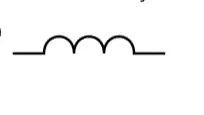
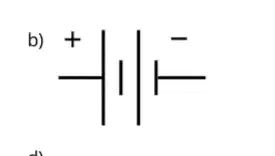
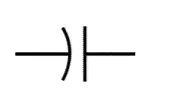
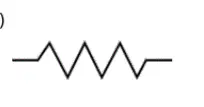
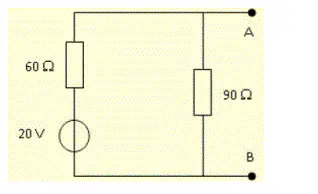
identify Thevenin Equivalent Circuit
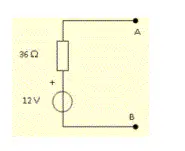
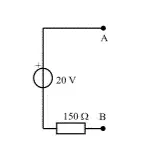
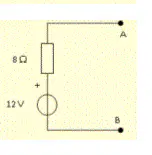
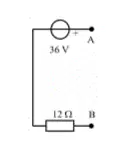
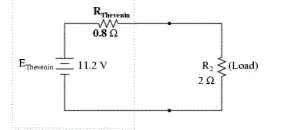
Thevenin Equivalent Circuit
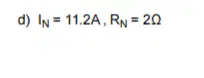
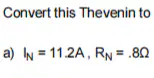
Convert this Thevenin to norton
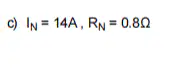
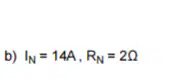
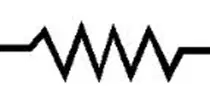
The image is the symbol for a
conductor
resistor
LED
diode
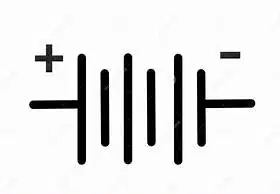
Choose the equivalent
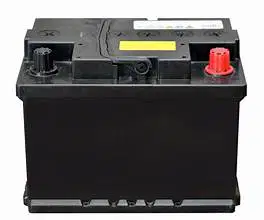
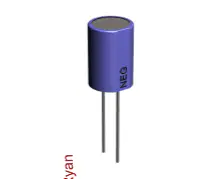

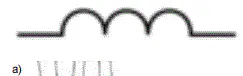
Choose the best equivalent

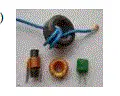
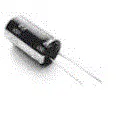

This is a
Transistor
Relay
Buzzer
Motor
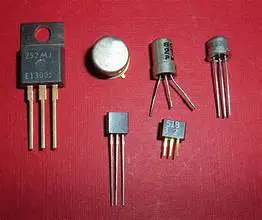
The name of this component:
photocell
capacitor
resistor
transistor
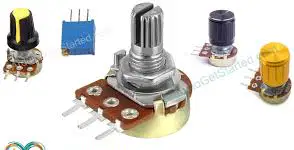
The name of this component:
transistor
photocell
potentiometer
transistor
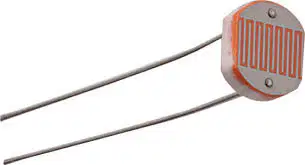
The name of this component:
transistor
potentiometer
diode
photocell

The image is the symbol for:
transistor
potentiometer
photocell
resistor
The function of a transistor is:
perform the function of an electronic switch
control the amount of electrical current
store electrical charge
control the direction of current
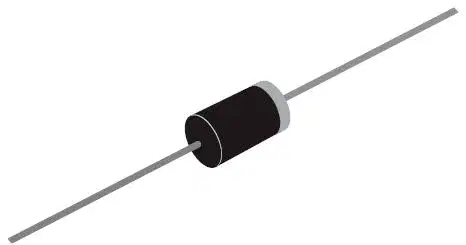
The function of this component is to:
vary the amount of resistance
hold electrical charge
act as an electrical switch
allow current to pass in only one way
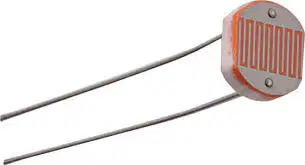
The function of this component is:
to indicate the presence of current (ON/OFF states
of electrical components
vary resistance to a circuit by the amount of light
that strikes its surface
to perform the function of a switch or an amplifier
to create various kinds of time delays in a circuit
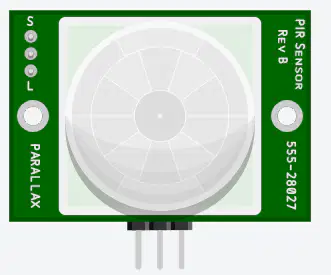
The name of this component is:
Motion sensor
Potentiometer
RGB LED
Light bulb

Convert this Thevenin to a Norton.
I = 11.2A , R = .8Ω
I = 14A , R = 2Ω
I = 14A , R = 0.8Ω
I = 11.2A , R = 2Ω
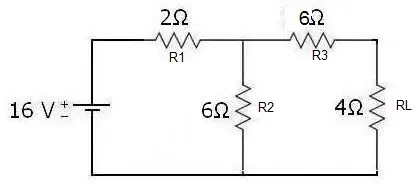
What is the Norton Resistance?
12Ω
6Ω
7.5Ω
14Ω
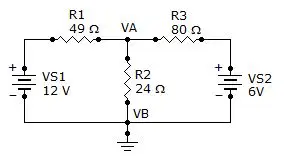
Find the node voltage V .
6 V
4.25 V
12 V
3 V
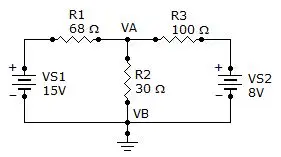
What is the current through R ?
173 mA
3.19 A
319 mA
1.73 A
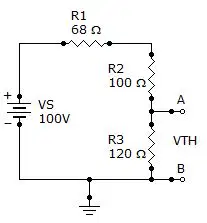
Find the Thevenin equivalent (V and R ) between terminals A and B of the circuit given below.
4.16 V, 120
41.67 V, 70
4.16 V, 70
41.6 V, 120
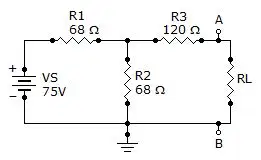
Find R for the circuit given.
120
68
34
154
What techniques used to find the currents circulating around a loop or mesh with in any closed path of a circuit?
Kirchhoffs Current Law
Nodal Voltage Analysis
Mesh current Analysis
Kirchhoffs Voltage Law
It reduces his circuit down to a single resistance in parallel with a constant current source.
Norton
Mesh
Node
Ohms
A capacitor is generally:
Linear, bilateral and passive
Linear and unilateral
Linear, active and bilateral component
Bilateral and active component
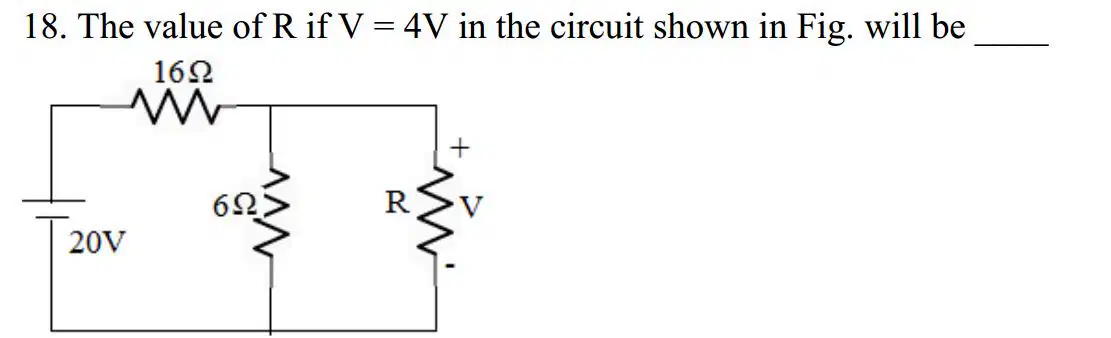
Find the value of R
12 Ω
4.36 Ω
16 Ω
10 Ω
Superposition theorem is not applicable for
Voltage calculations
Power calculations
Passive elements
Bilateral elements
.The real current source has ____________ but finite internal resistance.
Zero
Large
Small
None of these
Which elements obey Ohm’s law.
Unilateral
Non-linear
Linear
All of these
What is a simple example of the Superposition Theorem?
In a circuit with two voltage sources, the total current
through a resistor is the sum of the currents from
each voltage source acting independently.
The total voltage across a resistor is the sum of the
voltages from each source acting together.
The Superposition Theorem states that the total
power in a circuit is the sum of the powers from each
source.
In a circuit with one voltage source, the total current
is equal to the voltage divided by the resistance.
What is the relationship between the short-circuit current (IN) and the equivalent resistance (RN) in a Norton equivalent circuit?
IN = RN * VTh
IN = VTh - RN
IN = VTh / RN
IN = VTh + RN
What is the main advantage of using equivalent circuits?
They eliminate the need for resistors
They make calculations easier
They provide exact measurements
They are only theoretical

Is this a short circuit?
Yes if the button is pushed the light would go out
No since both lights would be on if switch closed but
still one light would be on if open
No because you cant have a short circuit with a
switch
Yes, if the switch is closed the bottom light would go
on and the first light would go off.
In order to create an electric charge, what type of particle must be added or removed from an object?
proton
alpha particle
neutron
electron
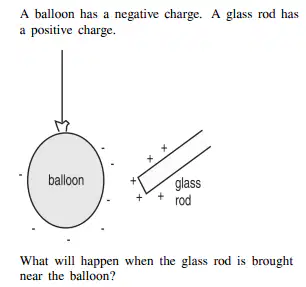
A balloon has a negative charge. A glass rod has a positive charge. What will happen when the rod is brought
near the balloon?
the balloon will spin in circles
the balloon will be repelled by the rod
the balloon will remain in place
the balloon will be attracted to the rod
RMS value of AC is equal to
0.637 max value
0.537 max value
0.707max value
0.123 max value
. Formfactor of ac wavefrom
1.11
0.638
0.707
0.123
Identify the resistor if it has three consecutive lines blue, green and red----------------
(a)
Human body is a
a) Insulator
b) Semiconductor
c) Superconductors
d) Conductor

LED is a diode
a) False
b) True
Transistors replaced the bulky
a) Diode
b) Vaccum tubes
c) Resistors
d) Transformers
Which of the following quantities cannot be measured using Multi-Meter:
a) Current
b) Power Factor
c) Voltage
d) Resistance
In a Circuit, Ammeter should be always connected in ____ arrangement
a) Parallel
b) Either in Series or in Parallel
c) Series
d) Can be connected in both
Wattmeter is used to measure which of the following:
a) DC Power only
b) Both AC Power and DC Power
c) AC Power only
A pointer of an instrument once deflected returns to zero position, when the current is removed due to
a) Mass of the pointer
b) Damping Torques
c) Controlling Torque
d) Action of gravity
Which of the following error is caused by poor calibration of the instrument?
a) Systematic error
b) Random error
c) Gross error
d) Precision error
Which of the following types of instrument can be used for D.C only?
a) Moving iron attraction type
b) Moving Iron repulsion type
c) Permanent magnet type
d) Hotwire type
A moving iron instrument can be used for
a) None of the above
b) AC only
c) DC only
d) Both AC and DC
The advantages of moving coil permanent magnet type instrument are
a) All of the above
b) Efficient eddy current damping
c) Low power consumption
d) No hysteresis loss
The deflecting torque in an instrument may be produced
a) Magnetically
b) Thermally
c) Electrostatically
d) Any of the above
To solve matrix equation, we can use
a) Newton Law
b) Cramer's rule
c) Pascal's Law
d) Elimination

By applying KCL in the node v2 we can get equation...
a) 9=i4+i3
b) i3+3+6=0
c) i3=9+i4
d) i3+3=i4+6
e) i3+3+6=i4

Find V2 in the figure using loop
a) V2=1.6V
b) V2=1.5 V
c) V2=2 V
d) V2=3V
e) V2=1.7V
Application of KCL is combining current source in parallel. The combined current is ...
a) The algebraic sum of the current supplied by the
individual resistors
b) The algebraic sum of the current supplied by the
individual mesh
c) The algebraic sum of the current supplied by the
individual sources
d) The algebraic sum of the current supplied by the
individual voltages
e) The algebraic sum of the current supplied by the
individual nodes
Nodal analysis produces a compact set of equations for the network, which can be solved by ...
a) Manual
b) Cramer's Rule
c) Computer
d) Mesh Analysis
e) Together with friends
. A supernode is formed by?
a) Circuit with many transistors
b) enclosing a voltage source connected between two
non-reference nodes and any elements connected
parallel with it
c) enclosing a voltage source connected between two
non-reference nodes and any elements connected
series with it
d) capacitors with high capacitance
e) many resistor with high resistance
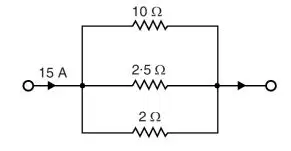
The current in 10Ω resistor in figure is
a) 3.5 A
b) 3 A
c) 1.5 A
d) 2.5 A
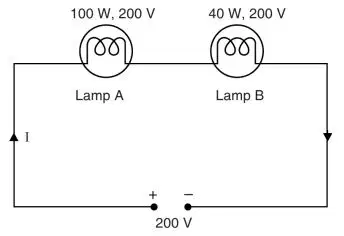
In figure
a) the lamp B will be brighter than lamp A.
b) none of the above
c) the two lamps will be equally bright
d) the lamp A will be brighter than lamp B.
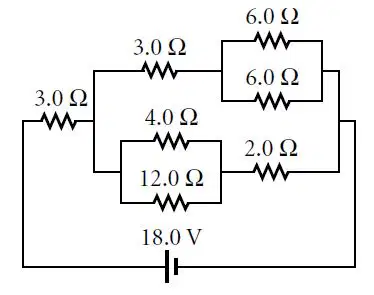
What is the total resistance in this circuit?
a) 37 ohms
b) 6.3 ohms
c) 5.7 ohms
d) 11 ohms
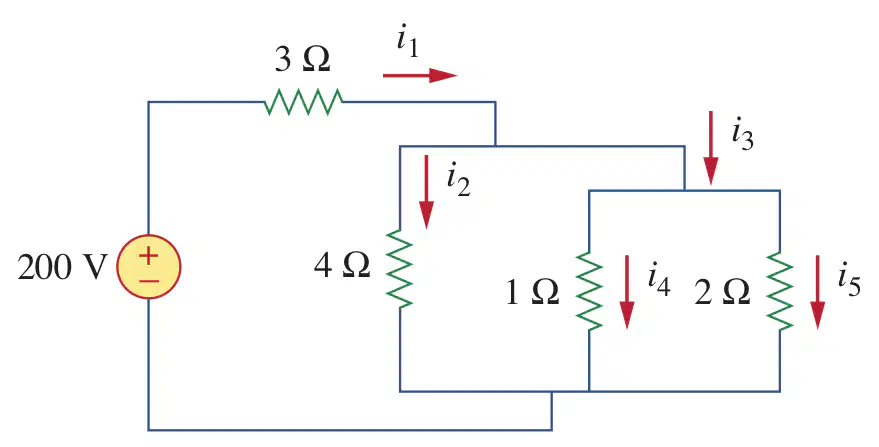
The value of i1 , i2 , i3 , i4 , i5
a) 32A, 16A, 48A, 56A, 8A
b) 56A, 8A, 32A, 16A, 48A
c) 56A, 8A, 16A, 48A, 32A
d) 56A, 16A, 32A, 48A, 8A

Equation for this circuit is :
a) R1R2 = R3Rx
b) R1Rg = RxRg
c) R1R3 = R2Rx
d) R1Rx = R3R2
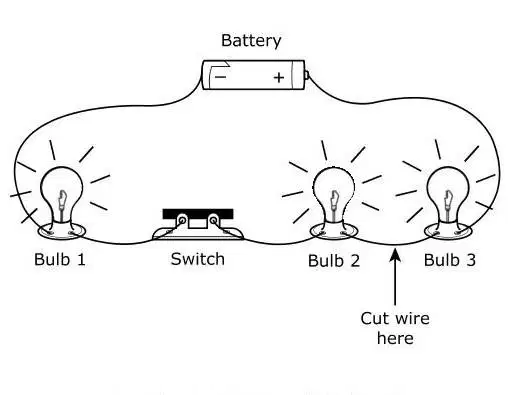
The picture shows a series circuit with three lit bulbs. How many of the bulbs will remain lit if the wire is cut at the
point shown by the arrow?
a) 3
b) 0
c) 2
d) 1
What is the principle of operation of a DC motor?
a) Electromagnetic induction
b) Faraday’s law of electrolysis
c) Fleming’s left-hand rule
d) Coulomb’s law
The back EMF in a DC motor:
a) Opposes the applied voltage
b) Aids the applied voltage
c) Is equal to the applied voltage
d) Does not depend on speed
The speed of a DC shunt motor can be increased by:
a) Increasing armature resistance
b) Decreasing field current
c) Increasing field current
d) Decreasing terminal voltage
Which DC motor has the highest starting torque?
a) Shunt motor
b) Series motor
c) Compound motor
Permanent magnet motor
A DC generator works on the principle of:
a) Faraday’s law of electromagnetic induction
b) Lenz’s law
c) Fleming’s right-hand rule
d) Both a) and c)
The function of a commutator in a DC generator is to:
a) Convert AC to DC
b) Increase voltage
c) Reduce losses
d) Provide mechanical support
A single-phase transformer works on:
a) DC supply
b) AC supply
c) Both AC and DC
d) Pulsed DC
The turns ratio of a transformer is 5:1. If the primary voltage is 220V, the secondary voltage is:
a) 44V
b) 1100V
c) 220V
d) 55V
The core of a transformer is laminated to reduce:
a) Copper losses
b) Hysteresis losses
c) Eddy current losses
d) Windage losses
An ideal transformer has:
a) Zero losses and 100% efficiency
b) 50% efficiency
c) Only hysteresis losses
d) Leakage flux
What is the most commonly used semiconductor material?
a) Copper
b) Silicon
c) Aluminum
d) Iron
Doping in semiconductors is done to:
a) Increase resistivity
b) Decrease conductivity
c) Modify electrical properties
d) Make it a perfect insulator
The potential barrier in a silicon PN junction is approximately:
a) 0.3V
b) 0.7V
c) 1.2V
d) 5V
Reverse saturation current in a diode depends on:
a) Forward voltage
b) Temperature
c) Doping concentration
d) Diode capacitance
A diode is primarily used as a:
a) Voltage regulator
b) Current amplifier
c) Rectifier
d) Oscillator
A Zener diode operates in:
a) Forward bias only
b) Reverse bias only
c) Breakdown region
d) Cutoff region
Zener breakdown occurs due to:
a) High electric field
b) Thermal effects
c) Doping concentration
d) Magnetic field
A BJT has how many PN junctions?
a) 1
b) 2
c) 3
d) 4
The current gain (β) of a BJT is defined as:
a) IC/IE
b) IC/IB
c) IE/IB
d) IB/IC
A BJT operates in the active region when:
a) Emitter-base junction is forward biased, collector-base junction is reverse biased
b) Both junctions are forward biased
c) Both junctions are reverse biased
d) Emitter-base junction is reverse biased
A depletion-mode MOSFET conducts when:
a) VGS=0
b) VGS>0VGS>0
c) VGS<0
d) Only at high temperatures
An enhancement-mode MOSFET turns on when:
a) VGS=0
b) VGS>Vth
c) VGS<0
d) No gate voltage is needed
The main advantage of a MOSFET over a BJT is:
a) Higher input impedance
b) Higher power dissipation
c) Lower switching speed
d) More complex biasing
The binary equivalent of decimal 13 is:
a) 1101
b) 1011
c) 1110
d) 1001
The octal equivalent of binary 101101 is:
a) 45
b) 55
c) 65
d) 75
The hexadecimal equivalent of binary 11101110 is:
a) EE
b) EF
c) FE
d) FF
BCD representation of decimal 9 is:
a) 1001
b) 1100
c) 1010
d) 1111
Gray code for binary 1100 is:
a) 1010
b) 1100
c) 1001
d) 1110
The output of a NAND gate is 0 only when:
a) All inputs are 0
b) Any input is 0
c) All inputs are 1
d) Any input is 1
An XOR gate outputs 1 when:
a) Both inputs are same
b) Both inputs are different
c) Any input is 1
d) All inputs are 1
According to Boolean algebra, A+A‾B
A
A+B
A‾B
AB
The simplified form of A(A+B)
a) AA
b) BB
c) ABAB
d) A+BA+B
A
B
AB
A+B
State de-morgan law
(a)