wayground logo

Free Printable Worksheets

Font size

S
M
L
XL
Worksheets

Earth Science 2nd Nine Weeks Test Review

Total questions: 167

Worksheet time: 3hrs 35mins

Name
Class
Date
1.
What are the two main factors that determine the climate of an area?
a)
precipitation and humidity
b)
temperature and air pressure
c)
wind conditions and humidity
d)
temperature and precipitation
2.
What are the 3 major climate zones in order from equator to the poles?
a)
polar, temperate, tropical
b)
tropical, temperate, polar
c)
temperate, polar, tropical
3.
What is the condition of the Earth's atmosphere at a certain time and place?
a)
climate
b)
temperature
c)
weather
d)
air pressure
4.
Which BEST describes why latitudes closest to the equator have warmer climates?
a)
they are at lower elevations
b)
they receive more solar energy
c)
they are nearer to ocean currents
d)
they get more winds that carry energy in the form of heat
5.
What is the weather conditions in an area over a long period of time?
a)
climate
b)
temperature
c)
elevation
d)
precipitation
6.
The temperature of a tropical climate is?
a)
consistently warm
b)
consistently cool
c)
consistently moderate
d)
warm and cool
7.
A polar climate is?
a)
warm and cool
b)
consistently moderate
c)
consistently cool
d)
consistently warm
8.
What is the climate of the top of a mountain like as compared to the bottom of the mountain?
a)
warmer
b)
cooler
c)
drier
d)
wetter
9.
The gradual increase in the temperature of the atmosphere is known as ___________________.
a)
greenhouse effect
b)
global warming
c)
fossil fuels
d)
ice ages
10.
Which of these is NOT a factor that determines the climate of a place?
a)
latitude
b)
wind patterns
c)
longitude
d)
elevation
11.
What is climate?
a)
What's happening in space at a time and place.
b)
What's happening in our atmosphere at a time and place
c)
The average weather over many years
d)
The average temperature over many years.
12.
What climate does a desert have?
a)
Tropical
b)
Polar
c)
Arid/Dry
d)
Temperate
13.
Antarctica is cold all the time. What is it's climate?
a)
Tropical
b)
Polar
c)
Arid/Dry
d)
Temperate
14.
Which of the following is a greenhouse gas?
a)
carbon monoxide
b)
oxygen
c)
nitrogen
d)
carbon dioxide
15.
When the sun's rays pass through our atmosphere and then heat is trapped by the atmosphere it is called
a)
Global Warming
b)
Greenland Effect
c)
Greenhouse Effect
d)
Ice Age
16.
All of the following are effects of Global Warming EXCEPT
a)
increase in hurricanes
b)
lower sea levels
c)
increase in disease
d)
melting polar ice caps
17.

Most of the United States is in Earth's ___________ climate zone.

a)

polar

b)

tropical

c)

temperate

d)

subtropical

18.

Cities that are closer to large bodies of water tend to have _____________ temperatures

a)

more extreme temperature changes

b)

less extreme temperature changes

c)

4 distinct seasons

d)

more sunshine

19.
How does latitude influence climate?
a)
The closer you are to the equator the higher the temp
b)
Winds bring rain to the coast from the seas
c)
The higher the altitude the colder the temperature
d)
Ocean Currents affect precipitation
20.

Sea and land breezes over a large region that change direction with the seasons are

called

a)

savannas

b)

prevailing winds.

c)

monsoons

d)

desert winds.

21.

This is released by mining, livestock, and agriculture.

a)

sunspots

b)

methane

c)

aerosols

d)

Fuel

22.

Which of the following gases found in our atmosphere is not a greenhouse gas?

a)

carbon dioxide

b)

water vapor

c)

methane

d)

nitrogen

23.

Over the past 200 years, the level of carbon dioxide in the atmosphere has

a)

decreased slightly.

b)

increased steadily.

c)

stayed about the same

24.

Which statement is true?

a)

Temperature is affected by latitude, precipitation, and ocean currents.

b)

Temperature is affected by altitude, precipitation, and ocean currents.

c)

Temperature is affected by distance from large bodies of water and ocean currents.

d)

Temperature is affected by latitude, altitude, distance from large bodies of water, and ocean currents

25.
Earth's ozone layer is _____________________________.
a)
has been thickening over the past several years
b)
filters harmful ultraviolet radiation from the sun
c)
exists only over Antarctica
d)
traps carbon dioxide in the stratosphere
26.
Select the best answer- What is weather?
a)
Weather is what is happening in the atmosphere in a certain place at a certain time.
b)
Weather is the atmosphere.
c)
Weather is precipitation.
d)
Weather is wind.
27.
A severe storm which involves a funnel cloud forming over land is:
a)
hurricane
b)
tornado
c)
thunderstorm
d)
blizzard
28.
A severe storm that involves winds over 119mph and forms over water is:
a)
tornado
b)
thunderstorm
c)
hurricane
d)
blizzard
29.
This severe weather involves low temperatures and snow either falling or drifting
a)
hurricane
b)
thunderstorm
c)
tornado
d)
blizzard
30.
The boundary  between two air masses is known as:
a)
front
b)
storm
c)
climate
d)
flood
31.
Why do hurricanes inflict more damage than tornadoes?
a)
they are larger
b)
longer duration
c)
also associated with flooding and strong rains
d)
all of the rest
32.
Warm air moving upwards from the Gulf of Mexico is:
a)
continental tropical
b)
continental polar
c)
maritime tropical
d)
maritime polar
33.
Warm air mass that does not carry water:
a)
continental tropical
b)
continental polar
c)
maritime tropical
d)
maritime polar
34.
Cold air mass that is carrying water is:
a)
continental tropical
b)
continental polar
c)
maritime tropical
d)
maritime polar
35.
This type of front can bring strong storms
a)
cold
b)
warm
c)
stationary
d)
occluded
36.
This type of front results in the same weather for several days
a)
warm
b)
cold
c)
stationary
d)
occluded
37.
Most of the U.S.A weather storms come from the...
a)
East and Travel to the West
b)
West and Travel to the East
c)
North and Travel to the South
d)
South and Travel to the North
38.
Which front is represented on a map by a line with triangles attached to it? 
a)
Cold Front
b)
Warm Front
c)
Stationary Front
d)
Occluded Front
39.
What is the most likely forecast of any area experiencing high barometric pressure?
a)
Stormy
b)
Windy
c)
Rainy
d)
Sunny
40.
Which front is represented on a map as a line with half circles attached to it?
a)
Cold
b)
Warm
c)
Stationary
d)
Occluded
41.
In a high pressure systems
a)
there are few clouds because the air in moving downward
b)
there are many clouds because the air is very humid
c)
there are few clouds because the air is moving outward
d)
there are many clouds because the air is moving upward
42.
What is an air mass?
a)
a place where weather always changes in an extreme way
b)
a large body of air with the same temperature and moisture
c)
any cloud that produces rain, sleet, snow or hail
d)
any kind of air, as long as it is always wet and freezing
43.
What does this symbol on a weather map indicate? 
a)
High pressure system
b)
Low pressure system
c)
Cold front
d)
Warm front
44.
What does this symbol indicate on a weather map? 
a)
High pressure system
b)
Low pressure system
c)
Cold front
d)
Warm front
45.
What kind of pressure predicts clear weather?
a)
high
b)
low
c)
cold
d)
stationary
46.
What would you expect from a Continental Polar air mass? 
a)
moist, warm air
b)
dry, cold air
c)
dry, warm air
47.
What would you expect from a Maritime Tropical air mass? 
a)
dry, warm air
b)
moist, cold air
c)
moist, warm air
48.

Differences in air pressure cause wind.

a)

True

b)

False

49.
A hurricane forms over the Atlantic Ocean. When it hits land and comes ashore, its wind speed decrease significantly.  This happens because the hurricane:
a)
gains more water from the flooded land than the ocean
b)
meets a land breeze
c)
meets a stronger hurricane moving from land
d)
no longer gains energy from warm ocean water
50.
This is the symbol for a... 
a)
Stationary Front
b)
Occluded Front
c)
Cold Front
d)
Warm Front
51.
This is the symbol for a... 
a)
Stationary Front
b)
Occluded Front
c)
Cold Front
d)
Warm Front 
52.

Fossils are often found in this type of rock.

a)

Sedimentary

b)

Igneous

c)

Metamorphic

53.

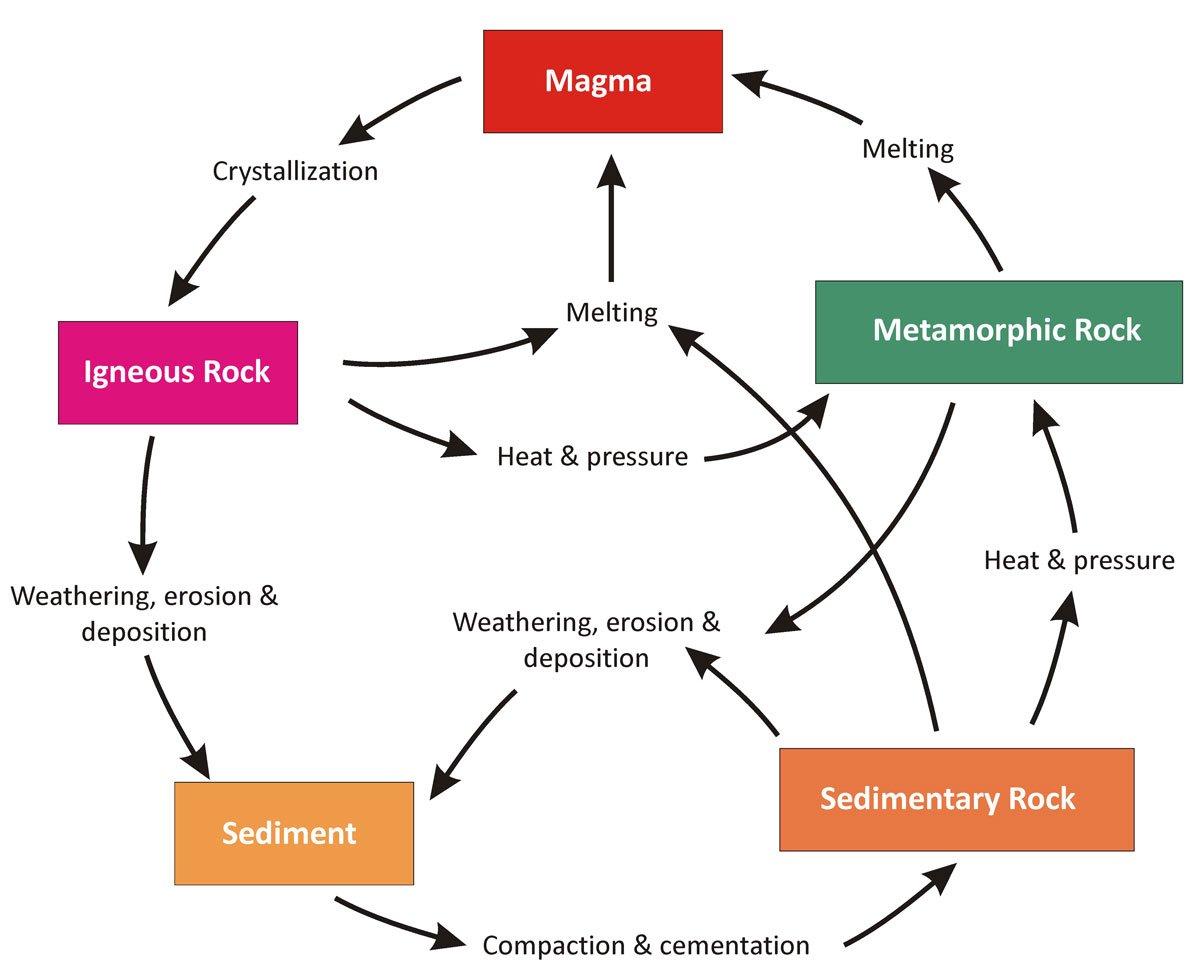
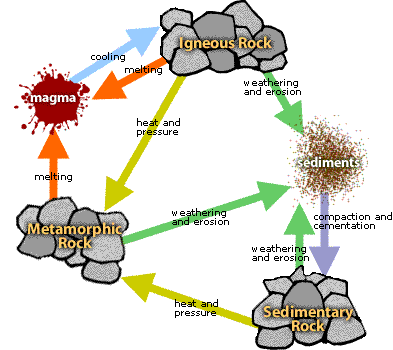
This rock is changed by heat and pressure.

a)

Sedimentary

b)

Igneous

c)

Metamorphic

54.

This rock may form from magma that hardens.

a)

Sedimentary

b)

Igneous

c)

Metamorphic

55.

This rock is often found near water.

a)

Sedimentary

b)

Igneous

c)

Metamorphic

56.

This rock may be formed from lava.

a)

Sedimentary

b)

Igneous

c)

Metamorphic

57.

You would most likely find this rock near a volcano.

a)

Sedimentary

b)

Igneous

c)

Metamorphic

58.

What kind of rock is "granite"?

a)

Sedimentary

b)

Igneous

c)

Metamorphic

59.

What kind of rock is "marble"?

a)

Sedimentary

b)

Igneous

c)

Metamorphic

60.

What kind of rock is "limestone"?

a)

Sedimentary

b)

Igneous

c)

Metamorphic

61.

What kind of rock is "sandstone"?

a)

Sedimentary

b)

Igneous

c)

Metamorphic

62.

What kind of rock is "Basalt"?

a)

Sedimentary

b)

Igneous

c)

Metamorphic

63.

This rock is usually made up of pieces of rock called sediments that have been pressed and cemented together.

a)

Sedimentary

b)

Igneous

c)

Metamorphic

64.

Formed by heat and pressure.

a)

Sedimentary

b)

Metamorphic

c)

Extrusive Igneous

d)

Intrusive Igneous

65.
Formed by compacting & cementing of sediments
a)
Sedimentary
b)
Metamorphic
c)
Extrusive Igneous
d)
Intrusive Igneous
66.
Formed by weathering & erosion
a)
magma
b)
sediments
c)
sedimentary rock
d)
intrusive igneous
67.

Has large crystals due to slow cooling.

a)

sedimentary rock

b)

metamorphic rock

c)

intrusive igneous rock

d)

extrusive igneous rock

68.

Has small or no crystals because of rapid cooling.

a)

sedimentary

b)

metamorphic

c)

extrusive igneous

d)

intrusive igneous

69.
Has wavy bands.
a)
sedimentary rock
b)
metamorphic rock
c)
extrusive igneous rock
d)
intrusive igneous rock
70.

A rock deep within the Earth experiences extreme temperature and pressure. After a long period of time, it becomes which type of rock?

a)

Magma

b)

Igneous

c)

Metamorphic

d)

Sedimentary

71.

Rocks and sediment change as they move through the rock cycle. Which change involves them melting?

a)

Lava to rock

b)

magma to lava

c)

rock to magma

d)

rock to sediment

72.

A geologist is studying three layers of sedimentary rock in an area. The layers have not shifted from their original positions. The geologist records the relative ages of the rocks. What did the geologist use to determine the relative ages of the rocks?

a)

Radioactive dating

b)

Mineral content

c)

Absolute dating

d)

The Law of Superposition

73.

What is underground molten rock?

a)

Lava

b)

Magma

c)

Soil

d)

Intrusive

74.

What is molten rock above ground?

a)

Extrusive

b)

Magma

c)

Lava

d)

Sedimentary

75.

Pumice is an example of:

a)

Igneous

b)

Metamorphic

c)

Sedimentary

76.

Quartzite is an example of:

a)

Metamorphic

b)

Igneous

c)

Sedimentary

77.

Shale is an example of:

a)

Metamorphic

b)

Sedimentary

c)

Igneous

78.

Gneiss is an example of:

a)

Igneous

b)

Sedimentary

c)

Metamorphic

79.

Obsidian is an example of:

a)

Igneous

b)

Sedimentary

c)

Metamorphic

80.

Conglomerate is an example of:

a)

Igneous

b)

Sedimentary

c)

Metamorphic

81.

What are the three major types of rocks?

a)

Igneous, Metamorphic, Sedimentary

b)

Metamorphic, Igneous, Cementation

c)

Brown, Red, Gray

d)

Streak, Hardness, Breakage

82.
This rock formed when bits of other rocks became pressed into a solid. What type of rock is it?
a)
Sedimentary Rock
b)
Metamorphic Rock
c)
Igneous Rock
83.

What is the name of a person who studies rocks and the earth?

a)

veterinarian

b)

geologist

c)

podiatrist

d)

teacher

84.

The process when rocks break into smaller pieces due to exposure to natural elements is called:

a)

erosion

b)

weathering

c)

sediments

85.
The process by which metamorphic rocks are formed...
a)
heat and pressure
b)
erosion and deposition
c)
melting and cooling
86.
The three groups of rocks are classified by
a)
How they form
b)
Color
c)
Grain size
d)
Chemical Composition
87.
Which of the following processes involves the binding of sediments together?
a)
Compaction
b)
Cementation
c)
Erosion
d)
Weathering
88.
What does Luster mean?
a)
How it reflects light
b)
How easily it irregularly breaks apart
c)
How tightly packed the mineral is
d)
Is tested by using the scratch plate
e)
Is tested by the mohs scale
89.
Which of the following processes involves the binding of sediments together?
a)
Compaction
b)
Cementation
c)
Erosion
d)
Weathering
90.
What does Luster mean?
a)
How it reflects light
b)
How easily it irregularly breaks apart
c)
How tightly packed the mineral is
d)
Is tested by using the scratch plate
e)
Is tested by the mohs scale
91.

What does 'streak' mean?

a)

Is tested by using the scratch plate

b)

How easily it irregularly breaks apart

c)

How tightly packed the mineral is

d)

Is tested by the Mohs scale

e)

How it reflects light

92.
Which process describes the transformation of sediment into sedimentary rock?
a)
Melting
b)
Compaction and Cementation
c)
Metamorphism
d)
Erosion
93.

Which type of rock is primarily formed from the accumulation of plant and animal debris?

a)

Sedimentary

b)

Metamorphic

c)

Igneous

d)

Organic

94.

What are grains?

a)

Grains are the particles of minerals that give a rock its texture.

b)

Lines

c)

Bumps, lines, and dots

d)

Its chemical composition

95.

Which of the following is an example of biological weathering?

a)

Freeze-thaw

b)

Wind blowing sand onto a rock

c)

Abrasion due to the movement of glaciers

d)

Plant that grows in the cracks of rocks

96.

What characteristic is common in metamorphic rocks?

a)

Fossils

b)

Foliations or layers

c)

Gas bubbles

d)

Glassy surface

97.

Magma trapped below the surface forms large-grained ______________ rock when it cools.

a)

Extrusive

b)

Metamorphic

c)

Sedimentary

d)

Intrusive

98.

Magma cooling at or near Earth’s surface forms small-grained __________ igneous rock.

a)

Extrusive

b)

Intrusive

c)

Sedimentary

d)

Metamorphic

99.

This rock was formed by many fossils that settled on top of each other over time. What type of rock is this?

a)

Sedimentary

b)

Igneous

c)

Metamorphic

100.
After lots of time, pressure, and heat, you get this kind of rock. What type of rock is this?
a)
Sedimentary
b)
Igneous
c)
Metamorphic
101.
This rock cooled on the outside of a volcano and contained air bubbles when it was forming. What type of rock is this?
a)
Sedimentary
b)

Extrusive Igneous

c)
Metamorphic
d)

Intrusive Igneous

102.
This rock was molten magma that slowly cooled under the ground. What type of rock is this?
a)
Sedimentar
b)

Intrusive Igneous

c)
Metamorphic
d)

Extrusive Igneous

103.
This rock started as molten magma. What type of rock is this?
a)
Sedimentary
b)
Igneous
c)
Metamorphic
104.
This rock started as lava that cooled and then was heated and put under pressure over time. What type of rock is this?
a)
Sedimentar
b)
Igneous
c)
Metamorphic
105.
The geologic time scale represents Earth's ________ year history.
a)
2.5 million
b)
9 million
c)
1 billion
d)
4.6 billion
106.
Scientists use ______ to help figure out geologic time.
a)
earthquakes
b)
plate tectonics
c)
rock layers
d)
erosion
107.
A ________ is a scientist that studies the composition of the Earth, including rock layers.
a)
biologist
b)
paleontologist
c)
chemist
d)
geologist
108.
Dinosaurs lived in the ___________ era.
a)
Mesozoic
b)
Paleozoic
c)
Cenozoic
d)
Neozoic
109.

Mammals are a dominant group in which era?

a)

Cenozoic

b)

Mesozoic

c)

Paleozoic

d)

Cambrianozoic

110.

What era did the formation of the earth occur?

a)

Paleozoic

b)

Precambrian

c)

Cenozoic

d)

Cambrian

111.

What type of event usually marks the end of an Era

a)

A Mass Extinction

b)

A Quinceanera

c)

An earthquake

d)

A Volcanic Eruption

112.

What are the four eras in order from OLDEST to NEWEST?

a)

Pre-Cambrian, Paleozoic, Mesozoic, Cenozoic

b)

Pre-Cambrian, Mesozoic, Paleozoic, Cenozoic

c)

Cenozoic, Mesozoic, Paleozoic, Pre-Cambrian

d)

Mesozoic, Pre-Cambrian, Cenozoic, Paleozoic

113.

What era did trilobites, fishes, and other marine organisms dominate?

a)

Precambrian

b)

Paleozoic

c)

Mesozoic

d)

Cenozoic

114.

Which era is the most recent, the one that we are currently in?

a)

Mesozoic

b)

Paleozoic

c)

Cenozoic

d)

Precambrian

115.

The dinosaurs and reptiles were dominant in which Era?

a)

Precambrian

b)

Mesozoic

c)

Paleozoic

d)

Cenozoic

116.

90% of Earth’s history occurred during which era?

a)

Precambrian

b)

Paleozoic

c)

Mesozoic

d)

Cenozoic

117.

When did the first birds appear?

a)

Cambrian

b)

Permian

c)

Cretaceous & Triassic

d)

Mesozoic and Jurassic

118.

The period of geologic time when the biodiversity of life on the planet increased dramatically was

a)

Jurassic

b)

Triassic

c)

Permian

d)

Cambrian

119.

There have been how many major extinction events on planet Earth?

a)

3

b)

4

c)

5

d)

2

120.

The worst mass extinction event in the history of the Earth wiping out 96% of all life was the

a)

Permian-Triassic

b)

Holocene

c)

Triassic-Jurassic

d)

Ordovician-Silurian

121.

During which periods did the first land plants, vertebrates, and insects appear?

a)

Jurassic-triassic

b)

Ordovician-silurian

c)

Hadean-acheon

d)

Tertiary-quaternary

122.

When did this creature live?

a)

Triassic-Jurassic

b)

Jurassic-Silurian

c)

Cretaceous-Tertiary

d)

Eocene-Oligocene

123.

The period of time where conditions were harsh and no life forms existed was the

a)

Pleistocene

b)

Cambrian

c)

Hadean

d)

Holocene

124.

The time when the first jawed fishes and amphibians appeared

a)

Devonian

b)

Jurassic

c)

Cambrian

d)

Hadean

125.

When large land reptiles first appeared.

a)

Jurassic

b)

Permian

c)

Cambrian

d)

Holocene

126.

Known as the age of reptiles

a)

Mesozoic

b)

Cenozoic

c)

Phanerozoic

d)

Cambrian

127.
The Geologic Time Scale is a record of what?
a)
old geologists
b)
sweet geology music
c)
the known history of rocks and fossils
d)
a list of every living thing ever
128.

Why may fossil of the same organism be found on different continents?

a)

Because the continents were once together

b)

Similar fossils should not be found on different continents

c)

Because fossils change over time

d)

Because of the Evolution of the Earth

129.

When scientists want to know the exact age of a rock or fossil, they use...

a)

a magnifying glass

b)

the law of superposition

c)

radioactive dating

d)

a microscope

130.

The second broadest category of geologic time is______________?. The Cenozoic is one of them.

a)

era

b)

eon

c)

epoch

d)

period

131.

What are the names of ALL parts of the geologic time scale in correct order from broadest to narrowest?

a)

era, period, eon

b)

eon, era, period, epoch

c)

era, eon, epoch, period

d)

eon, era, epoch, period

132.

The Phanerozoic is a

a)

eon

b)

era

c)

period

d)

epoch

133.

The Cenozoic is a

a)

eon

b)

era

c)

period

d)

epoch

134.
According to the law of superposition, which layer is the youngest?
a)
A
b)
B
c)
C
135.
When magma reaches the surface, what is it called?
a)
lava
b)
explosive
c)
rocks
136.
What is the shaking and trembling that results from movement of rock beneath Earth's surface?
a)
Volcanoes
b)
Earthquakes
c)
Plate tectonics
137.
What is an area where material from deep within the mantle rises and then melts, forming magma?
a)
hot spot
b)
lithosphere
c)
transform boundary
138.
What is a weak spot in the crust where molten material, or magma, comes to the surface?
a)
volcano
b)
lava
c)
earthquakes
139.
Two plates move toward each other at what?
a)
convergent boundary
b)
transform boundary
c)
divergent boundary
140.
The idea that Earth's crust is made up of separate plates that float on the upper mantle is the theory of what?
a)
plate tectonics
b)
continental drift
c)
Pangea
141.
What is represented by the picture? 
a)
Sea-floor spreading
b)
Pangea
c)
How the continents are arranged today
d)
Volcanoes
142.
Look at the image. The South American and Nasca plate are moving together. Which type of boundary is this? 
a)
divergent
b)
convergent
c)
transform fault
143.
In the image, which type of boundary is shown? Hint: its located in the state of California. 
a)
divergent
b)
convergent
c)
transform fault
144.
Which type of event often occurs along transform fault boundaries? 
a)
volcanoes
b)
earthquakes
c)
sea-floor spreading
d)
mountain building
145.
When molten rock reaches the Earth's surface, comes out and begins to cool, it is known as
a)
lava
b)
mantle
c)
magma
d)
crater
146.
The movement of Earth's crust along plate boundaries produces
a)
earthquakes
b)
volcanoes
c)
moutains
d)
All of these options. 
147.
What causes tectonic plates to move?
a)
ocean currents
b)
convection currents in the mantle
c)
volcanoes
d)
the Coriolis Effect
148.
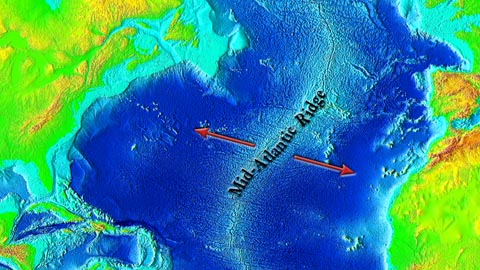
The image shows the Mid Atlantic Ridge. Which type of boundary occurs at this ridge where the ocean floor is spreading apart? 
a)
convergent
b)
divergent 
c)
transform fault
149.
The place where old crust is pushed down into a trench is called what?
a)
subduction
b)
convection current
c)
deep-ocean trench
150.
The area around the Pacific Ocean where lots of earthquakes and volcanoes happen is called the ____________.
a)
Ring of Earth
b)
Ring of Fire
c)
Ring of Stone
d)
Ring of Diamond
151.
What are the puzzle pieces of the Earth's surface called?
a)
Tectonic plates
b)
Puzzles
c)
Earthquakes
152.

This famous fault in California has a lot of earthquakes!

a)

New Madrid

b)

Denali Fault

c)

Ramapo Seismic Zone

d)

San Andreas Fault

153.

What type of boundary is shown in the diagram?

a)

Divergent

b)

Convergent

c)

Transform

154.

What type of boundary is shown in the diagram?

a)

Divergent

b)

Convergent

c)

Slide/Transform

155.

What type of boundary is shown in the diagram?

a)

Divergent

b)

Convergent

c)

Slide/Transform

156.
What is subduction?
a)
one plate collides with another
b)
one plate destroys another
c)
one plate goes beneath another
d)
one plate divides another
157.
What is molten rock that has formed deep within the Earth?
a)
Hot Spot
b)
Magma
c)
Lava
d)
Volcano
158.
Vocanoes are found...
a)
on land
b)
under water
c)
on islands
d)
all of the above
159.
The difference between magma and lava is _____
a)
where it is found (above or below the surface)
b)
how hot the molten rock is (lava is hotter than magma)
c)
 the type of boundary where it forms
d)
the viscosity of the molten rock (lava has a lower viscosity)
160.

Where are volcanoes most likely to form?

a)

along plate boundaries

b)

near the center of continents

c)

near water

d)

on the moon

161.

Most earthquakes occur along or near the edges of the Earth's

a)

rivers.

b)

tectonic plates.

c)

oceans.

d)

deserts.

162.

The order of the layers of the Earth from the surface to the center is:

a)

asthenosphere, lithosphere, mesosphere,

outer core, inner core

b)

lithosphere, asthenosphere, mesosphere,

inner core, outer core

c)

mesosphere, outer core, inner core,

lithosphere, asthenosphere

d)

lithosphere, asthenosphere, mesosphere,

outer core, inner core

163.

What is the outermost layer of the Earth called?

a)

lithosphere

b)

core

c)

asthenosphere

d)

mesosphere

164.
Wegener’s proposal of a supercontinent was supported by:
a)
earthquake data
b)
seafloor magnetism
c)
rock, fossil, and climate data.
d)
convection currents in the mantle.
165.
What evidence did Wegener use in his theory?
a)
Continents and fossils fitting together/matching-up like puzzle pieces 
b)
glacier scars and evidence from temperature
c)
mountain ranges and coal deposits line up across continents
d)
all of the above
166.

The movement of the tectonic plates is caused by

a)

the rotation of the Earth.

b)

convection currents in the Asthenosphere

c)

the gravity of the iron-nickel core.

d)

the Moho discontinuity.

167.

What are the two layers which affect the movement of plate tectonics?

a)

asthenosphere and lithosphere

b)

asthenosphere and biosphere

c)

asthenosphere and geosphere