
 Worksheets
Introduction to Robotics Exam
Total questions: 44
Worksheet time: 25mins
A ____________ and ____________ machine designed to move materials, tools or specialized instruments, by programmed movements to carry out a variety of tasks.
Reprogrammable and Multifunction
Programmable and functional
Programmed and multifunctional
Specialized and skilled
Who coined the term robotic and published the three famous laws of robotics?
Isaac Asimov
Isaac Newton
Isaac Stewart
Isaac Sherill
How many degrees of freedom is needed to locate a robot’s Hand at any point in its workspace?
6
8
4
12
What are the three degrees of freedom located in the arm of a robotic system
Rotational, Radial and Vertical
Vertical, Horizontal and Circular
Up, down, and around
90 degrees, 180 degrees and 360 degrees
The following degrees of freedom pitch, yaw and roll are located in which part of the robotic arm?
Base
Joint
Traverse
Wrist
A robotic joint provides relative motion between how many links of the robot?
4
2
3
5
How many degrees of freedom is normally associated with each joint?
1
2
4
5
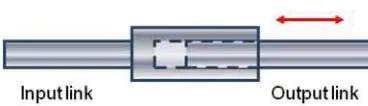
Name the following joint:
Linear
Twising
Orthogonal
Revolving

Name the following joint:
Rotational
Revolving
Twisting
Orthogonal
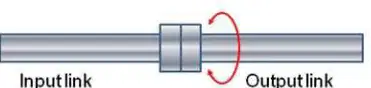
Name the following joint
Rotational
Orthogonal
Revolving
Twisting
Which configuration Consists of three sliding joints, two of which are orthogonal.
Rectangular
Cylindrical
Polar
SCARA
Which configuration consists of a vertical column, relative to which an arm assembly is moved up or down?
Cylindrical
Spherical
Jointed arm
SCARA
Which of these is not a joint?
Rotational
Cartesian
Linear
Orthogonal
What are the specifications of Axis Movement?
Robot motion range, Robot motion speed and Repeatability
Payload and Robot mass
V – Reach, H – Reach, and Structure
None of the above
The basic components of a robot are?
manipulator, and the end effector (which is the part of the manipulator).
the power supply and the controller.
manipulator, the end effector, the power supply and the controller.
Wrist and end effector
Sensors are devices with inbuilt ________________, ________________, or ________________ features. Their ________________ depends mainly on the transduction principle.
electronic signals, Mechanical, Chemical, functioning
electrical, magnetic, optical, performance
digital, analog, thermal, operation
pressure, temperature, humidity, accuracy
The ________________ is based on the ________________ of ________________ from one form to another.
Principle, Conversion, Energy
Law, Creation, Matter
Theory, Transfer, Power
Concept, Movement, Force
A ________________ is used to measure the ________________ of the robot and its ________________ environment.
Robot Sensor, temperature, surrounding
Robot Actuator, speed, internal
Robot Controller, voltage, external
Robot Motor, pressure, mechanical
Sensors pass __________________________ to robots for executing desired ________.
(a)
Robots need ______________ sensors that help them ______________ themselves.
suitable, control
random, destroy
useless, ignore
broken, confuse
Robot sensor ________________ the smooth ________________ of a robot.
These sensors help robots react to the ________________ received.
Condition
Color
Sound
Shape
These sensors help create a feel-and-see feature in them, which provides the ____________________ accomplishment of various tasks.
Functions
Failures
Interruptions
Errors
Understanding the environment can help a robot determine the ____________________, object ____________________, sound, or chemical reaction and ________ accordingly.
proximity, surrounding, act
distance, movement, react
location, position, move
area, object, respond
What are used to identify the light and generate a voltage difference?
Light sensors
Camera obscura
Signals
Fire
Which set of sensors are used as light sensors in robot parts?
photoresistors and photovoltaic cells.
IR Transceiver and Ultrasonic
Camera obscura and daguerreotype
Refracted and projection
Which sensor with the help of angular momentum, this sensor is used to quantify the orientation. It is used when we want our robot to be independent of the earth’s gravity to maintain the right orientation?
Gyroscope
IMU
Voltage
Current
What sensors require physical contact to function?
Proximity
Contact
Temperature
Sound
Which sensors are widely used in robots working in extreme weather conditions?
Contact
Temperature
Navigation
Pressure
6. Industrial robots have which kind of sensors?
Temperature sensors
Vision sensors
Humidity sensors
Sound sensors
7. What sensors does a military robot have?
Temperature and humidity sensors
Proximity, infrared, and camera sensors
Only sound sensors
No sensors
Task and Behavior Planning operates on the key principles of abstraction and composition.
True
False
Natural Language Understanding and Dialog is not effectively two-way communication of semantic understanding between humans and robots.
True
False
Motion planning seeks to coordinate multiple actuators in a robot to execute higher-level tasks.
True
False
Navigation seeks to build a representation of the environment (mapping) and knowledge of the robot’s state within the environment (localization) to enable the robot to operate in the world.
True
False
At the multifunctional level, we have perhaps demonstrated capabilities for the robot to respond to very concrete, mathematical goals.
True
False
Controls is all about ensuring the robot can reliably execute physical commands.
True
False
Speech synthesis acts on the physical world in a different way.
True
False
Speech recognition is another form of exteroceptive sensing.
True
False
Automatic, Autonomous, and Aware are the 3 capabilities of a robot’s behavior.
True
False
Abstract, behavioral and functional are the 3 skill types of a robot.
True
False
How many joints does the robot have?
3
5
6
8
Joint Limits allow you to restrict individual robot joint movements in joint space. Which of the below are options for doing this? (multiple answers)
Least Restricted
Maximum Speed
Reduced Mode
Position Range
Technology dealing with the design, construction, and operation of computer-controlled, autonomous machines.
Mechanics
Robotics
Physics
Chemistry

