
 Worksheets
Final Review Seniors
Total questions: 76
Worksheet time: 38mins
If I have an element and it is hard, malleable, ductile, and a good conductor of heat and electricity, what type of element is likely to be?
Non-metal
Metal
Metalloid
Noble Gas
What theory primarily assumes that matter is made of small particles in constant motion?
Einstein's Theory of Relativity
Kinetic Molecular Theory
Pascal's Theory
Archimedes' Theory
__________ = Force divided by Area
Pressure
Volume
Density
Mass
The temperature at which an object goes from the solid state of matter to the liquid state of matter is called what?
Boiling Point
Plasma Point
Hydration Point
Melting Point
All particles move randomly in objects according to kinetic molecular theory.
True
False
___________ Principle can be described in two ways. 1. Restricting the flow of a fluid increases the velocity of the fluid. 2. As the velocity of a fluid increases, the pressure exerted by the fluid decreases. What principle is this?
Bernoulli's Principle
Pascal's Principle
Archimedes' Principle
Jefferson's Principle
The notion, pressure applied to any part of a fluid is applied all of the fluid, is known as what?
Bernoulli's Principle
Pascal's Principle
Archimedes' Principle
Jefferson's Principle
Which state of matter has neither a definite volume nor a definite shape?
Solid
Liquid
Gas
Plasma
Which state of matter has both a definite volume and a definite shape?
Solid
Liquid
Gas
Plasma
What state of matter is composed of positively and electrically charged particles and makes up things like the Sun?
Solid
Liquid
Gas
Plasma
Which state of matter has a definite volume, but takes the shape of its container?
Solid
Liquid
Gas
Plasma
______________ = Pressure times Area
Force
Work
Energy
Power
What principle helps explain how ships float on water?
Bernoulli's Principle
Archimedes' Principle
Pascal's Principle
Newton's Principle
Which principle primarily helps explain how airplanes fly?
Bernoulli's Principle
Archimedes' Principle
Pascal's Principle
Newton's Principle
Which principle helps explain how hydraulic presses work?
Bernoulli's Principle
Archimedes' Principle
Pascal's Principle
Newton's Principle
Which principle helps explain why you feel "weightless" or lighter when swimming?
Bernoulli's Principle
Archimedes' Principle
Pascal's Principle
Solve for the final temperature using Charles' Law given the initial volume is 500 L, initial temperature is 250 K, and final volume is 1000 L.
100 K
250 K
500 K
1000 K
Initial Pressure: 10 Pascals Initial Volume: 6 Liters Final Pressure: ? Final Volume: 12 Liters Mark only one oval.
3 Pascals
4 Pascals
5 Pascals
6 Pascals
Select the option below that is a physical property.
Flammability
Pyrophoricity
Blue color
Supports combustion
Select the option below that is a chemical property.
Odor
Luster
Density
Flammability
If I had 15 ml (this is the volume) of liquid water and then boiled it to produce 50 ml (this is the volume) of water vapor, what would happen to the mass of water during this change?
The mass would increase.
The mass would decrease.
The mass would stay the same.
There would be no mass of water anymore, it is a totally different substance.
A candle burning is an example of what type of change?
Physical
Chemical
If you take water and freeze it into ice, what type of change has occurred?
Physical
Chemical
The formation of water when hydrogen burns.
Physical
Chemical
What group on the periodic table is SUPER reactive with air and water and therefore must be stored in oil to prevent reaction?
Alkali Metals
Alkaline Earth Metals
Oxygen Group
Noble Gases
I have an element that can be hammered into thin sheets, what property is that?
Conductivity
Ductility
Reactivity
Malleability
What form of bonding produces a sea of electrons surrounding positively charged ions?
Covalent
Ionic
Metallic
Nuclear
Which of the following individuals was the first to propose the existence of atoms?
Aristotle
Democritus
JJ Thomson
Thomas Jefferson
Select the option that best describes the first version of atomic theory proposed in the 5th century BC.
All matter is composed of water, earth, fire, and air.
All matter is composed of protons, neutrons, and electrons in constant motion.
All matter is composed of various humors like spirit, phlegm, blood, and wind.
All matter is composed of tiny, indivisible, and indestructible particles.
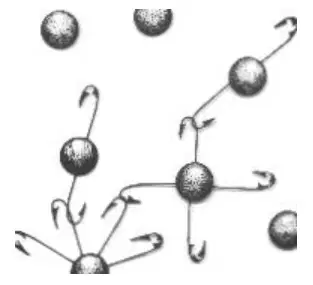
This image shows iron atoms with hooks, which scientist would this idea most likely belong with?
Schrodinger
Thomson
Rutherford
Democritus
Select the word below that best matches the definition provided: "The positive subatomic particle found in the nucleus of the atom."
Photon
Proton
Neutron
Electron
What were the limitations of John Dalton's atomic model?
He didn't say much about the nature of atoms themselves or their appearance.
He didn't understand that they were small particles.
He didn't think that atoms were essentially the same in structure.
He didn't create symbols for each element that he discovered.
The cathode ray experiment was used to prove what aspect of atomic theory?
The existence of atoms as a whole.
The existence of protons.
The existence of electrons.
The existence of neutrons.
What scientific principle primarily helped us discover the electron?
Like charges attract like charges
Opposite charges attract opposite charges
For every action there is an equal but opposite reaction
Force=Mass x Acceleration
What was the first "nuclear" model of the atom compared to?
A really big rain cloud
A solar system
A highway
A ladder
Non-metals are said to be which of the following?
Very malleable and ductile
Phenomenal conductors of heat and electricity
All solid at room temperature
Brittle or powdery and not very good at conducting heat and electricity
Which group of non-metals does not form compounds under natural conditions?
Halogens
Nitrogen Group
Noble Gases
Boron Group
If I was wanting to build a bridge, which group of the periodic table would I use?
Alkaline Earth Metals
Transition Metals
Alkali Metals
Halogens
Metals, when they bond with non-metals, really like to engage in which type of bonding? (It's the one where electrons are taken from the metal and given to the non-metal.)
Ionic
Covalent
Metallic
Carbonic
Which group on the periodic table is the only one that has nothing but non-metals in it?
Alkali Metals
Nitrogen Group
Noble Gases
Oxygen Group
What type of element is able to commonly form BOTH ionic and covalent bonds with some elements in this category being used for semi-conductors?
Metals
Carbonates
Non-metals
Metalloids
If I was trying to produce a transuranium element, what process would I follow?
I would take samples from a mine.
I would use a heavy ion or particle accelerator.
I would combine other elements in the lab.
I would go to the school chemistry lab and get them.
The fundamental particles that make up protons and neutrons are called what?
Electrons
Gigatrons
Antiprotons
Quarks
Protons and Neutrons both have an AMU of what?
-2
-1
0
1
2
For all the isotopes of an atom, which of the following will stay the same?
The number of protons
The number of neutrons
The Mass number
The isotopic notation
The difference between Carbon-12 and Carbon-14 is what?
The number of electrons in the atoms.
The number of protons in the atoms.
The number of energy levels in the atoms.
The number of neutrons in the atoms.
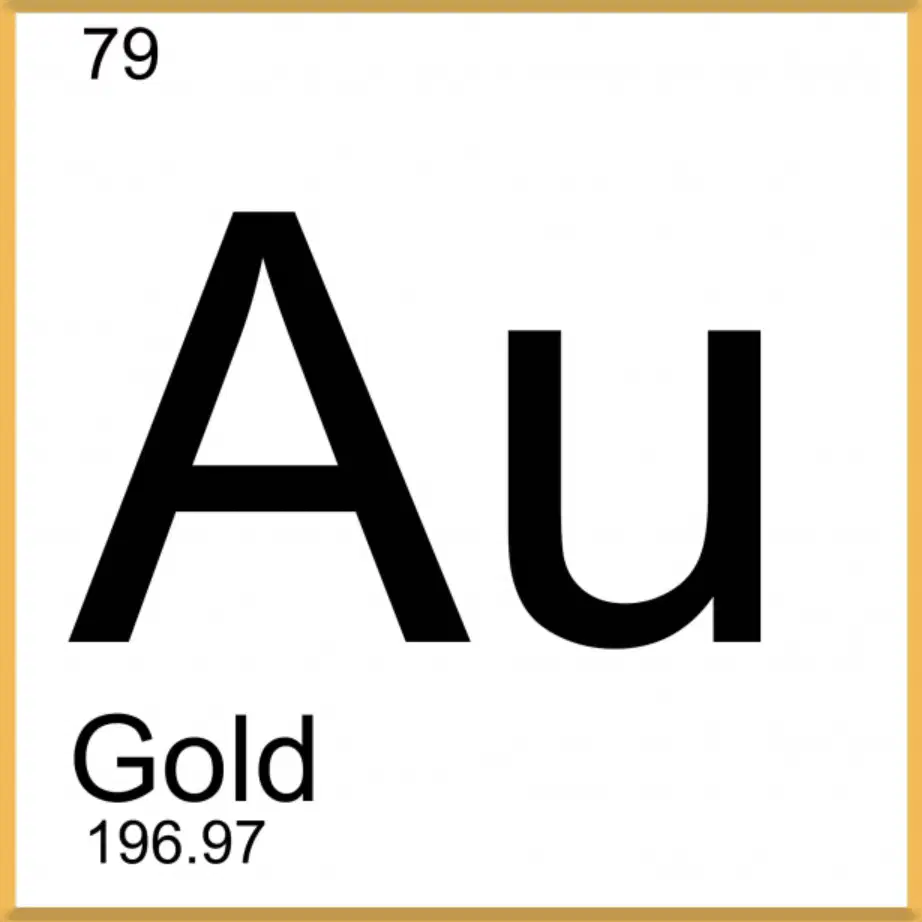
Which component of the periodic square below corresponds to the Element Name?
Au
Gold
79
196.97

Which component of the periodic square below corresponds to the average atomic mass/atomic mass?
Au
Gold
79
196.97
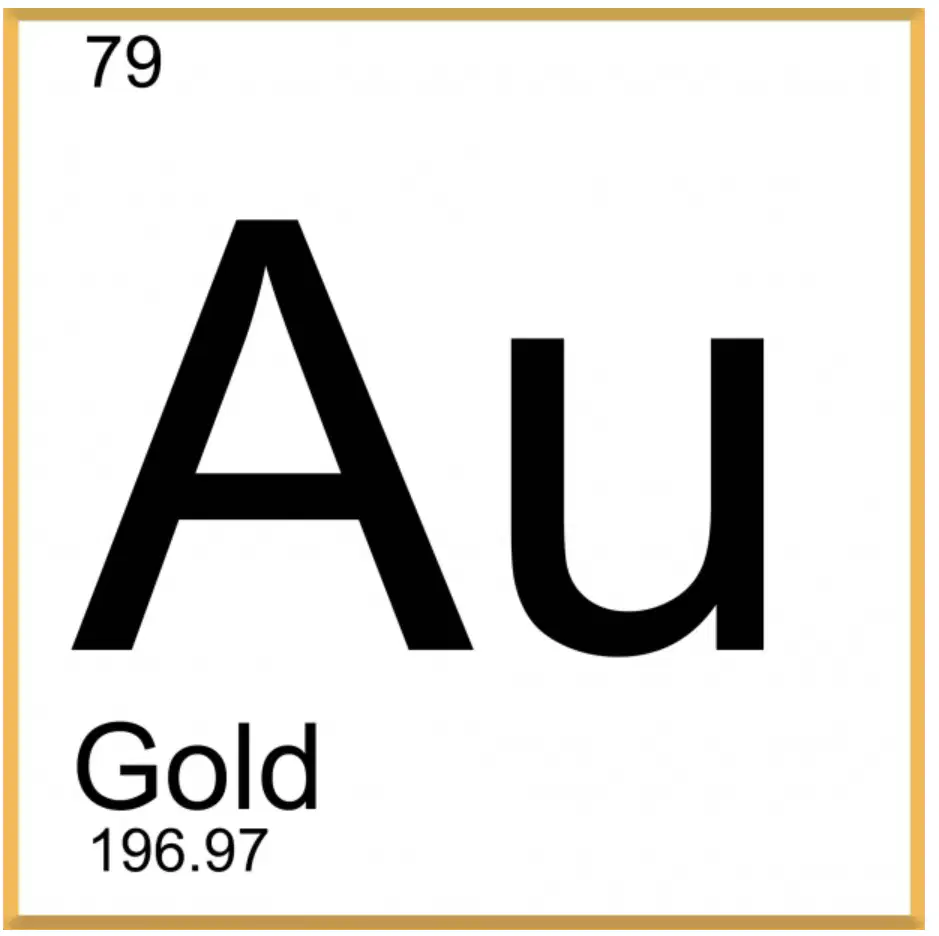
Which component of the periodic square below corresponds to the Atomic number?
Au
Gold
79
196.97
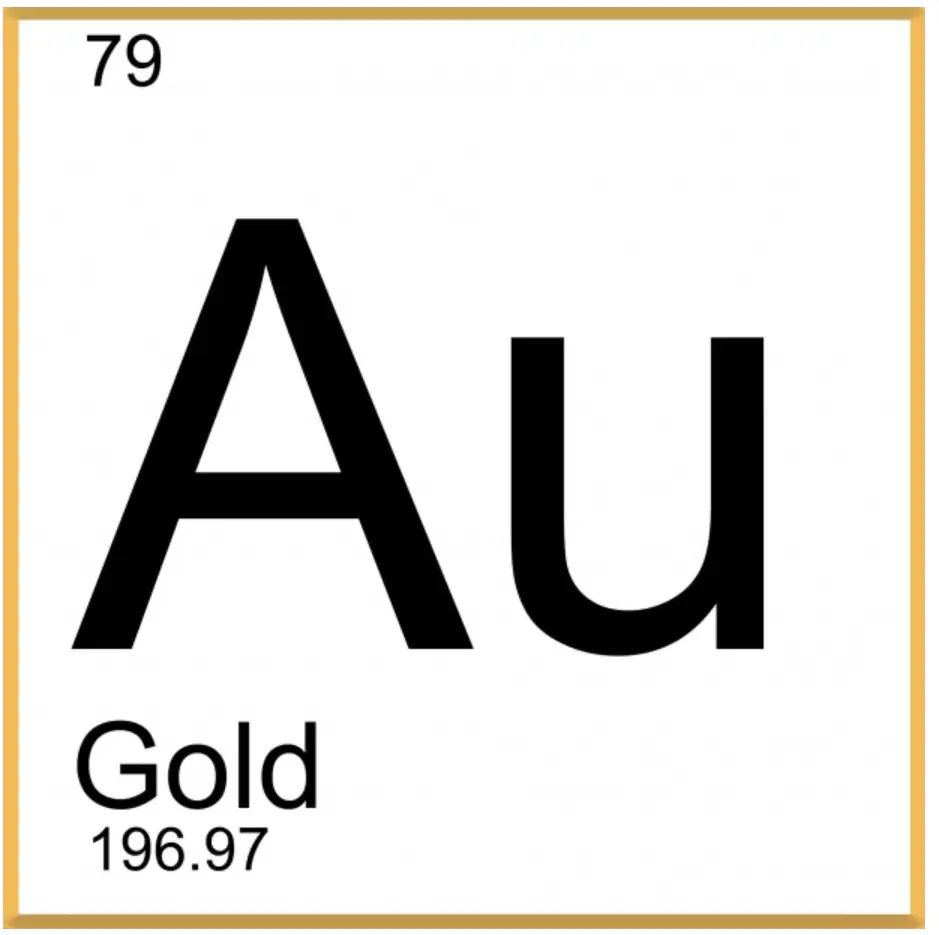
Which component of the periodic square below corresponds to the chemical symbol?
Au
Gold
79
196.97
Which sub-atomic particle is so small that we consider it basically "mass-less"?
Protons
Neutrons
Electrons
The Nucleus
Select the term that best matches the definition provided: atoms of the same element that have different numbers of neutrons.
Atomic Number
Mass Number
Isotope
Average Atomic Mass
Select the term that best matches the definition provided: sum of the number of protons and neutrons in an atom.
Atomic Number
Mass Number
Isotope
Average Atomic Mass
From left to right, the periodic table is organized primarily in terms of what?
Increasing reactivity
Increasing Neutrons
Increasing Atomic Number
Increasing Solubility
Which of the following types of substance are found on the periodic table?
Compounds
Elements
Mixtures
Solutions
Who was the scientist that we discussed who really created the foundations of the periodic table?
Alex Kepler
Isaac Newton
Dmitri Mendeleev
Yuri Gagarin
Elements within groups primarily share what?
The same number of protons.
Characteristics and properties
Electron count and reactivity with air
Solubility and neutron count
How many energy levels will an element in row 4 have?
2
4
6
8
How many electrons would you suspect an element in group 7 to have in their outer energy level?
3
5
7
9
Transuranium elements have how many protons?
Less than 90
90
92
More than 92
If a molecule consists of two atoms of the same element, it is called what?
Unatomic
Diatomic
Triatomic
Quadatomic
Different forms of the same element, with different uses and properties based on molecular arrangement (not atomic mass), are called what?
Isotopes
Allotropes
Quadrotropes
Mesotropes
If I say that an element is able to be turned into wires easily, I am talking about what property?
Conductivity
Malleability
Ductility
Reactivity
Non-metals usually bond with non-metals in what type of bond? (They SHARE electrons.)
Ionic
Covalent
Carbonic
Nitrogenic
Elements in group 16 have how many outer electrons?
16
1
6
10
Noble gases are stable for what reason?
They have enough protons to be stable.
They have 8 neutrons in their nucleus which makes them stable.
They have 8 protons in their outer energy level which makes them stable.
They have 8 electrons in their outer energy level which makes them stable.
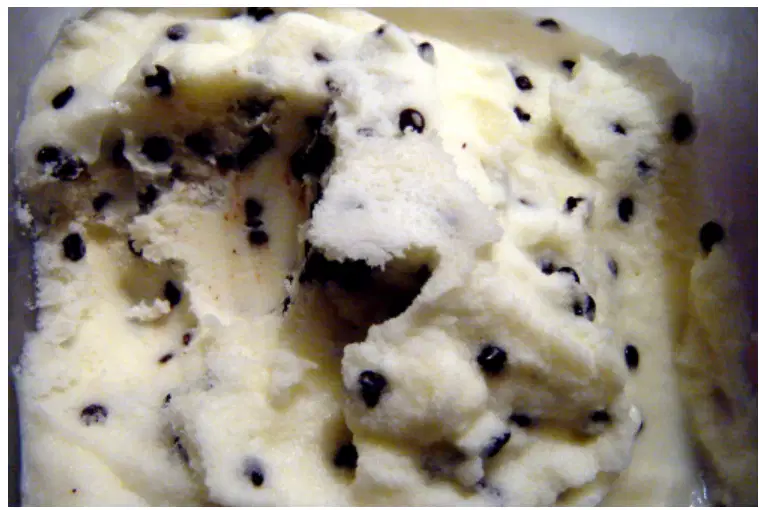
Decide whether the following thing is a heterogeneous or homogeneous mixture: Chocolate Chip Ice Cream
Heterogeneous Mixture
Homogeneous Mixture
Decide whether the following thing is a heterogeneous or homogeneous mixture: Tap Water
Heterogeneous Mixture
Homogeneous Mixture
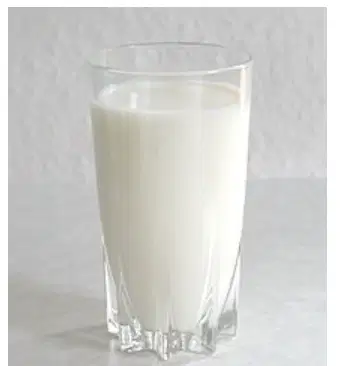
Decide whether the following thing is a heterogeneous or homogeneous mixture: Milk
Heterogeneous Mixture
Homogeneous Mixture
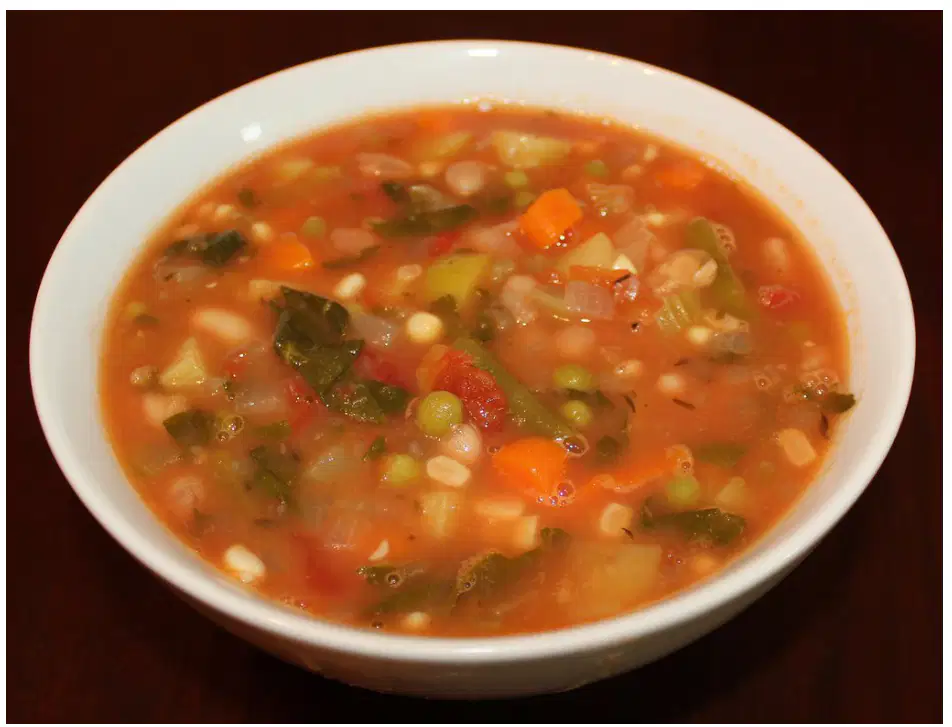
Decide whether the following thing is a heterogeneous or homogeneous mixture: Vegetable Soup
Heterogeneous Mixture
Homogeneous Mixture
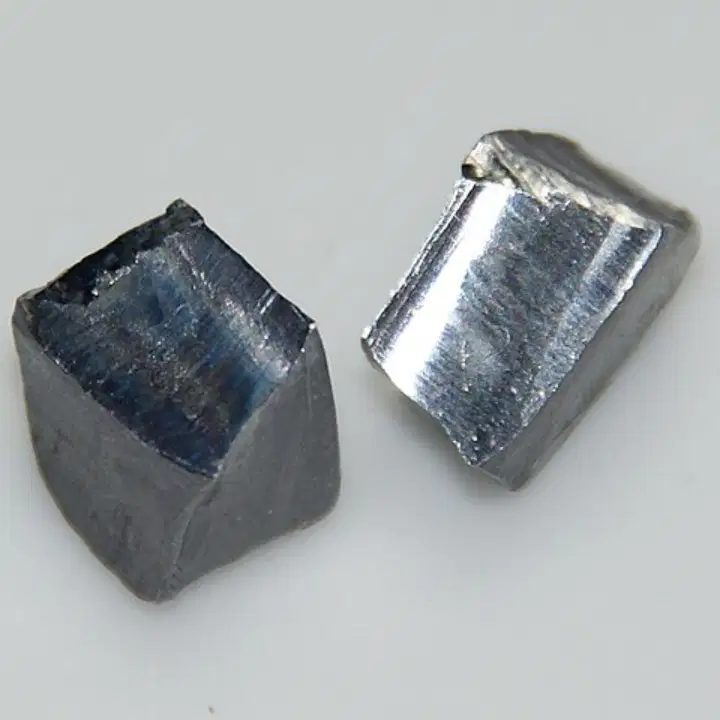
Decide whether the following thing is a heterogeneous or homogeneous mixture: Lead Metal
Heterogeneous Mixture
Homogeneous Mixture
Colloidal Mixture
Suspension
Which of the following is a property of metals?
Poor thermal conductor
High electrical conductivity
Low melting point
Brittle
What is the main component of the sun?
Carbon
Oxygen
Hydrogen
Helium
What is the process called when a gas turns into a liquid?
Condensation
Sublimation
Deposition
Evaporation
Which of the following elements is a noble gas?
Oxygen
Helium
Iron
Carbon
What is the chemical formula for table salt?
CO2
H2O
NaCl
O2

