wayground logo

Free Printable Worksheets

Font size

S
M
L
XL
Worksheets

Anatomy and Physiology Semester

Total questions: 201

Worksheet time: 3hrs 36mins
Name
Class
Date
1.
The point of attachment that does not move is the _______________. The point of attachment that does move is the ____________________.
a)
origin/insertion
b)
insertion/origin
c)
lever/fulcrum
d)
fulcrum/lever
2.
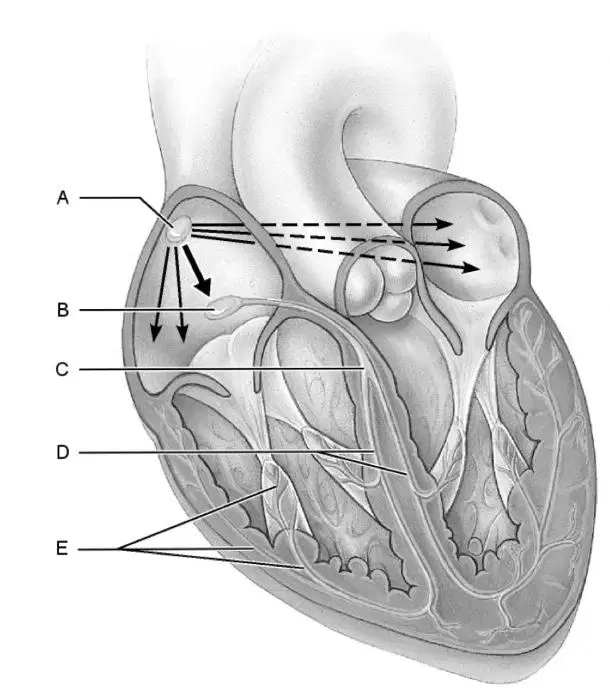
Which letter represents the purkinje fibers?
a)
A
b)
B
c)
C
d)
D
e)
E
3.
What is the sac around the heart called that provides protection from friction?
a)
Endocardium
b)
Epicardium
c)
Myocardium
d)
Pericardium
4.
The ___________ carry de-oxygenated blood back to the heart.
a)
arteries
b)
capillaries
c)
veins
d)
ventricles
5.
The most muscular chamber of the heart is the __________.
a)
left ventricle
b)
right atrium
c)
right ventricle
d)
left atrium
6.
The ____________ keeps food particles from entering your lungs.
a)
trachea
b)
tongue
c)
epiglotis
d)
teeth
7.
The nervous system is divided into two major divisions, the:
a)
brain and spinal cord
b)
central nervous system and peripheral nervous system
c)
cerebrum and cerebellum
d)
afferent and efferent
8.
This is part of the brain that controls coordination and stores muscle memories.
a)
corpus callosum
b)
brain stem
c)
cerebrum
d)
cerebellum
9.
This part of the brain regulates heart rate, blood pressure, respiration and digestion. Also filters out the unnecessary information. (Bobby Boucher)
a)
Pons
b)
midbrain
c)
thalamus
d)
medulla oblongata
10.
Which of the following is NOT a function of the respiratory system?
a)
assist in the homeostasis of body pH
b)
distribute oxygen to cells
c)
filtrate air
d)
warm air
11.
Once food hits your stomach it starts the _______.
a)
cephalic phase
b)
gastric phase
c)
intestinal phase
12.
The digestion of food starts in
a)
Mouth
b)
Liver
c)
Small intestine
d)
Large intestine
13.

#12

a)

femur

b)

tibia

c)

fibula

d)

patella

14.

#7

a)

cervical vertebra

b)

thoracic vertebra

c)

lumbar vertebra

15.

#6

a)

radius

b)

ulna

c)

humerus

d)

phalanges

16.

explanation for how muscles contract to produce force

a)

expansion contraction theory

b)

sliding filament theory

c)

muscular contraction theory

d)

evolution

17.

thick filament that is a prototype of a molecular motor—a protein that converts chemical energy in the form of ATP to mechanical energy, thus generating force and movement.

a)

myosin

b)

actin

c)

troposin

d)

tryptomyosin

18.

B

a)

pectoralis major

b)

triceps brachii

c)

biceps brachi

d)

rectus abdominus

19.

O

a)

Trapezius

b)

erector spinae

c)

Deltoid

d)

triceps brachii

20.

A

a)

biceps brachii

b)

triceps brachii

c)

radius

d)

ulna

21.

4

a)

zygomaticus

b)

vastus mediallis

c)

masseter

d)

orbicularis oculi

22.

3

a)

orbicularis oris

b)

orbiculars oculi

c)

zygomaticus

d)

masseter

23.

6

a)

cerebrum

b)

cerebellum

c)

pituitary gland

d)

brain stem

24.

13

a)

parietal

b)

occipital

c)

cerebellum

d)

frontal

25.

11

a)

pons

b)

thalamus

c)

midbrain

d)

medulla oblangata

26.

each of the paired lobes of the brain lying immediately behind the forehead, including areas concerned with behavior, learning, personality, and voluntary movement.

a)

parietal

b)

occipital

c)

temporal

d)

frontal

27.

either of the paired lobes of the brain at the top of the head, including areas concerned with the reception and correlation of sensory information.

a)

frontal

b)

parietal

c)

temporal

d)

occipital

28.

coordinates voluntary movements such as posture, balance, coordination, and speech, resulting in smooth and balanced muscular activity.

a)

cerebrum

b)

cerebellum

c)

parietal

d)

occipital

29.

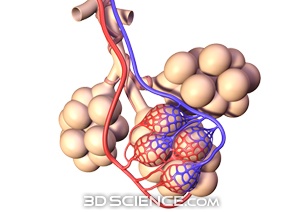
Where gas exchange occurs in the lungs

a)

red blood cels

b)

capillaries

c)

alveoli

d)

blood vessels

30.

The absorption of nutrients occurs in which structure

a)

stomach

b)

large intestine

c)

small intestine

d)

bladder

31.

Carries urine from the kidney to the bladder

a)

urethra

b)

capillary

c)

blood vessel

d)

ureter

32.

the part of the nervous system responsible for control of the bodily functions not consciously directed, such as breathing, the heartbeat, and digestive processes

a)

PNS

b)

CNS

c)

ANS

d)

APS

33.
The air sacs that are covered with capillaries where gas exchange takes place
a)
bronchi
b)
lungs
c)
oxygen
d)
alveoli
34.
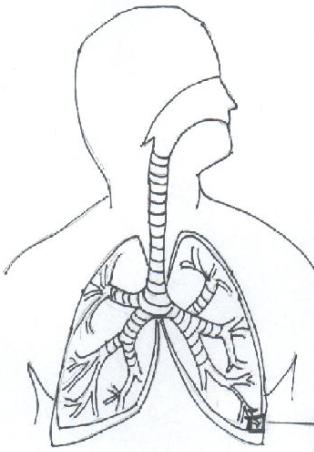
Given the following structures:
1. larynx
2. nasal cavity
3. pharynx
4. trachea
Which of the following is the correct order that air would flow during inhalation. 
a)
1,2,3,4
b)
2,3,1,4
c)
2,1,3,4
d)
4,2,3,1 
35.

What is the function of the bronchi?

a)

Transport air from nose to lungs

b)

Transport air from trachea to lungs

c)

Transport air from lungs to alveoli

d)

Transport air from alveoli to blood

36.

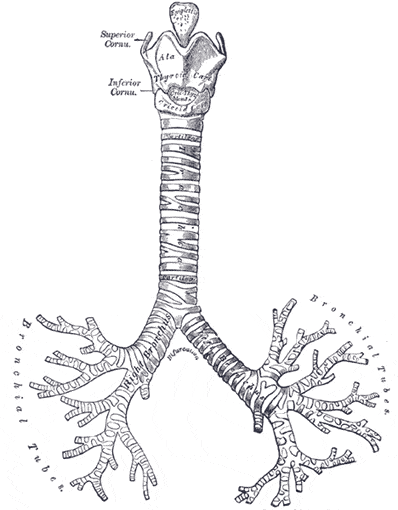
What is tube that is also known as your wind pipe?

a)

esophogus

b)

bronchi

c)

trachea

d)

alveoli

37.

What is the volume that remains in the lungs even after a forceful exhale

a)

expiratory reserve

b)

residual volume

c)

inspiratory reserve

d)

total lung capacity

38.

Which letter shows the urethra?

a)

H

b)

F

c)

D

d)

B

39.

What is # 2 ?

a)

kidney

b)

ureter

c)

urethra

d)

urinary bladder

40.

The pyloric sphincter is a valve that controls the movement of food between the stomach and the small intestine.

a)

true

b)

false

41.

The gallbladder releases which substance?

a)

saliva

b)

bile

c)

chyme

d)

amylase

42.

Which number indicates the esophagus?

a)

13

b)

16

c)

3

d)

1

43.

The back is my ____________ side

a)

super

b)

inferior

c)

ventral/anterior

d)

dorsal/posterior

44.

The forehead is my ____________ side

a)

inferior

b)

superior

c)

dorsal/posterior

d)

ventral/anterior

45.
Name this part.
a)
Right atrium
b)
Left ventricle
c)
Right ventricle
d)
Left atrium
46.
Name this part.
a)
Left ventricle
b)
Pulmonary artery
c)
Right atrium
d)
Pulmonary veins
47.
Name this part.
a)
Right ventricle
b)
Aorta
c)
Right atrium
d)
Atrium
48.
Name this part.
a)
Right ventricle
b)
Pulmonary artery
c)
Left ventricle
d)
Right atrium
49.
a)

Latissmius Dorsi

b)

Erectors

c)

Deltoids

d)

Abdominal

50.
a)
Tricep
b)
Deltoid
c)
Hamstring
d)
Bicep
51.
a)
Trapezius
b)
Gluteals
c)
Deltoid
d)
Hamstring
52.

Label the origin and insertion of the muscle

53.

Label the parts of a muscle

54.

Name the muscle indicated in the image.

a)

orbicularis oculi

b)

masseter

c)

buccinator

d)

orbicularis oris

55.

Name the forearm muscle indicated in the image.

a)

brachioradialis

b)

biceps

c)

palmaris longus

d)

flexor carpi radialis

56.

Name the muscle indicated in the image.

a)

flexor carpi ulnaris

b)

extensor carpi ulnaris

c)

flexor carpi radialis

d)

brachioradialis

57.

Name the muscle indicated in the image.

a)

oblique major

b)

rectus abdominus

c)

trapezius

d)

pectoralis minor

58.

Label #2

a)

Deltoid

b)

External Obliques

c)

Triceps Brachii

d)

Soleus

59.

Label #1

a)

Rectus Abdominis

b)

Deltoid

c)

External Obliques

d)

Pectoralis Major

60.

Label #3

a)

Deltoid

b)

Rectus Abdominis

c)

Abdominals

d)

Trapezius

61.

Label #4

a)

Soleus

b)

Tibialis Anterior

c)

Gastocnemius

d)

Triceps Surae

62.

Label #4

a)

Soleus

b)

Tibialis Anterior

c)

Gastocnemius

d)

Triceps Surae

63.

Label #7

a)

Rectus Femoris

b)

Sartorius

c)

Gracilis

d)

Vastus Lateralis

64.

Label #9

a)

Rectus Femoris

b)

Vastus Medialis

c)

Gracilis

d)

Vastus Lateralis

65.

Label #11

a)

Tibialis Anterior

b)

Tibialis Posterior

c)

Gastrocnemius

d)

Soleus

66.

Label #12

a)

Tibialis Anterior

b)

Tibialis Posterior

c)

Gastrocnemius

d)

Soleus

67.

Label #13

a)

Deltoid

b)

Latissimus Dorsi

c)

Trapezius

d)

Rhomboids

68.

Label #20

a)

Hamstrings

b)

Semitendinosus

c)

Biceps Femoris

d)

Rectus Femoris

69.

How many muscles make up the hamstrings?

(a)  

70.

Rotating a body part in a circle is called

a)

Adduction

b)

Abduction

c)

Circumduction

71.

Moving a body part away from the midline is called

a)

Adduction

b)

Abduction

c)

Circumduction

72.

What type of movement occurs at a joint when the angle of the joint is increasing? (straightening)

a)

Flexion

b)

Extension

c)

Abduction

d)

Lateral Rotation

73.

What type of movement occurs at a joint when the angle of the joint is decreasing? (bending)

a)

Flexion

b)

Extension

c)

Abduction

d)

Lateral Rotation

74.

Your bicep muscle is attached to the scapula at one end and the radius at the other. When you contract the bicep muscle, the scapula remains stationary, while the radius, a bone of your forearm, moves. Which of the following statements about the origin and insertion of the bicep muscle is true? Select all that apply.

a)

Origin of the muscle is the end attached to the scapula

b)

Insertion of the muscle is the end attached to the scapula

c)

Origin of the muscle is the end attached to the radius

d)

Insertion of the muscle is the end attached to the radius

75.

Which of the following movements describes the bending of the knees when you squat?

a)

extension of the leg

b)

adduction of the leg

c)

abduction of the leg

d)

flexion of the leg

76.

which of these are adduction ?

a)
b)
c)
d)
77.

identify the type of movement

(a)  

78.

identify the type of movement

(a)  

79.

identify the movement

a)

extention

b)

supination

c)

adduction

d)

eversion

80.

identify the type of movement

(a)  

81.
Movement away from the mid-line is called _____________.
a)
abduction
b)
adduction
c)
internal rotation
d)
external rotation
82.
Turning the hand so that the palm is upward or facing anteriorly (in anatomical position).
a)
supination
b)
pronation
c)
flexion
d)
dorsiflexion
83.
Turning the foot so the plantar surfaces faces medially.
a)
plantar flexion
b)
eversion
c)
inversion
d)
dorsiflexion
84.
Which of the following best describes extension?
a)
The straightening of a joint where the angle of movement increases
b)
The bending of a joint where bones get closer together
c)
The rotation of a joint or spinning of one bone on another
d)
The lateral movement away from the midline
85.
The lateral motion TOWARDS the midline is called ______.
a)
adduction
b)
abduction
c)
internal rotation
d)
external rotation
86.
Rotation of the forearm until the palm faces DOWN is called __________.
a)
supination
b)
pronation
c)
flexion
d)
dorsiflexion
87.
Rotation of the forearm until the palm faces UP is called _________.
a)
supination
b)
external rotation
c)
plantar flexion
d)
pronation
88.
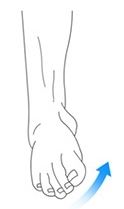
Pointing your toe
a)
dorsiflexion
b)
plantar flexion
c)
flexion
d)
extension
89.
What movement is occurring here?
a)
Eversion
b)
Flexion
c)
Dorsiflexion
d)
Plantarflexion
90.
Which movement is shown in the picture?
a)
inversion
b)
eversion
c)
plantarflexion
d)
dorsiflexion
91.

Which movement is shown in the picture?

a)

eversion

b)

rotation

c)

extension

d)

flexion

92.
Identify the joint action being performed.
a)
Inversion
b)
Eversion
c)
Plantarflexion
d)
Dorsiflexion
93.

Which movement is illustrated here?

a)

Rotation

b)

Oppostion

c)

Pronation

d)

Hyperextension

94.

Where is the ball and socket joint located ?

a)

Shoulder

b)

Neck

c)

elbow

d)

wrist

95.
Name this joint
a)
gliding
b)
saddle
c)
ball and socket
d)
condyloid
96.
Name this joint
a)
gliding
b)
saddle
c)
ball and socket
d)
condyloid
97.

The skull is an example of what type of joint?

a)

Cartilaginous

b)

Synovial

c)

Fibrous

98.
Name this joint
a)
gliding
b)
saddle
c)
condyloid
d)
pivot
99.
The knee joint is
a)
Hinge
b)
Gliding
c)
Ball and socket
d)
Pivot
100.

The hip joint is an example of a(n)_____ joint

a)

condyloid

b)

saddle

c)

ball and socket

d)

hinge

101.

The vertebral joints are examples of _______ joints

a)

cartilaginous

b)

fibrous

c)

synovial

102.

The joints that are immovable are

a)

diarthrosis

b)

amphiarthrosis

c)

synarthrosis

103.

Joints that allow for free movement are classified as

a)

synarthrosis

b)

diarthrosis

c)

amphiarthrosis

104.

The rib cage is considered a(n) ______type of joint

a)

amphiarthosis

b)

synarthrosis

c)

diarthrosis

105.

The joint colored blue is considered a _____ joint

a)

gliding

b)

condyloid

c)

ball and socket

d)

hinge

106.

Which joint allows a full range of movements including forwards and backwards, sideways, and rotation?

a)

hinge

b)

plane

c)

saddle

d)

ball and socket

107.

Check all the true statements about synovial joints...

a)

Bones are separated by a space called the joint cavity

b)

They have synovial fluid

c)

They have an articular capsule

d)

They are diarthroses

e)

Freely mobile articulations

108.

The Central Nervous System consists of...

a)

Nerves

b)

brain, spinal cord and nerves

c)

Brain and spinal cord

d)

brain and nerves

109.

which lobe is pictured?

a)

Cerebellum

b)

Temporal

c)

Parietal

d)

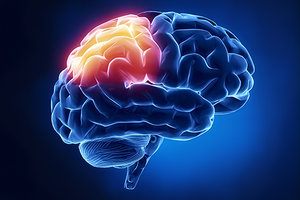
Occipital

110.

which lobe plays a part in decision making?

a)

Frontal

b)

Temporal

c)

Parietal

d)

Occipital

111.

The left hemisphere of the brain controls the right side of the brain and vise versa.

a)

True

b)

False

112.

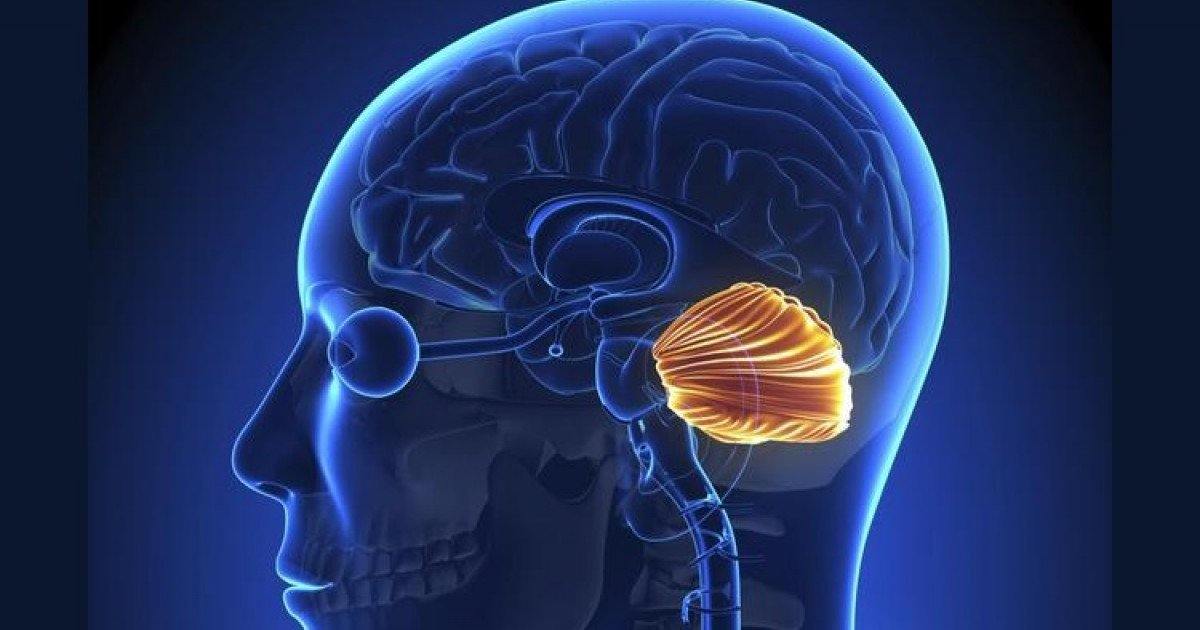
WHAT IS THE NAME OF THIS PART OF BRAIN?

a)

BRAIN

b)

RIGHT HEMISPHERE

c)

LEFT HEMISPHERE

d)

CEREBELLUM

113.

Shelton fell off of a ladder while cleaning the windows. He can not stand up without assistance and is unable to catch a ball. Which is the most likely affected part of the brain?

a)

Cerebellum

b)

Frontal Lobe

c)

Cerebral Cortex

d)

Temporal Lobe

114.
A person has a stroke on her occipital lobe.  What might happen to her?
a)
reduced planning abilities
b)
deafness
c)
coma
d)
blindness
115.

What lobe is related to articulate speech? (hint: Brocha's area)

a)

FRONTAL

b)

PARIETAL

c)

TEMPORAL

d)

OCCICPITAL

116.

WHAT BRAIN LOBE DOES REPRESENT THE IMAGE BELOW?

a)

PARIETAL

b)

FRONTAL

c)

OCCIPITAL

d)

TEMPORAL

117.

The nerves outside of the brain and spinal cord make up the.....

a)

central nervous system

b)

peripheral nervous system

c)

nervous system

118.

What part of the brain is pictured in purple?

a)

cerebellum

b)

brain stem

c)

temporal lobe

119.
The cerebellum is labeled
a)
1
b)
4
c)
5
d)
7
120.
Controls motivational behaviors, including: feeding, fight-flight response
a)
Hippocampus
b)
Amygdala
c)
Reticular Formation
d)
Hypothalamus
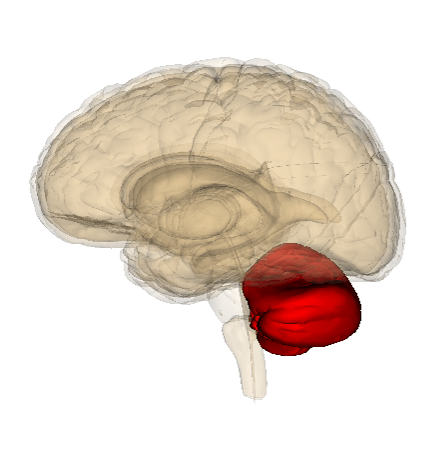
121.
The red portion is the ________
a)
Cerebrum
b)
Cerebellum
c)
Brain Stem
d)
Diencephalon
122.
Which letter on the illustration represents the temporal lobe
a)
A
b)
B
c)
C
d)
D
123.
Known as the "Little brain" and is in charge of balance and coordinating movements:
a)
Thalamus
b)
Reticular Formation
c)
Hypothalamus
d)
Cerebellum
124.
Carries messages between the body and the brain:
a)
cerebellum
b)
corpus callosum
c)
spinal cord
d)
special thalamus
125.
Thinking, problem solving, "executive functioning," happen here. 
a)
cerebellum
b)
cerebrum
c)
amygdala
d)
hypothalamus
126.
The brain's "sensory switchboard":  directs sensory messages to proper area of the brain
a)
thalamus
b)
hypothalamus
c)
hippocampus
d)
reticular formation
127.
Connects the left and right hemispheres of the brain
a)
Cerebellum
b)
Hypothalamus
c)
Medulla  Oblongata
d)
Corpus Callosum
128.

Label the heart

129.

Blood traveling in the pulmonary circuit goes through the​ ​ (a)   ​ side of the heart and out to the​ (b)   ​ ​ .  Blood traveling in the systemic circuit goes through the ​​ (c)               side of the heart and out to the​ ​ (d)   .

Choose from the below words
right
lungs
left
body
130.

Three Types of Blood Vessels

a)

Vein

1.

Carry oxygen poor blood to the heart

b)

Artery

2.

Carry blood AWAY from the heart

c)

Capillary

3.

One cell thick

131.

Identify the trachea

132.

Label the image.

133.

Please label the back image of the muscular system.

134.

Point to the location of the hamstring muscles.

135.

Point to the location of the rectus abdominis muscles.

136.

Which digestive organ STORES/SECRETES bile produced by the liver?

a)

kidneys

b)

intestines

c)

stomach

d)

gall bladder

137.

Enzymes in your saliva help break down food, this is an example of ...

a)

Mechanical digestion

b)

Chemical digestion

138.
What happens when the food goes to the small intestine?
a)
nutrients gets into the blood
b)
the food keeps on going
c)
nothing
139.
Identify #8
a)
Triceps Brachii
b)
Adductor of thighs
c)
Bicep Brachii
d)
Biceps femoris
e)
Deltoid
140.
Identify #8
a)
Triceps Brachii
b)
Adductor of thighs
c)
Bicep Brachii
d)
Biceps femoris
e)
Deltoid
141.
Identify #11
a)
Gluteus minimus
b)
Adductor of thighs
c)
Bicep Brachii
d)
Biceps femoris
e)
Deltoid
142.
The rippling effect seen on the lower midland of the abdomens of some athletes is caused by hypertrophy of the ____ muscles. (six pack)
a)
rectus abdominis
b)
brachialis
c)
occipital
d)
mandible
e)
skull
143.
A muscle is anchored by its________, whereas it pulls at its ________.
a)
origin/insertion
b)
insertion/origin
c)
lever/fulcrum
d)
fulcrum/lever
144.
Which letter represents the purkinje fibers?
a)
A
b)
B
c)
C
d)
D
e)
E
145.
What is labeled #4?
a)
Aorta
b)
Aorta SL Valve
c)
Bicuspid (Mitral) Valve
d)
Inferior Vena Cava
e)
Left Atrium
146.
What is labeled #6?
a)
Right Atrium
b)
Aorta
c)
Aorta SL Valve
d)
Bicuspid (Mitral) Valve
e)
Inferior Vena Cava
147.
The most muscular chamber of the heart is the __________.
a)
left ventricle
b)
right atrium
c)
right ventricle
d)
left atrium
148.
Identify #6
a)
Deltoid
b)
Adductor of thighs
c)
Bicep Brachii
d)
Biceps femoris
e)
External abdominal oblique
149.
What type of movement is seen below?
a)
Abduction
b)
Adduction
c)
Extension
d)
Plantar Flexion
e)
Dorsiflexion
150.
Which bone is shown below?
a)
radius
b)
atlas
c)
axis
d)
calcaneous
e)
carpals
151.
The ____________ keeps food particles from entering your lungs.
a)
trachea
b)
tongue
c)
epiglotis
d)
teeth
152.
Where is the frontal lobe?
a)
1
b)
2
c)
3
d)
4
e)
5
153.
The nervous system is divided into two major divisions, the:
a)
brain and spinal cord
b)
central nervous system and peripheral nervous system
c)
cerebrum and cerebellum
d)
afferent and efferent
154.
Where is the occipital lobe?
a)
3
b)
1
c)
2
d)
4
e)
5
155.
Where is the cerebellum?
a)
6
b)
1
c)
2
d)
3
e)
4
156.
This is part of the brain that controls coordination and stores muscle memories.
a)
corpus callosum
b)
brain stem
c)
cerebrum
d)
cerebellum
157.
This part of the brain regulates heart rate, blood pressure, respiration and digestion. (Bobby Boucher)
a)
Pons
b)
midbrain
c)
thalamus
d)
medulla oblongata
158.
Which tissues belong to bones? (Check all that apply)
a)
compact bone
b)
cancellous
c)
loose connective areolar tissue
d)
erythrocytes
e)
leukocyte
159.
Which of the following is NOT a function of the respiratory system?
a)
assist in the homeostasis of body pH
b)
distribute oxygen to cells
c)
filtrate air
d)
warm air
160.
Identify structure #3
a)
larynx
b)
alveoli
c)
broncial tubes
d)
lungs
e)
nasal cavity
161.
Identify structure #8
a)
trachea
b)
alveoli
c)
broncial tubes
d)
larynx
e)
lungs
162.
Once food hits your stomach it starts the _______.
a)
cephalic phase
b)
gastric phase
c)
intestinal phase
163.
The digestion of food starts in
a)
Mouth
b)
Liver
c)
Small intestine
d)
Large intestine
164.
Which organ is represented by #2?
a)
Small intestines
b)
Stomach
c)
large intestines
d)
liver
e)
appendix
165.
Which bone is shown below?
a)
scapula
b)
atlas
c)
axis
d)
calcaneous
e)
carpals
166.
Which bone is shown below?
a)
floating rib
b)
atlas
c)
axis
d)
calcaneous
e)
carpals
167.
What type of movement is seen below?
a)
Abduction
b)
Adduction
c)
Flexion
d)
Extension
e)
Plantar Flexion
168.
Label the joint below
a)
hinge
b)
ball and Socket
c)
pivot
d)
condyloid/ellipsoidial
e)
gliding
169.

  •  the attachment point of the muscle that does not move during contraction

a)

origin

b)

insertion

170.

The structure labeled #6 is

a)

left auricle

b)

right auricle

c)

left ventricle

d)

adipose tissue

171.
This chamber of the heart RECEIVES blood returning from the body
a)
Right Atrium
b)
Right Ventricle
c)
Left Atrium
d)
Left Ventricle
172.

The structure labeled #6 is the?

a)

Left Auricle

b)

Right Auricle

c)

Right Atrium

d)

Left Atrium

173.

Without the nervous system, you couldn't

a)

walk

b)

breathe

c)

think

d)

all of the above

174.

What is the primary function of the nervous system?

a)

Transportation of oxygen

b)

Regulation of body temperature

c)

Coordination of body activities

d)

Digestion of food

175.

Select all of the following which are functions of the nervous system.

a)

Control bodily functions and movements

b)

Monitor and evaluate conditions to maintain homeostasis

c)

Provide protection to internal organs

d)

Regulate thoughts, emotions, reasoning, learning and memory

e)

Support fluid retention

176.

Homeostasis can regulate the body's temperature

a)

True

b)

False

177.

Anatomy studies...

a)

Skin and organs

b)

Bones and muscles

c)

Structure and relationships between body parts

178.

Your skin is _____________ to your muscles

a)

Superior

b)

Deep

c)

Amazinger

d)

Superficial

179.

What are these bones called?

a)

ribs

b)

humerus

c)

phalanges

d)

hips

180.

What bone goes from the shoulder to the elbow?

a)

The Femur

b)

The Humerus

c)

The rib cage

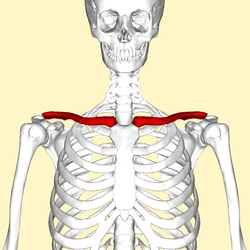
181.

What letter is the Clavicle

(a)  

182.

Which letter is the Humerus

(a)  

183.

Which letter is the Radius

(a)  

184.

Which letter is the Ulna

(a)  

185.

Which letter is the pelvis

(a)  

186.

Which letter is the Femur

(a)  

187.

Which letter is the fibula

(a)  

188.
What bones are these?
a)
Sternums
b)
Scapulae
c)
Clavicles
d)
Hyoids
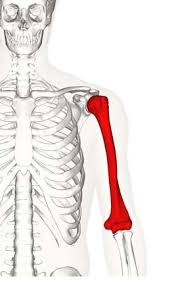
189.

Which bone is highlighted

a)

humerus

b)

fibula

c)

radius

d)

ulna

e)

tibia

190.

Which bone is highlighted

a)

humerus

b)

radius

c)

ulna

d)

femur

e)

fibula

191.

Which bone is highlighted

a)

fibula

b)

tibia

c)

ulna

d)

radius

192.
Also known as the kneecap
a)
Patella
b)
Tibia
c)
Fibula
d)
Femur
193.
What type of bone makes up the diaphysis?
a)
spongy bone
b)
compact bone
c)
rigid bone
d)
soft bone
194.

How many bones are in the human body?

a)

206

b)

106

c)

306

d)

256

195.

What is the primary function of the skeletal system?

a)

To produce blood cells

b)

To provide support and structure to the body

c)

To control body movements

d)

To protect internal organs

196.

Which of the following is NOT a function of the respiratory system?

a)

Gas exchange

b)

Blood filtration

c)

Sound production

d)

Regulation of blood pH

197.

What is the main organ of the circulatory system?

a)

The lung

b)

The heart

c)

The liver

d)

The kidney

198.

What is the name of the process by which oxygen and carbon dioxide are exchanged in the lungs?

a)

Osmosis

b)

Diffusion

c)

Filtration

d)

Active transport

199.

Which blood vessels carry blood away from the heart?

a)

Veins

b)

Arteries

c)

Capillaries

d)

Venules

200.

What is the primary muscle used in the process of inhalation?

a)

Diaphragm

b)

Intercostal muscles

c)

Abdominal muscles

d)

Pectoralis major

201.
The point of attachment that does not move is the _______________. The point of attachment that does move is the ____________________.
a)
origin/insertion
b)
insertion/origin
c)
lever/fulcrum
d)
fulcrum/lever