
 Worksheets
Glycolysis Quiz
Total questions: 130
Worksheet time: 11hrs 37mins
What is the primary purpose of glycolysis?
To synthesize glucose from pyruvate
To degrade glucose into pyruvate, producing ATP and NADH
To convert pyruvate into lactose
To break down proteins into amino acids
What happens to most of the energy during glycolysis?
It is released as heat
It is stored in the pyruvate molecules
It is converted into NADH and released as H+ ions
It is used to form glucose
What is the initial substrate for glycolysis?
Pyruvate
Oxaloacetate
Glucose
None of the above
According to the equation of glycolysis, what are the net products of one glucose molecule?
2 NADH, 2 pyruvate, 2 ATP, 2 H₂O, 4 H⁺
2 NAD⁺, 2 pyruvate, 2 ADP, 2 H₂O
2 NADH, 2 pyruvate, 4 ATP, 2 H⁺
2 NAD⁺, 2 pyruvate, 2 ATP, 4 H₂O
What is the main purpose of the irreversible phosphorylation of glucose by hexokinase?
To allow glucose to diffuse out of the cell
To trap glucose as glucose 6-phosphate inside the cell
To break down glucose into pyruvate
To produce ATP directly
In which step of glycolysis is the first ATP molecule produced?
Conversion of glucose to glucose-6-phosphate by hexokinase
Conversion of fructose-6-phosphate to fructose-1,6-bisphosphate by phosphofructokinase-1
Conversion of 1,3-bisphosphoglycerate to 3-phosphoglycerate by phosphoglycerate kinase
Conversion of phosphoenolpyruvate to pyruvate by pyruvate kinase
Hexokinase is one of the regulatory enzymes in glycolysis. Which of the following are also regulatory enzymes in this pathway?
Phosphofructokinase and pyruvate kinase
Aldolase and enolase
Glyceraldehyde 3-phosphate dehydrogenase
Triose phosphate isomerase
During the conversion of glyceraldehyde-3-phosphate to 1,3-bisphosphoglycerate in glycolysis, what is the source of the added phosphate group?
ATP
GTP
Inorganic phosphate (Pi)
FAD
How does glucose-6-phosphate (Glu-6P) affect hexokinase and glucokinase?
It inhibits both enzymes
It inhibits hexokinase but not glucokinase
It inhibits glucokinase but not hexokinase
It activates both enzymes
What is the name of the enzyme that catalyzes the irreversible phosphorylation of fructose-6-phosphate to fructose-1,6-bisphosphate in glycolysis?
Hexokinase
Glucokinase
Phosphofructokinase (PFK-1)
Pyruvate kinase
Which enzyme catalyzes the rate-limiting step in glycolysis?
Hexokinase
Phosphofructokinase-1 (PFK-1)
Pyruvate kinase
Enolase
Which enzyme catalyzes the oxidation of glyceraldehyde into 1,3-bisphosphoglycerate in glycolysis?
Phosphofructokinase (PFK-1)
Glyceraldehyde 3-phosphate dehydrogenase
Pyruvate kinase
Hexokinase
Which molecule acts as an allosteric activator of phosphofructokinase-1 (PFK-1)?
ATP
Citrate
AMP
Acetyl-CoA
Which of the following molecules inhibits phosphofructokinase-1 (PFK-1)?
AMP
Fructose-2,6-bisphosphate
ATP
ADP
On which carbon of 1,3-bisphosphoglycerate is the high-energy phosphoryl group located, and why is it significant?
Carbon 2, because it activates the enzyme
Carbon 1, because it conserves much of the free energy of oxidation
Carbon 3, because it prevents oxidation
Carbon 4, because it inhibits glycolysis
In the reaction catalyzed by phosphoglycerate kinase, where 1,3-bisphosphoglycerate donates a phosphate to ADP, which phosphate group is transferred?
Phosphate on carbon 1 (C1)
Phosphate on carbon 2 (C2)
Phosphate on carbon 3 (C3)
Phosphate on carbon 6 (C6)
The conversion of glyceraldehyde-3-phosphate to 1,3-bisphosphoglycerate in glycolysis is classified as which type of reaction?
Hydrolysis
Oxidation-reduction
Dehydration
Decarboxylation
Which enzyme catalyzes the conversion of PEP to pyruvate in glycolysis?
Phosphofructokinase (PFK-1)
Pyruvate kinase
Glyceraldehyde 3-phosphate dehydrogenase
Hexokinase
What is the product of the carboxylation of pyruvate?
Glucose-6-phosphate
Oxaloacetate
Fructose 1,6-bisphosphate
1,3-bisphosphoglycerate
Which enzyme mediates the carboxylation of pyruvate into oxaloacetate?
Pyruvate kinase
Phosphofructokinase (PFK-1)
Pyruvate carboxylase
Glyceraldehyde 3-phosphate dehydrogenase
Where does the oxidative decarboxylation of pyruvate occur?
Cytosol
Mitochondria
Rough endoplasmic reticulum
Nucleus
How many ATP molecules are produced from each NADH during aerobic glycolysis via the respiratory chain system?
1 ATP
2 ATP
3 ATP
4 ATP
What is the total number of ATP molecules yielded from one glucose molecule in aerobic glycolysis?
2 ATP
6 ATP
8 ATP
10 ATP
In which organ does gluconeogenesis primarily occur?
Muscle
Liver
Brain
Heart
In which cellular compartment are both glycolysis and gluconeogenesis processes located?
Cytosol
Mitochondrial matrix
Golgi apparatus
Plasma membrane
What is the starting material for gluconeogenesis?
Pyruvate
Oxaloacetate
Glucose-6-phosphate
Fructose 1,6-bisphosphate
During gluconeogenesis, which molecule provides the additional carbon atom when pyruvate is converted to oxaloacetate?
Carbon dioxide (CO₂)
Ethylene glycol
Acetyl-CoA
Bicarbonate (HCO₃⁻)
Which cofactor is required by pyruvate carboxylase?
Iron
Biotin
Zinc
Magnesium
Which enzyme catalyzes the conversion of oxaloacetate to phosphoenolpyruvate (PEP) in gluconeogenesis?
Pyruvate kinase
PEP carboxykinase (PEPCK)
Pyruvate carboxylase
Malate dehydrogenase
Acetyl-CoA acts as an allosteric activator for which enzyme?
Pyruvate kinase
Pyruvate carboxylase
Hexokinase
Phosphofructokinase-2
Which of the following is not a major regulatory enzyme in glycolysis?
Hexokinase
Phosphofructokinase-1 (PFK-1)
Pyruvate kinase
Phosphoglycerate kinase
In what form can oxaloacetate be transported out of the mitochondria?
Pyruvate
Malate
Lactate
Acetaldehyde
How is the pyruvate dehydrogenase complex inactivated?
Phosphorylation
Dephosphorylation
Low NADH/NAD⁺ ratio
Low acetyl-CoA levels
In the Cori cycle, which molecule is transported from muscle to the liver?
Pyruvate
Lactate
Glycerol
Alanine
Why can acetyl-CoA not give rise to a net synthesis of glucose?
Because it is reversible in the citric acid cycle
Because of the irreversible nature of pyruvate dehydrogenase that converts pyruvate to acetyl-CoA
Because acetyl-CoA is directly converted to glucose
Because it lacks the necessary enzymes
The reaction catalyzed by the pyruvate dehydrogenase complex is reversible, allowing acetyl-CoA to be converted back into pyruvate.
True
False
Pyruvate dehydrogenase is a part of the citric acid cycle.
True
False
A decrease in fructose-2,6-bisphosphate levels results in which of the following?
Activation of phosphofructokinase-1 (PFK-1)
Activation of fructose-1,6-bisphosphatase (FBPase)
Activation of glycolysis
Increased ATP consumption
The citric acid cycle contains a series of oxidation-reduction reactions.
True
False
Oxygen is used in the citric acid cycle.
True
False
Which enzyme in the citric acid cycle catalyzes the production of FADH₂?
Isocitrate dehydrogenase
α-Ketoglutarate dehydrogenase complex
Succinate dehydrogenase
Malate dehydrogenase
Which citric acid cycle enzyme produces GTP during its reaction?
Succinyl-CoA synthetase
Citrate synthase
Aconitase
Malate dehydrogenase
Approximately how many ATP molecules are produced from the complete oxidation of two glucose molecules in aerobic respiration?
60
62
66
76
78
Which citric acid cycle intermediate is directly involved in the production of fatty acids and sterols?
Succinyl-CoA
Citrate
Oxaloacetate
Malate
In the citric acid cycle, α-ketoglutarate serves as a precursor for the synthesis of which molecules?
Fatty acids and sterols
Purines and pyrimidines
Heme and porphyrins
Glutamate and other amino acids
Is muscle glycogen unaffected by short periods of fasting?
True
False
Which enzyme is responsible for creating branches in glycogen?
Glycogen phosphorylase
Glycogen synthase
Amylo-(1,4→1,6)-transglycosylase
Debranching enzyme
What is the source of glycosyl residues added to the growing glycogen chain during glycogenesis?
Glucose-6-phosphate
α-D-glucose
UDP-glucose
Glucose-1-phosphate
In glycogen synthesis, which amino acid in glycogenin provides the initial hydroxyl group for glucose attachment?
Serine
Tyrosine
Threonine
Alanine
What is the role of glycogenin in glycogen synthesis?
It acts as an enzyme to degrade glycogen
It serves as a primer to initiate glycogen synthesis
It transports glucose into the cell
It phosphorylates glucose-6-phosphate
When glycogen phosphorylase reaches approximately four residues before a branch point, what is the resulting structure called?
Limit dextrin
Glycogen core
Glycogen primer
Branching polymer
What molecule is produced by the action of glycogen phosphorylase?
Free glucose
Glucose-1-phosphate
Glucose-6-phosphate
Both A and B
What molecule is produced by the action of amylo-α(1,6)-glucosidase?
Glucose-1-phosphate
Free glucose
Glucose-6-phosphate
None of the above
Which molecule is represented by the structure provided?
FAD
FMN
NAD⁺
NADPH
What is the final electron acceptor in oxidative phosphorylation?
NAD⁺
FAD
Oxygen (O₂)
Coenzyme Q (ubiquinone)
Which complexes in the electron transport chain function as proton pumps?
Complexes I, III, and IV
Complexes I, II, and III
Complexes II, III, and IV
Complex II only
What is the prosthetic group that receives electrons from NADH in Complex I?
FAD
FMN
NADH
Heme
Which enzyme catalyzes the formation of FADH₂ in the citric acid cycle?
Isocitrate dehydrogenase
Succinate dehydrogenase (complex II)
Fumarase
Malate dehydrogenase
How many protons (H⁺) are pumped from the mitochondrial matrix to the intermembrane space during the complete passage of electrons from one NADH molecule through the electron transport chain?
6 protons
8 protons
10 protons
12 protons
How many ATP molecules are generated from the oxidative phosphorylation of three NADH molecules?
6 ATP
7 ATP
9 ATP
12 ATP
What type of molecule is QH₂ in the context of the electron transport chain?
A hydrophilic quinone
A hydrophobic quinone
A hydrophilic cytochrome
A hydrophobic proton
Which complexes are directly involved in the electron transfer mediated by the QH₂ shuttle?
Complex I and complex II
Complex I and complex III
Complex III and complex IV
Complex II and complex IV
Complex II (succinate dehydrogenase) is an integral protein in the mitochondrial inner membrane.
True
False
In the electron transport chain, electrons flow from ubiquinol to which molecule through cytochrome reductase?
Cytochrome c
NADH
FADH₂
Oxygen
What is the primary role of pumping 4 H⁺ ions to the inter-membrane space?
To synthesize ATP via the ATP synthase
To directly produce NADH
To oxidize cytochrome c
To reduce oxygen to water
In the context of cytochrome oxidase, what is the role of CuA and CuB?
They act as substrates for ATP synthesis
They serve as prosthetic groups
They transport protons across the membrane
They inhibit electron flow
According to the chemiosmotic hypothesis, what drives the phosphorylation of ADP into ATP?
The direct oxidation of NADH
The proton gradient across the mitochondrial membrane
The reduction of oxygen to water
The breakdown of glucose in glycolysis
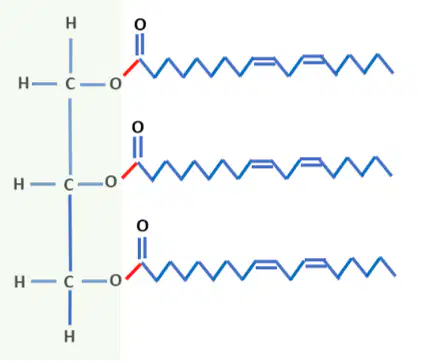
Which of the following categories does the molecule in the previous image belong to?
Triacylglycerols
Phospholipids
Glycolipids
Sphingolipids
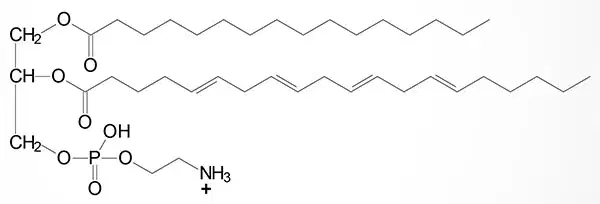
Which of the following categories does the molecule in the previous image belong to?
Triacylglycerols
Phospholipids
Glycolipids
Sphingolipids
Triacylglycerols are totally non-polar.
True
False
Triacylgcerols with a higher percentage of unsaturated fatty acids are classified as fats.
True
False
Phospholipids are amphipathic molecules.
True
False
What is the parent compound for many glycerophospholipids?
Sphingosine
Ceramide
Phosphatidic acid
Glycerol
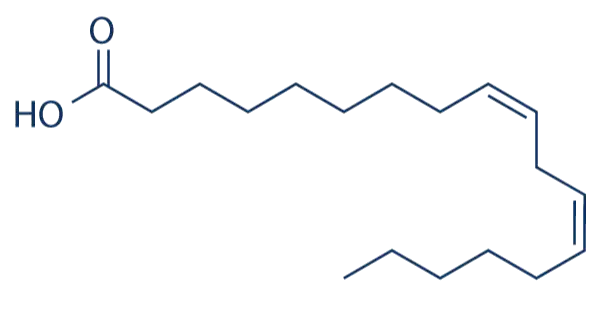
Which of the following correctly describes this fatty acid?
16 carbons, 1 double bond, Omega-9
18 carbons, 0 double bonds, Omega-9
18 carbons, 2 double bond, Omega-6
18 carbons, 2double bond, Omega-9

Based on the chemical structure provided, which of the following accurately describes this fatty acid?
16 carbons, 1 double bond, Omega-7
18 carbons, 1 double bond, Omega-9
18 carbons, 2 double bonds, Omega-6
16 carbons, 0 double bonds, Omega-9
Unsaturated fatty acids have higher melting points than saturated fatty acids.
True
False
Carbon/carbon double bonds are stable as Cis isomers.
True
False
Which of the following eicosanoids is involved in renal vasodilation?
Thromboxanes
Leukotrienes
Prostaglandins
All of the above
Following a tissue injury, which eicosanoid plays a key role in vasoconstriction and platelet aggregation?
Prostaglandins
Thromboxanes
Leukotrienes
All of the above
Leukotrienes are primarily involved in which of the following?
Vasodilation and decreased inflammation
Bronchodilation and vasoconstriction
Bronchoconstriction, vasoconstriction, and inflammation
Increased gastric secretion and bronchodilation
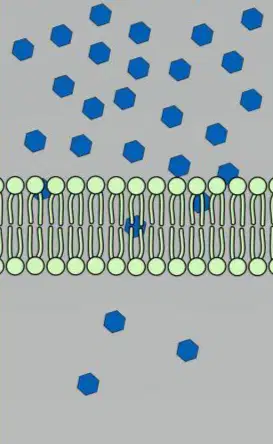
Which type of membrane transport is depicted in the image for the hydrated solute?
Active transport
Facilitated diffusion
Simple diffusion
Osmosis
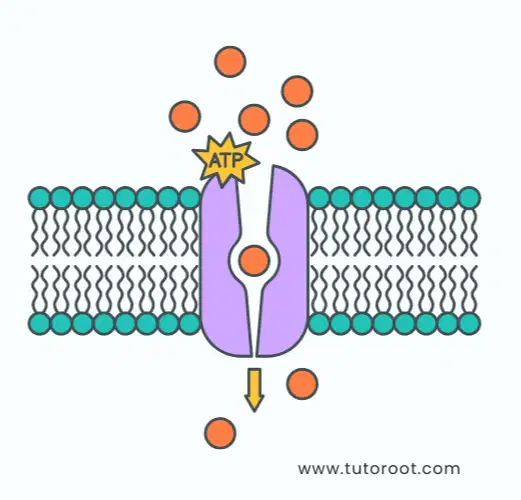
Which type of membrane transport is depicted in the image for the hydrated solute?
Active transport
Facilitated diffusion
Simple diffusion
Osmosis
Does the plasma membrane of mitochondria contain more lipids than proteins?
True
False
Which transport system allows the movement of a single substance in one direction?
Symport
Antiport
Uniport
None of the systems allow this.
True or False: A deficiency in Vitamin D3 can lead to defective bone formation and Rickets disease.
True
False

What is the structure shown in the provided figure?
Vitamin K
Vitamin D
Vitamin E
Vitamin C
HDL is a high-density lipoprotein that carries excess cholesterol from tissues to the liver.
True
False
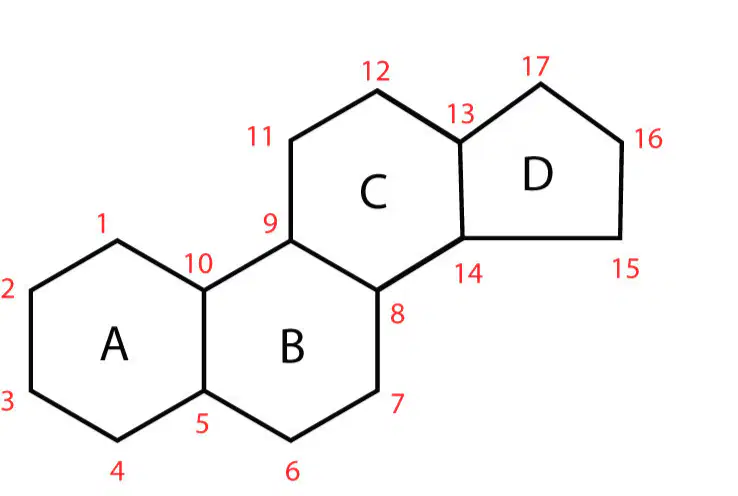
What characterizes the steroid nucleus?
It consists of five fused rings with varying carbon atoms.
It consists of four fused rings, three with 6 carbon atoms and one with 5 carbon atoms.
It is composed of only non-polar rings with no specific structure.
It has a single ring with 6 carbon atoms.
Dietary fats are absorbed in the small intestine.
True
False
emulsification increases the surface area of lipid droplets.
True
False
Which pancreatic enzyme is primarily responsible for the degradation of triglycerides (T.G) in the small intestine?
Phospholipase A2
Pancreatic lipase
Cholesterol esterase
Lyso-phospholipase
Why can glycerol not be metabolized by adipocytes?
Lack of glycerol kinase
Absence of glycerol-3-phosphate
Insufficient ATP levels
Lack of transport proteins
Glycerol can be metabolized by adipocytes.
True
False
Where is glycerol released from adipocytes transported for metabolism?
Muscle tissue
Liver
Pancreas
Kidney
What is the primary metabolic outcome of increased epinephrine and glucagon in adipocytes during low blood glucose conditions?
Increased glucose uptake
Enhanced lipogenesis
Increased hydrolysis of triglycerides to release fatty acids
Decreased energy mobilization
Bile salts are synthesized from which of the following in the body?
Pancreas
Liver
Gallbladder
Small intestine
The formation of micelles plays what role in the digestion of lipids?
Decreases the surface area of lipids exposed to enzymes
Makes lipids insoluble in water
Increases the surface area of lipids exposed to water-soluble enzymes
Inhibits the action of fat-digesting enzymes
A 24-carbon fatty acid undergoes complete β-oxidation. How many molecules of acetyl-CoA, NADH, FADH2 are produced, and how many cycles of β-oxidation occur?
12 acetyl-CoA, 11 NADH, 11 FADH2, 11 cycles
11 acetyl-CoA, 12 NADH, 12 FADH2, 12 cycles
12 acetyl-CoA, 11 NADH, 11 FADH2, 11 cycles
13 acetyl-CoA, 12 NADH, 12 FADH2, 12 cycles
How many net ATP molecules are produced from the complete β-oxidation and citric acid cycle metabolism of a 16-carbon fatty acid?
126 ATP
128 ATP
129 ATP
132 ATP
What are the final products of β-oxidation of an odd-chain fatty acid?
Only acetyl-CoA
Only propionyl-CoA
Propionyl-CoA and acetyl-CoA
Pyruvate and acetyl-CoA
What is the role of malonyl-CoA in fatty acid metabolism?
Stimulates β-oxidation
Converts fatty acids to glucose
Inhibits carnitine acyltransferase I
Activates thiolase
Under which metabolic condition is the oxidation of fatty acids typically inhibited?
When there is an excess of carbohydrates and glucose.
When the levels of acetyl-CoA are low.
When the NADH/NAD+ ratio is low.
When the body needs more energy.
A high concentration of acetyl-CoA directly inhibits which enzyme in the β-oxidation pathway?
Thiolase
β-hydroxyacyl CoA dehydrogenase
Acyl-CoA dehydrogenase
Enoyl-CoA hydratase
If glucose is not readily available, the brain can use acetoacetate and β-hydroxybutyrate as alternative fuels.
True
False
Ketone bodies can be used as a fuel source by the heart, skeletal muscles, and kidney.
True
False
Large quantities of acetoacetate production, which can occur in untreated diabetes or starvation, can result in an increased amount of acetone and a characteristic odor on the breath.
True
False
Which of the following is a direct product of the breakdown of acetoacetate and β-hydroxybutyrate that then feeds into the citric acid cycle?
Acetyl-CoA
Pyruvate
Lactate
Oxaloacetate
Acetoacetate and β-hydroxybutyrate are converted into how many molecules of acetyl-CoA?
1
2
3
4
During starvation, why is acetyl-CoA diverted away from the citric acid cycle?
High insulin levels
Accumulation of NADH
Depletion of oxaloacetate due to gluconeogenesis
Inhibition of ketone body enzymes
What condition results from the accelerated production of ketone bodies in diabetes?
High blood pH (alkalosis).
Low blood pH (ketoacidosis or ketosis).
High blood glucose levels (hyperglycemia).
Low blood glucose levels (hypoglycemia).
Bases from two adjacent DNA strands can form covalent bonds.
True
False
The hydrogen bonding between adenine and thymine is stronger than the hydrogen bonding between guanine and cytosine.
True
False
Nucleotides in DNA are linked together by hydrogen bonds.
True
False
Packaging into chromatin is considered the tertiary (3°) structure of DNA.
True
False
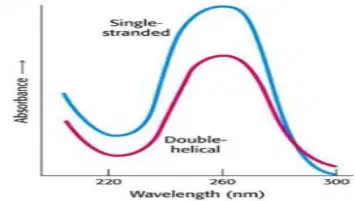
Based on the graph, which form of DNA absorbs more UV light at 260 nm?
Double-helical DNA
Single-stranded DNA
Both absorb equally
Neither absorbs significantly at this wavelength
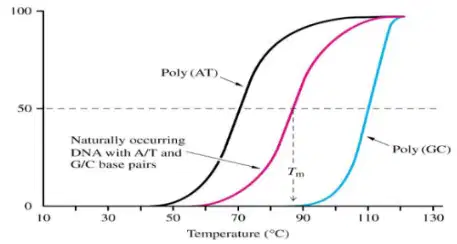
which DNA sequence has the highest melting temperature (Tm)?
Poly (AT)
Naturally occurring DNA with A/T and G/C base pairs
Poly (GC)
All three have the same melting temperature
Starting with one double-stranded DNA molecule, how many DNA molecules will be present after 5 rounds of replication?
5
10
25
32
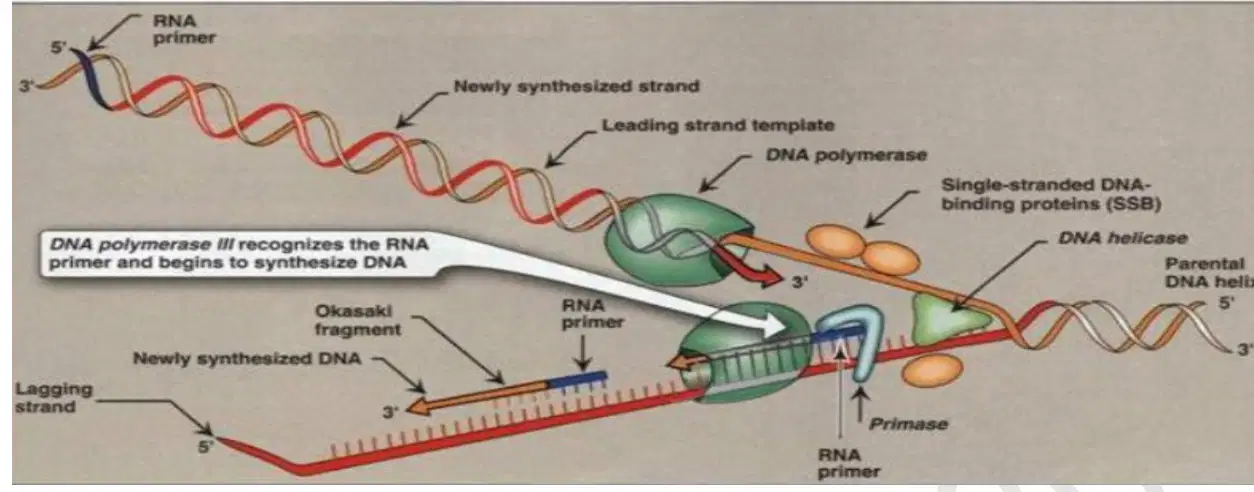
Which enzyme is represented by the X?
Xهنا على حسب ما الدكتور هتحط حرف ال
DNA polymerase
Primase
Transcriptase
Ligase
Which enzyme is responsible for removing RNA primers and replacing them with DNA?
DNA polymerase I
DNA polymerase II
DNA polymerase III
None of the above
Is the synthesis of complementary DNA in the 5' to 3' direction catalyzed by DNA polymerase III?
True
False
Given a DNA template strand with the sequence 3'-CGT ATC GGA-5', what is the corresponding mRNA sequence?
5'-CGT ATC GGA-3'
5'-GCA TAG CCT-3'
5'-GCU UAG CCG-3'
5'-GCA UAG CCU-3'
Are exons the nucleotide sequences that do not code for proteins?
True
False
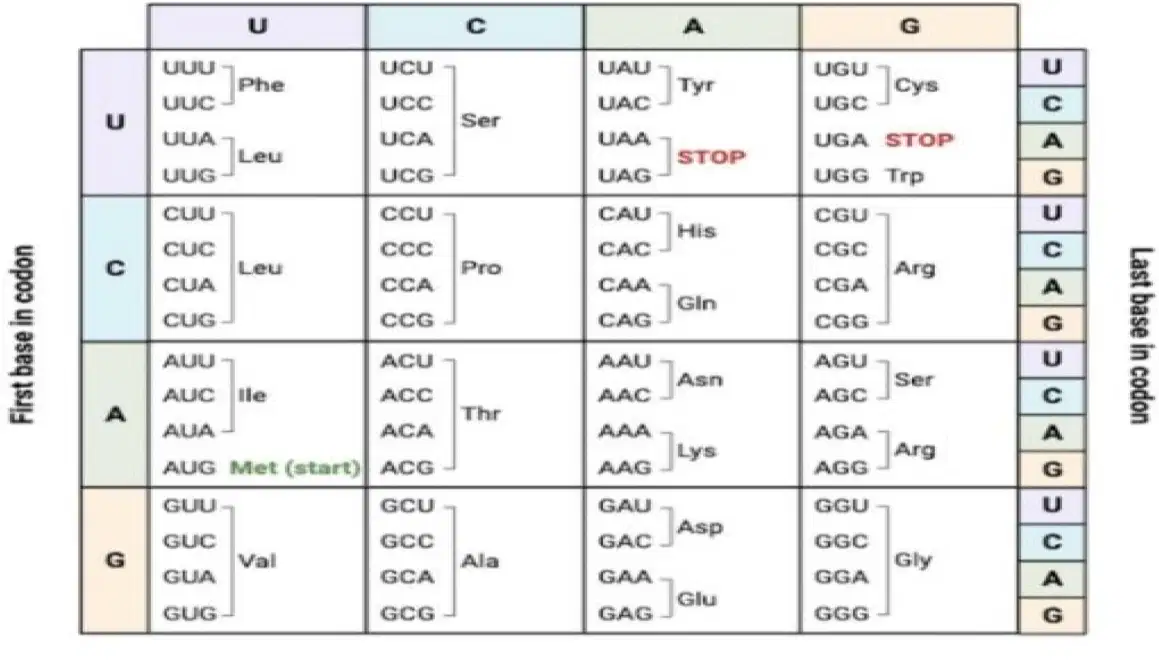
A point mutation changes the mRNA codon GAA to GAG. What type of mutation is this?
Missense mutation
Nonsense mutation
Silent mutation
Frameshift mutation
Based on the provided genetic code table, how many amino acids are encoded by the mRNA sequence 5'-AUG GCA UUU-3'?
1
2
3
4
If a messenger RNA (mRNA) molecule is composed of precisely twenty-one nucleotide building blocks, how many amino acid units will it direct the assembly of during the process of protein synthesis?
7
21
3
8
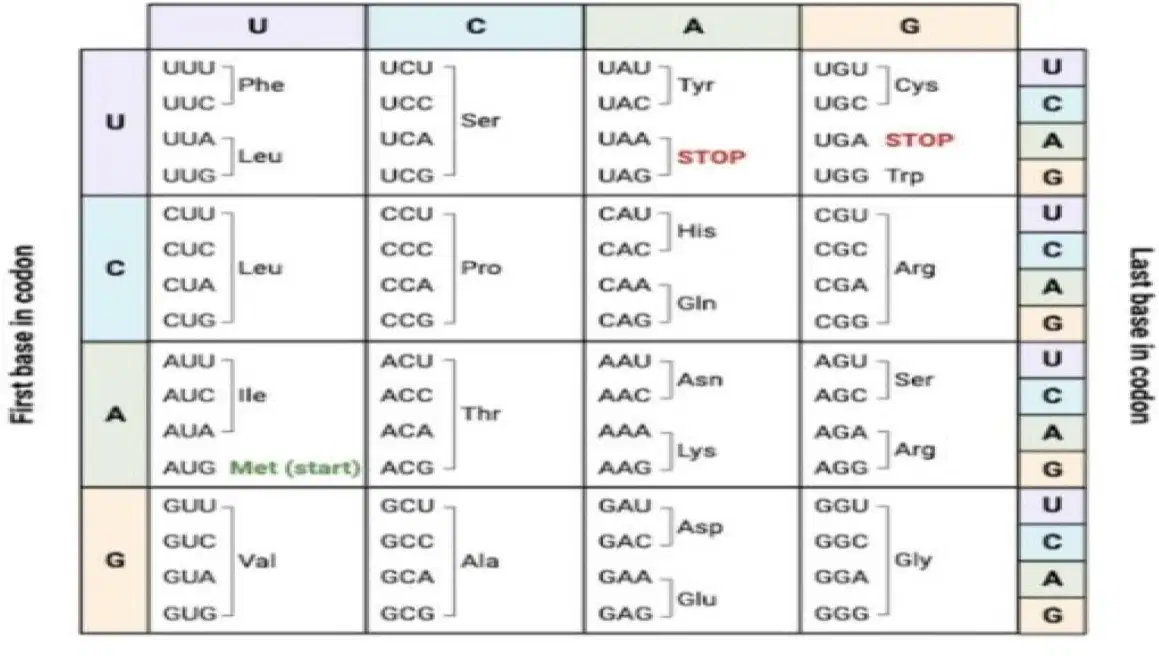
Given an anticodon sequence on a transfer RNA (tRNA) molecule of 5'-CAA-3', which specific amino acid would be attached to this tRNA,?
Isoleucine
Leucine
Lysine
Glutamine
Hexokinase in the muscle is allosterically inhibited by ATP.
T
F
Hexokinase in the brain is allosterically inhibited by ATP.
T
F
Gluconeogenesis is simply the reverse of glycolysis.
T
F
The pyruvate dehydrogenase complex is located in the mitochondria
T
F

