
 Worksheets
Lesson 30 Assessment
Total questions: 20
Worksheet time: 10mins
Name
Class
Date
1.
Which of these sources best helps scholars learn about the cultures of the Maya, Aztec, and Incan people?
a)
paintings by recent Spanish painters
b)
artifacts from the sites of modern cities
c)
accounts written by English authors
d)
traditions found among descendants
2.
Which describes the solar year calculated by the Maya?
a)
the year of 260 days on the sacred calendar
b)
the number of days in a single Calendar Round
c)
the time it takes Earth to go once around the sun
d)
the period from one full moon to the next
3.
What was one way the medieval Maya system of numbers was DIFFERENT from ours here today?
a)
It lacked a way to show zero.
b)
B. It was based on 20 rather than 10.
c)
C. It could not be used to do subtraction.
d)
D. It used symbols to represent different amounts.
4.
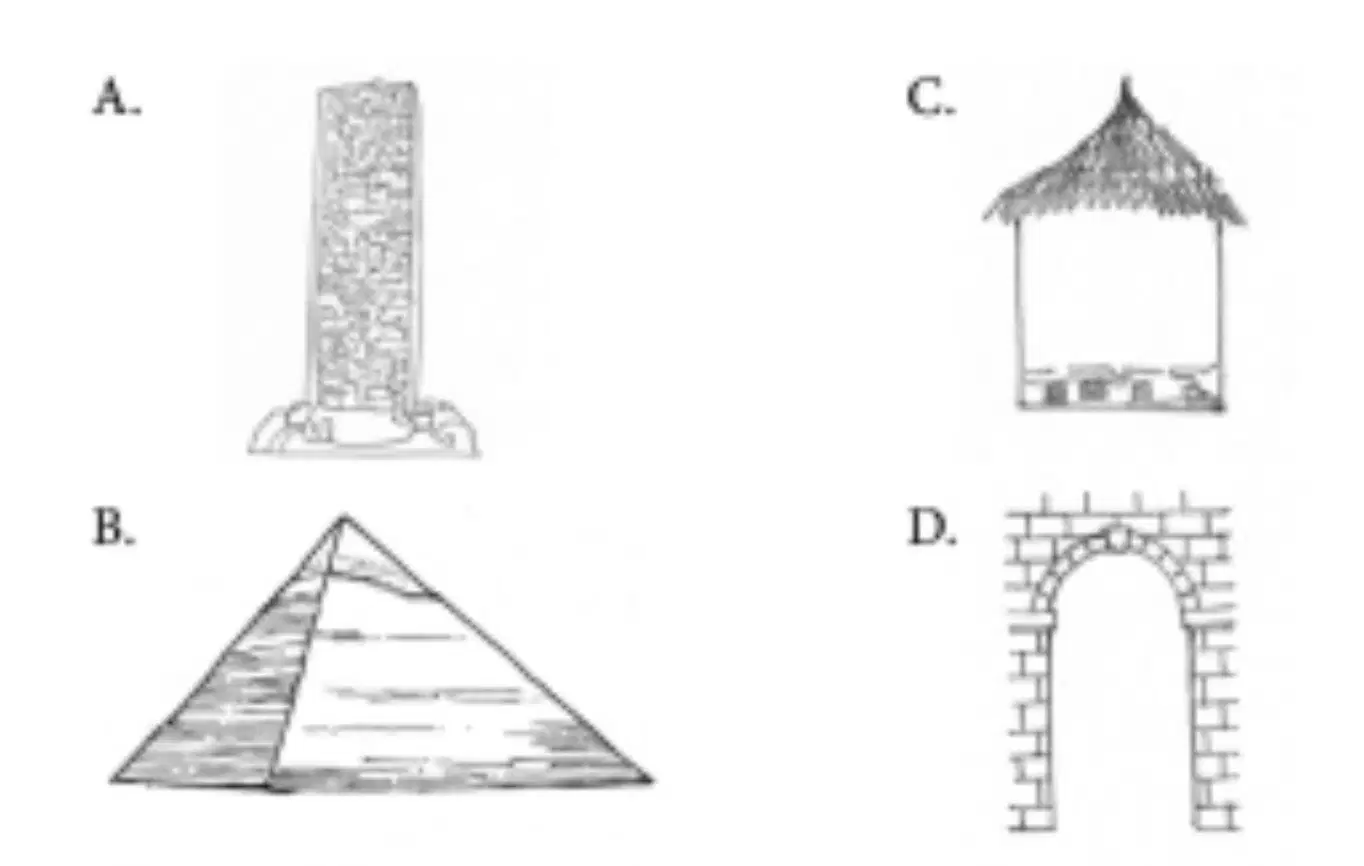
Which picture shows a Maya stele?
a)
A
b)
B
c)
C
d)
D
5.
Maya sees a stranger and knows what town he or she is from. What traditional Maya art makes this possible?
a)
weaving cloth in complex patterns
b)
making jewelry from silver and gold
c)
carving sculptures in animal shapes
d)
making hats out of grasses and feathers
6.
Why did the Maya create hundreds of glyphs?
a)
to raise crops on steep mountain slopes
b)
to communicate sounds, words, and ideas
c)
to teach men, women, and children their duties
d)
to protect themselves from a ack by foreign invaders
7.
How can tourists in Mexico observe Aztec technology skill in use?
a)
ride to the top of a skyscraper built with steel
b)
walk into the lobby of a typical downtown hotel
c)
take a boat to see flowers grown on artificial islands
d)
hire a horse-drawn carriage for a ride through the park
8.
What achievement did the Aztecs adapt from the Maya?
a)
floating gardens
b)
use of roads
c)
chariots with wheels
d)
system of two calendars
9.

What does this translation of a short Aztec verse tell about Aztec culture?
a)
Poetry was highly valued.
b)
Emeralds were quite common.
c)
Men sang while women danced.
d)
Long-distance traders got wealthy.
10.
Suppose you are an archaeologist and find an old, overgrown temple. You know it is Aztec because it has ____________.
a)
a domed roof.
b)
a double stairway.
c)
carved pillars by the door.
d)
beautiful stained-glass windows.
11.
The Aztec system of writing made use of ____________.
a)
knots.
b)
weaving.
c)
pictographs.
d)
an alphabet.
12.
What challenge did the Incas face to a much larger extent than other civilization in the Americas mentioned in Lesson 30?
a)
speaking many dialects
b)
surviving a severe climate
c)
building homes in wetlands
d)
controlling a very large empire
13.
How did travelers on Incan roads cross rivers?
a)
hey rode across on llamas.
b)
They swam with a strong stroke.
c)
They paid a ferry boatman to row them.
d)
They walked on suspension bridges.
14.
Why did Incan farmers terrace their fields?
a)
to keep wild animals away
b)
to increase available cropland
c)
to get enough water in the desert
d)
to do required labor for the emperor
15.

What material is described below?
a)
gold
b)
bone
c)
copper
d)
mahogany
16.
The sets of strings called quipus helped solve what problem of the Incas?
a)
shortage of water
b)
lack of transportation
c)
lack of a written language
d)
shortage of administrators
17.

Which civilization is the following artifact from?
a)
Maya
b)
Aztec
c)
Inca
18.

Which civilization is the following artifact showing "trephination" surgery from?
a)
Maya
b)
Aztec
c)
Inca
19.

Which civilization is the following artifact (of strings with knots in certain places) from?
a)
Maya
b)
Aztec
c)
Inca
20.
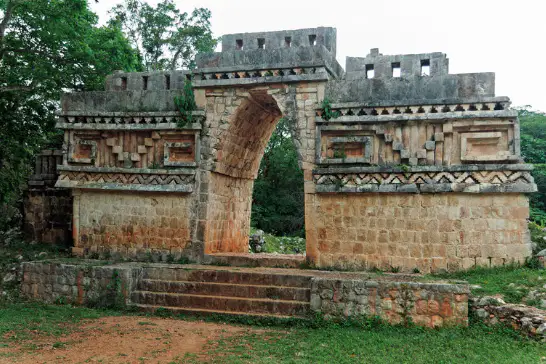
Which civilization is the following type of architecture (the corbel vault) from?
a)
Maya
b)
Aztec
c)
Inca
100 %

