
Font size
 Worksheets
Topic 12 Test- Solar System and the Universe
Total questions: 18
Worksheet time: 9mins
Astronomers can observe many stars being formed in the Orion nebula. Gravity starts to form the beginnings of a star by pulling in gas and dust from the surrounding cloud. What is this first stage of a star called?
nebula
protostar
white dwarf
neutron star
Different types of telescopes provide different forms of data. Which of the following is an example of this?
Radio telescopes detect radio waves, while optical telescopes detect visible light.
All telescopes detect only visible light.
X-ray telescopes and optical telescopes provide the same data.
Telescopes can only be used at night.
Hassam is making a model showing the interior of the sun. He discovers the interior of the sun consists of gaseous layers that produce and distribute heat energy. In which layer of the sun is most of the heat in the form of electromagnetic radiation?
radiative zone
core
convection zone
surface
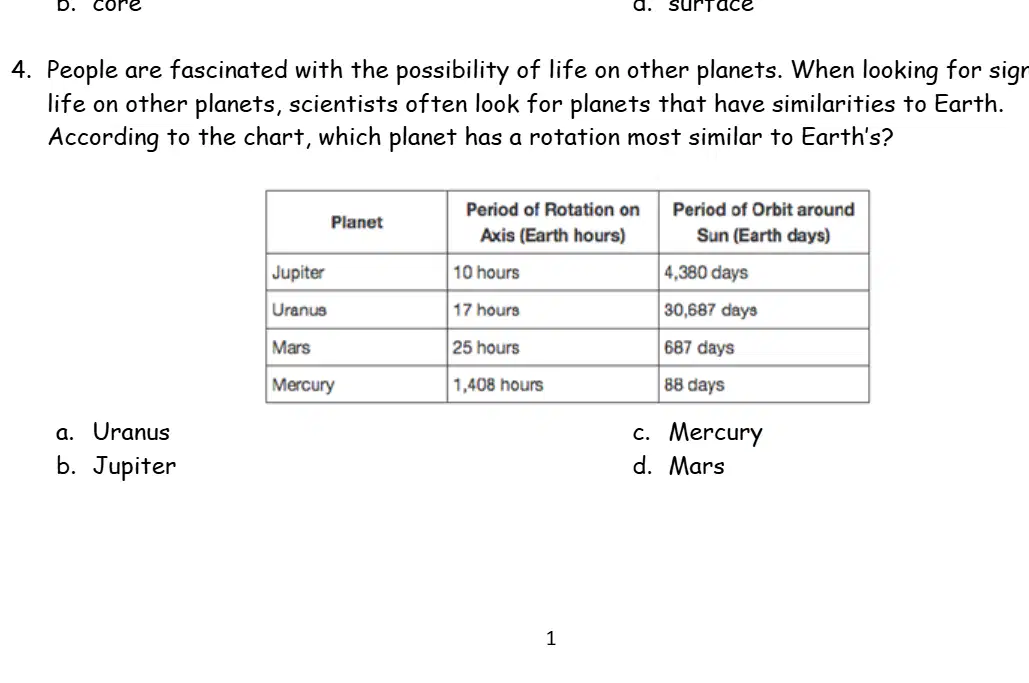
According to the chart, which planet has a rotation most similar to Earth's?
Uranus
Jupiter
Mercury
Mars
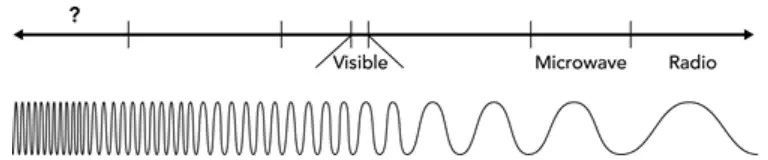
On April 5, 1991, a space telescope was launched aboard the space shuttle Atlantis. This observatory used four primary instruments to locate and observe high-energy radiation in space. Radio waves have the longest wavelengths and lowest energy on the electromagnetic spectrum. The high-energy radiation being observed by the space telescope has the shortest wavelength. What is it called?
X-rays
infrared radiation
gamma rays
ultraviolet radiation
Ethan visited the Crosby Observatory at the Orlando Science Center. The observatory houses the largest refracting telescope available to the public in Florida. One night, he observed several stars that all seemed to be equally bright. However, one of the astronomers explained that each star actually had a different absolute brightness. What information do you need to calculate a star's absolute brightness? Choose the two that apply.
its distance from the sun
its chemical composition
its apparent brightness
its distance from Earth
its color and temperature
The James Webb Space Telescope (JWST) will be a large, infrared telescope. It will help astronomers to discover more details about our universe. With technological advances such as the JWST, astronomers can study distant stars. These stars can be compared to our sun to better understand them. Which feature of the sun do astronomers use to observe the sun's rotation?
corona
prominences
sun spots
solar flares
Lin and Alex are discussing the two theories about the future of the universe. Alex was confused about what happens when massive stars die. Lin explains that sometimes after a star dies, the gravity of the remaining mass can be so strong that it pulls the gases inward, packing it into a smaller and smaller space. What is this called?
supernova
dark matter
black hole
planetary nebula
Which theory about the end of the universe does Lin think makes the most sense?
The theory involving a black hole
The theory involving dark matter
The theory involving a big crunch
The theory involving a big freeze
The James Webb Space Telescope (JWST) will be a large, infrared telescope. It will help astronomers to discover more details about our universe. The JWST will continue the line made between the sun and Earth so that it will always orbit the sun in Earth's shadow. Earth is one astronomical unit (AU) from the sun. The JWST will be 1.01 AU from the sun and 1.5 million kilometers from Earth. Look at the diagram below. If the telescope captures images from points A through D, which planets will it be observing? Use the planets' orbital distance from the sun and the words from the word bank to match the letters with the planets.
Mercury
Neptune
Mars
Saturn
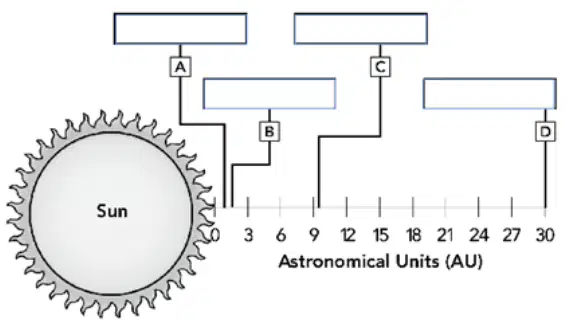
The James Webb Space Telescope (JWST) will be a large, infrared telescope. It will help astronomers to discover more details about our universe. The JWST will continue the line made between the sun and Earth so that it will always orbit the sun in Earth's shadow. Earth is one astronomical unit (AU) from the sun. The JWST will be 1.01 AU from the sun and 1.5 million kilometers from Earth. Look at the diagram below. If the telescope captures images from points A through D, which planets will it be observing? Use the planets' orbital distance from the sun and the words from the word bank to match the letters with the planets.
Mercury
Neptune
Mars
Saturn
The James Webb Space Telescope (JWST) will be a large, infrared telescope. It will help astronomers to discover more details about our universe. The JWST will continue the line made between the sun and Earth so that it will always orbit the sun in Earth's shadow. Earth is one astronomical unit (AU) from the sun. The JWST will be 1.01 AU from the sun and 1.5 million kilometers from Earth. Look at the diagram below. If the telescope captures images from points A through D, which planets will it be observing? Use the planets' orbital distance from the sun and the words from the word bank to match the letters with the planets.
Mercury
Neptune
Mars
Saturn
Ethan visited the Crosby Observatory at the Orlando Science Center. The observatory houses the largest refracting telescope available to the public in Florida. One night, he observed several stars that all seemed to be equally bright. However, one of the astronomers explained that each star actually had a different absolute brightness. What information do you need to calculate a star's absolute brightness? Choose the two that apply.
its apparent brightness
its chemical composition
its color and temperature
its distance from Earth
its distance from the sun
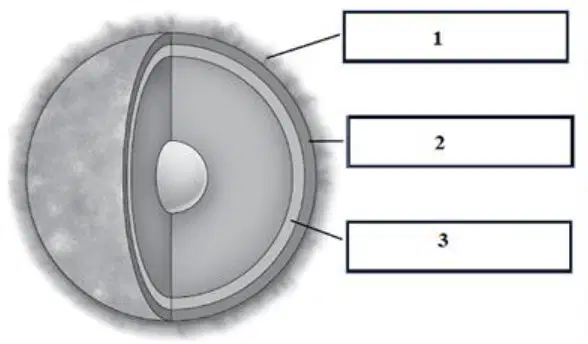
Ella is given the task of creating a display showing the parts of the sun's atmosphere in preparation for studying the unit on the sun. Help her to correctly label the sun's atmosphere, using the words from the word bank.
1. Corona 2. Chromosphere 3. Photosphere
1. Mantle 2. Core 3. Crust
1. Troposphere 2. Stratosphere 3. Mesosphere
1. Lithosphere 2. Asthenosphere 3. Mesosphere
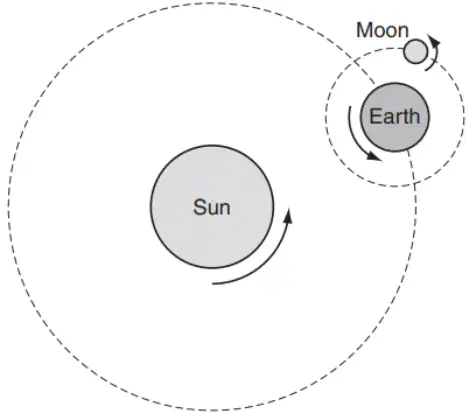
Adding arrows to Susan’s model would show how the force of gravity affects the motions within the Sun-Earth-Moon system by:
Indicating the direction of gravitational pull between the Sun, Earth, and Moon.
Showing the temperature differences between the Sun, Earth, and Moon.
Representing the distances between the Sun, Earth, and Moon.
Illustrating the colors of the Sun, Earth, and Moon.
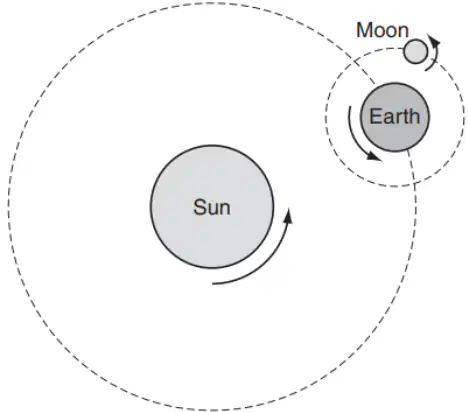
The model represents gravity by showing the paths and directions of movement of the Sun, Earth, and Moon. What does this indicate about gravity?
Gravity causes the objects to move in straight lines.
Gravity keeps the objects in orbit around each other.
Gravity has no effect on their movement.
Gravity only affects the Sun.
Based on the data, which of the following are similarities of Mars and Earth?
Both have seasons and polar ice caps.
Both have rings and many moons.
Both are gas giants.
Both have no atmosphere.
The characteristics of these planets affect their surface temperature by:
Determining how much sunlight is absorbed or reflected
Changing the color of the sky
Affecting the number of moons
Influencing the planet's rotation speed

