
 Worksheets
#1 Evolution
Total questions: 14
Worksheet time: 18mins
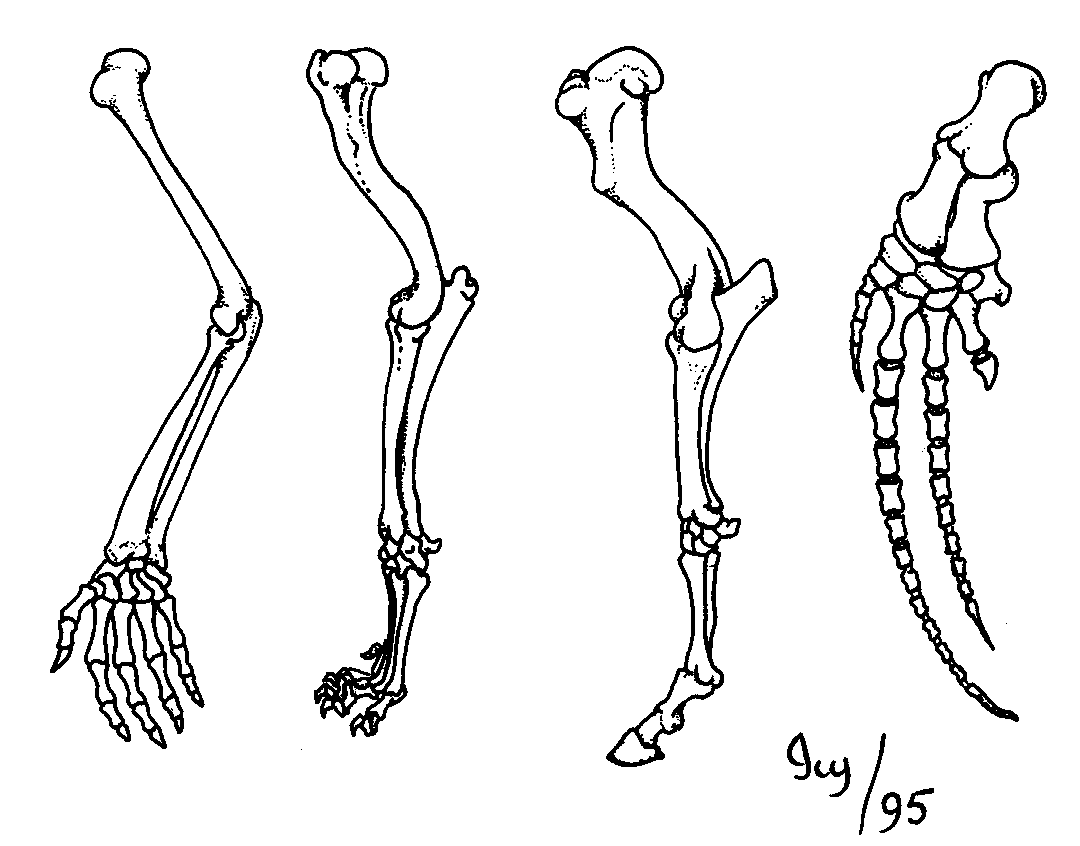
Zoe and Avery are studying different animal limbs in their biology class. They notice that the limbs have the same basic structure but are used for different functions, like flying, swimming, and walking. What does this suggest about the organisms?
vestigial structures
homologous structures
adaptive radiation
fossil

Mia and Aiden are studying two species of birds in their biology class. They learn that two organisms that are closely related would have
very similar DNA sequence
exactly the same DNA sequences
no proteins in common
completely different DNA sequence
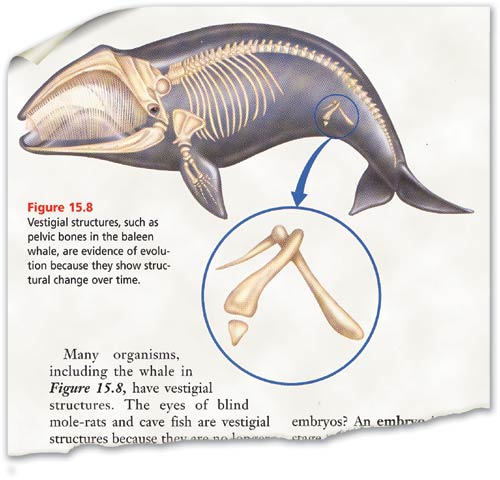
During a biology class, Mia learned that the hind leg bones in a whale are examples of
homologous structures
analogous structures
fossils
vestigal structures
Zoe and Mason are observing bird and butterfly wings in their biology class. They notice that the wings have the same functions but different structures. What type of evolutionary evidence is this?
Analogous structures
Embryological development
Genetic comparisons
Homologous structures

Benjamin and Priya are studying different animals and notice that a shark's fin, a penguin's wing, and a dolphin's flipper have similar functions but different structures. Which type of structure is depicted in this scenario?
analogous structure
homologous structure
vestigial structure
DNA
Benjamin and Maya are visiting a natural history museum. They see a display of fossils and wonder how these fossils support the theory of evolution. How do fossils support evolution?
The fossil record provides evidence that organisms have changed over time.
Individual species disappear and reappear in the fossil record over time.
The fossil record provides evidence that all organisms developed at the same time.
Organisms in the fossil record are identical to living organisms.

Hannah and Ava are studying the similarities of bones in different animals. The similarities of the bones in the diagram provide evidence that---
The organisms shown lived in the same natural environment
The organisms shown may have developed from a common ancestor
The organisms shown have the same genetic diseases
All vertebrate species have identical forelimbs
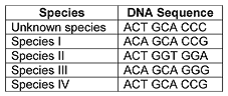
Emma is studying different bacterial species in her biology class. According to the DNA sequence data she collected, the unknown bacterial species is most closely related to:
Species I
Species II
Species III
Species IV
During a school field trip to a natural history museum, students like Mason and Olivia learn that the fossil record helps scientists
better understand the kinds of organisms that lived in the past
better understand how the environment has changed over time
better understand how organisms have evolved over time
all of the above

William and Ethan are studying the forelimbs of humans, cats, whales, and bats. They notice that these limbs are similar in structure due to having a common ancestor hundreds of millions of years ago. Is this considered homology or analogy?
Homology
Analogy

During a biology class, Olivia and Grace learned about the cave fish and minnow, which are related to each other. The cave fish is blind and only has the remnants of an eye. What type of structure is this?
vestigial
analogous
During a biology class, Jackson was curious about human anatomy and asked his teacher, "What is an example of a vestigial structure in a human?"
liver
appendix
Zoe, Olivia, and Evelyn are studying a particular protein found in blood cells. Based on this, which animals are most closely related?
Dog: ARG - LYS - HIS - TYR
Rabbit: ARG - LYS - TYR - TYR
Elk: ARG - PRO - TYR - ARG
Dog & Rabbit
Rabbit & Elk
Dog & Elk

