wayground logo

Free Printable Worksheets

Font size

S
M
L
XL
Worksheets

Practice Review : Grade 6

Total questions: 142

Worksheet time: 3hrs 14mins

Name
Class
Date
1.

Which of the following inequalities represents "A number xx is greater than 5"?

a)

x5x \leq 5

b)

x>5x > 5

c)

x<5x < 5

d)

x5x \geq 5

2.

Which point is a solution to the inequality x2x \leq -2 ?

a)

x=0x = 0

b)

x=1x = -1

c)

x=2x = -2

d)

x=3x = 3

3.

If you graph the inequality x>4x > 4 on a number line, which of the following best describes the graph?

a)

A closed circle at 4 with shading to the right

b)

An open circle at 4 with shading to the right

c)

A closed circle at 4 with shading to the left

d)

An open circle at 4 with shading to the left

4.

Write an inequality for: "The temperature tt is at most 10 degrees."

a)

t>10t > 10

b)

t<10t < 10

c)

t10t \geq 10

d)

t10t \leq 10

5.

Which of the following values is NOT a solution to the inequality x<7x < 7 ?

a)

x=6x = 6

b)

x=0x = 0

c)

x=7x = 7

d)

x=3x = -3

6.

Solve the inequality: x+3>8x + 3 > 8

a)

x>5x > 5

b)

x>11x > 11

c)

x<5x < 5

d)

x<11x < 11

7.

Which inequality matches the statement: "A number yy is no less than 12"?

a)

y<12y < 12

b)

y12y \leq 12

c)

y>12y > 12

d)

y12y \geq 12

8.

If you graph x0x \leq 0 on a number line, what does the graph look like?

a)

Open circle at 0, shading to the right

b)

Closed circle at 0, shading to the left

c)

Open circle at 0, shading to the left

d)

Closed circle at 0, shading to the right

9.

Which of the following is a solution to the inequality 2x>102x > 10 ?

a)

x=4x = 4

b)

x=5x = 5

c)

x=6x = 6

d)

x=3x = 3

10.

Write an inequality for: "The number of candies cc is less than 15."

a)

c>15c > 15

b)

c15c \leq 15

c)

c<15c < 15

d)

c15c \geq 15

11.

Which of the following inequalities represents "The number of apples aa is at least 20"?

a)

a<20a < 20

b)

a20a \leq 20

c)

a>20a > 20

d)

a20a \geq 20

12.

Solve the inequality: 3x4113x - 4 \leq 11

a)

x3x \geq 3

b)

x3x \leq 3

c)

x5x \geq 5

d)

x5x \leq 5

13.

If you graph the inequality x3x \geq -3 on a number line, which of the following best describes the graph?

a)

A closed circle at -3 with shading to the left

b)

A closed circle at -3 with shading to the right

c)

An open circle at -3 with shading to the right

d)

An open circle at -3 with shading to the left

14.

Name the polygon.

a)

Circle

b)

Rectangle

c)

Square

d)

Triangle

15.

Name the polygon.

a)

Circle

b)

Rectangle

c)

Square

d)

Triangle

16.

Name the polygon.

a)

Circle

b)

Square

c)

Triangle

d)

Rectangle

17.

Name the polygon.

a)

Circle

b)

Square

c)

Triangle

d)

Rectangle

18.

Is the figure 2D or 3D?

a)

2D

b)

3D

19.

Is the figure 2D or 3D?

a)

2D

b)

3D

20.

Is the figure 2D or 3D?

a)

2D

b)

3D

21.

Is the figure 2D or 3D?

a)

2D

b)

3D

22.

Name the shape of the base.

a)

Square

b)

Triangle

c)

Rectangle

d)

Circle

23.

Name the shape of the base.

a)

Triangle

b)

Circle

c)

Rectangle

d)

Square

24.

Name the shape of the base

a)

Circle

b)

Square

c)

Rectangle

d)

Triangle

25.

Name the shape of the base.

a)

Circle

b)

Square

c)

Triangle

d)

Trapezoid

26.

Name the 3D figure.

a)

Cylinder

b)

Sphere

c)

Circle

d)

Cone

27.

Name the 3D figure.

a)

Cylinder

b)

Circle

c)

Sphere

d)

Cone

28.

Name the 3D figure

a)

Pyramid

b)

Cone

c)

Triangular Prism

d)

Square Pyramid

29.

Name the 3D figure

a)

Cube

b)

Rectangular Prism

c)

Cylinder

d)

Square Pyramid

30.

Name the 3D figure

a)

Cylinder

b)

Sphere

c)

Cone

d)

Circular Pyramid

31.

Name the 3D figure

a)

Triangular Pyramid

b)

Rectangular Prism

c)

Square Pyramid

d)

Triangular Prism

32.

Name the 3D figure

a)

Triangular Pyramid

b)

Rectangular Prism

c)

Rectangular Pyramid

d)

Triangular Prism

33.

Name the 3D figure

a)

Pyramid

b)

Square Pyramid

c)

Triangular Prism

d)

Triangular Pyramid

34.

Name the shape of the base

a)

Rectangle

b)

Circle

c)

Square

d)

Triangle

35.

Name the shape of the base

a)

Triangle

b)

Square

c)

Rectangle

d)

Circle

36.

Name the shape of the base

a)

Triangle

b)

Square

c)

Rectangle

d)

Circle

37.

Name the shape of the base

a)

Circle

b)

Square

c)

Triangle

d)

Rectangle

38.

Name the shape of the base

a)

Square

b)

Rectangle

c)

Circle

d)

Triangle

39.

Name the shape of the base

a)

Triangle

b)

Square

c)

Rectangle

d)

Circle

40.

Name the shape of the base

a)

Triangle

b)

Circle

c)

Square

d)

Rectangle

41.
What is the perimeter?
a)
15
b)
10
c)
3
42.
What is the perimeter?
a)
20
b)
40
c)
60
43.
What is the perimeter?
a)
20
b)
5
c)
4
44.
What is the perimeter of the shape?
a)
4
b)
10
c)
12
45.
What is the perimeter of this rectangle?
a)
21 units
b)
12 units
c)
3 units
d)
None of the above.
46.
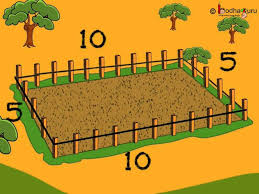
What is the perimeter of the fence?
a)
25
b)
30
c)
35
d)
40
47.
What is the perimeter of the shaded figure?
a)
28
b)
24
c)
22
d)
26
48.
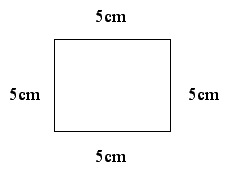
Find the PERIMETER of this figure.
a)
25 cm
b)
20 cm
c)
10 cm
d)
20 sq. cm
49.

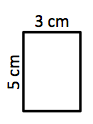
What is the perimeter of the rectangle? (Hint: top matches the bottom, left matches the right!)

a)

15 cm

b)

16 cm

c)

15 sq cm

d)

15 cm

50.
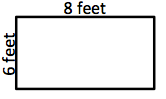
What is the perimeter of the rectangle? (Hint: top matches the bottom, left matches the right!)
a)
28 sq feet
b)
28 feet
c)
48 feet
d)
48 sq feet
51.
What is the perimeter?
a)
15
b)
10
c)
3
52.
What is the perimeter?
a)
20
b)
40
c)
60
53.
What is the perimeter?
a)
20
b)
5
c)
4
54.
What is the perimeter of the shape?
a)
4
b)
10
c)
12
55.
What is the perimeter of this rectangle?
a)
21 units
b)
12 units
c)
3 units
d)
None of the above.
56.
What is the perimeter of the fence?
a)
25
b)
30
c)
35
d)
40
57.
What is the perimeter of the shaded figure?
a)
28
b)
24
c)
22
d)
26
58.
Find the PERIMETER of this figure.
a)
25 cm
b)
20 cm
c)
10 cm
d)
20 sq. cm
59.

What is the perimeter of the rectangle? (Hint: top matches the bottom, left matches the right!)

a)

15 cm

b)

16 cm

c)

15 sq cm

d)

15 cm

60.
What is the perimeter of the rectangle? (Hint: top matches the bottom, left matches the right!)
a)
28 sq feet
b)
28 feet
c)
48 feet
d)
48 sq feet
61.
Find the area. 
a)
88 inches2
b)
60 inches
c)
88 inches 
d)
60 inches2
62.
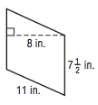
Find the area. 
a)
27 feet2
b)
213.5 feet
c)
182 feet2
d)
2775.5 feet
63.
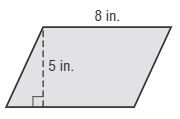
Find the area:
a)
13 in2
b)
20 in2
c)
26 in2
d)
40 in2
64.

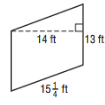
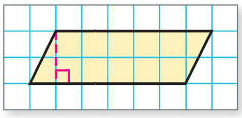
Find the area of the parallelogram above

a)

14.5 ft2

b)

48.5 ft2

c)

52 ft2

d)

7.3 ft2

65.

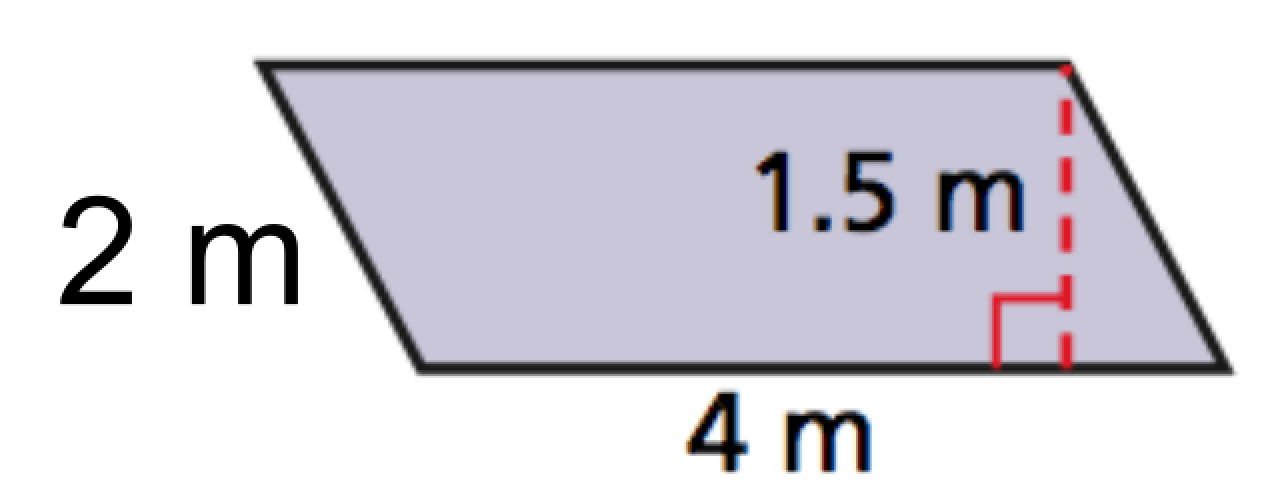
What is the area of the parallelogram above?

a)

13 cm2

b)

28.5 cm2

c)

45.6 cm2

d)

40 cm2

66.
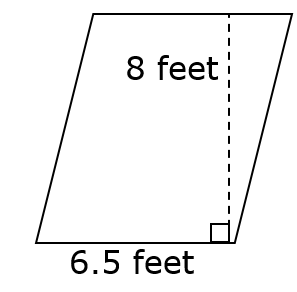
Find the area of the parallelogram.
a)
12 units2
b)
10 units2
c)
13 units2
d)
6 units
67.
Find the area of the parallelogram.
a)
15.6 cm2
b)
30.6 cm2
c)
13.26 cm2
d)
79.56 cm2
68.
What is the area of this shape?
a)
6 m2
b)
12 m2
c)
3 m2
d)
2.666 m2
69.
Find the area.
a)
27.3 mi2
b)
54 mi2
c)
27 mi2
d)
54.6 mi2
70.
Name that shape.
a)
quadrilateral
b)
quadrilateral, parallelogram
c)
quadrilateral, rectangle
d)
quadrilateral, rhombus
71.
What is the area?
a)
12 cm2
b)
14
c)
14 cm2
d)
24 cm2
72.
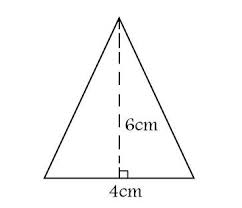
Area or triangle?
a)
20 cm2
b)
56 cm2
c)
28 cm2
d)
27 cm2
73.
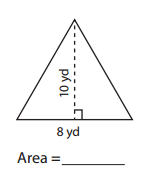
Find the area:
a)
40 yd
b)
40 yd2
c)
80 yd2
d)
18 yd2
74.
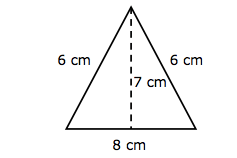
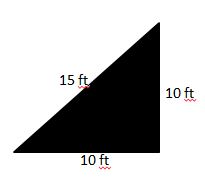
Find the area of this triangle.
a)
150 ft2
b)
100 ft2
c)
50 ft2
d)
35 ft2
75.
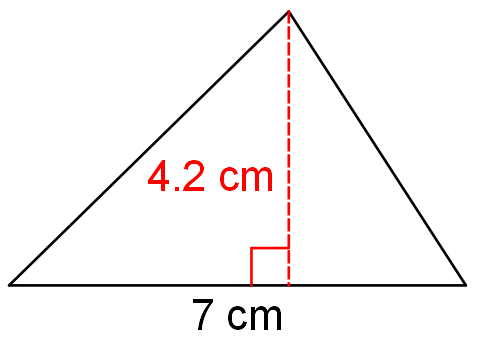
Find the area of this triangle.
a)
12 in2
b)
22 in2
c)
18 in2
d)
24 in2
76.
a)
14.7 in2
b)
14.7  cm2
c)
28 cm2
d)
28 in2
77.
a)
4 km2
b)
16 km2
c)
64 km2
d)
8 km2
78.
a)
18.4 in
b)
9.2 cm
c)
18.4 in2
d)
9.2 in2
79.

Find the area of a parallelogram that has a base of 13in. and a height of 9in.

a)

117 square inches

b)

58.5 square inches

c)

22 square inches

d)

115 square inches

80.

Find the area of the parallelogram.

a)

50 sq cm

b)

25 sq cm

c)

52 sq cm

d)

30 sq cm

81.
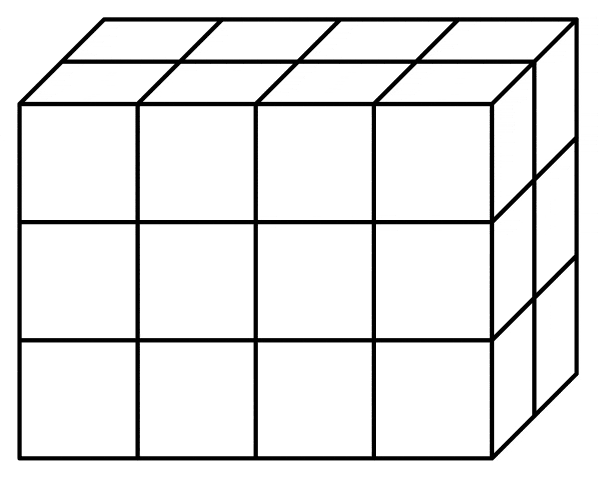
What is the volume of this rectangular prism?
a)
26 cubic units
b)
24 cubic units
c)
24 square units
d)
26 square units
82.
The dimensions of this rectangular prism are:
a)
Length: 6 cubes, Width: 3 cubes, Height: 3 cubes
b)
Length: 3 cubes, Width: 3 cubes, Height: 6 cubes
c)
Length: 3 cubes, Width: 3 cubes, Height: 3 cubes
d)
Length: 9 cubes, Width: 3 cubes, Height: 3 cubes
83.
Which formula can be used to find the volume of a rectangular prism?
a)
length x width
b)
length x width x height
c)
height x length
d)
length + width + height
84.
Joy wants to create a box with a volume of 8 cubic units. Which dimensions would work?
a)
length: 8 units
width: 8 units
height: 8 units
b)
length: 2 units
width 4 units
height: 3 units
c)
length: 4 units
width: 2 units
height: 2 units
d)
length: 2 units
width: 4 units
height: 1 unit
85.
Which label would NOT be appropriate for volume.
a)
square miles
b)
inches3
c)
cm3
d)
cubic feet
86.
Each side of this ice cube measures 2 inches.  What is the volume of the ice cube?
a)
6 cubic inches
b)
8 cubic inches
c)
12 cubic inches
d)
8 square inches
87.
What is the volume of the rectangular prism when it is fully packed if there are no gaps or overlaps in the unit cubes?
a)
15 cubic inches
b)
60 cubic inches
c)
30 cubic inches
d)
10 cubic inches
88.
What shape is this?
a)
cone
b)
pyramid
c)
rectangular prism
d)
cube
89.

Bob has a rectangular prism gift box what it the volume of Bob's gift box?

a)

64in3

b)

60in3

c)

240in3

d)

24in3

90.
what is the volume?
a)
72
b)
27
c)
1.5
d)
272
91.
Which axis runs vertically?
a)
x
b)
Y
92.
Which axis runs horizontally?
a)
x
b)
y
93.
How do you write an ordered pair?
a)
(X,X)
b)
(Y,X)
c)
(X,Y)
d)
(Y,Y)
94.
Ordered pair (0,0) is also known as the ___.
a)
y-axis
b)
x-axis
c)
origin
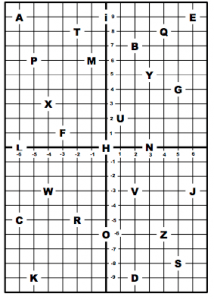
95.
Which letter matches the coordinate (4, -6)?
a)
G
b)
Z
c)
K
d)
None of the above
96.
What error did the student make when plotting the point (3, 4) according to the picture?                                                                                                                                                                                                                                                                                                                                                                         
a)
The student moved left along the x-axis when he should have moved right
b)
The student plotted the y-coordinate in place of the x-coordinate
c)
The student didn't make a mistake
d)
Both Options 1 and 2
97.
Which quadrant contains the point named by (2, 5)?
a)
Quadrant I
b)
Quadrant II
c)
Quadrant III
d)
Quadrant IV
98.
In which quadrant is the following point?
(-3, 12)
a)
Quadrant I
b)
Quadrant II
c)
Quadrant III
d)
Quadrant IV
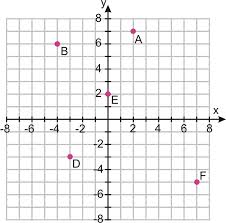
99.
Where is point E located?
a)
( 2, 0 )
b)
( 2 , 2 )
c)
( 0 , 2 )
d)
( 0 , 0 )
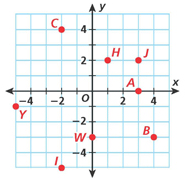
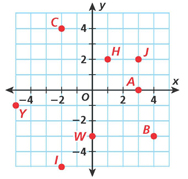
100.
Name the quadrant where POINT A is located. 
a)
Quadrant I
b)
Quadrant IV
c)
No Quadrant
d)
Quadrant II
101.
Give the coordinates for POINT I.
a)
(-2, 5)
b)
(-2, -5)
c)
(2, 5)
d)
(2, -5)
102.
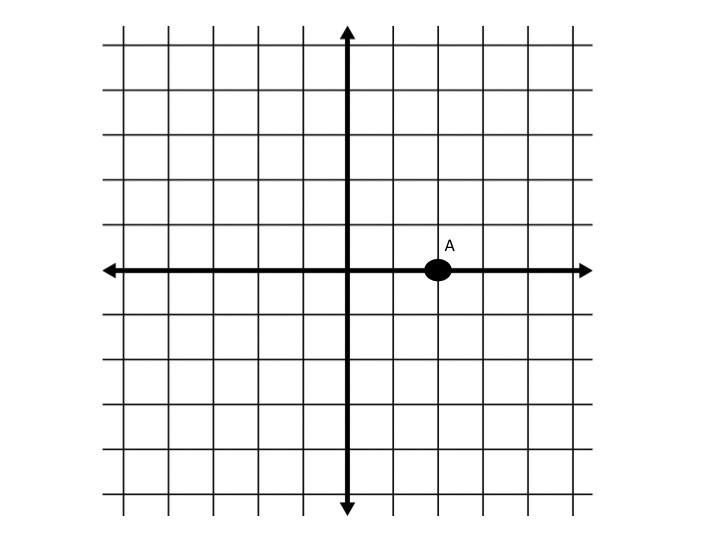
What is the ordered pair for point A?
a)
( 2, 0)
b)
( 0 , 2)
c)
(0, -2)
d)
(-2,0)
103.
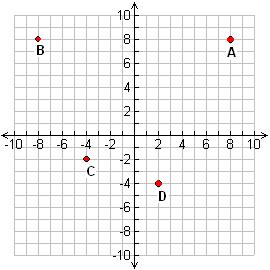
What are the coordinates of Point C?
a)
(-4, -2)
b)
(-2,-4)
104.

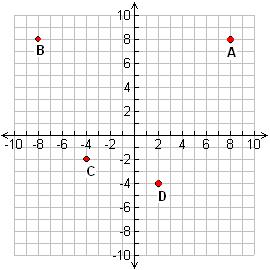
What is the distance from Point A to Point B?

a)

8 units

b)

16 units

c)

0 units

d)

32 units

105.
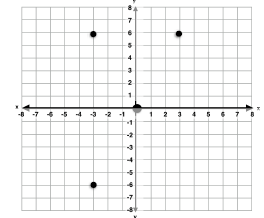
Which of the coordinates given could be the fourth point used to form a rectangle?
a)
(3, -6)
b)
(-3, -6)
c)
(-6, 3)
d)
(4, -6)
106.
What is the mode?
a)
# happening the most
b)
the average
c)
biggest - smallest
d)
the middle #
107.
What is the mean?
a)
# happening the most
b)
the number in the middle
c)
biggest-smallest
d)
the average
108.
A data set can have more than one median?
a)
True
b)
False
109.
The number of pages that Carolyn wrote in her journal each day from Monday to Friday is shown below: 
9, 8, 12, 6, 10
What is the mean number of pages she wrote per day?
a)
5
b)
6
c)
9
d)
11
110.
The number of miles that Jenna cycled each week for a 7-week period is shown: 
36, 42, 28, 52, 48, 36, 31 
What is the median number of miles Jenna cycled?
a)
24
b)
36
c)
39
d)
52
111.
Find the range.
5, 15, 10, 20, 15, 10, 15
a)
5
b)
10
c)
15
d)
13
112.
Mode:
67, 74, 95, 98, 98, 99, 102
a)
90.4
b)
35
c)
92
d)
98
113.
Find the median of these numbers:
4,2,7,4,3
a)
2
b)
5
c)
7
d)
4
114.
A data set can have more than one mode
a)
True
b)
False
115.
To find the average of a set of numbers, add up all the items and divide by...
a)
2
b)
The minimum
c)
The maximum
d)
The number of items
116.
What is the definition of the range?
a)
The average
b)
The number that occurs the most
c)
The middle number
d)
The difference of the largest and smallest numbers
117.
What is the mode?
a)
# happening the most
b)
the average
c)
biggest - smallest
d)
the middle #
118.
What is the mean?
a)
# happening the most
b)
the number in the middle
c)
biggest-smallest
d)
the average
119.
A data set can have more than one median?
a)
True
b)
False
120.
The number of pages that Carolyn wrote in her journal each day from Monday to Friday is shown below: 
9, 8, 12, 6, 10
What is the mean number of pages she wrote per day?
a)
5
b)
6
c)
9
d)
11
121.
The number of miles that Jenna cycled each week for a 7-week period is shown: 
36, 42, 28, 52, 48, 36, 31 
What is the median number of miles Jenna cycled?
a)
24
b)
36
c)
39
d)
52
122.
Find the range.
5, 15, 10, 20, 15, 10, 15
a)
5
b)
10
c)
15
d)
13
123.
Mode:
67, 74, 95, 98, 98, 99, 102
a)
90.4
b)
35
c)
92
d)
98
124.
Find the median of these numbers:
4,2,7,4,3
a)
2
b)
5
c)
7
d)
4
125.
A data set can have more than one mode
a)
True
b)
False
126.
To find the average of a set of numbers, add up all the items and divide by...
a)
2
b)
The minimum
c)
The maximum
d)
The number of items
127.
What is the definition of the range?
a)
The average
b)
The number that occurs the most
c)
The middle number
d)
The difference of the largest and smallest numbers
128.

Identify the OUTLIER for the Data Set.

(If no outlier type: N/A)

26, 29, 24, 33, 31, 43, 17, 84, 23, 27, 29

(a)  

129.

Identify the OUTLIER for the Data Set.

(If no outlier type: N/A)

8, 7, 31, 6, 5, 4, 4, 3, 2, 9, 7

(a)  

130.

Identify the OUTLIER for the Data Set.

(If no outlier type: N/A)

17, 15, 16, 22, 34, 30, 28, 19

(a)  

131.

Identify the OUTLIER for the Data Set.

(If no outlier type: N/A)

101, 92, 93, 78, 82, 83, 76, 103, 46, 89

(a)  

132.

Identify the OUTLIER for the Data Set.

(If no outlier type: N/A)

66, 63, 72, 55, 6, 42, 48, 66, 53

(a)  

133.

Identify the OUTLIER for the Data Set.

(If no outlier type: N/A)

2, 3, 1, 1, 1, 4, 8, 26, 3, 2, 7

(a)  

134.

Identify the OUTLIER for the Data Set.

(If no outlier type: N/A)

77, 59, 30, 62, 67, 77, 79, 81, 62

(a)  

135.

Identify the OUTLIER for the Data Set.

(If no outlier type: N/A)

92, 94, 89, 88, 91, 92, 126, 93, 94, 87, 88

(a)  

136.

Identify the OUTLIER for the Data Set.

(If no outlier type: N/A)

34, 45, 24, 31, 35, 25, 44, 42, 36, 28

(a)  

137.

Identify the OUTLIER for the Data Set.

(If no outlier type: N/A)

12.4, 13.2, 11.5, 14.5, 20, 19.1, 17.8, 42.6, 15.9

(a)  

138.

Identify the OUTLIER for the Data Set.

(If no outlier type: N/A)

110, 109.48, 107.6, 99, 32.89, 98.3, 103, 104.41

(a)  

139.

Identify the OUTLIER for the Data Set.

(If no outlier type: N/A)

0.45, 0.23, 0.38, 0.94, 0.27, 0.36, 0.41, 0.28

(a)  

140.

Identify the OUTLIER for the Data Set.

(If no outlier type: N/A)

2.23, 2.26, 2.34, 3.59, 2.56, 2.47, 2.34, 2.43

(a)  

141.

Identify the OUTLIER for the Data Set.

(If no outlier type: N/A)

223, 226, 234, 359, 256, 247, 234, 243

(a)  

142.

Identify the OUTLIER for the Data Set.

(If no outlier type: N/A)

765, 631, 672, 744, 731, 319, 652, 731

(a)