
 Worksheets
Holy Orders - Test VIII - 2025
Total questions: 79
Worksheet time: 42mins
At the turn of the first century, the Church was being tested by which of the following?
Roman persecution
The rise of Islam
An emergence of schismatic, or heretical, sects of the new Christian religion
Both A and C
At the turn of the first century, the Church was being tested by ________ and an emergence of schismatic, or heretical, sects of the new Christian religion.
Roman persecution
Greek philosophy
Jewish traditions
Economic hardship
According to St. Ignatius of Antioch, the role of the Apostle’s successors was crucial for which of the following?
Maintaining Church unity
Preserving the truth of Christ
Continuing the mission of Christ
All of the above
St. Ignatius of Antioch knew the role of the Apostle’s successors was crucial for ________, preserving the truth of Christ, and continuing the mission of Christ.
maintaining Church unity
gathering wealth
performing miracles
writing new scriptures
At the turn of the first century, the Church was being tested by Roman persecution and the emergence of heretical sects.
True
False
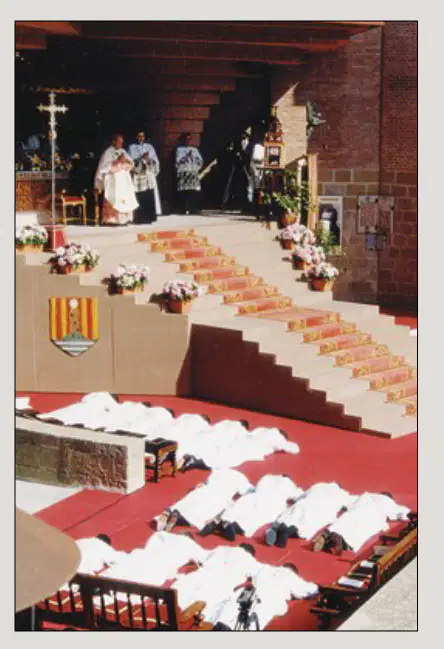
Which sacraments are described as being at the Service of Communion?
Baptism and Confirmation
Holy Orders and Matrimony
Eucharist and Reconciliation
Anointing of the Sick and Matrimony
Both Holy Orders and Matrimony ______ a person to the service of others.
consecrate
separate
distract
ignore
Holy Orders ordains a baptized man to the ministry of the ______.
Church
State
Family
School
According to CCC 874, the holders of office, who are invested with a sacred power, are dedicated to promoting the interests of whom?
Themselves
Their brethren
The government
The wealthy
The word 'Minister' comes from the Latin meaning "______".
servant
leader
teacher
ruler
Those who have received a sacrament to Holy Orders are called to a life of:
Wealth
Service
Leisure
Study
Ordained ministers of the Catholic Church continue Christ’s ministry by:
Preaching only
Preserving the Church
Writing books
Traveling
Jesus wishes to touch our lives through those men he has called to the ministry of Holy Orders.
True
False
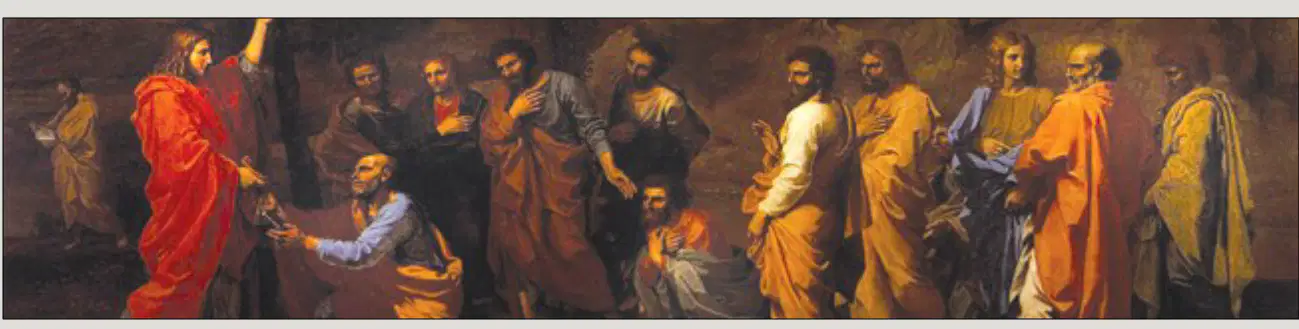
According to the Old Testament, who did God choose to be his priestly people?
The Hebrews, the descendants of Abraham
The Egyptians, the followers of Pharaoh
The Canaanites, the people of Jericho
The Babylonians, the descendants of Nimrod
Who did God direct to appoint the Levites to act as priests according to the Old Testament?
Moses
Aaron
Joshua
Samuel
The priesthood in Judeo-Christian history was handed down from generation to generation.
True
False
Priesthood was not a new development in Judeo-Christian history.
True
False
In the Old Testament, how were priests appointed?
Through their hereditary lineage
By popular vote
By personal calling
By prophecy
Jesus Christ called his Apostles in a more ______ and profound way.
personal
distant
casual
temporary
According to the Gospels, how many Apostles did Jesus call?
Ten
Twelve
Fourteen
Seven
Who said, 'You did not choose me, but I choose you.'? (Jn 15:16)
Moses
Peter
Jesus Christ
Paul
The call or vocation to be an Apostle is a personal invitation to leave all behind and dedicate one's life to the service of God in his plan for (a) .
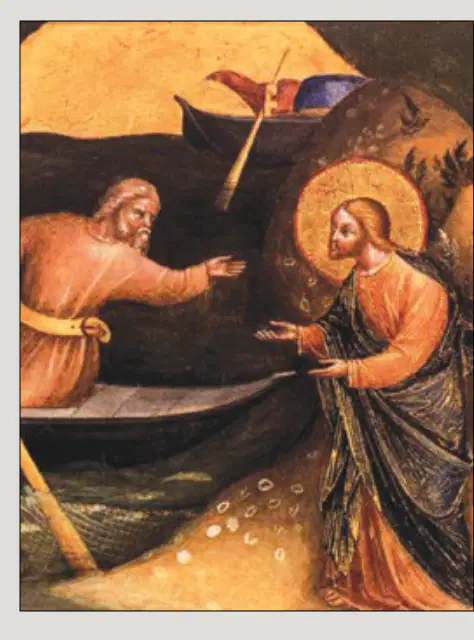
Today, those who hear God’s call respond to it after long periods of _______ and prayer.
discernment
celebration
doubt
neglect

Those who hear God’s call seek to understand _______ and his voice.
God
the world
themselves
nature

Those called by Christ to the priesthood vocation participate in passing down Christ’s divine authority through the _______ Apostles.
twelve
seven
forty
five
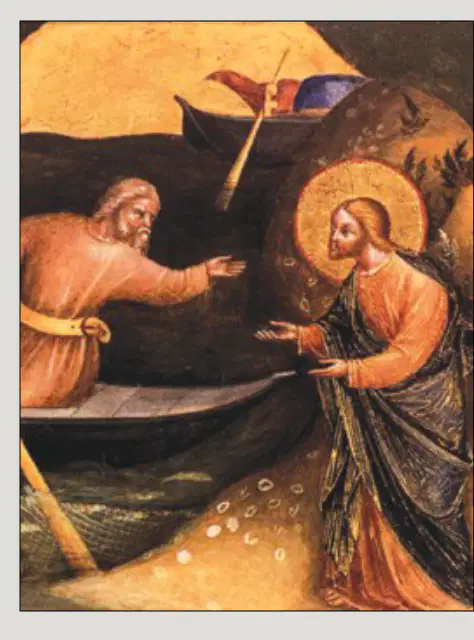
Christ’s mandate to those called to priesthood is to spread his _______ News.
Good
Bad
Old
False
According to the passage, why did the Apostles ordain deacons?
To preach sermons
To serve the material needs of the Christian community in Jerusalem
To write scriptures
To lead prayers
As the Church continued to grow, what additional leaders did the Apostles ordain to minister to new congregations?
Bishops and presbyters
Deacons and monks
Priests and nuns
Popes and cardinals
Apostles ordained these new leaders by the ________ on of hands.
laying
lifting
joining
clapping
From which word do we get the English word 'priest'?
Deacon
Presbyter
Bishop
Apostle
Jesus Christ desired that his saving ministry be continued after his ______ and Resurrection.
Death
Birth
Ascension
Baptism
Imitating the relationship between Father and Son, Jesus bestowed his authority on the ______.
Apostles
Pharisees
Romans
Prophets
Jesus called the Apostles to participate in his own ______ ministry.
priestly
political
economic
military
Which of the following did Jesus instruct the Apostles to do?
Preach
Baptize
Celebrate the Sacraments
Forgive sins
All of the above
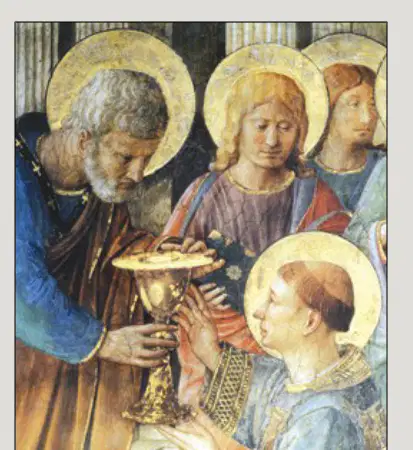
Jesus empowered the Apostles with his own divine authority.
True
False
When a priest celebrates the sacraments, he is acting ________ (in the person of Christ).
in persona Christi
ex opere operato
ad orientem
in nomine Patris
According to the passage, the priest no longer acts as the individual mediator between God and man.
True
False
Which of the following is NOT mentioned as a role of the priest when acting in persona Christi?
Participates in the mediation and ministry of Christ himself
Acts as an individual mediator between God and man
Shares the divine authority of Christ
Acts in the person of Christ
Christ is the source of all priesthood: the priest of the old law was a figure of Christ, and the priest of the new law acts in the person of Christ. (CCC 1548)
True
False
According to the earliest Church documents, who were appointed to succeed the Apostles?
Certain men (bishops, priests, and deacons)
Only kings and rulers
Ordinary laypeople
Women exclusively
Who bestowed his divine authority on the Apostles, according to the post-apostolic church?
(a)
Early post-apostolic writings state that the bishops exercised the authority of teaching and governing the local church by instruction of whom?
(a)
Which of the following best describes the hierarchy detailed in early post-apostolic writings?
Pope, Cardinal, Bishop
Bishop, Priest, Deacon
Pastor, Elder, Deacon
Apostle, Prophet, Teacher
Later writings illustrate the importance of apostolic succession. What is one reason why apostolic succession is important?
It helps identify the true Church
It guarantees the bishop acts under Christ's authority
It assures the authentic Gospel message is transmitted
All of the above
By tracing the authority of the Apostles from one bishop to the next, one could identify the _________?
true Church
first Pope
original Bible
Council of Nicaea
By tracing the authority of the Apostles from one bishop to the next, one could be guaranteed that the bishop was acting under the authority of ________ himself.
Christ
Peter
Paul
Moses
By tracing the authority of the Apostles from one bishop to the next, one could be assured that the authentic ________ message was transmitted.
Gospel
Epistle
Creed
Sacrament
In early Christianity, who was the local church headed by?
The Pope
The bishop
The presbyter
The deacon
As the Church experienced rapid growth, who would the bishop send to assist the new community?
A deacon
A priest (presbyter)
A layperson
A nun
The local church community is called a ________, headed by the bishop.
diocese
parish
congregation
synod
The bishop sends his priests to each of the smaller Catholic communities (parishes) within the (a) .
Christ granted authority to the Apostles to continue his saving mission through the Sacraments. During the Last Supper, Jesus instituted the Sacraments of the _______ and Holy Orders.
Eucharist
Baptism
Confirmation
Reconciliation
After his Resurrection, Jesus gave the Apostles the authority to forgive sins through the _______.
Holy Spirit
Ten Commandments
Baptism
Sermon on the Mount
Which Sacraments did Jesus institute during the Last Supper?
Baptism and Confirmation
Eucharist and Holy Orders
Matrimony and Anointing of the Sick
Reconciliation and Eucharist
According to the passage, how is the priesthood of Christ made visible in the Church?
Through Baptism
Through Holy Orders
Through Confirmation
Through Marriage
Who receives grace from the Holy Spirit according to the passage?
Only priests
Only bishops
Deacons, priests, and bishops
Only deacons
Deacons, priests, and bishops receive grace from the Holy Spirit to ________ the People of God.
serve
ignore
judge
punish
Deacons, priests, and bishops celebrate those sacraments appropriate to each one’s particular ________.
office
parish
service
belief
According to the slide 'THE SACRAMENT OF HOLY ORDERS', those who receive Holy Orders consecrate themselves to the _____?
Lord
Church
Community
Priesthood
According to the slide 'THE SACRAMENT OF HOLY ORDERS', those who receive Holy Orders become servants of the _____?
Word of God and his sacraments
Church building and its maintenance
Community leaders and their decisions
Traditions and customs of the people
According to the slide 'THE SACRAMENT OF HOLY ORDERS', those who receive Holy Orders dedicate themselves to a life of _____?
self-denial and sacrifice
wealth and luxury
leisure and entertainment
political power
According to the slide 'THE SACRAMENT OF HOLY ORDERS', those who receive Holy Orders are personally called to 'be Christ' to others by _____?
the lives they lead
the prayers they recite
the wealth they possess
the titles they hold
Holy Orders is a vocation from whom?
The Church
God
The Bishop
The Community
Due to the nature of the Sacrament of Holy Orders, who has the right to receive Holy Orders?
Anyone who wants it
Only church authority
No one has a right to receive Holy Orders (unlike all other Sacraments)
Any baptized man
Only ______ can call a baptized man to receive the Sacrament of Holy Orders.
church authority
the congregation
his family
any baptized person
Before ordaining a man to the priesthood, a candidate’s suitability for the priestly ministry must be verified by whom?
(a)
Holy Orders is a Sacrament with how many separate degrees?
Two
Three
Four
One
Which of the following is NOT one of the three degrees of Holy Orders?
Deacon
Priest
Bishop
Cardinal
The word 'orders' referred to a governing body, in which membership was considered _____
sacred
temporary
illegal
optional
Match the Latin term to its English meaning:
Order of priests
Order of bishops
Order of deacons
Order of priests
Order of bishops
Order of deacons
Deacons and priests are ordained as assistants of the bishop and cannot function apart from him.
True
False
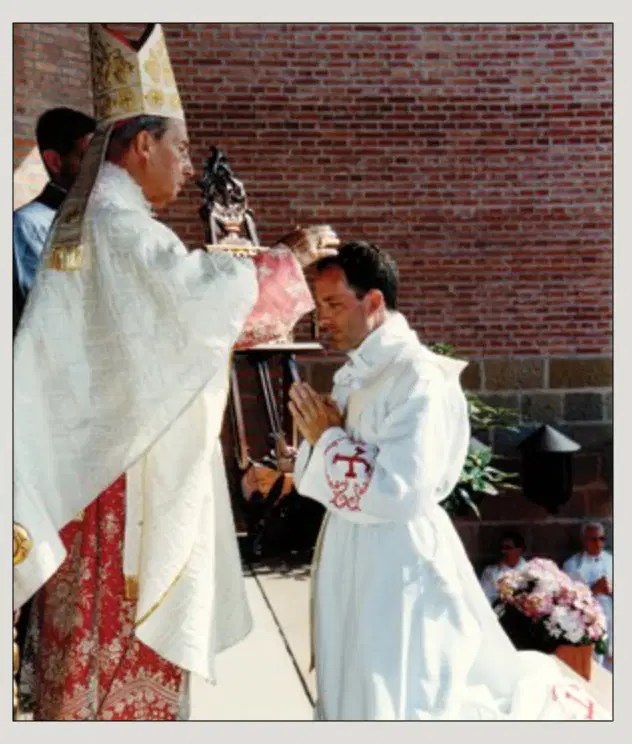
According to the effects of the Sacrament of Holy Orders, what is conferred upon the recipient?
the office of bishop, priest, or deacon
the forgiveness of all sins
the gift of prophecy
eternal life in heaven
Which of the following is an effect of the Sacrament of Holy Orders?
The recipient can repeat the sacrament multiple times
The recipient receives an indelible mark upon the soul
The recipient is given a new name
The recipient is required to leave the ministry
The Sacrament of Holy Orders gives a sacramental grace proper to the exercise of the recipient’s ________.
ministry
faith
baptism
marriage
What is the first degree in the hierarchy of Holy Orders?
Priest
Bishop
Deacon
Cardinal
The word 'deacon' comes from the Greek word for what?
servant
teacher
leader
prophet
Which of the following statements is true about a permanent deacon?
He is ordained for a period of time before becoming a priest
He is ordained with the intention of serving as a deacon for the rest of his life
He is not ordained
He only assists at weddings
A transitional deacon is ordained for a period of time before progressing on to the priesthood.
True
False
How do deacons assist the bishop and priests at the celebration of the Mass?

