
 Worksheets
Student Assessment | Grade 4 Form B Segment A
Total questions: 16
Worksheet time: 8mins
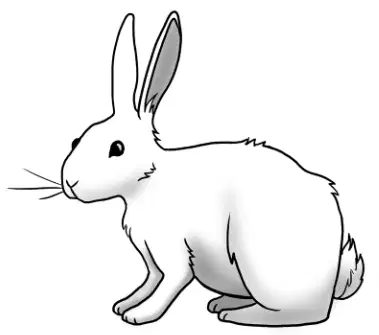
Many rabbits, like the one shown below, have very long ears, eyes on both sides of their head, and very strong back legs. Which of the following best explains why rabbits have long ears?
to help them find plants to eat
to protect them from snow
to look for a good habitat
to notice predator sounds
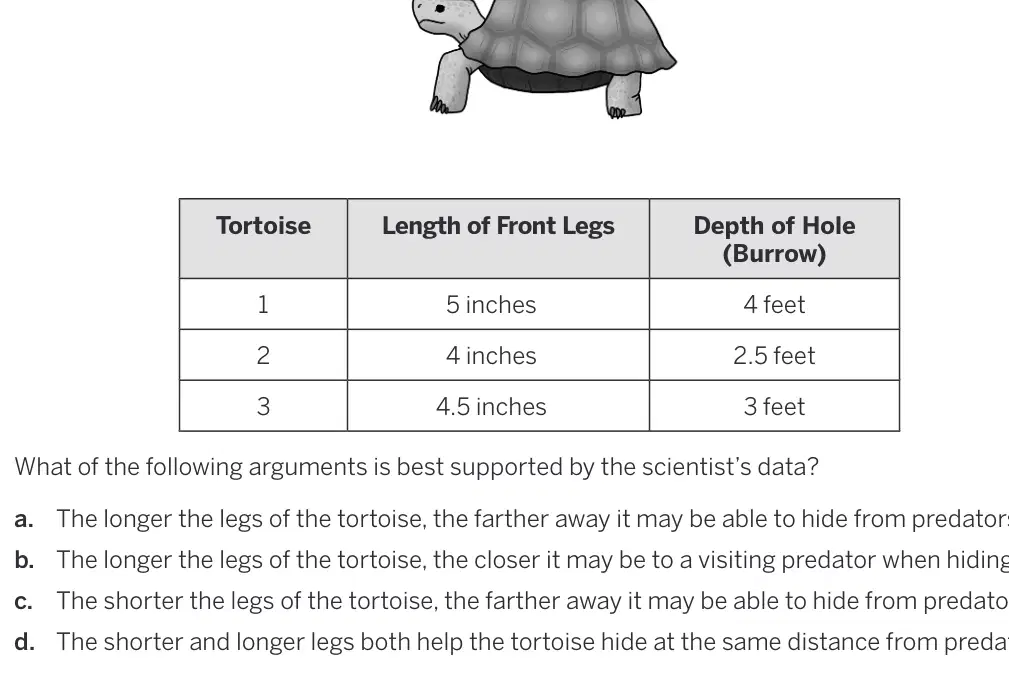
A scientist collects data on three different desert tortoises. Below is a picture of a typical desert tortoise. They use their front legs to make deep holes (burrows) in the ground where they stay safe from predators. Tortoise | Length of Front Legs | Depth of Hole (Burrow) 1 | 5 inches | 4 feet 2 | 4 inches | 2.5 feet 3 | 4.5 inches | 3 feet What of the following arguments is best supported by the scientist’s data?
The longer the legs of the tortoise, the farther away it may be able to hide from predators.
The longer the legs of the tortoise, the closer it may be to a visiting predator when hiding.
The shorter the legs of the tortoise, the farther away it may be able to hide from predators.
The shorter and longer legs both help the tortoise hide at the same distance from predators.
Alligators have highly sensitive skin. Parts of their skin have bundles of nerves that can sense very small changes in vibrations in their surroundings. An alligator then uses these changes in vibrations to detect its prey.
The sensation of vibration changes must travel to other parts of the skin before the alligator can use these changes in vibrations to detect its prey.
The sensation of vibration changes must travel to the brain before the alligator can use these changes in vibrations to detect its prey.
The sensation of vibration changes must travel to the back before the alligator can use these changes in vibrations to detect its prey.
The sensation of vibration changes must travel to the prey before the alligator can use these changes in vibrations to detect its prey.
Many snakes have structures on their faces between their eyes and nostrils that let them sense the heat of warm-bodied animals, such as rabbits. Snakes rely on these sensors to help them hunt for prey. How do these heat-sensing structures support the overall system of the snake?
They help snakes hide better from their prey.
They are the only source of sight for the snake.
They send signals to the brain when an animal may be nearby.
They allow the snake to process smells and taste its food.
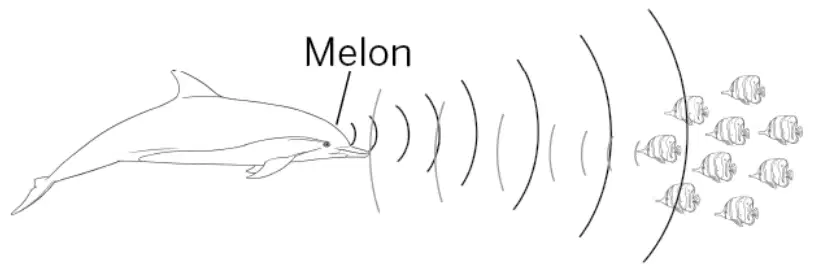
Dolphins have a sensory organ found in the forehead called the melon. It allows dolphins to use a process called echolocation to sense objects in their surroundings. They produce sound waves that are sent out in the water and then returned back to them. The dolphin’s teeth pick up the returned sound, which travels all the way to the brain. These sound waves provide information to the dolphin on how far or close, big or small, and fast or slow other objects in the water are. How does echolocation serve as an important part of the dolphin’s sensory system?
It gives dolphins advance warning that predators may be approaching.
It lets dolphins know to avoid certain water temperatures so they do not freeze.
It allows dolphins to see their prey in the dark so they have a better chance of eating.
It tells dolphins when they are low on oxygen so they can go back to the surface.
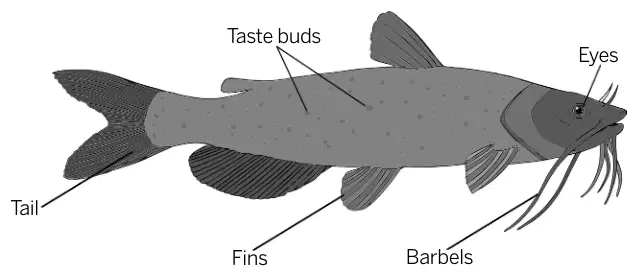
A science class is learning about catfish. Catfish are a type of fish usually found in the bottom of muddy or murky waters. They have two very small eyes, multiple pairs of barbels that act like whiskers around their mouths, and over 100,000 tiny taste buds that cover their entire bodies that allow them to taste their surroundings. They have forked tails and several fins for moving through the water. One student in class says that the most important sensory organs of the catfish are the eyes. Which is an argument that can be made against the student?
Since the catfish lives in muddy waters, it must rely more on its forked tail, the most important sensory organ, to help it move in the water.
Since the catfish lives in muddy waters, it must rely more on its fins, the most important sensory organ, to help it move faster in the water.
Since the catfish lives in muddy waters, it must rely more on its barbels, the most important sensory organ, to help it dig into holes.
Since the catfish lives in muddy waters, it must rely more on its taste buds, the most important sensory organ, to help it taste its surroundings.
Elephants have a very complex sensory motor system. They have special cells that let elephants use their sense of touch. When there is motion or vibrations in the environment, pressure builds up and causes cells to change. This sends a signal to the elephant’s brain. These special cells are found in the elephant’s trunk, as well as in the elephant’s feet. How can these sensory structures in the feet help the elephant survive?
by sending a signal to the elephant if a predator is nearby
by sending a signal to the elephant that a female that is ready to mate
by sending a signal to the elephant to lift something that is heavy to protect it
by sending a signal to the elephant not to eat something that may be poisonous
Scientists are studying two different animals. One animal hunts for prey at night, while the other hunts for prey during the day. Which of the following claims about how they see light is most accurate?
The night hunter has low sensitivity light receptors while the day hunter has high sensitivity receptors.
The night hunter and the day hunter both have low sensitivity light receptors.
The night hunter and the day hunter both have high sensitivity light receptors.
The night hunter has high sensitivity light receptors while the day hunter has low sensitivity receptors.
A science class is studying light. A student in the class claims that light is not necessary for the eyes to see objects, since some people can see in the dark. Why is this student’s claim inaccurate?
Light is not necessary to see objects and when it is dark outside.
The eyes work with other parts of the brain to see objects when there is no light outside.
Even the smallest amount of light that is outside at night reflects off the surface of an object, and then the eyes can see the object.
The eyes convert light into an object that can be seen against shadows.
A student wants to develop a model that shows how the eyes see objects. He creates three possible models.
Model 1
Model 2
Model 3
All models are accurate.
Your imaginary animal will need senses that take in information from its environment. Read the sentences below about the sensory process. Number them from 1 to 3, in the order in which they occur, where 1 = first and 3 = last. _____ Senses take in information from the environment. _____ The animal responds to the information. _____ The brain processes the information.
1. Senses take in information from the environment. 2. The brain processes the information. 3. The animal responds to the information.
1. The animal responds to the information. 2. The brain processes the information. 3. Senses take in information from the environment.
1. The brain processes the information. 2. Senses take in information from the environment. 3. The animal responds to the information.
1. The brain processes the information. 2. The animal responds to the information. 3. Senses take in information from the environment.
You will use what you know about how animals process information to design an animal that can survive under the conditions below: • The animal is nocturnal (it sleeps during the day and is awake at night). • The animal’s main diet mostly consists of fruits and berries. However, there are many poisonous berries in the animal’s environment that would be deadly if eaten. • The animal is prey to many different types of large predators. Now that you understand the conditions under which your animal must survive, you will choose body parts and senses that will be useful to the animal. Part A – Of the options below, which would be most useful to an animal that is nocturnal?
long neck for reaching
large wings for flying
ears with good hearing
You will use what you know about how animals process information to design an animal that can survive under the conditions below: • The animal is nocturnal (it sleeps during the day and is awake at night). • The animal’s main diet mostly consists of fruits and berries. However, there are many poisonous berries in the animal’s environment that would be deadly if eaten. • The animal is prey to many different types of large predators. Now that you understand the conditions under which your animal must survive, you will choose body parts and senses that will be useful to the animal. Part B – Which best supports your answer to Part A?
The animal needs to reach berries in tall bushes.
The animal needs to fly away from predators quickly.
The animal needs to be able to hear what it cannot see.
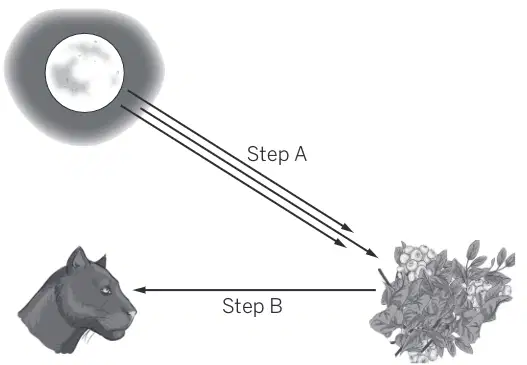
What does the arrow in Step B represent?
reflected light from the sun shining on the bush
reflected light from the animal’s eyes traveling to the bush
reflected light from the bush shining on the moon
reflected light from the bush traveling to the animal’s eyes
Your imaginary animal must avoid eating the poisonous berries in its environment. These berries look, feel, and taste the same as non-poisonous berries. If you had to choose one of the characteristics below for your animal, which would you choose?
Receptors in the eyes that allow the animal to see the two different types of berries well at night.
Receptors on the paws that allow the animal to feel the difference between the two types of berries.
Receptors in the nose that allow the animal to smell the difference between the two types of berries.
Receptors in the eyes that allow the animal to only see the non-poisonous berries at night.
You want to choose a good place for your imaginary nocturnal animal to live. Which of the following is the best choice?
An area with low light year-round
An area with bright light year-round
An area where the light changes throughout the year
None of the above; light will not affect how well the animal will sense its surroundings

