
NEW
Font size
 Worksheets
Central Dogma of Molecular Biology Quiz
Total questions: 20
Worksheet time: 10mins
What is the primary function of proteins in the central dogma?
To store genetic information
To catalyze biochemical reactions
To transcribe RNA
To replicate DNA
Which of the following is not a part of the central dogma?
Transcription
Translation
Replication
Photosynthesis
What is the main purpose of replication in the central dogma?
To create proteins
To duplicate DNA
To synthesize RNA
To break down carbohydrates
Which enzyme is primarily responsible for transcription?
DNA polymerase
RNA polymerase
Ligase
Helicase
What is the central dogma of molecular biology?
The process of cell division
The flow of genetic information
The structure of DNA
The function of enzymes

What is the role of RNA in the central dogma?
It is the final product of gene expression.
It copies a stretch of DNA sequence.
It encodes the phenotype of the organism.
It is responsible for physical action.
What is encoded in the linear DNA/RNA sequence?
Physical action
Phenotype
Linear protein sequence
Reverse transcription
What is the sequence of events in the central dogma?
RNA → DNA → Protein
DNA → RNA → Protein
Protein → RNA → DNA
DNA → Protein → RNA
What is the primary function of proteins in the central dogma?
To encode DNA sequences
To perform physical actions
To copy RNA sequences
To reverse transcribe DNA
What must a cell decide every time it makes one molecule of protein?
The temperature at which to synthesize
The amount of energy to use
Where to start reading and where to stop
The type of sugar to consume
Which of the following is a characteristic of RNA?
Double-stranded
Contains thymine
Contains uracil
Contains deoxyribose sugar

What is the first stage of transcription?
Elongation
Termination
Initiation
Translation

Which enzyme is responsible for synthesizing RNA during transcription?
DNA polymerase
RNA polymerase
Ligase
Helicase

Which sequence signals the RNA polymerase to stop transcription?
Promoter
Start codon
Stop sequence
Enhancer
What is the function of the core RNA polymerase in transcription?
It recognizes the promoter.
It synthesizes RNA.
It unwinds DNA.
It terminates transcription.

What enzyme is responsible for synthesizing RNA during transcription?
DNA polymerase
RNA polymerase
Ligase
Helicase

What happens to DNA during transcription initiation?
DNA is replicated.
DNA is unwound.
DNA is degraded.
DNA is methylated.
What happens to the DNA after it is unwound by RNA polymerase?
It remains unwound.
It is degraded.
It is rewound.
It forms a hybrid region.
Is this mRNA ready for translation by the ribosome?
Yes
No
In prokaryotes, it’s ready to go – but not in eukaryotes
Only in eukaryotes
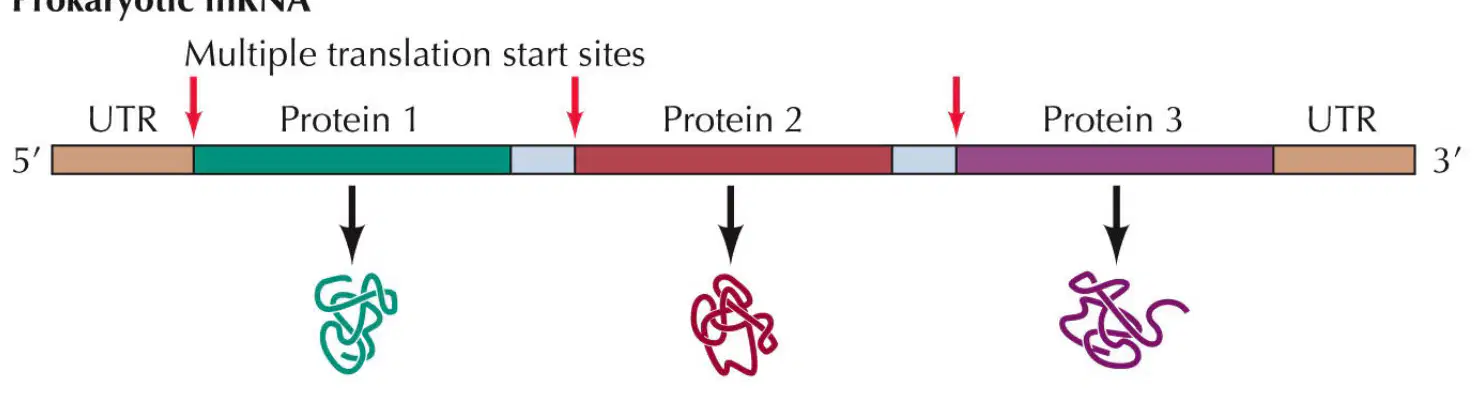
What is a key difference between prokaryotic and eukaryotic mRNAs in terms of translation start sites?
Prokaryotic mRNA has a single translation start site, while eukaryotic mRNA has multiple.
Prokaryotic mRNA has multiple translation start sites, while eukaryotic mRNA has a single.
Both prokaryotic and eukaryotic mRNAs have multiple translation start sites.
Both prokaryotic and eukaryotic mRNAs have a single translation start site.

