
Font size
 Worksheets
Mexican Cession
Total questions: 103
Worksheet time: 1hrs 4mins
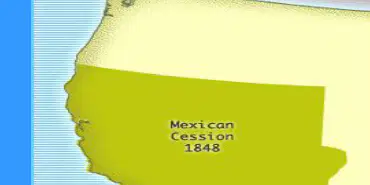
What major issue did the acquisition of the Mexican Cession raise anew in the United States?
The right to vote
Extending slavery into the territories
Women's suffrage
Taxation without representation
The debate over the issue of slavery in the Mexican Cession threatened to split which two political parties along sectional lines?
Whigs and Democrats
Republicans and Federalists
Libertarians and Greens
Socialists and Populists
The acquisition of the Mexican Cession raised anew the burning issue of extending _______ into the territories.
slavery
democracy
railroads
statehood
Who was the Democratic candidate in the Election of 1848?
Martin Van Buren
Lewis Cass
Abraham Lincoln
Henry Clay
Define Popular Sovereignty as described in the context of the Election of 1848.
The sovereign people of a territory, under the general principles of the Constitution, should determine the status of slavery in that territory.
The federal government should decide the status of slavery in all territories.
Only the President can determine the status of slavery in new territories.
Slavery should be immediately abolished in all territories regardless of local opinion.
Which party favored the Wilmot Proviso and was against slavery in the territories?
Democrats
Free Soil Party
Whigs
Republicans
Who was the candidate for the Free Soil Party in the Election of 1848?
Martin Van Buren
Lewis Cass
Zachary Taylor
Millard Fillmore
Who was the Whig candidate in the Election of 1848?
Martin Van Buren
Zachary Taylor
Lewis Cass
Millard Fillmore
Zachary Taylor was known as the "Hero of _________."
Buena Vista
Gettysburg
Yorktown
Antietam
The Whigs avoided the slavery issue during the Election of 1848.
True
False
What did the Whigs do to promote their candidate in the Election of 1848?
Criticized the opposition
Extolled the virtues of the candidate
Focused on economic issues
Supported the abolition of slavery
Taylor's ________ won him the election. Fill in the blank.
popularity
speech
defeat
scandal
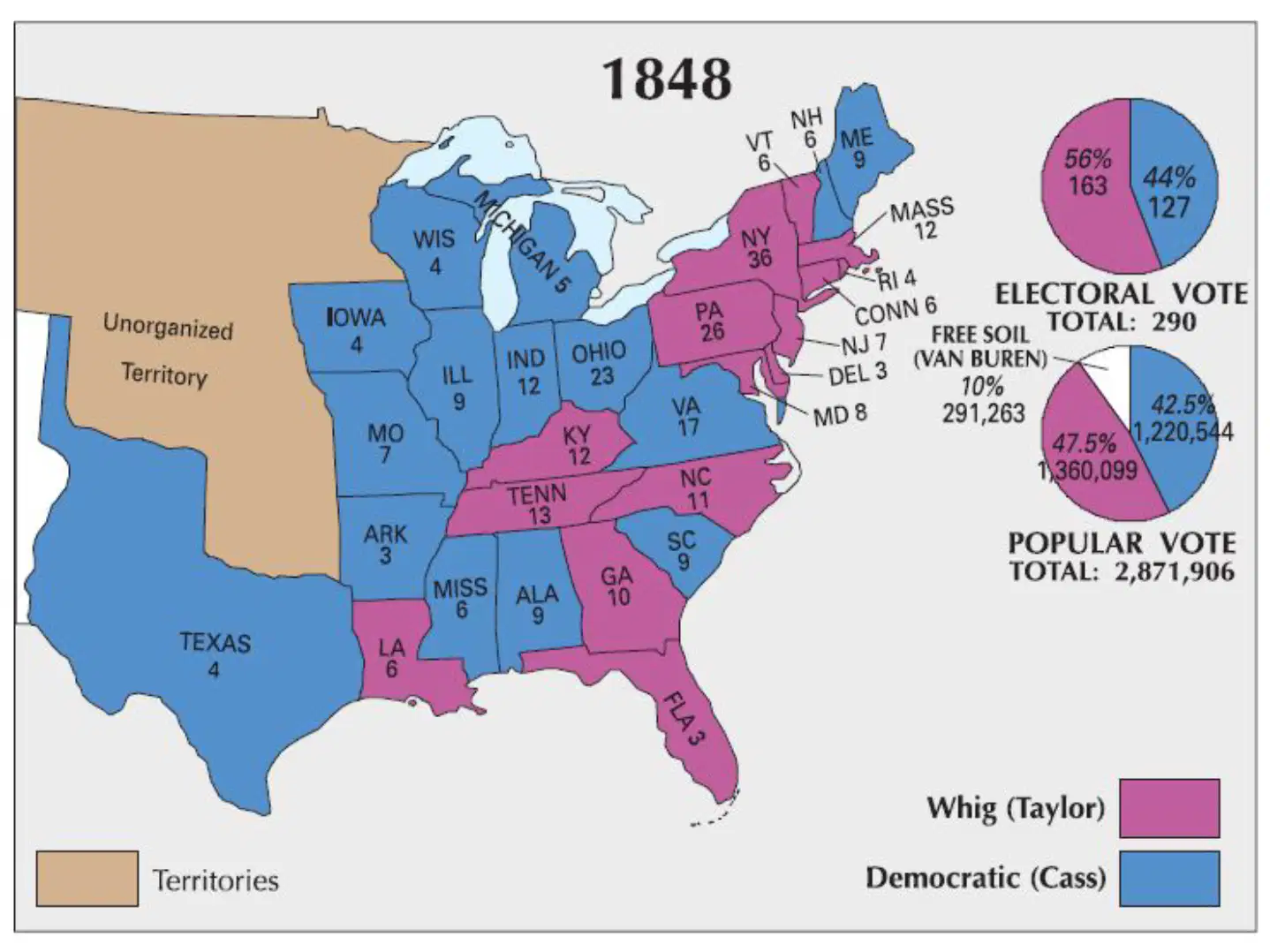
According to the map of the 1848 U.S. presidential election, which party won the state of New York?
Whig (Taylor)
Democratic (Cass)
Free Soil (Van Buren)

How many electoral votes did the Whig (Taylor) party receive in the 1848 election?
127
163
290

The total popular vote in the 1848 U.S. presidential election was _________.
2,871,906
1,234,567
3,500,000
2,000,000

Which party won the majority of the Southern states in the 1848 election?
Whig (Taylor)
Democratic (Cass)
Free Soil (Van Buren)

What percentage of the popular vote did the Free Soil (Van Buren) party receive in the 1848 election?
10%
42.5%
47.5%

The state of Texas had ______ electoral votes in the 1848 election.
4
6
8
10
In what year was gold discovered in Sacramento Valley, leading to the California Gold Rush?
1849
1855
1836
1862
What was the main reason tens of thousands of people flooded into California in 1849?
The discovery of gold in Sacramento Valley.
The construction of the transcontinental railroad.
The promise of free land for settlers.
The search for religious freedom.
The constitution drafted in California in 1849 excluded slavery.
True
False
California applied for statehood in 1849. Did it bypass the territorial stage?
True
False
Why were Southerners upset by the addition of California as a free state?
It would upset the sectional balance.
It would increase taxes in the South.
It would lead to the abolition of slavery everywhere.
It would force Southerners to move to California.

Look at the posters and photograph. What historical event are these images related to?
The American Revolution
The California Gold Rush
The Civil War
The Industrial Revolution

According to the posters, what was a common reason people traveled to California in the mid-1800s?
To escape war
To find gold
To visit family
To become farmers

The photograph shows people ______ for gold during the California Gold Rush.
panning
digging
sifting
melting

Based on the advertisements, what was one method of transportation to California mentioned in the posters?
Steam ship (or clipper ship)
Horse-drawn carriage
Hot air balloon
Automobile

Many people were willing to travel long distances to California in 1849 because:
They wanted to escape from the law.
They were searching for gold and new opportunities.
They were forced to move by the government.
They wanted to visit family.

Refer to the map of California Gold Rush areas. Which color on the map represents 'The Mother Lode'?
Yellow
Orange
Light Brown
Blue

Refer to the map of California Gold Rush areas. What do the blue diamonds on the map represent?
Major Gold Rush Cities
Gold Mining Rivers
Native American Settlements
Railroad Stations
If a city is located halfway between 0 and 200 miles, how many miles from the starting point is it?
100 miles
50 miles
150 miles
200 miles

Refer to the map of California Gold Rush areas. Which of the following cities is NOT marked as a major Gold Rush city on the map?
Placerville
Los Angeles
Sonora
Jamestown
What was the Underground Railroad?
A real train system
A virtual 'freedom train' with 'stations' (antislavery homes and businesses), 'passengers' (runaway slaves), helped by 'conductors' (abolitionists) to free-soil North/Canada
A subway system in the South
A military operation
Who was Harriet Tubman?
A former slave
A president
A conductor of a real train
An inventor
How many trips did Harriet Tubman make to the South? Harriet Tubman made ___ trips to the South.
19
5
12
25
How many runaway slaves did Harriet Tubman rescue?
Over 100
Over 200
Over 300
Over 400
What was the reward for Harriet Tubman's capture?
$10,000
$20,000
$30,000
$40,000
According to the information about Harriet Tubman, Southerners wanted a new, more restrictive fugitive slave law that required which authorities to aid slaveholders?
According to the information about Harriet Tubman, the argument for the new fugitive slave law rested on which of the following?
The Declaration of Independence
The Constitution and laws passed by Congress
The Bill of Rights
The Emancipation Proclamation
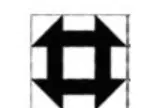
What is the name of the Underground Railroad quilt symbol shown as a wrench-like pattern?
Bear's Paw
Monkey Wrench
Bow Ties
Log Cabin

What is the name of the Underground Railroad quilt symbol that looks like a bear's paw?
Bear's Paw
Crossroads
North Star
Tumbling Boxes
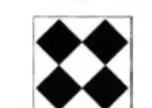
What is the name of the Underground Railroad quilt symbol that looks like intersecting roads?
Log Cabin
Crossroads
Flying Geese
Bow Ties
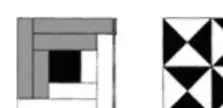
What is the name of the Underground Railroad quilt symbol that looks like a small house?
Log Cabin
North Star
Tumbling Boxes
Bow Ties
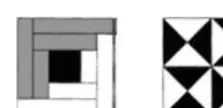
What is the name of the Underground Railroad quilt symbol that looks like bow ties?
Bow Ties
Flying Geese
Bear's Paw
Crossroads
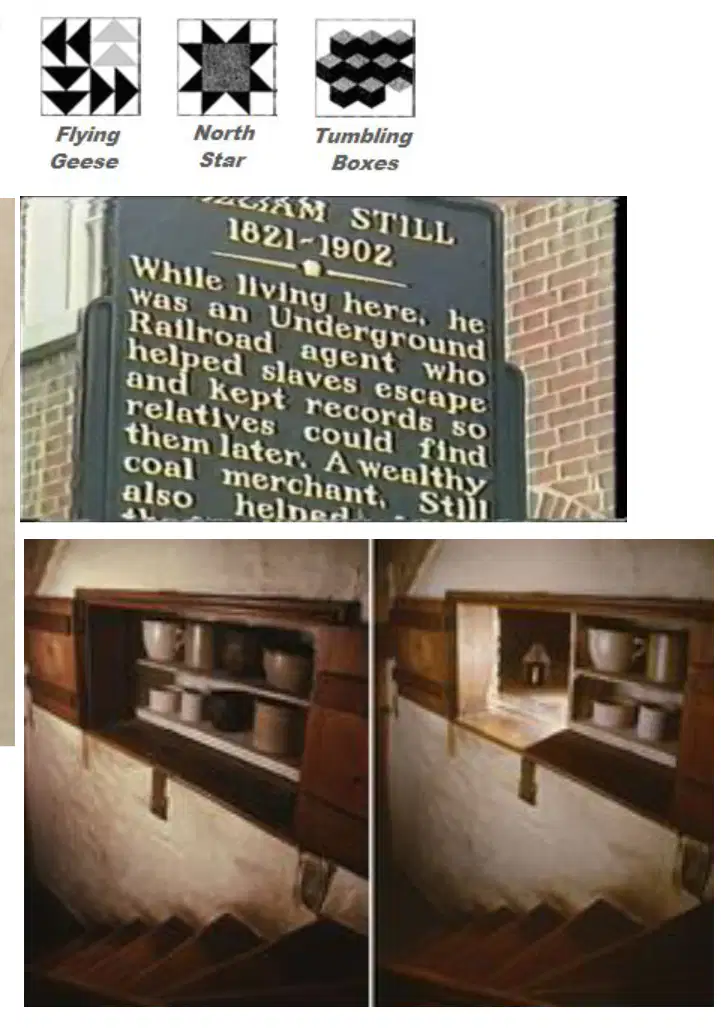
What is the name of the Underground Railroad quilt symbol that looks like a group of geese flying?
Flying Geese
North Star
Tumbling Boxes
Monkey Wrench
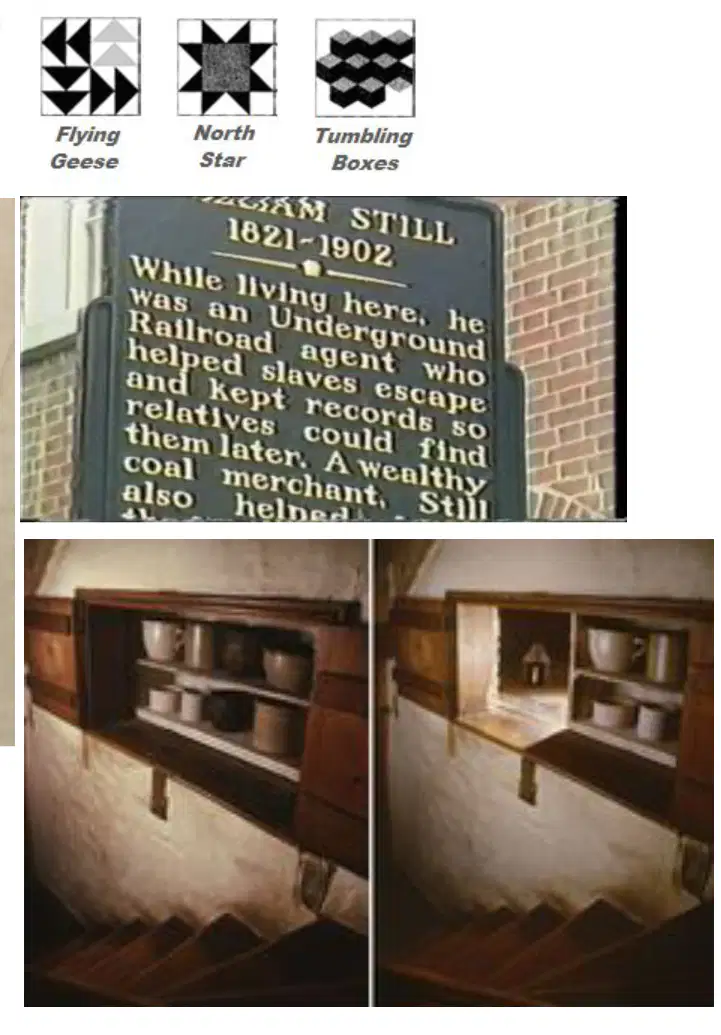
What is the name of the Underground Railroad quilt symbol that looks like a star?
North Star
Log Cabin
Crossroads
Bow Ties
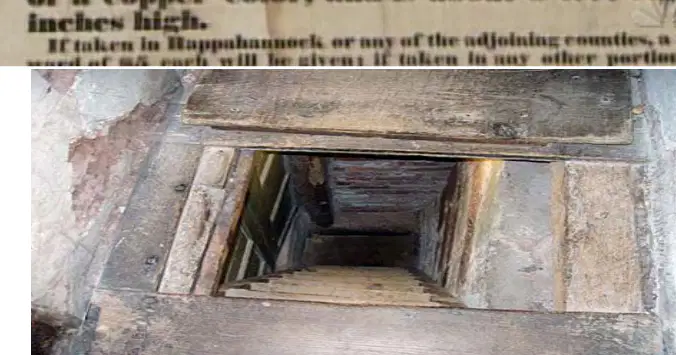
According to the reward poster, how much money was offered for the return of the runaway boys?
$300
$100
$500
$50
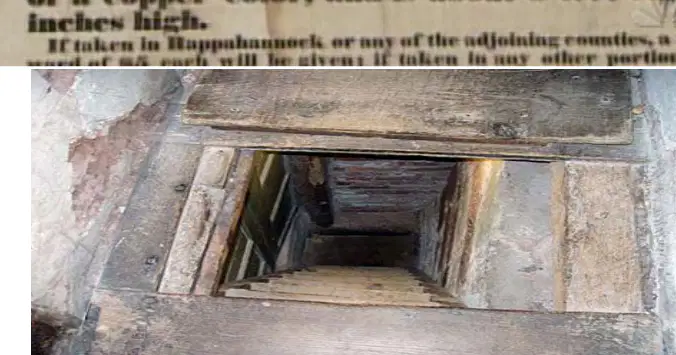
Who were the three runaway boys mentioned in the reward poster?
Albert, Sam, and Bailey
Tom, Jerry, and Max
Luke, Mark, and John
Eli, Noah, and Jack

According to the historical marker, what did William Still do to help slaves?
He was an Underground Railroad agent who helped slaves escape and kept records so relatives could find them later.
He led a slave rebellion in the South.
He wrote a famous novel about slavery.
He was a politician who passed laws to end slavery.

The images of hidden compartments and passageways suggest that the Underground Railroad was:
a system that used secret methods to help enslaved people escape
a network of actual trains and railways
a government-sponsored transportation system
a public and well-known route for travel

According to the map, which color represents the free states and territories?
Green
Orange
Purple
Blue

According to the map, which states and territories were open to slavery?
Those colored green
Those colored orange
Those colored purple
Those colored blue

The map shows corridors of escape to free northern states/territories, British Canada, Mexico, Cuba, and the ________.
Bahamas
Azores
Jamaica
Bermuda

Which of the following destinations is NOT shown as a corridor of escape on the map?
British Canada
Mexico
France
The Bahamas

According to the map, which city is a starting point for an escape route to Mexico?
San Antonio
Boston
New York
St. Paul
Who proposed a series of resolutions to resolve all issues during the Compromise of 1850?
Henry Clay
Daniel Webster
John C. Calhoun
Stephen A. Douglas
Who made a plea to leave slavery alone, respect Southern rights, return runaways, and keep political balance during the Compromise of 1850?
John C. Calhoun
Daniel Webster
Henry Clay
Stephen A. Douglas
Who believed that compromise was the only solution and helped swing the North to compromise during the Compromise of 1850?
Daniel Webster
John C. Calhoun
Stephen A. Douglas
Henry Clay
Which group attempted to reach an agreement on the issues of California, the Texas border, and fugitive slaves during the Compromise of 1850?
The old guard of Congress (Clay, Calhoun, Webster)
The Supreme Court
The President's Cabinet
The House of Representatives
Who was William Seward?
Senator from Illinois
Senator from New York
President of the United States
Governor of California
William Seward was unequivocally against ______ and concession to the South.
slavery
industrialization
immigration
expansionism
Who backed Clay in an attempt to compromise during the Compromise of 1850?
William Seward
Stephen Douglas
Abraham Lincoln
Henry Clay

Match the names to the correct portraits. (Refer to the images provided.)
Henry Clay
Top left
John C. Calhoun
Top center
Daniel Webster
Top right
William H. Seward
Bottom left
Stephen A. Douglas
Bottom right
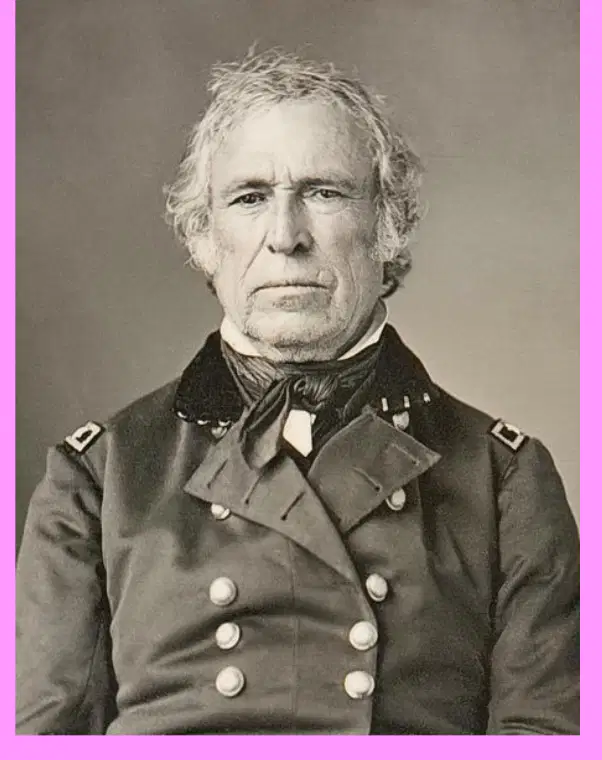
Who opposed the Compromise resolutions but suddenly died?
Millard Fillmore
President Taylor
Abraham Lincoln
Franklin Pierce
Who became President and strongly favored the Compromise resolutions?
Millard Fillmore
President Taylor
Abraham Lincoln
Franklin Pierce
Both Northern and Southern radicals were opposed to compromise, but ________ won out.
moderates
abolitionists
secessionists
radicals
As part of the Compromise of 1850, __________ was admitted as a free state.
California
Texas
Florida
Kansas
Which territory was to be surrendered to New Mexico Territory as part of the Compromise of 1850?
California
Texas
Territory disputed by Texas and New Mexico
District of Columbia
True or False: The Compromise of 1850 abolished slavery in the District of Columbia.
True
False
According to the Compromise of 1850 – Concessions to the South, what was to be formed from the remainder of the Mexican Cession area?
New states with restrictions on slavery
Territories of New Mexico and Utah without restrictions on slavery (popular sovereignty)
Territories of California and Nevada
Free states only
According to the Compromise of 1850 – Concessions to the South, Texas received $____ million from the federal government as compensation for ceded territory.
10
5
20
15
According to the Compromise of 1850, what law was enacted that was more stringent than that of 1793?
Kansas-Nebraska Act
Missouri Compromise
Fugitive Slave law
Emancipation Proclamation
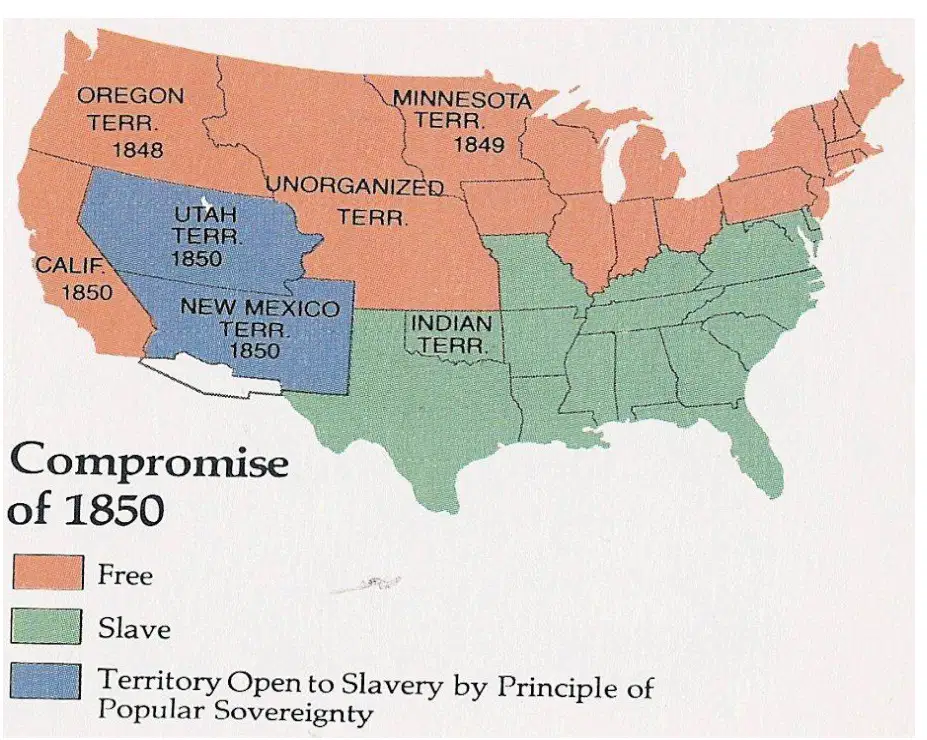
According to the map, which color represents the Free states and territories?
Green
Blue
Orange
Yellow
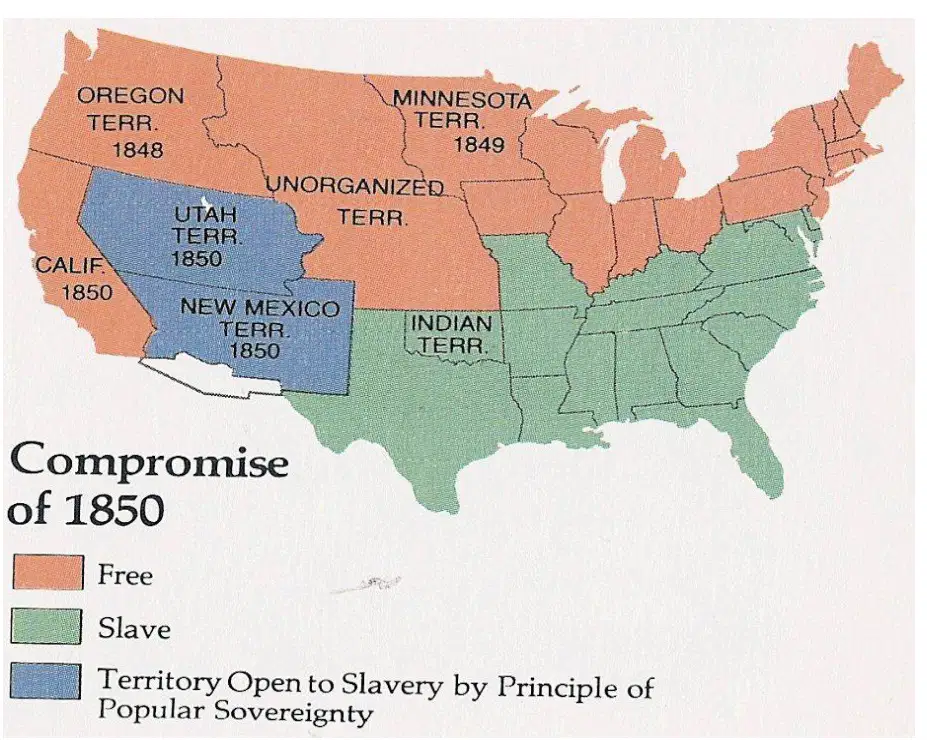
Refer to the 'Map of United States following Compromise of 1850.' Which state was admitted as a Free state in 1850?
California
Texas
Utah
New Mexico
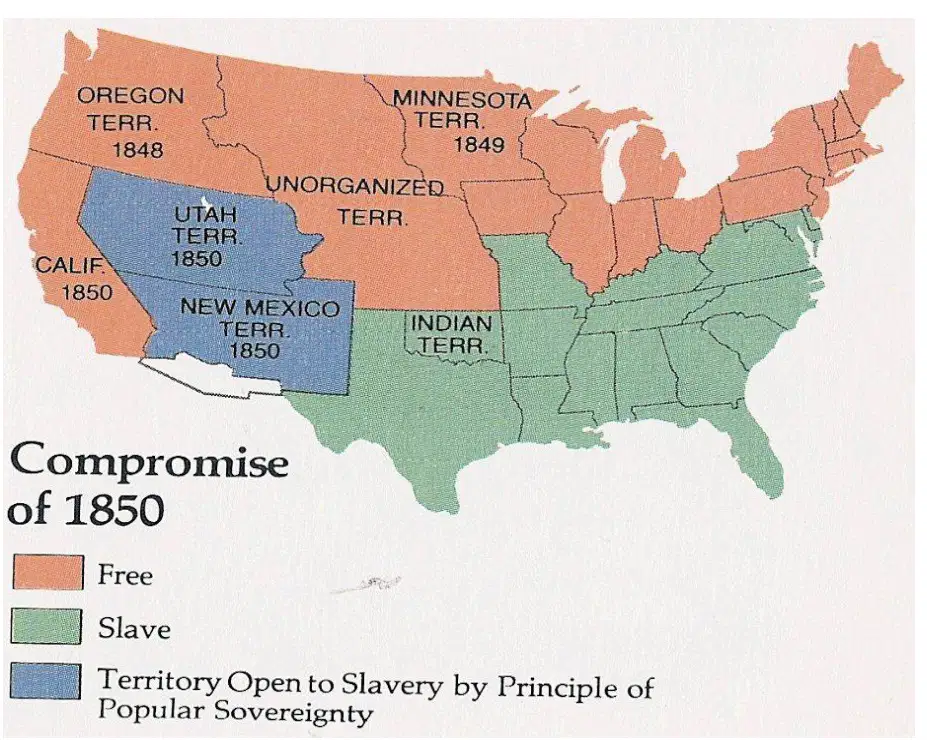
Refer to the 'Map of United States following Compromise of 1850.' The territories of Utah and New Mexico were classified as ________ according to the Compromise of 1850.
Territory Open to Slavery by Principle of Popular Sovereignty
Free States
Slave States by Federal Law
Unorganized Territories
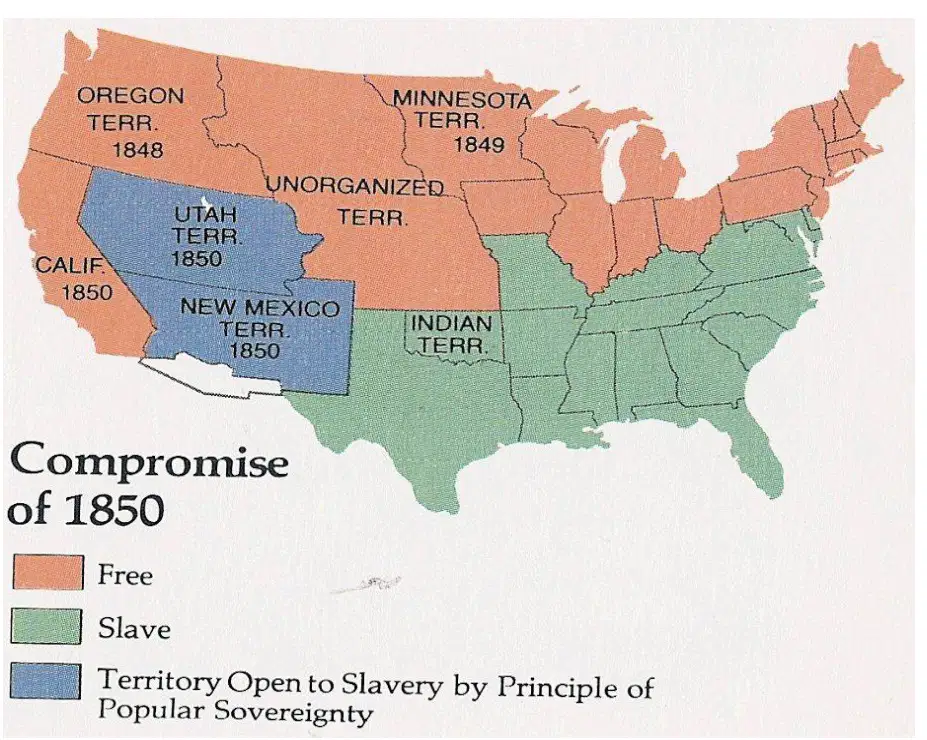
Refer to the 'Map of United States following Compromise of 1850.' True or False: The green color on the map represents Slave states.
True
False
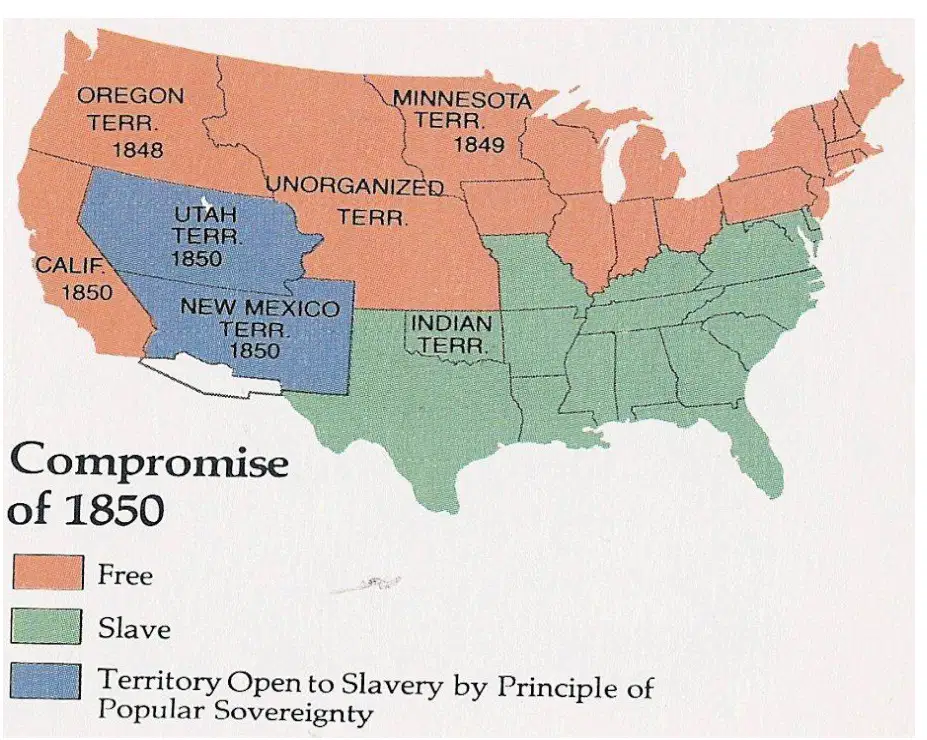
Refer to the 'Map of United States following Compromise of 1850.' Which territory was unorganized in 1850?
Oregon Territory
Minnesota Territory
Unorganized Territory
Indian Territory
According to the conclusions of the Compromise of 1850, who was the clear winner?
North
South
Texas
California
According to the conclusions of the Compromise of 1850, California permanently tipped Senate balance in whose favor?
South
North
Texas
New Mexico
According to the conclusions of the Compromise of 1850, the territories of Utah and New Mexico were likely to be ________ states.
free
slave
border
neutral
According to the conclusions of the Compromise of 1850, the territory taken from Texas was likely to be ________ territory.
free
slave
neutral
disputed
According to the conclusions of the Compromise of 1850, the slave trade was removed from the nation’s capital. Was this the first step to abolition of slavery in the capital?
Yes
No
According to the conclusions of the Compromise of 1850, the Fugitive Slave Act of 1850 infuriated the North and changed Northern attitudes about slavery and abolitionists.
True
False
According to the Fugitive Slave Act of 1850, who only had to identify a person as a runaway to arrest them?
slave-catcher
police officer
judge
plantation owner
According to the Fugitive Slave Act of 1850, did a runaway have the right to testify or a right to trial?
No, runaway could not testify/no right to trial
Yes, runaway had the right to testify and a right to trial
Runaway could testify but had no right to trial
Runaway had a right to trial but could not testify
According to the Fugitive Slave Act of 1850, how much did Federal Commissioners receive if a fugitive was freed?
$5
$10
$15
$20
According to the Fugitive Slave Act of 1850, how much did Federal Commissioners receive if a fugitive was not freed?
$10
$5
$20
$15
According to the Fugitive Slave Act of 1850, what were the consequences for those aiding slaves?
Heavy fines and jail
Public recognition and reward
No consequences at all
Land grants from the government
Automatic citizenship
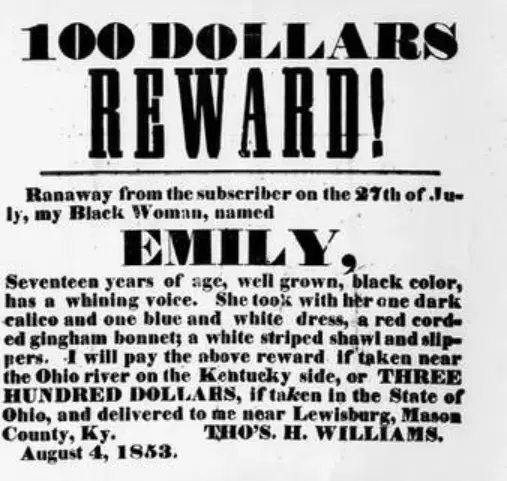
What was the reward offered for the return of Emily, a runaway enslaved woman, according to the poster dated August 4, 1853?
50 dollars
100 dollars
200 dollars
300 dollars

According to the reward poster from Prince George's County, Maryland, what was the name used by the runaway enslaved man?
Joe Bond
Peter Lee
Thomas Williams
John Nash
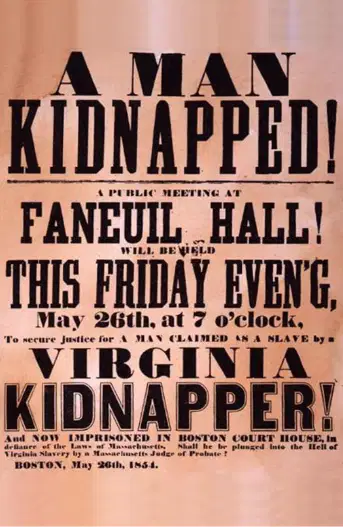
Fill in the blank: The public meeting at Faneuil Hall was held to secure justice for a man claimed as a slave by a (a) kidnapper.
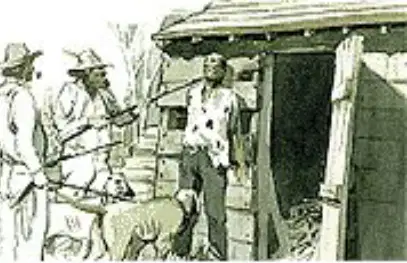
What law is referenced in the illustration showing people capturing an individual outside a building?
The Emancipation Proclamation
The Fugitive Slave Act
The Missouri Compromise
The Kansas-Nebraska Act
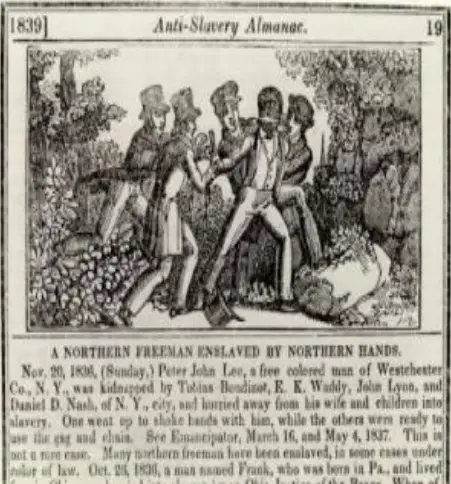
Based on the anti-slavery almanac excerpt, what happened to Peter John Lee on November 20, 1839?
Peter John Lee, a free man, was enslaved by northern bands and taken from Westchester County, NY, away from his wife and children.
Peter John Lee was elected as a local official in Westchester County, NY.
Peter John Lee escaped from slavery and fled to Canada.
Peter John Lee was reunited with his family after years of separation.
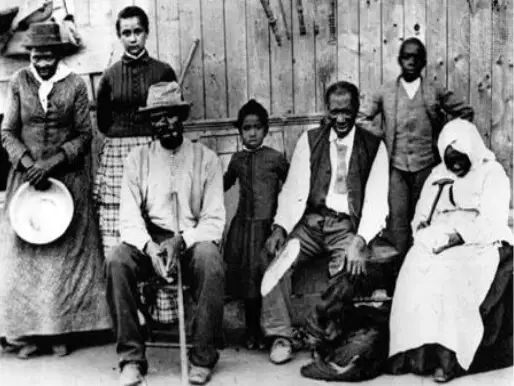
What do the historical photographs in the bottom center of the collage depict?
Read the following poster: 'CAUTION!! COLORED PEOPLE OF BOSTON, ONE & ALL, You are hereby respectfully CAUTIONED and advised, to avoid conversing with the Watchmen and Police Officers of Boston. For since
It is safe to converse with the Watchmen and Police Officers.
It is dangerous to converse with the Watchmen and Police Officers.
The Watchmen and Police Officers are friendly.
Conversations with the Watchmen and Police Officers are encouraged.
According to the notice, what rights does the Fugitive Slave Law deny?
Trial by Jury, Habeas Corpus, and Appeal
Right to Vote, Freedom of Speech, and Right to Bear Arms
Right to Education, Right to Property, and Right to Privacy
Freedom of Religion, Right to Assemble, and Right to Petition
According to the Fugitive Slave Law notice, what are the punishments for those who help fugitive slaves?
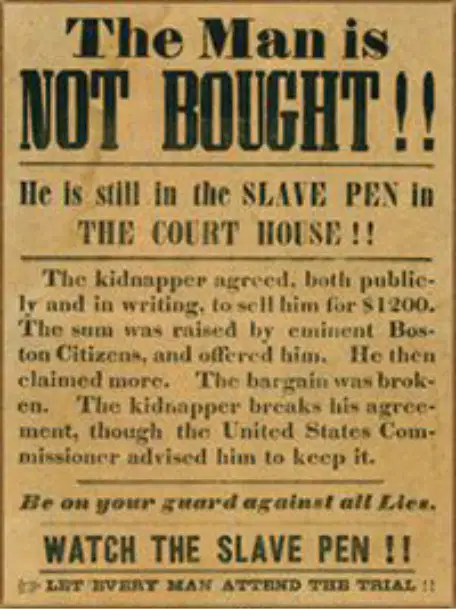
What does this notice suggest about the status of the man mentioned?
The advertisements in the image offer services for catching runaway slaves using dogs.
True
False
What was the price offered by J.W. Horton for catching runaway slaves?
Which event is often considered the starting point of the California Gold Rush?
The founding of San Francisco
The completion of the Transcontinental Railroad
The signing of the Treaty of Guadalupe Hidalgo
The discovery of gold at Sutter's Mill
What was the main goal of the Free Soil Party during the mid-19th century?
To support the annexation of Texas
To advocate for women's suffrage
To prevent the expansion of slavery into the western territories
To promote the expansion of slavery
Which of the following was a significant impact of the California Gold Rush on the U.S. economy?
It led to a decrease in the national population
It caused a significant increase in the U.S. money supply
It resulted in the abolition of slavery
It led to the decline of the railroad industry

