
 Worksheets
review all
Total questions: 144
Worksheet time: 2hrs 7mins
Which flight pulls a plane down to the ground?
drag
thrust
lift
weight
Which force counters weight (or moves the plane up)?
drag
thrust
lift
weight
Which force moves the plane forward?
drag
thrust
lift
weight
Which force slows the plane down?
drag
thrust
lift
weight
The left to right movement of an airplane's nose is
pitch
roll
yaw
The up or down movement of an airplane's nose is
pitch
roll
yaw
The weight force of an airplane is because of
air resistance
gravity
wind
the power of the engine
When lift and weight are equal, a plane will
turn left or right
stay at the same height
ascend (rise)
descend (drop)
Which component of an airplane is primarily responsible for generating lift?
A) Fuselage
B) Wings
C) Tail
D) Engine
What is the primary function of the rudder in an aircraft?
A) Control pitch
B) Control roll
C) Control yaw
D) Increase speed
Which of the following is a real-world application of Bernoulli's principle in aviation?
A) The design of airplane wings
B) The function of the landing gear
C) The operation of the cockpit controls
D) The material used for the fuselage
What is the main purpose of ailerons on an aircraft?
A) To control yaw
B) To control pitch
C) To control roll
D) To increase thrust
Which scientific concept explains why an airplane can fly?
A) Newton's First Law of Motion
B) Bernoulli's Principle
C) Archimedes' Principle
D) Pascal's Law
In a flight experiment, if the thrust is greater than drag, what will happen to the airplane?
A) It will ascend
B) It will descend
C) It will accelerate forward
D) It will decelerate
What is the effect of increasing the angle of attack on an airplane's wing?
A) Decreases lift
B) Increases drag
C) Increases lift
D) Decreases thrust
Which force counters weight (or moves the plane up)?
drag
thrust
lift
weight
Which force moves the plane forward?
drag
thrust
lift
weight
Which force slows the plane down?
drag
thrust
lift
weight
The up or down movement of an airplane's nose is
pitch
roll
yaw
The weight force of an airplane is because of
air resistance
gravity
wind
the power of the engine
Bernoulli's Principle as it applies to an airplane's wings creates
drag
thrust
lift
weight
When lift and weight are equal, a plane will
turn left or right
stay at the same height
ascend (rise)
descend (drop)

Name the motion illustrated by the aircraft image.
Pitch
Yaw
Roll
Bend

Who will be the flight attendants for this flight? (Choose two)
C. Ross
P. Henderson
L. Jenkins
D. Ford
What is the primary function of an airplane's ailerons?
To control the pitch of the airplane
To control the roll of the airplane
To control the yaw of the airplane
To increase the lift of the airplane
Which part of the airplane is primarily responsible for generating lift?
Fuselage
Wings
Tail
Engine
What is the main purpose of the rudder on an airplane?
To control the roll of the airplane
To control the pitch of the airplane
To control the yaw of the airplane
To increase the speed of the airplane
Which scientific principle explains why an airplane wing generates lift?
Newton's Third Law
Bernoulli's Principle
Archimedes' Principle
Pascal's Law
What happens to the air pressure on top of an airplane wing as the speed of the airflow increases?
The air pressure increases
The air pressure decreases
The air pressure remains the same
The air pressure fluctuates
In a controlled experiment to test the effect of wing shape on lift, what is the independent variable?
The shape of the wing
The amount of lift generated
The speed of the airflow
The weight of the airplane
The force that directly opposes the weight of an aircraft and holds the aircraft in the air.
Lift
Thrust
Drag
Weight

You are designing an airplane to carry liquid cargo that will slosh and move side to side in its container. This could make the plane unstable. What type of airfoil would you use for the wing? Why?
Low Camber
High Camber-Thick wing section
Symmetrical Camber
High Camber-Thin wing section

You have to design an airplane that is very fast. What type of airfoil would you use for the wing? Why?
High Camber-Thick wing section
Symmetrical Camber
Low Camber
High Camber- Thin wing section

Describe the direction of the forces—lift, drag, thrust, and weight—in the quadcopter.
Lift and Drag
Weight and Thrust
Lift and Weight
Weight and Drag
Which part of an airplane is responsible for generating lift?
Fuselage
Wings
Tail
Engine
What is the primary function of the ailerons on an airplane?
To control pitch
To control yaw
To control roll
To provide lift
What is the main purpose of the ailerons on an airplane?
Control pitch
Control roll
Control yaw
Increase lift
Bernoulli's Principle as it applies to an airplane's wings creates
drag
thrust
lift
weight
Name the motion illustrated by the aircraft image.
Pitch
Yaw
Roll
Bend

This rocket launched but did not orbit.
Which statement most accurately describes what happened to this rocket?
The thrust was greater than the weight.
The thrust was so great that the rocket went into orbit.
The thrust was less than the weight.
The thrust was great enough for launch, but not enough for orbit.
Discarded objects, trash and other man made debris left in orbit during space flights
(a)
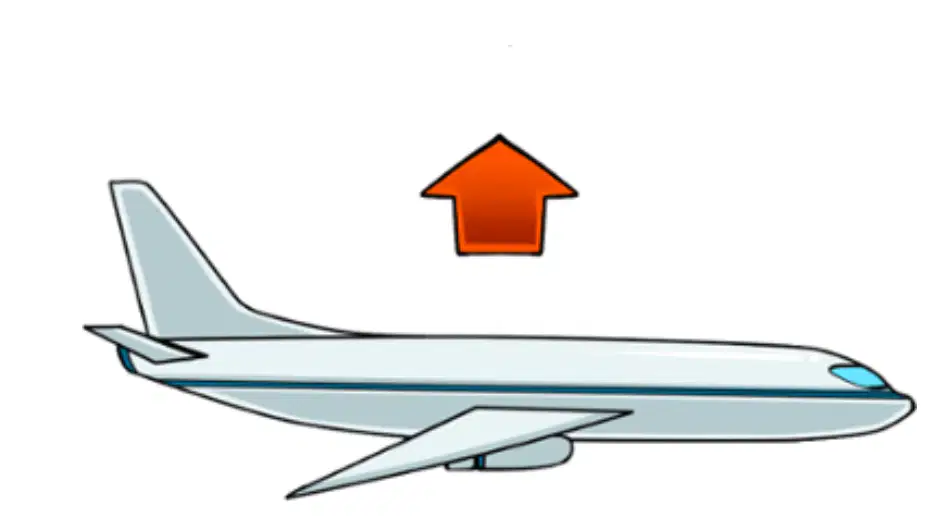
What force is this?
(a)
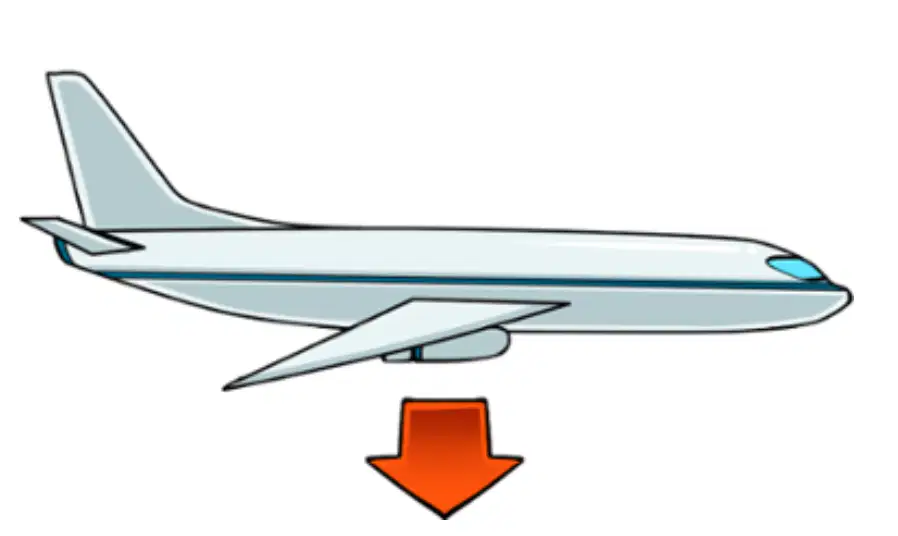
What force is this?
(a)
The part on an airplane that raises and lowers the wings, causing the aircraft to roll.
Wings
Ailerons
Cockpit
Yaw
What is the force that directly opposes the weight of an aircraft and holds the aircraft in the air?
Lift
Thrust
Drag
Weight
Which part of an airplane is responsible for generating lift?
Fuselage
Wings
Tail
Engine
What is the primary function of the ailerons on an airplane?
To control pitch
To control yaw
To control roll
To provide lift
Bernoulli's Principle as it applies to an airplane's wings creates
drag
thrust
lift
weight
Discarded objects, trash and other man-made debris left in orbit during space flights are known as
Space Junk
Asteroids
Comets
Satellites
The part on an airplane that raises and lowers the wings, causing the aircraft to roll.
Wings
Ailerons
Cockpit
Yaw
What is the primary function of the rudder on an airplane?
To control pitch
To control roll
To control yaw
To provide lift
Which law explains the action and reaction forces experienced by a rocket during launch?
Newton's First Law
Newton's Second Law
Newton's Third Law
Law of Universal Gravitation
What is the main purpose of the elevator on an airplane?
Control pitch
Control roll
Control yaw
Increase lift
What is the term for the speed at which an aircraft must travel to become airborne?
Lift-off speed
Cruising speed
Stall speed
Mach speed
Which component of a rocket is responsible for its propulsion?
Fuselage
Engine
Wings
Payload
What type of chart shows an enhanced map that pilots use when flying? It contains topography, hazards, navigation routes, airspace, and airports.
Cardinal directions
Topography
Aeronautical chart
Compass rose
Airline employee who plans routes, determines fuel loads, checks weather, and follows flight paths on the ground. Also called a dispatcher.
Aircraft dispatcher
Navigator
Pilot
The air or sky above a country that is considered to belong to that country.
Airspace
Cardinal directions
Compass rose
Topography
The shape and features of land surfaces, including both natural and artificial physical features of an area.
Checkpoint
Compass rose
Sextant
Topography
A symbol on a map that shows orientation relative to north, south, east, and west.
Aeronautical chart
Compass rose
Cardinal directions
Sextant
The person who sets the course or direction for a vehicle or trip.
Pilot
Navigator
Aircraft Dispatcher
Sextant
Cardinal directions
The air or sky above a country that is considered to belong to that country.
Something on the Earth's surface that is easily visible from the air.
The four main directions: north, south, east, and west.
A symbol on a map that shows orientation relative to north, south, east, and west.
Checkpoint
The air or sky above a country that is considered to belong to that country.
Something on the Earth's surface that is easily visible from the air.
The four main directions: north, south, east, and west.
A symbol on a map that shows orientation relative to north, south, east, and west.
Navigation
An enhanced map that pilots use when flying. It contains topography, hazards, navigation routes, airspace, and airports.
The shape and features of land surfaces, including both natural and artificial physical features of an area.
Navigation of an aircraft using only visual ground references.
The method of determining one’s position and planning and following a route.
Pilotage
An enhanced map that pilots use when flying. It contains topography, hazards, navigation routes, airspace, and airports.
The shape and features of land surfaces, including both natural and artificial physical features of an area.
Navigation of an aircraft using only visual ground references.
The method of determining one’s position and planning and following a route.
A navigation instrument used for measuring the angular distances between objects and taking altitudes in navigation.
Sextant
Checkpoint
Cardinal Directions
Compass Rose


What is energy?
The ability to do work and cause change and move an object some distance.
The push and pull exerted on an object.
The relationship between matter and substances..
The feeling you get after drinking a Monster or Red Bull

What is nuclear energy?
Kinetic and potential energy that is stored and produced by an electrical field.
The potential energy an object has because of the movement of its molecules
The potential energy stored in the nucleus of an atom.

At what point does the roller coaster have the highest amount of potential energy?
At the bottom of the first hill.
At the top of the third hill.
At the end of the ride.
At the top of the first hill.
Energy can be __________ from one object to another.
Transported
Teleported
Transferred
Transposed

Molly is planting a flower garden. She carries the flowers from the car to the garden. She then pulls each flower out of its pot. She shoves a shovel into the dirt and digs a hole. She then holds the flowers as she places each of them in a hole.
In which case is Molly doing work? Remember, works is when an object moves as a result of force (a push of a pull). There are 2 answers! TWO ANSWERS!
When Molly carries the flowers from the car to the garden.
When Molly pulls the flowers from their pots.
When Molly lowers the flowers into their holes.
When Molly digs a hole.

What type of energy does a battery contain?
electrical kinetic energy
electrical potential energy
electrical neuron energy
electromagnetic pulsar energy

What is chemical energy?
A form of potential energy that is stored in chemical bonds between atoms.
The potential energy an object has because of the movement of its molecules
Kinetic and potential energy that is stored and produced by an electrical field.
Energy sent out in the form of electromagnetic waves.
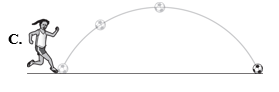
Which diagram models the position of a soccer ball when it has the greatest amount of gravitational potential energy?
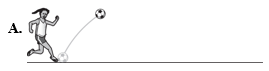
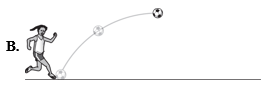
Which of these has kinetic energy?
a book sitting on a shelf
hat and gloves on a table
cars parked in a parking lot
a child kicking a soccer ball
Which of these has elastic potential energy?
a vase sitting on a shelf
a stretched rubber band
a child moving down a slide
sugars stored in the molecules of food
Possible human solutions for limiting global warming and climate change are...
being more energy-efficient
using renewable sources of energy
removing carbon from fossil fuel emissions
all of the above

What happen when CO2 and other greenhouse gases increase in our atmosphere?
Average global temperatures decrease
Average global temperatures increase
The Earth's magnetic field changes direction

Hot water is pumped up from deep inside Earth and is used to heat homes or to generate electricity. This describes...
biomass
hydroelectric energy
geothermal energy
Which of the following is a fossil fuel?
wind
water
oil
Which of the following is a renewable resource?
coal
water
oil
Nonrenewable resources are
Used up faster than they can be replaced.
A source that can't be used up by humans
hydroelectric power generated by ocean tides

Any significant change in measures of climate, such as temperature lasting for an extended period of a decade or longer.
BIOTECHNOLOGY
CLIMATE CHANGE
CONVECTION
COMPOST
A natural fuel (coal, oil, or gas) formed in the geological past from the remains of living organisms.
FUEL CELL
WIND ENERGY
SOLAR ENERGY
FOSSIL FUEL
Energy stored in the earth in the form of heat.
GEOTHERMAL
SOLAR ENERGY
WIND ENERGY
NUCLEAR ENERGY
Energy stored in the nucleus of an atom.
HYDRO & TIDAL POWER
SOLAR ENERGY
WIND ENERGY
NUCLEAR ENERGY
Plant materials and animal waste used especially as a source of fuel.
BIODEGRADABLE
BIOMASS
REDUCE
RECYCLABLE
Energy derived from wind by means of windmills or wind turbines.
HYDRO & TIDAL POWER
SOLAR ENERGY
WIND ENERGY
NUCLEAR ENERGY
Which type of energy produces Carbon Dioxide, which can be harmful to our planet and cause pollution?
Solar Energy
Wind Energy
Fossil Fuels (Coal, oil, and gas)
Nuclear Energy
A resource that can be replaced when needed.
Fossil Fuels
Nonrenewable Energy
Exhaustible Energy
Renewable Energy
What is an example of a non-renewable energy source?
Sunlight
Wind
Oil

True or False. The burning of fossil fuels causes the earth to warm more quickly because of greenhouse gases and pollution.
True
False
Possible human solutions for limiting global warming and climate change are...
being more energy-efficient
using renewable sources of energy
removing carbon from fossil fuel emissions
all of the above

The angle at which an airfoil meets the oncoming air is called
Bernoulli's principle
Angle of attack
leading edge
hypotenuse
What happens when a cold drink sits in a hot room?
It remains cold
It gets warmer
It starts boiling
It starts to freeze
Which of the following best describes temperature?
Number of molecules
Motion of molecules
Size of molecules
Type of molecules
When two things are the same temperature:
They have the same number of molecules
Their molecules stop moving
Their molecules move at the same average speed
Heat transfer between the two things stops
When you heat a pot on a stove, the handle gets warm. Which type of heat transfer is responsible?
Conduction
Radiation
Convection
All of the above
Which of the following best describe a vacuum?
Hot
Cold
Shiny
Empty
List the following particles in size order, from biggest to smallest?
Molecules, electrons, atoms
Atoms, molecules, electrons
Electrons, atoms, molecules
Molecules, atoms, electrons
Thermoses work because they minimize which kinds of heart transfer?
Conduction and convection
Conduction and radiation
Convection and radiation
Conduction, convection, and radiation
Heat from the Sun reaches Earth through which type of heat transfer?
Conduction
Radiation
Convection
All of the above
Convection currents occur:
Only in liquids
When a dense substance is warmer than a less dense substance
In both liquids and gases
Weakly in solids
All of the following are examples of convection currents, excerpt:
Warm air rising in a house
Cold water sinking to the bottom of the lake
Water flowing through pipes
Steam from hot soup rising into the air
What is compost?
A material used to measure ecological footprints
A mixture of living and nonliving animals
A mixture of decomposing organic matter made to fertilize soil.
Normal dirt from the ground
Which of the following is NOT a greenhouse gas?
Carbon dioxide
Methane
Water vapor
nitrogen

Materials from the Earth that are used to support life and meet people's needs.
Prehistoric Materials
Artificial Products
Carbon Footprint
Natural Resources

Which of the following is NOT and example of natural resources
plastic
water
coal
wood
A radio, siren, and a television are all designed to produce _______ energy.
light energy
sound energy
mechanical energy
electrical energy
What is energy?
moving energy
stored energy
renewable energy
The ability to do work.
What is potential energy?
moving energy
stored energy
renewable energy
non renewable energy
What unit is used to measure energy and work?
Joules
calories
Calories
Watts
What unit is used to measure energy and work?
Joules
calories
Calories
Watts
What does a watt measure?
How much energy is needed in the nucleus of atoms (energy)
the rate at which energy is used (power)
the rate of a calorie (force)

