
 Worksheets
Unit 4 Quiz: Earth's Resources
Total questions: 11
Worksheet time: 6mins
Name
Class
Date
1.
1. Check all that apply. Which of the statements below are true about renewable and nonrenewable resources? Choose three.
a)
Most renewable resources are bad for the environment.
b)
Renewable resources can be replenished in a relatively short period of time.
c)
Nonrenewable resources can be replaced within the lifetime of a human.
d)
Most nonrenewable resources create a lot of pollution.
e)
Nonrenewable resources are cheaper to obtain.
2.
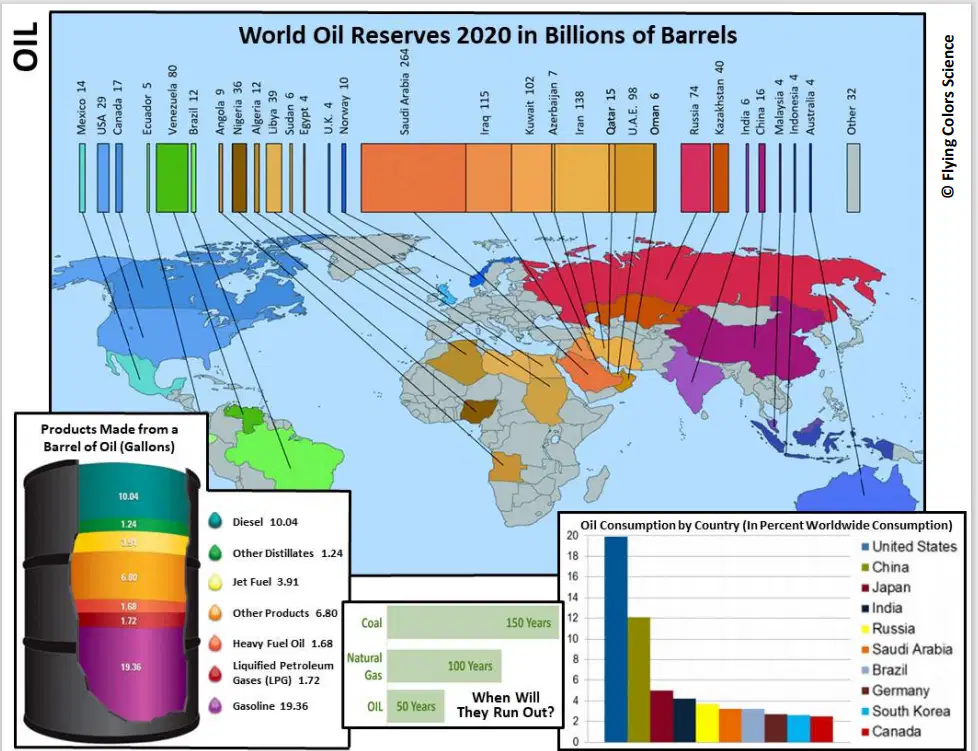
3. Which statement is best supported by the data below?
a)
The United States has more oil reserves than any other country.
b)
Diesel is the product made the most from oil.
c)
Coal will run out in about 50 years.
d)
Saudi Arabia has 264 billion barrels of reserved oil.
3.
4. Using a resource in a way that guarantees it will be available in the future is called -
a)
ecology.
b)
sustainability.
c)
nonrenewable.
d)
recycling.
4.
5. The agricultural and industrial revolution allowed -
a)
the human population to grow rapidly.
b)
humans to create goods in a cleaner and greener way.
c)
humans to use less fossil fuels.
d)
the human to live shorter lifespans.
5.
6. When making environmental decisions, government and business must always take into account the positive and negative consequences of their choices. This is called -
a)
an ecological footprint.
b)
environmental policy.
c)
a cost-benefit analysis.
d)
provisioning of resources.
6.

7. Mr. Varner brings in a batch of his famous homemade Christmas cookies to share with your class. He hands the plate of cookies to a student in the front row and tells them to take however many cookies they want. By the time the cookie plate gets to you, there are none left. This is an example of -
a)
regulating the use of resources.
b)
the tragedy of the commons.
c)
recycling goods to ensure some remains for the future.
d)
why Santa will be mad at some of your classmates. (DON'T PICK THIS ONE!)
7.
8. Environmental policies generally fit into what two categories?
a)
recycling and conserving.
b)
renewable and nonrenewable.
c)
biotic and abiotic.
d)
regulations and incentives.
8.
9. The process of obtaining minerals, rocks, and metals from the Earth's crust is known as -
a)
agriculture.
b)
forestry.
c)
mining.
d)
transportation.
9.
11. Counties that produce the most carbon dioxide also have the largest -
a)
amount of land.
b)
amount of factories and industries.
c)
amount of yearly precipitation.
d)
amount of renewable energy sources.
10.
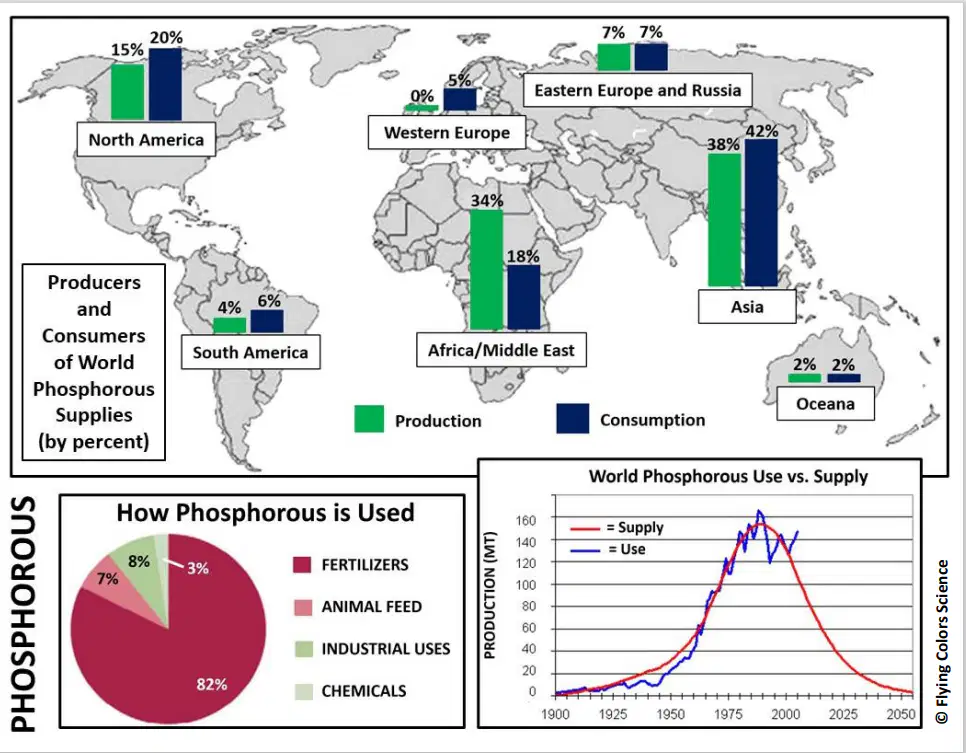
12. Based on the data in the diagram below, which of the following statements is true?
a)
Oceana produces and consumes equal amounts of phosphorous.
b)
Most phosphorous is used in animal feed.
c)
The world supply of phosphorous is increasing.
d)
Western Europe does not produce any phosphorous.
e)
Asia consumes more phosphorous when compared to the other areas on the map.
11.
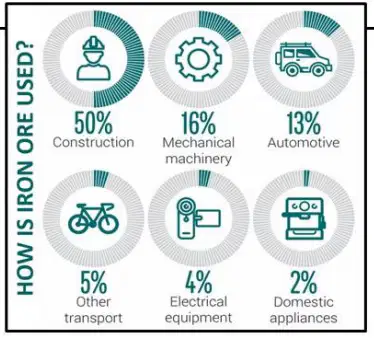
14. Based on the information below, less than 50% of iron ore is used for purposes other than construction.
a)
True
b)
False
100 %

