
 Worksheets
Quizziz_lesson 39: se eu estivesse na Bahia
Total questions: 14
Worksheet time: 24mins
Match the word to its correct definition:
Oxê
An exclamation of surprise or emphasis.
Dendê
Palm oil commonly used in Bahia
Cafuné
Gently stroke someone's hair
Dengo
A request for affection or comfort

What is the name of the traditional Bahian street food made from black-eyed beans, deep-fried in dendê oil, and often filled with shrimp and spicy peppers—a dish with Nigerian roots and sold by Baianas in Salvador?
(a)
To talk about things you would do if you were in Bahia, we use the passado do subjuntivo of the verb estar. How do we conjugate it?
We use the futuro do passado to express a probable outcome — a structure that, in English, is often formed using the modal verb "would", Which endings do we add to the base verb?
Reorder the sentence "If I were in Bahia, I would visit Pelourinho."
Se eu
estivesse
na Bahia,
eu visitaria
o Pelourinho.
Reorder the sentence "If I were in Bahia, I would try acarajé."
Se eu
estivesse
na Bahia,
eu experimentaria
acarajé.
Reorder the sentence "If I were in Bahia, I would eat moqueca."
Se eu
estivesse
na Bahia,
eu comeria
uma moqueca.
Reorder the sentence "If I were in Bahia, I would drink coconut water on the beach."
Se eu estivesse
na Bahia,
eu beberia
uma água de coco
na praia.
If you want to talk about what you would do if you were a different person, you'll use the verb "ser" in the passado do subjuntivo. How do we conjugate this verb?
Complete the sentence below with the correct term.
When we talk about hypothetical situations, we use the passado do subjuntivo +
the ____________________ with verbs that describe:
✔️ Actions that feel familiar, routine, or descriptive
✔️ Especially when the verb itself already implies a kind of continuity or “everyday-ness.”
passado imperfeito
futuro do passado
Complete the sentence below with the correct term.
In sentences that expresse what would happen in a hypothetical situations in which the outcome is a precise, one-time, or modal actions, especially those with strong consequence or planning, we use the ____________________.
passado imperfeito
futuro do passado

Which Brazilian music genre mixes Afro-Brazilian rhythms, Caribbean sounds, and reggae, and is especially popular during Carnival in street parades called blocos?
(a)
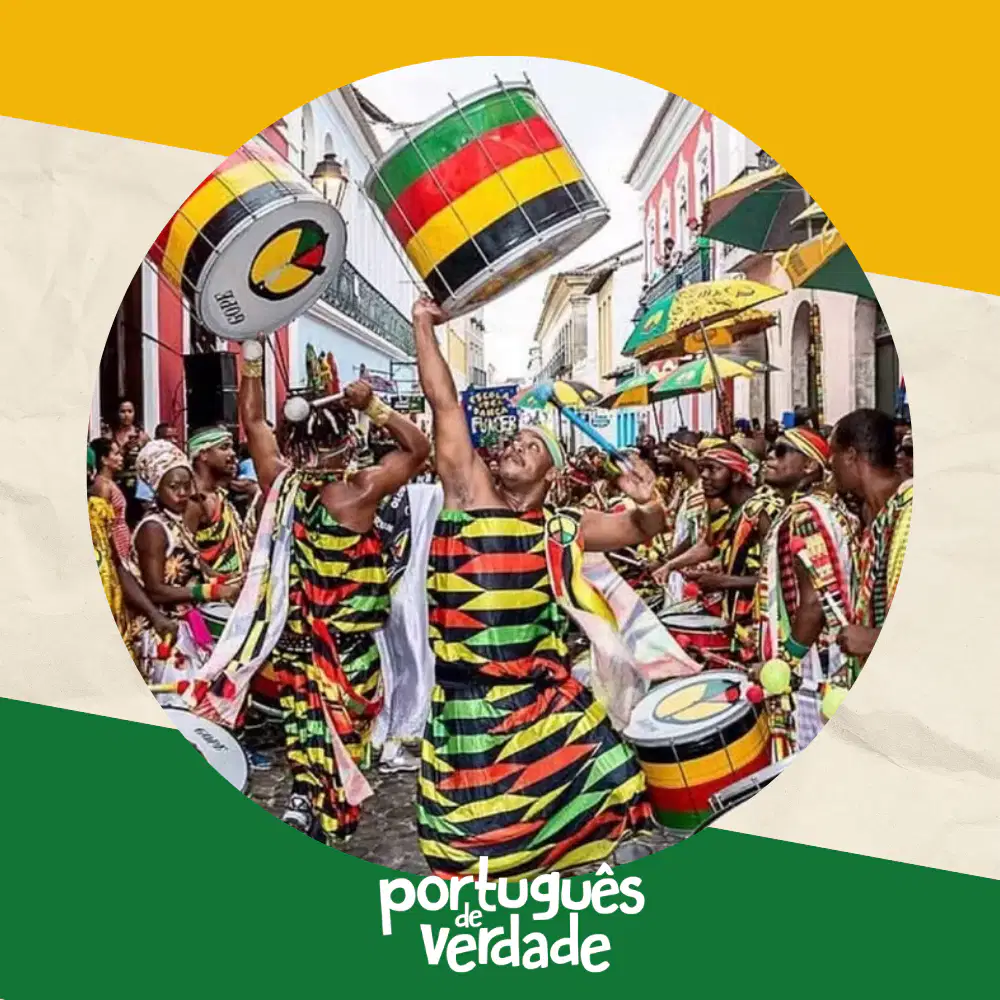
Which famous percussion group from Salvador, Bahia, is known for their strong drumming and their celebration of African culture in Brazil, and played a significant role in Michael Jackson's "They Don’t Care About Us" music video?
(a)
Glossary:
morar: to live in a place
outra vida: life would be totally different
começar: to start, to begin
ouvir: to hear
ondas do mar: sea waves
fazer caminhada na areia: take a walk on the sand
cedinho: early morning
que delícia!: that sounds amazing!
fazer um passeio por: take a stroll through
ver os artistas de rua: watch street performers
aprender: to learn
berimbau: a musical instrument used in capoeira
até cansar: until you get tired
quem sabe um dia, né?: Maybe one day, right?
Where would Speaker 2 have her coffee?
On the beach
On the balcony
At a café
TRUE OR FALSE: Speaker 1 would drink coconut water on the beach.
VERDADEIRO
FALSO
TRUE OR FALSE: Speaker 2 said she would surf every morning.
VERDADEIRO
FALSO
Where would they go in the afternoon?
(a)
What would they do in Pelourinho?
Go shopping
Watch street artists
Ride a bike
What time of day would Speaker 1 walk on the beach?
(a)
What instrument would Speaker 1 learn?
(a)
TRUE OR FALSE: They would dance axé at night.
VERDADEIRO
FALSO
TRUE OR FALSE: If they were in Bahia, they would eat feijoada every day.
VERDADEIRO
FALSO

