
 Worksheets
Quiz on Levers
Total questions: 91
Worksheet time: 46mins
What is a lever?
A mechanical device to produce turning motion about an axis
A type of electrical circuit
A chemical compound used in reactions
A device for measuring temperature
Which of the following best describes the function of a lever?
It is a rigid bar moving around a fixed point of axis to overcome resistance by applying force
It is a flexible rope used to lift objects
It is a container for storing liquids
It is a device for generating electricity
Why must force be applied to a lever?
To move it and overcome resistance
To change its color
To make it lighter
To increase its temperature
A lever is considered a simple machine because it is a rigid bar that moves around a fixed point (axis), requiring force to overcome resistance. Which of the following best describes a lever?
A rigid bar that moves around a fixed point (axis), requiring force to overcome resistance
A device made of multiple moving parts and uses electricity
A device used only for decoration
A flexible device that does not require force
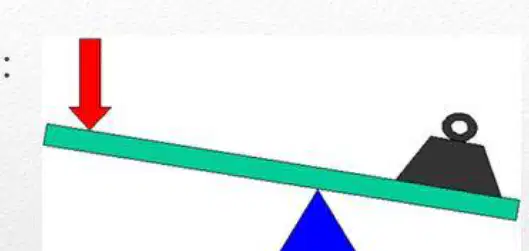
Which of the following best describes a lever?
A flexible rope used to lift objects
A rigid structure rotating around a fixed point
A machine with gears and pulleys
A flat surface inclined at an angle
Which of the following is NOT one of the three main parts of a lever?
Load (resistance)
Effort (force)
Pivot (fulcrum)
Spring (tension)
What is the main function of a lever when moving a heavy box with a crowbar?
To increase the distance the box moves
To move greater loads with a set amount of force
To reduce the weight of the box
To change the direction of the box
How does a lever help when using a golf club or a badminton racquet?
It increases the weight of the object
It helps move loads at greater speed
It reduces the effort needed to lift the object
It changes the color of the object
Suppose you are designing a tool to lift a heavy object with minimal effort. Based on your understanding of levers, which part of the lever would you adjust to make lifting easier, and why?
Increase the length of the load arm to increase resistance
Decrease the length of the effort arm to reduce force
Increase the length of the effort arm to reduce the force needed
Place the pivot at the center to balance the lever
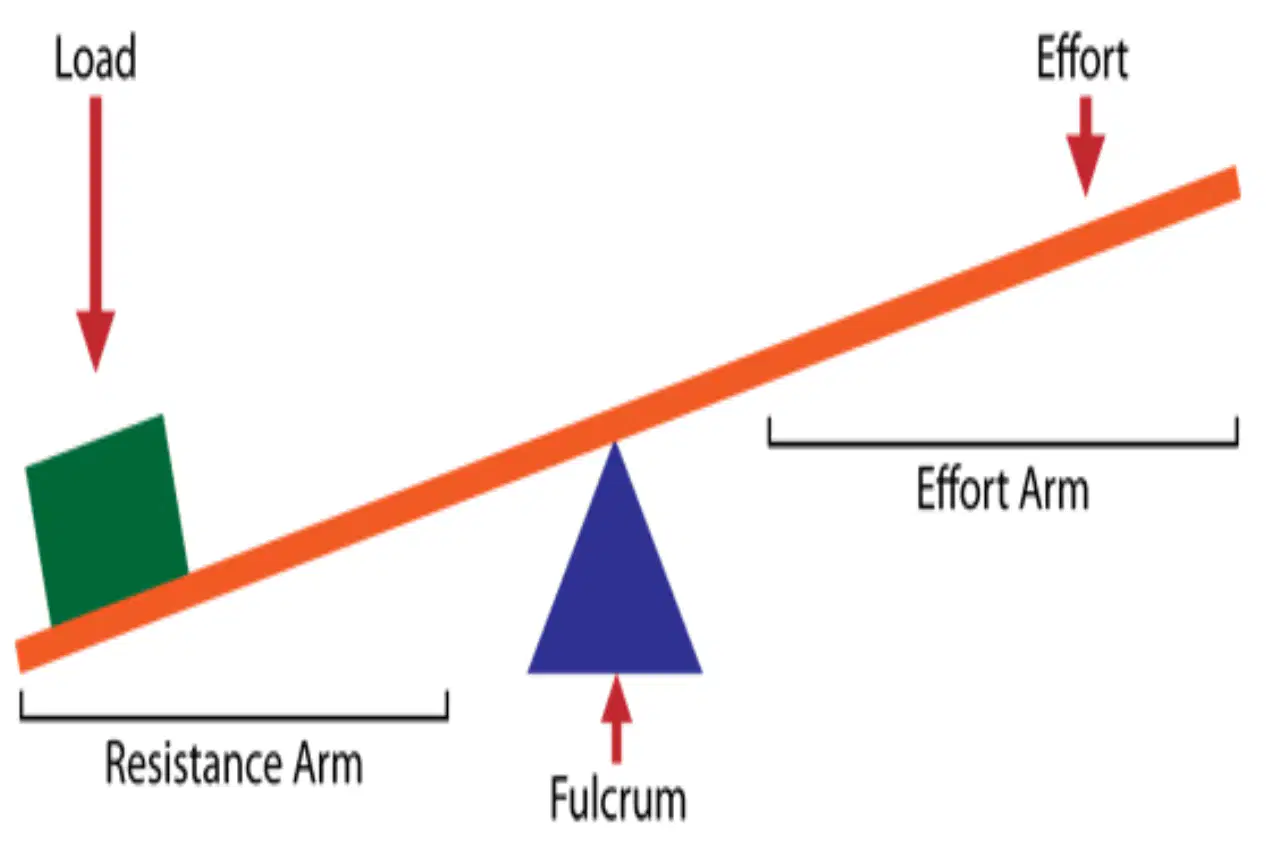
What is the name of the point on a lever where it pivots?
Fulcrum
Load
Effort Arm
Resistance Arm
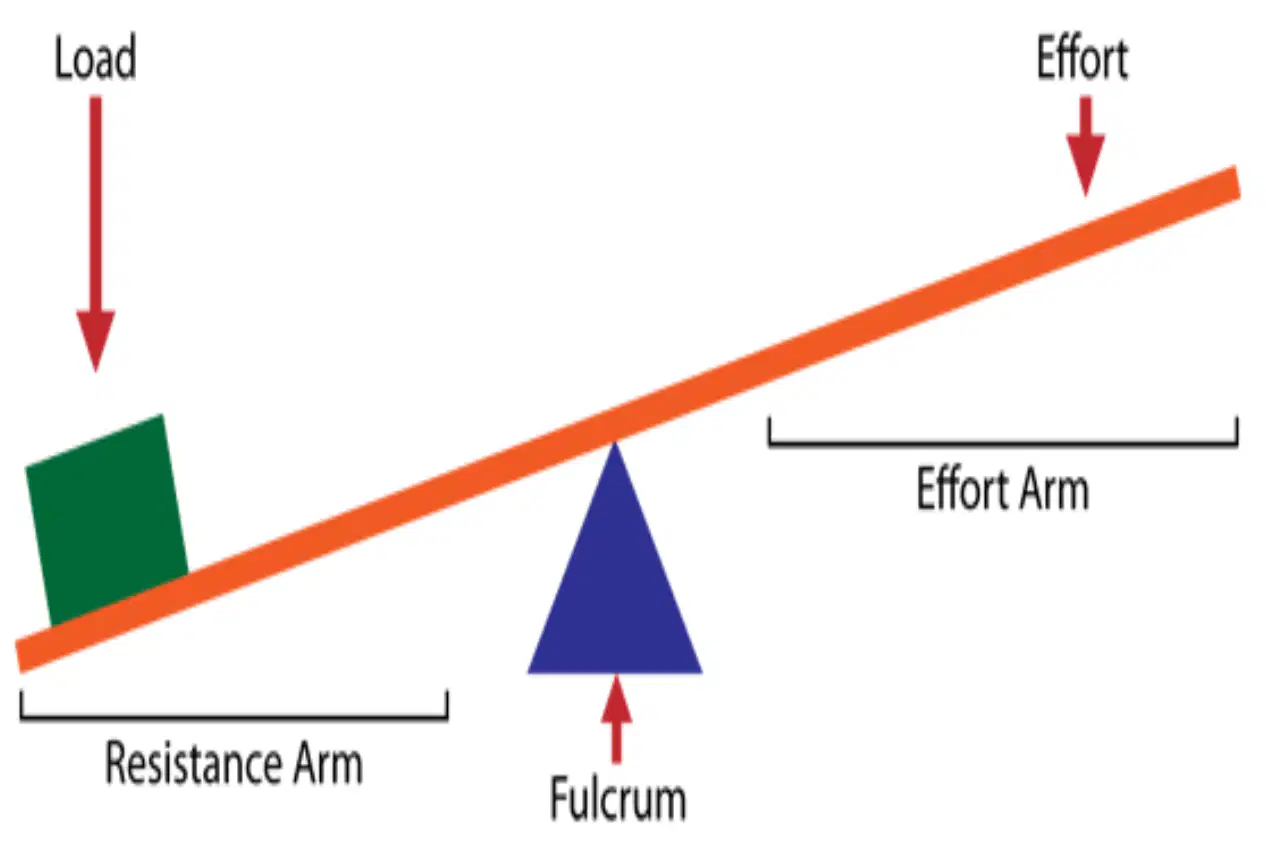
Which part of the lever is the distance from the fulcrum to the point where the effort is applied?
Resistance Arm
Effort Arm
Load
Fulcrum

If you want to lift a heavier load with less effort using a lever, which arm should be longer?
Resistance Arm
Effort Arm
Both arms should be equal
The fulcrum should be removed
How many possibilities of arrangement are there for the three points in a lever?
2
3
4
5
What is the basis for the classification of levers?
The length of the lever
The material of the lever
The arrangement of three points
The color of the lever
Which of the following is NOT a class of lever mentioned in the material?
Class I Lever
Class II Lever
Class III Lever
Class IV Lever
There are three classes of levers based on the arrangement of points because any one of the three points can be situated between the other two.
Because there are three different materials used
Because any one of the three points can be situated between the other two
Because levers are always made in sets of three
Because levers can only be used in three ways
In a first-class lever, what is positioned between the effort and resistance?
The fulcrum
The resistance
The effort
The load
Which type of lever has the resistance between the fulcrum and the effort?
First-class lever
Second-class lever
Third-class lever
Fourth-class lever
In a third-class lever, what is the position of the effort relative to the fulcrum and resistance?
Between the resistance and fulcrum
Between the fulcrum and resistance
At the end of the lever
At the fulcrum
If the effort arm is longer than the resistance arm in a second-class lever, what is the result?
More effort is required to move less weight
Less effort over a certain distance exerts a greater force over a shorter distance
The fulcrum is at the end of the lever
The speed and distance moved are decreased
Why does a third-class lever require more effort to move less weight?
Because the fulcrum is at the center
Because the resistance is between the fulcrum and effort
Because the effort is between the fulcrum and resistance, increasing speed and distance moved
Because the lever is shorter
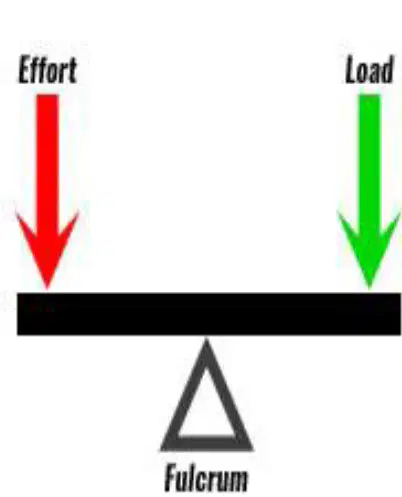
Which of the following best describes the arrangement of the fulcrum, effort, and load in a 1st class lever?
The fulcrum is between the effort and the load.
The load is between the fulcrum and the effort.
The effort is between the fulcrum and the load.
The fulcrum is at one end, with effort and load at the other.
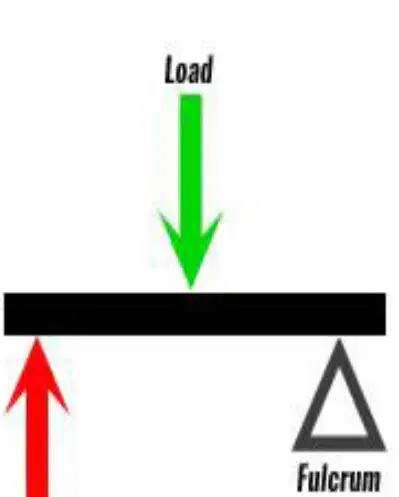
In a 2nd class lever, where is the load located relative to the fulcrum and effort?
The load is between the fulcrum and the effort.
The fulcrum is between the effort and the load.
The effort is between the fulcrum and the load.
The load is at one end, with fulcrum and effort at the other.
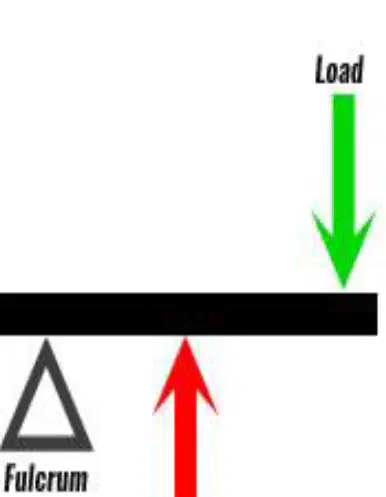
Which class of lever has the effort applied between the fulcrum and the load?
3rd class lever
1st class lever
2nd class lever
4th class lever
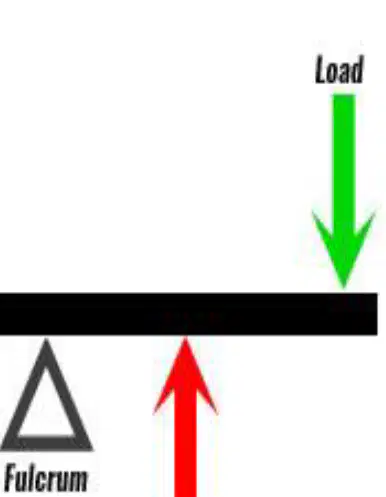
If you are given a diagram of a lever with the fulcrum at one end, the load at the other end, and the effort applied in the middle, which class of lever is it?
3rd class lever
1st class lever
2nd class lever
4th class lever
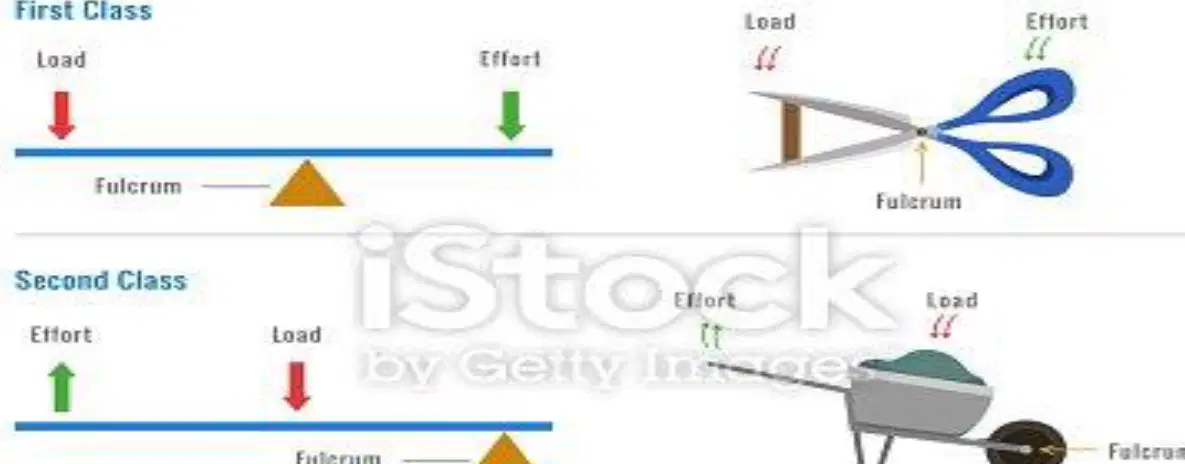
Which of the following best describes a first class lever?
The fulcrum is between the load and the effort.
The load is between the fulcrum and the effort.
The effort is between the fulcrum and the load.
The fulcrum is at one end, with load and effort on the same side.
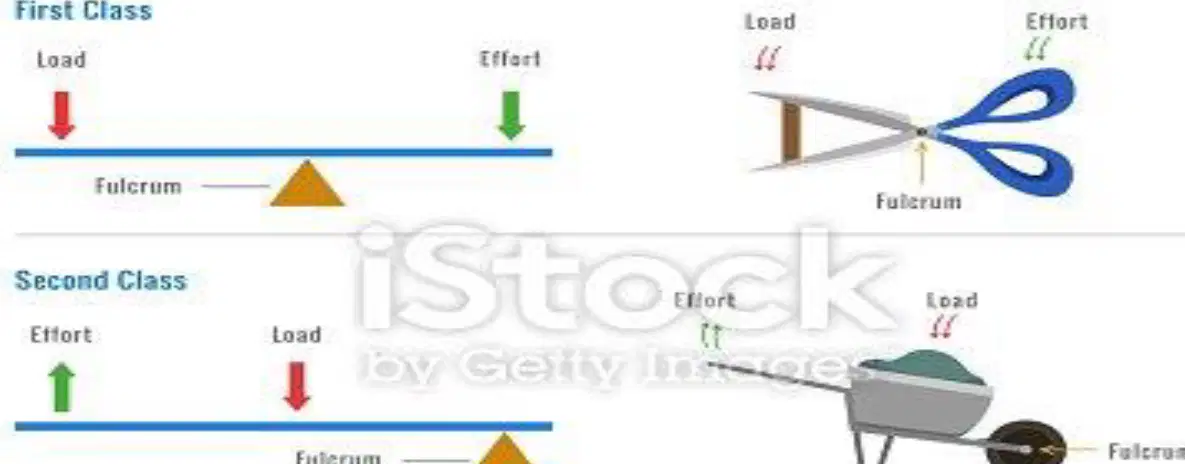
Which of the following is an example of a second class lever?
Scissors
Wheelbarrow
Shovel
Crowbar
In a third class lever, where is the effort applied relative to the fulcrum and the load?
Between the load and the fulcrum
At the fulcrum
At the load
On the opposite side of the fulcrum from the load
A student is given a shovel and asked to identify the class of lever it represents. What reasoning should the student use to determine the answer?
The fulcrum is in the middle, so it is a first class lever.
The load is in the middle, so it is a second class lever.
The effort is in the middle, so it is a third class lever.
The fulcrum is at the end, so it is a second class lever.
Which of the following statements is true about the arrangement of load, effort, and fulcrum in a second class lever?
The fulcrum is between the load and the effort.
The load is between the fulcrum and the effort.
The effort is between the fulcrum and the load.
The fulcrum and effort are at the same point.

Which of the following best describes a 1st class lever?
The fulcrum is between the input force and the output force.
The input force is between the fulcrum and the output force.
The output force is between the fulcrum and the input force.
The fulcrum is at one end, with input and output forces on the same side.

In a 2nd class lever, where is the output force located relative to the fulcrum and input force?
Between the fulcrum and the input force
At the same point as the fulcrum
At the same point as the input force
On the opposite side of the fulcrum from the input force

Which real-life example best represents a 3rd class lever?
Seesaw
Wheelbarrow
Human arm lifting a weight
Crowbar
What is the main difference between a 2nd class lever and a 3rd class lever?
The position of the fulcrum
The position of the input force relative to the output force and fulcrum
The type of force applied
The length of the lever arm
If you wanted to maximize the output force with minimal input force, which class of lever would you most likely use?
1st class lever
2nd class lever
3rd class lever
None of the above

Which of the following is an example of a first class lever?
Scissors
Wheelbarrow
Nutcracker
Human arm lifting a weight

In a second class lever, where is the load located relative to the fulcrum and effort?
Between the fulcrum and the effort
At the end, opposite the fulcrum
Next to the effort
On top of the fulcrum

Which type of lever is represented by the human arm lifting a weight?
First class lever
Second class lever
Third class lever
Fourth class lever
Compare the position of the fulcrum in first, second, and third class levers. Which statement is correct?
The fulcrum is always at the center in all classes.
The fulcrum is between the effort and load in first class levers, at one end in second class, and at the other end in third class.
The fulcrum is always at the end in all classes.
The fulcrum is always next to the load in all classes.
A nutcracker is an example of which class of lever, and why?
First class lever, because the fulcrum is between the effort and load
Second class lever, because the load is between the fulcrum and effort
Third class lever, because the effort is between the fulcrum and load
First class lever, because the effort is at one end
Which of the following is a function of simple machines?
Applying force at a convenient point
Generating electricity
Producing heat
Absorbing sound
Why is it easier to lift a bucket full of water using a pulley rather than lifting it directly?
The pulley changes the direction of the applied force
The pulley increases the weight of the bucket
The pulley reduces the amount of water in the bucket
The pulley generates electricity
Which simple machine is used as a force multiplier to lift heavy loads such as cars or trucks?
Screw jack
Bicycle pedal
Pulley
Gear
How do gears in an automobile function as simple machines?
They change the speed of the automobile
They increase the weight of the automobile
They reduce the size of the automobile
They generate fuel for the automobile
A student wants to lift a heavy object with minimal effort. Which function of a simple machine should they utilize, and which device would be most appropriate?
Use a force multiplier, such as a screw jack
Use a speed multiplier, such as a gear
Use a heat generator, such as a stove
Use a sound absorber, such as foam
What is the fixed point called on which a lever system moves?
Fulcrum
Axis
Pivot
Node
Which components make up a lever system in the human body?
Effort, load, and fulcrum
Muscle, bone, and tendon
Joint, ligament, and cartilage
Resistance, force, and axis
In the context of biomechanics, what role do muscles play in the lever system of the human body?
They provide the effort to move the lever
They act as the fulcrum
They serve as the load
They provide resistance only
How do muscles and bones work together to create movement in the human body according to the lever system?
Muscles pull on bones via tendons, causing bones to act as levers and joints as fulcrums
Bones contract and muscles relax to create movement
Joints push muscles to move bones
Tendons act as fulcrums and bones as loads
Why is understanding the levers in the body important for understanding movement?
It explains how muscles and joints work together to make movement possible
It helps identify the strongest muscles in the body
It shows how bones grow and develop
It describes how nerves control muscle contraction
If the load in a lever system is the weight of the body and any additional resistance, what is the fulcrum in the human body?
The joint itself
The muscle
The tendon
The bone
Which component is the middle one in a first-class lever system in the human body?
Effort (E)
Load (L)
Fulcrum (F)
Resistance (R)
In a second-class lever found in the human body, what is the position of the load (L)?
At the end
In the middle
At the fulcrum
At the effort point
For a third-class lever in the human body, which of the following is true?
The fulcrum is the middle component
The load is the middle component
The effort is the middle component
The resistance is the middle component
Why is it useful to remember the rhyme about lever classes in the human body?
It helps identify the strongest muscle
It helps determine the type of lever system during movement
It explains how bones grow
It describes the function of ligaments
Given a movement where the fulcrum is between the effort and the load, which class of lever is being used?
First-class lever
Second-class lever
Third-class lever
Fourth-class lever
What are the two main functions of a lever system?
To increase resistance and increase speed
To decrease resistance and decrease speed
To increase resistance and decrease speed
To decrease resistance and increase speed
Which of the following best describes why different types of lever systems exist?
To allow different ranges of movement
To reduce the need for force
To make machines more complex
To increase the size of the lever
A lever system that is effective at overcoming resistance is likely to be less effective at which of the following?
Generating speed
Increasing resistance
Allowing movement
Reducing force
The two main functions of a lever system can influence the design of mechanical devices in sports or engineering in which of the following ways?
Devices may be designed to either maximize resistance or maximize speed, depending on the required function.
Devices are always designed to minimize both resistance and speed.
Devices are designed without considering lever systems.
Devices are only designed to look aesthetically pleasing.
What is the position of the fulcrum in a first-class lever system?
The fulcrum is at one end of the lever
The fulcrum is the middle component and lies between the effort and load
The fulcrum is at the same point as the load
The fulcrum is at the same point as the effort
Which of the following is an example of a first-class lever in the human body?
Flexion at the elbow during a bicep curl
Extension (straightening) at the elbow during a throwing action
Plantar flexion at the ankle
Flexion at the knee
What role does the triceps play in the first-class lever system at the elbow?
The triceps acts as the load
The triceps acts as the fulcrum
The triceps acts as the effort
The triceps acts as the resistance
How do first-class levers affect movement in the body?
They decrease the effects of effort and speed
They increase both the effects of effort and the speed of the body
They only increase the speed of the body
They only increase the effects of effort
During flexion at the elbow, such as in a bicep curl, which muscle provides the effort and what class of lever is this?
Triceps, first-class lever
Biceps, third-class lever
Triceps, second-class lever
Biceps, first-class lever
During flexion at the elbow, such as in a bicep curl, which muscle provides the effort and what class of lever is this?
The image shows a second-class lever system at the knee
The image shows a first-class lever system at the elbow
The image shows a third-class lever system at the shoulder
The image shows a pulley system in the arm
In a second class lever system, where is the load positioned relative to the fulcrum and the effort?
The load is between the fulcrum and the effort.
The load is at the end, opposite the fulcrum.
The load is next to the effort.
The load is at the fulcrum.
Which of the following exercises is an example of a second class lever system?
Bicep curl
Calf raise
Push-up
Pull-up
What is the main function of second class lever systems in the human body?
To generate speed
To increase the effect of the effort force and overcome resistance
To decrease resistance
To reduce the effort needed for speed
During plantar flexion at the ankle joint, which part acts as the fulcrum?
The heel
The ball of the foot and toes
The calf muscle
The knee
In the example of plantar flexion at the ankle, which muscle applies the effort?
Quadriceps
Hamstring
Gastrocnemius
Tibialis anterior
Second class lever systems are more effective at overcoming resistance rather than generating speed because:
Because the load is positioned between the fulcrum and effort, increasing the effect of the effort force.
Because the fulcrum is at the end, allowing for faster movement.
Because the effort is always greater than the load.
Because they are designed for speed, not resistance.
Which component is located in the middle in a third-class lever system?
Fulcrum
Load
Effort
Resistance
Which of the following is an example of a movement that involves a third-class lever system in the human body?
Flexion at the elbow
Flexion at the knee
Extension at the wrist
Rotation at the shoulder
What is the primary function of third-class lever systems in the human body?
To increase force
To decrease speed
To increase the speed of a body and allow a wide range of movement
To stabilize joints
During flexion at the knee, what role does the knee joint play in the third-class lever system?
It acts as the load
It acts as the fulcrum
It acts as the effort
It acts as the resistance
Third-class lever systems are advantageous for movements such as running and jumping because:
They increase the force applied to the load
They allow for a greater range of movement and increase speed
They reduce the effort needed to move the load
They stabilize the body during movement
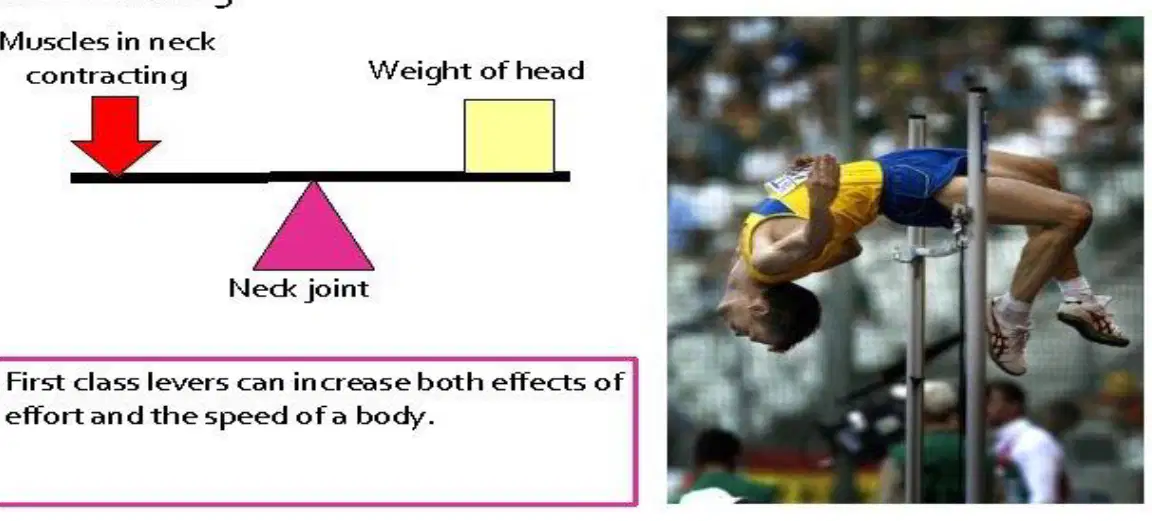
Which part of the body acts as a first-order lever when the head and neck are being flexed and extended?
The arm and elbow
The head and neck
The leg and knee
The hand and wrist
What is the function of the neck joint in the first-class lever system of the head and neck?
It acts as the load
It acts as the effort
It acts as the fulcrum
It acts as the resistance
First class levers in the body can increase which of the following?
Only the speed of a body
Only the effects of effort
Both the effects of effort and the speed of a body
Only the resistance of a body
A high jumper flexes and extends their head and neck during a jump. Which type of lever is being demonstrated in this action?
Second class lever
Third class lever
First class lever
Fourth class lever
The arrangement of muscles, the neck joint, and the weight of the head forms a first-class lever in the body because:
The muscles provide the load, the neck joint is the effort, and the head is the fulcrum.
The muscles provide the effort, the neck joint is the fulcrum, and the weight of the head is the load.
The neck joint provides the resistance, the head is the effort, and the muscles are the fulcrum.
The head is the fulcrum, the neck joint is the load, and the muscles are the resistance.
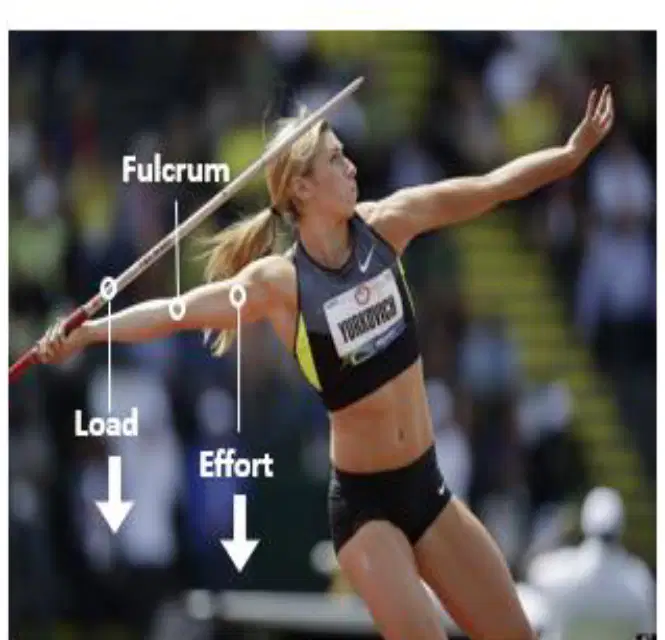
Which part of the arm acts as the fulcrum when an athlete throws a javelin, according to the example of a first class lever?
The wrist
The elbow
The shoulder
The hand
In the context of a first class lever, what role do the biceps and triceps play when throwing a javelin?
They act as the load
They act as the fulcrum
They supply the effort
They provide resistance
Which of the following best describes a first class lever as shown in the image?
The load is between the fulcrum and the effort
The fulcrum is between the load and the effort
The effort is between the load and the fulcrum
The load and effort are on the same side of the fulcrum
When analyzing the action of throwing a javelin, which object represents the load in the first class lever system?
The elbow
The biceps
The javelin
The triceps
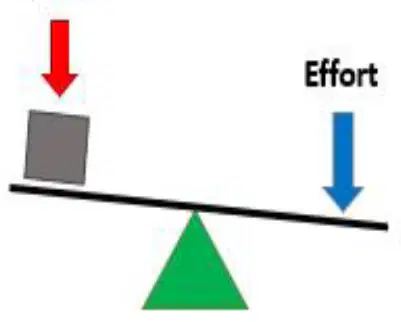
The arm, when throwing a javelin, is considered a first class lever. Why is this the case?
Because the load is between the fulcrum and the effort
Because the fulcrum is between the load and the effort
Because the effort is between the load and the fulcrum
Because the fulcrum and load are on the same side
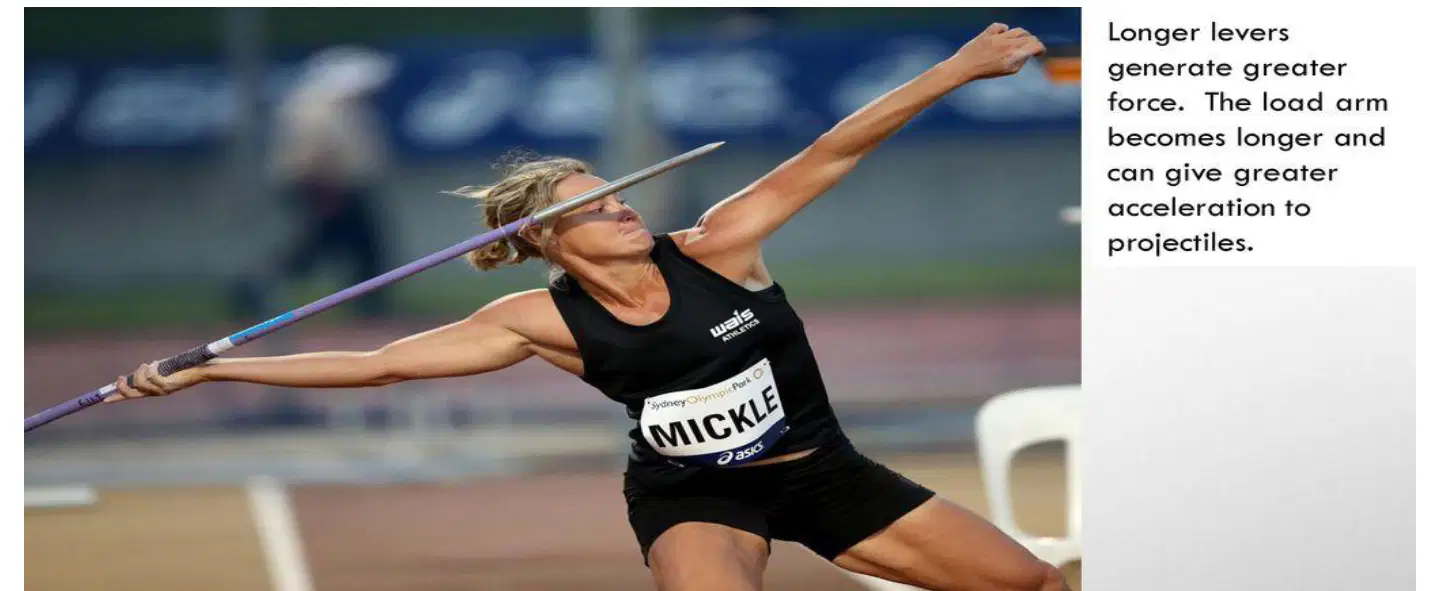
What is the effect of having longer levers in generating force?
Longer levers generate greater force and can give greater acceleration to projectiles.
Longer levers generate less force and reduce acceleration.
Longer levers have no effect on force or acceleration.
Longer levers only affect balance, not force.
According to the material, what happens as the distance of the effort or load from the fulcrum increases?
The effort or load becomes more significant.
The effort or load becomes less significant.
The fulcrum moves closer to the load.
The acceleration decreases.
Which of the following best explains why a javelin thrower extends their arm fully when throwing?
To increase the length of the lever and generate greater force.
To decrease the length of the lever and reduce force.
To balance the javelin better.
To slow down the acceleration of the javelin.
If the load arm becomes longer, what is the likely effect on the acceleration of a projectile?
The acceleration increases.
The acceleration decreases.
The acceleration remains the same.
The acceleration stops completely.

