
Font size
 Worksheets
TEST-Chapter 5 Citizenship
Total questions: 37
Worksheet time: 19mins

Which of the following is an example of being a good citizen in your community?
Helping to keep the community clean
Ignoring community rules
Not helping others in need
Damaging public property
What are the first ten amendments to the United States Constitution called?
The Declaration of Independence
The Bill of Rights
The Articles of Confederation
The Federalist Papers
According to the passage, name one right protected by the Bill of Rights.
The right to practice religion, the right to speak and write opinions, the right to a fair trial, or the right to gather in peaceful groups.
The right to own property without any restrictions.
The right to vote in all elections regardless of age.
The right to travel internationally without a passport.
According to the passage, what is one reason why voting is important in the United States?
It allows citizens to choose their leaders
It is required by law
It is only for government officials
It is not important
Why do schools have a rule that says students must walk, not run, in the hallways?
To keep the hallways clean
To help students get to class faster
To prevent students from getting hurt
To make students exercise
Read the passage 'Our Rules and Laws.' What is an example of a community law mentioned in the passage?
Students must do their homework
People must cross the street at a crosswalk
Families must eat dinner together
Students must wear uniforms
If students do not follow the rule to walk in the hallways, they could get _____
hurt
lost
rewarded
praised
True or False: People who disobey laws may have to pay a fine or go to jail.
True
False
Why is it important for all citizens to follow rules and laws?
It is important because rules and laws help make our community, state, and country a safe and orderly place.
It is important because rules and laws make life more difficult for everyone.
It is important because rules and laws allow people to do whatever they want.
It is important because rules and laws are meant to be broken.
What does the word 'suffrage' mean as used in the passage?
The right to vote
The right to speak
The right to work
The right to travel
In 1954, all nine Supreme Court justices voted to end school segregation. This court case is known as ________ versus Board of Education.
Brown
Plessy
Marbury
Roe
What was the outcome of the Supreme Court case known as Brown versus Board of Education?
A) School segregation continued
B) All nine Supreme Court justices voted to end school segregation
C) Only some justices voted to end segregation
D) The case was dismissed
Who was Susan B. Anthony?
A woman who wanted to change the fact that women did not have the same rights as men and gave speeches about treating people fairly.
A famous singer.
A president.
A scientist.
Fill in the blank: In 1848, Elizabeth Cady Stanton, Lucretia Mott, and other women organized a _______ to discuss women's rights.
convention
parade
debate
petition
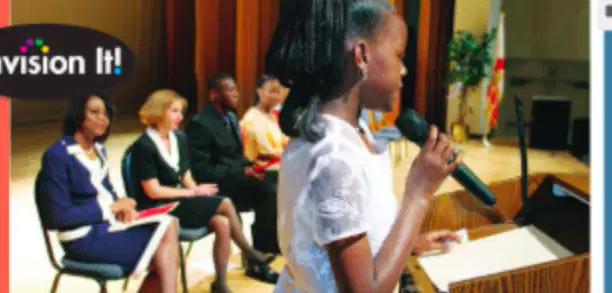
People have the right to say what they think and feel as long as it is not harmful to others.
True
False
A banner that supports equal rights should include which of the following messages?
Promote equality for all
Support discrimination
Encourage segregation
Deny basic rights
What are civil rights?
Rights of only some citizens to be treated equally under the law
Rights of all citizens to be treated equally under the law
Rights of only African Americans
Rights to attend any school
What does 'segregated' mean?
A) Mixed together
B) Separated
C) Equal
D) United
Thurgood Marshall worked hard for _________
civil rights
sports achievements
scientific research
musical talent
Why did Linda Brown have to cross a dangerous railroad track to get to school?
Because her school was far away from her home.
Because there was no school for Black children nearby.
Because she liked taking that route.
Because her parents worked near the railroad track.
What did Thurgood Marshall want to end, especially in schools?
Segregation
Homework
Uniforms
Sports
Who was Eleanor Roosevelt?
The First Lady of the United States
A school teacher
A doctor
A scientist
What is a delegate?
A person who travels the world
A person chosen to act for others
A person who writes laws
A person who teaches children
The group led by Eleanor Roosevelt at the U.N. recognized which rights for all people?
Political rights
Economic rights
Human rights
Religious rights
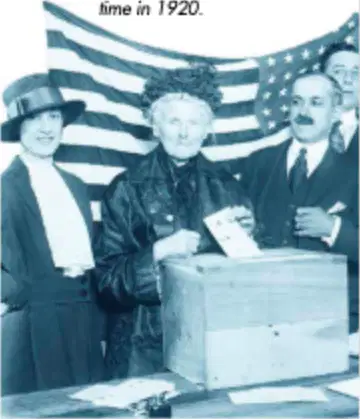
Susan B. Anthony was a leader in which movement?
Civil Rights Movement
Women's Suffrage Movement
Abolitionist Movement
Labor Movement
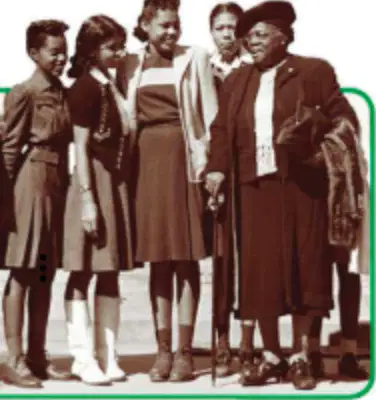
Who wasnMary McLeod Bethune?
Mary McLeod Bethune was an educator, founded a school for African American students, and was an advisor to President Franklin D. Roosevelt.
Mary McLeod Bethune was a famous artist, wrote several novels, and was a professional athlete.
Mary McLeod Bethune was a scientist, invented the telephone, and was a movie director.
Mary McLeod Bethune was a chef, won an Olympic medal, and was a fashion designer.
Chávez wanted people to boycott grapes because:
he wanted to support grape farmers.
he wanted to improve working conditions for farm workers.
he wanted to promote grape sales.
he wanted to start a new business.
Why were the farm owners angry according to the passage?
Because they lost money.
Because they had too many workers.
Because the weather was bad.
Because they received an award.
What is a union?
A group of workers that joins together.
A type of business organization.
A government agency.
A workplace rule.
What was the motto of the United Farm Workers?
Sí, se puede
Viva la Causa
Justicia para todos
Unidos para siempre
Who started the National Farm Workers Association (NFWA)?
César Chávez
Dolores Huerta
Martin Luther King Jr.
Robert F. Kennedy
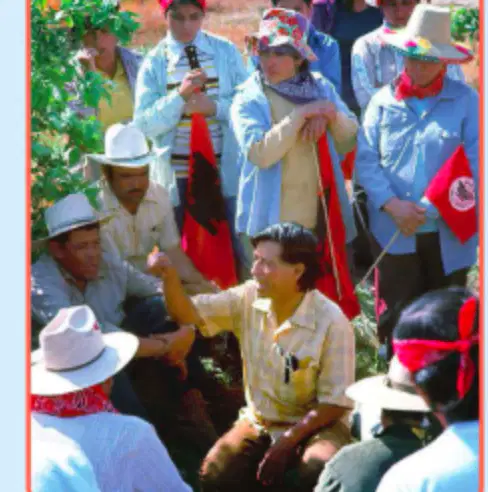
Who is meeting with the farmworkers in the photograph?
(a)
What did César Chávez do to help farmworkers?
He started a union
He became a politician
He opened a school
He moved to another country
Who was Clara Barton?
A) A famous artist
B) A volunteer who helped soldiers during the American Civil War and started the American Red Cross
C) A scientist
D) A president
What was Clara Barton often called?
The queen of the battlefield
The angel of the battlefield
The nurse of the battlefield
The hero of the battlefield
Fill in the blank: Clara Barton wanted to start the _______ in the United States.
Red Cross
United Nations
Peace Corps
Boy Scouts
The Red Cross provides which two things to people after dangerous storms, floods, or earthquakes?
Food and shelter
Books and toys
Money and jewelry
Cars and electronics

