
 Worksheets
Objectives and Methods in Industrial Manufacture
Total questions: 94
Worksheet time: 47mins
What is one of the main objectives of studying industrial manufacture?
To understand and reinforce knowledge on the scales of manufacture
To learn about ancient history
To study only manual labor techniques
To focus solely on marketing strategies
Which of the following is included in the objectives for learning about industrial manufacture?
Exploring a range of manufacture methods
Learning only about product design
Focusing on sales techniques
Studying only traditional crafts
Why is it important to gain an understanding of modern manufacturing systems in industry?
Because it includes the use of ICT and robotics in production
Because it only focuses on manual labor
Because it ignores technological advancements
Because it is unrelated to current industry practices
How might knowledge of the scales of production help in the manufacturing industry? (DoK Level 2)
It helps determine what scales of production particular products utilize
It only helps with advertising
It is only useful for packaging design
It is not relevant to manufacturing decisions
A company wants to improve its production efficiency. Based on the objectives listed, what should they consider implementing? (DoK Level 3)
Modern manufacturing systems including ICT and robotics
Only increasing the number of workers
Focusing solely on traditional methods
Reducing the use of technology

What is a level of production?
The amount of energy used in manufacturing
The stage or scale at which products are produced in an industry
The number of workers in a factory
The cost of raw materials
Why is it important for engineers to understand the different levels of production?
To select the most cost-effective and efficient method for manufacturing products
To increase the number of employees
To reduce the quality of products
To avoid using technology in production
Which of the following is an example of mass production?
Jewellery
Bread
Cars
Pottery
What is the typical quantity range for batch production?
10,000+
Low 100’s, maybe low 1000’s
Only 1
50,000+
Which scale of manufacture is most suitable for producing a made-to-measure suit?
Mass Production
Batch Production
One-Off Production (Bespoke)
Continuous Production
A company wants to produce specialist equipment for an elite sportsman. Which production method should they use and why?
Mass Production, because it is efficient for large quantities.
Batch Production, because it allows for some customization.
One-Off Production (Bespoke), because it is designed for unique, individual items.
Mass Production, because it is the cheapest method.
Explain why flat-pack furniture is typically produced using mass production rather than batch or one-off production.
Because it is always custom-made for each customer.
Because it is needed in very large quantities and can be standardized.
Because it is too expensive to produce in batches.
Because it requires specialized equipment for each item.
What is "one-off production"?
Making a single product, often custom-made for one customer
Mass-producing identical products for many customers
Producing products in batches for seasonal demand
Manufacturing products using automated machinery only
Which of the following is a typical application of one-off production?
Mass production of smartphones
Prototype and architectural models
Assembly line car manufacturing
Production of canned food
Why are one-off products usually expensive?
They are made using low-quality materials
They are produced in large quantities
They require a lot of time and skilled labor to make
They are made using automated machines
Which of the following is NOT an advantage of one-off production?
Made to exact personal specifications
High-quality materials used
Highly skilled craftsperson ensures high-quality product
Low cost due to mass production
Explain why one-off production can ensure a very high quality of build and finish. Use evidence from the summary and advantages provided.
Because products are made by highly skilled craftspeople using high-quality materials and to exact specifications
Because products are made quickly and in large quantities
Because products are made using automated machines
Because products are made with minimal labor input
Which of the following is a disadvantage of one-off production?
Products are highly specialized
Expensive final product compared to larger scales of production
High-quality materials are used
Made to exact personal specifications
A company needs a custom-built sign for their shop. Which production method is most suitable and why?
One-off production, because it allows for custom, highly specialized products
Mass production, because it is cheaper
Batch production, because it is faster
Continuous production, because it is automated
What is meant by "bespoke or one off production"?
The manufacture of an item that is completely individual and unique, usually hand crafted by one person or more.
The mass production of identical items using automated machinery.
The assembly of products using interchangeable parts on a production line.
The outsourcing of manufacturing to multiple factories worldwide.
How does the concept of bespoke or one off production relate to the manufacturing of experimental spacecraft like SpaceShipTwo?
Experimental spacecraft are often produced as unique, hand-crafted items tailored to specific requirements.
Experimental spacecraft are always mass produced using automated assembly lines.
Experimental spacecraft are made using only recycled materials.
Experimental spacecraft are never hand crafted and are always identical.
What is the main characteristic of batch production?
Producing a single unique product at a time
Producing small quantities of products in groups or batches
Producing products continuously without interruption
Producing only handmade products
Which of the following is an advantage of batch production?
It always produces the largest possible volume
It allows flexibility in adapting production to another product
It eliminates the need for any storage
It never uses industrial methods
Which of the following is a disadvantage of batch production?
It always produces unique, one-off products
Poor production planning can result in large quantities of products having to be stored
It never uses machine tools
It cannot respond to market trends
Why does batch production usually cost less than one-off manufacture?
Because it uses only manual labor
Because it does not require setting up machines for each product
Because it produces only one product at a time
Because it never uses CAD/CAM
Which of the following best describes the flexibility of batch production systems?
They can only make one version or type of product
They are often flexible and can make more than one version or type
They are never flexible
They only respond to the manufacturer’s needs
How does batch production respond to consumer demand?
By producing products continuously regardless of demand
By producing products only when there is a demand from consumers
By producing only one product for all consumers
By ignoring market trends
Which of the following is an example of an application of batch production?
Custom-made jewelry
Commercially printed materials, such as magazines and newspapers
Mass-produced cars
Handmade pottery
What is one way batch production achieves good economies of scale?
By buying materials in bulk
By producing only one item at a time
By never using machines
By avoiding the use of CAD/CAM
A company wants to quickly respond to changing market trends by producing different versions of a product. Which production method should they use?
One-off production
Batch production
Continuous production
Handmade production
If a company experiences frequent changes in production, what is a potential disadvantage of batch production?
Lower storage costs
Costly re-tooling reflected in retail price
No need for machine tools
Inability to adapt to market trends
Why do you think Ferrari produces their road cars in small batches?
To maintain exclusivity and high quality
Because they lack the resources for mass production
To reduce the cost of production
Because there is no demand for their cars
What is mass production?
The process of making very large quantities of the same product
The process of making unique, custom products
The process of recycling old products
The process of selling products in small quantities
Which of the following is a key feature of an assembly line in mass production?
Each machine performs multiple tasks on different products
Each machine performs one specific task before passing the product to the next machine
Products are made by hand without machines
Products are made in small batches
What is a major disadvantage of mass production?
High initial set-up costs due to expensive machinery and tooling
Products are produced at a high cost per unit
It requires no investment in machinery
It is highly flexible and can quickly respond to market trends
Which of the following is NOT an advantage of mass production?
Highly automated and efficient manufacturing processes
Low unit costs and reduced labour costs
Excellent economies of scale in bulk buying of materials
Inflexibility to respond quickly to market trends
Why is mass production often associated with ethical concerns in developing countries?
Because it uses only high-skilled workers
Because it often involves 'sweat shops' with low wages and poor working conditions
Because it produces only luxury goods
Because it eliminates the need for any workforce
Which of the following best explains why mass production requires a huge initial investment?
Because it uses only manual labor
Because it requires very expensive and specialist machinery and tooling
Because it produces only a few products at a time
Because it does not use automated systems
How does mass production achieve low long-term costs?
By producing products in small quantities
By using manual labor for all tasks
By spreading the high initial set-up costs over a large number of products
By frequently changing the production line
Which of the following is an application of mass production?
Handmade jewelry
Custom furniture
Electronic products like mobile phones and commercial packaging
One-of-a-kind artwork
What is one reason mass production can lead to job dissatisfaction?
High wages for all workers
Repetitive nature of tasks for a low-skilled workforce
Opportunities for creative input
Flexible work schedules
Which of the following statements about mass production is true?
It is highly flexible and can quickly adapt to market changes
It requires little to no investment in machinery
It is characterized by high volume, low cost per unit, and increased automation
It is best suited for producing unique, custom products
Who invented the mass production of cars?
Karl Benz
Henry Ford
Thomas Edison
Nikola Tesla
What was the first mass produced car?
Model S
Model T Ford
Model A
Model X
What was the main advantage of Ford’s moving production lines?
Cars were more luxurious
Car production was 10 times faster
Cars were larger
Cars used less fuel
Why did Ford want workers to be experts in one part of the assembly?
To reduce the number of workers needed
So they could work quickly
To increase the cost of cars
To make cars more complex
How did mass production affect the cost of cars?
It increased the cost
It had no effect on cost
It reduced the cost
It made cars free
What is continuous production primarily used to make?
Products like steel, oil, or chemicals
Handmade crafts
Custom furniture
Small batch bakery items
Why do factories that use continuous production run 24 hours a day, seven days a week?
To save money by avoiding expensive shutdowns and restarts
To give workers more breaks
To produce unique, custom items
To reduce the quality of products
Which of the following is an advantage of continuous production?
Extremely low unit costs
High flexibility in production
Produces only small quantities
Requires frequent setup changes
What is a disadvantage of continuous production?
Very little flexibility as production is set up 24/7
High unit costs
Limited to small-scale production
Requires frequent shutdowns
Which application is most suitable for continuous production?
Packaging, such as cans and bottles for the drinks industry
Custom jewelry making
Tailor-made clothing
Handmade pottery
Explain why continuous production is not suitable for products that require frequent changes in design or customization.
Because the production setup is designed to run continuously and changing it would be costly and inefficient
Because it is only used for food products
Because it is only used for handmade items
Because it requires a lot of manual labor
What does the phrase "Power stations run 24/7/365" mean?
Power stations operate only during the day.
Power stations operate only on weekends.
Power stations operate continuously, all day, every day of the year.
Power stations operate only during the night.
Why is it important for power stations to run 24/7/365?
To ensure a constant supply of electricity to meet demand at all times.
To reduce the cost of electricity.
To allow for frequent maintenance breaks.
To save fuel.
What does the JIT (Just In Time) manufacturing concept primarily focus on?
Storing large quantities of parts at the factory
Ordering parts to arrive just before they are needed
Manufacturing all parts in-house
Reducing the number of suppliers
Which of the following is a benefit of the JIT system?
Increased storage costs
Efficiency
Delayed deliveries
Environmental concerns
Which of the following is a drawback of the JIT system?
Easy monitoring of stocks/parts
Increased jobs for suppliers
Relies on punctuality of delivery
No storage costs
How does the JIT system use ICT (Information and Communication Technology)?
To manufacture products automatically
To tell the factory and supplier how many products are needed and when
To store parts in a warehouse
To increase environmental concerns
A company using JIT receives a shipment of parts that are incorrect. Which drawback of JIT does this situation illustrate?
Relies on effective ICT systems
Risk of wrong parts arriving
No storage costs
Increased jobs for suppliers
Explain why JIT manufacturing might lead to environmental concerns.
Because it increases the number of deliveries required
Because it stores parts in large warehouses
Because it reduces the need for suppliers
Because it eliminates the use of ICT systems
What does QRM stand for in manufacturing?
Quick Response Manufacturing
Quality Resource Management
Qualified Retail Management
Quantitative Resource Manufacturing
Which of the following is a benefit of QRM for manufacturers?
Saving on storage costs
Increasing advertising expenses
Reducing product quality
Increasing product prices
Why might companies that use QRM face a risk in the market?
There may be a sudden change in the market, making it hard to sell their products.
They have too much stock in storage.
They always have products ready for sale.
They do not use barcodes.
How do barcodes contribute to QRM according to the material?
They allow the JIT ordering of components and products and re-stocking.
They increase the cost of manufacturing.
They are used only for advertising.
They slow down the manufacturing process.
When ASDA gets close to running out of Walkers crisps, the computer automatically places an order with the factory. What manufacturing and sales system does this illustrate?
e-POS (Electronic Point of Sale) integrated with QRM
Traditional mass production
Manual inventory management
Batch production without automation
Which of the following best represents the use of technology in QRM as shown in the images?
Automation and tracking through barcodes and computerized systems
Manual labor without any technology
Only using trucks for delivery
Focusing solely on car design
Which of the following best describes the main function of Production, Planning and Control (PPC) in modern manufacturing?
Managing only the sales and marketing of products
Planning and allocating resources for production and manufacturing activities
Designing new products for the company
Handling only the transportation of goods
What is the primary role of logistics in supply chain management?
Designing new products
Efficiently managing the forward and reverse flow of goods, services, and information
Only storing raw materials
Advertising products to customers
Which component of modern manufacturing links sales demand with manufacturing capacity to minimize overstock and maximize on-time delivery?
Logistics management
Master production schedule (MPS)
Product design team
Quality control department
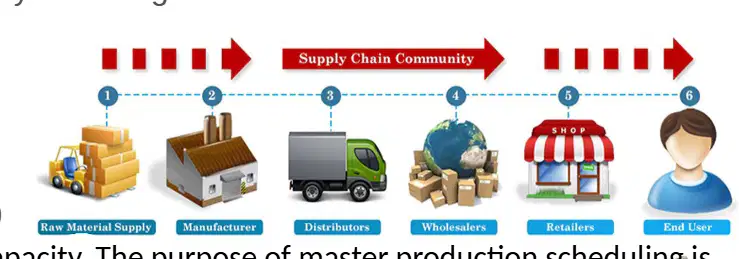
Based on the supply chain diagram, which of the following is the correct order of flow from origin to consumption?
Retailers → Wholesalers → Distributors → Manufacturer → Raw Material Supply → End User
Raw Material Supply → Manufacturer → Distributors → Wholesalers → Retailers → End User
End User → Retailers → Wholesalers → Distributors → Manufacturer → Raw Material Supply
Manufacturer → Raw Material Supply → Distributors → Wholesalers → Retailers → End User
Why is logistics management considered a crucial component in the supply chain?
It only focuses on product design
It holds the supply chain together by managing the flow of goods, services, and information
It is responsible for hiring employees
It only deals with financial transactions
A company is experiencing frequent overstock and late deliveries. Which modern manufacturing concept should they focus on improving to address these issues?
Product marketing
Master production schedule (MPS)
Employee training
Customer service
Which of the following best describes Automated Storage and Retrieval Systems (ASRS)?
Computer- and robot-aided systems that can retrieve or store items in specific locations.
Vehicles that transport goods autonomously without a driver.
Systems that only store items manually.
Machines that only manufacture products without storage capability.
What is the primary function of Automatic Guided Vehicles (AGVs) in a manufacturing facility?
To handle materials and transport loads autonomously without an onboard operator.
To manually operate machinery.
To design new products.
To store items in predefined locations.
Which system is designed to adapt to changes in the type and quantity of products being manufactured?
Flexible manufacturing systems (FMS)
Automated storage and retrieval systems (ASRS)
Automatic guided vehicles (AGVs)
Manual assembly lines
Explain how flexible manufacturing systems (FMS) contribute to efficient production in a factory.
By allowing machines and computerised systems to manufacture a variety of parts and handle changing production levels.
By storing products in a warehouse.
By transporting goods manually.
By reducing the need for any automation.
A company wants to increase efficiency in their warehouse by reducing the need for human operators in material handling. Which technology should they implement and why?
Automatic guided vehicles (AGVs), because they can transport materials autonomously without an onboard operator.
Manual forklifts, because they are cheaper.
Flexible manufacturing systems, because they only focus on production.
Automated storage and retrieval systems, because they only store items.
Which of the following best describes Product Data Management (PDM)?
A system for managing employee schedules
The use of software to manage product data and process-related information in a single, central system
A method for parallelizing manufacturing tasks
A tool for customer relationship management
What type of information is typically managed by Product Data Management (PDM) software?
Only financial data
Only marketing strategies
CAD data, models, parts information, manufacturing instructions, requirements, notes, and documents
Only customer feedback
What is the primary function of Enterprise Resource Planning (ERP) software?
To design new products
To help run an entire business by supporting automation and processes in various departments
To manage only manufacturing processes
To store customer contact information
Which work methodology emphasizes the parallelization of tasks, sometimes called simultaneous engineering or integrated product development (IPD)?
Sequential manufacturing
Concurrent manufacturing
Traditional project management
Waterfall development
How does concurrent manufacturing differ from traditional manufacturing approaches?
It focuses on performing tasks one after another
It emphasizes the parallelization of tasks to reduce lead time
It only applies to software development
It eliminates the need for any planning
What does QFD stand for in the context of quality assurance?
Quality Function Deployment
Quality Feedback Development
Quick Function Design
Quality Factor Determination
Which term is used to describe the stated and unstated customer needs or requirements in QFD?
Voice of the customer
Customer feedback
Market analysis
Product specification
What is the main purpose of Quality Function Deployment (QFD)?
To define customer needs and translate them into specific plans to produce products
To increase the speed of product manufacturing
To reduce the cost of production
To improve employee satisfaction
What is the 'House of Quality' in the context of QFD?
A diagram used to transform customer requirements into product specifications
A building where quality checks are performed
A software tool for quality management
A type of customer survey
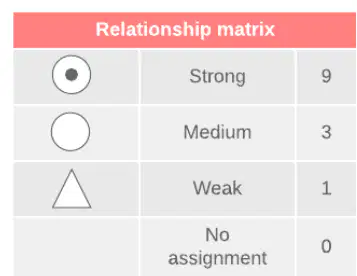
In the relationship matrix of the House of Quality, what does a filled circle represent?
Strong relationship
Medium relationship
Weak relationship
No assignment
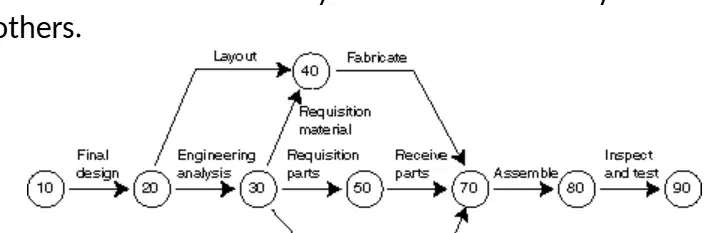
What is the main purpose of Critical Path Analysis (CPA) in project management?
To map out every key task, identify the time needed for each, and understand dependencies
To assign team members to specific roles
To create a budget for the project
To evaluate the quality of project outcomes
Which of the following best describes the Scrum framework?
A set of meetings, tools, and roles for efficient project delivery that allows teams to self-organize and adapt
A budgeting tool for financial management
A method for testing software quality
A process for hiring new employees
Which of the following is NOT a feature of Critical Path Analysis (CPA)?
Identifying the amount of time necessary to finish each activity
Mapping out every key task in a project
Assigning salaries to project team members
Understanding dependencies between activities
How does Scrum help teams improve their project delivery?
By allowing teams to self-manage, learn from experience, and adapt to change
By providing detailed financial reports
By eliminating the need for meetings
By focusing only on individual performance
Suppose a project team is struggling to meet deadlines because they do not understand which tasks depend on others. Which project management technique would best help them address this issue?
Critical Path Analysis (CPA)
Scrum
Brainstorming
SWOT Analysis
What is the primary belief behind the Total Quality Management (TQM) framework?
Organizations can succeed by focusing only on profits.
Long-term success is achieved by all members focusing on improving quality.
Only top executives are responsible for quality improvement.
Customer satisfaction is not important in TQM.

