
Font size
 Worksheets
Checkpoint 8 Review East Asia/Oceania
Total questions: 23
Worksheet time: 12mins

What does the satellite image of Southeast Asia at night show about the difference between North Korea and South Korea?
The image shows electricity use in both North and South Korea are the same
The amount of power displayed on the South Korean side shows that they are more developed than the North.
The amount of power displayed on the North Korean side shows that they are more developed than the South
The Demilitarized Zone (DMZ) separates North and South Korea.
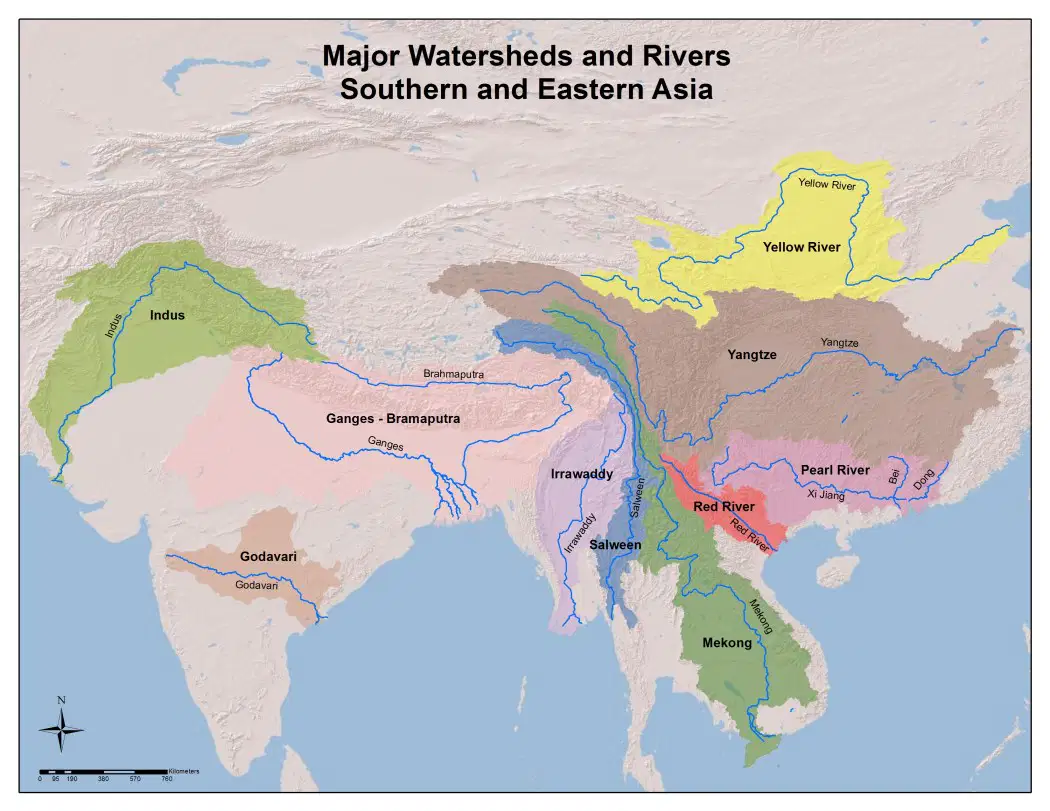
People who live along the major rivers of Asia have to deal with what type of problem?
The risk of losing their fishing gains to sharks
Potential war over control of these major rivers
The risk of flooding due to the flood seasons
The issue of developing a system for farming along these rivers

This is a map of Southern and Eastern Asia. Determine the location of Korea (North and South)
1
2
3
4
5
What was the main motivation for the Japanese Empire’s territorial expansion that occurred during the first half of the 20th Century (1900-1945)
To gain access to additional raw materials
To introduce Shintoism to other cultures
To recover territory it lost in a war with China
To colonize new territory for its growing population
To limit population growth in China, Mao Zedong in the late 1970s implemented what into Chinese law?
encouraged citizens to adhere to the teachings of Confucius.
dramatically reduced food production and established labor camps.
A family planning program known as the one-child policy.
forced citizens to migrate to neighboring countries with whom the government is allied.
What physical feature makes the Pacific Islands particularly vulnerable to volcanoes and earthquakes?
Tsunamis
Temperate climate
Underwater sea currents
The Ring of Fire
What is Japan's biggest weakness economically?
Japan’s oil resources made impossible for them to develop a strong military
Japan’s rich land supplies adequate food for her burgeoning population
Japan’s traditional government has prevented a market economy from growing.
Japan has to import most needed raw materials from other nations.
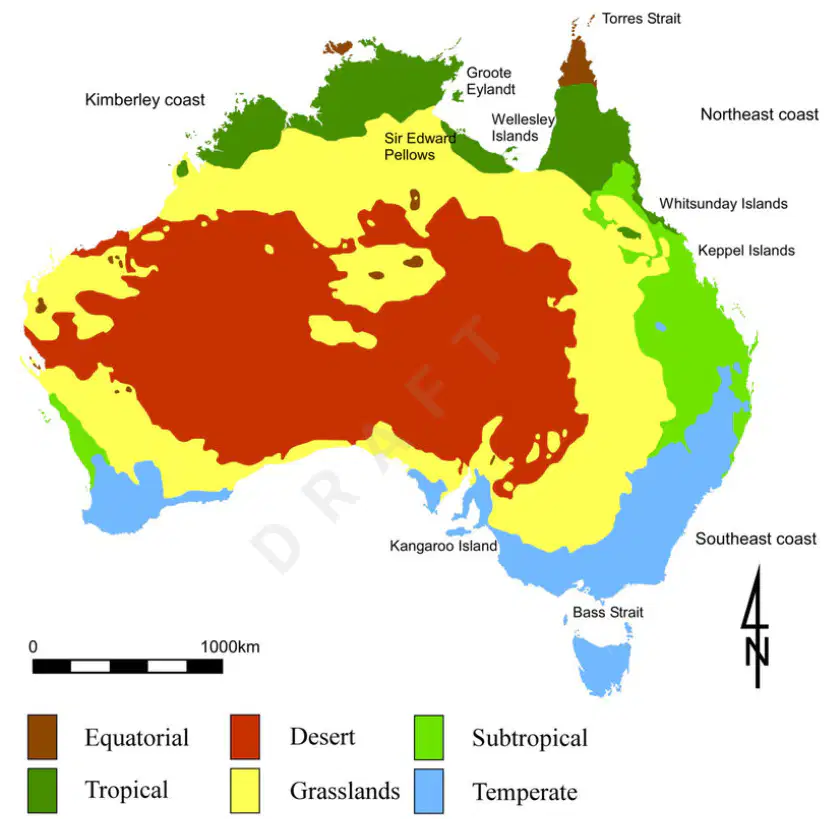
Which climate region covers the largest area in the interior of Australia according to the map?
Desert
Tropical
Temperate
Subtropical
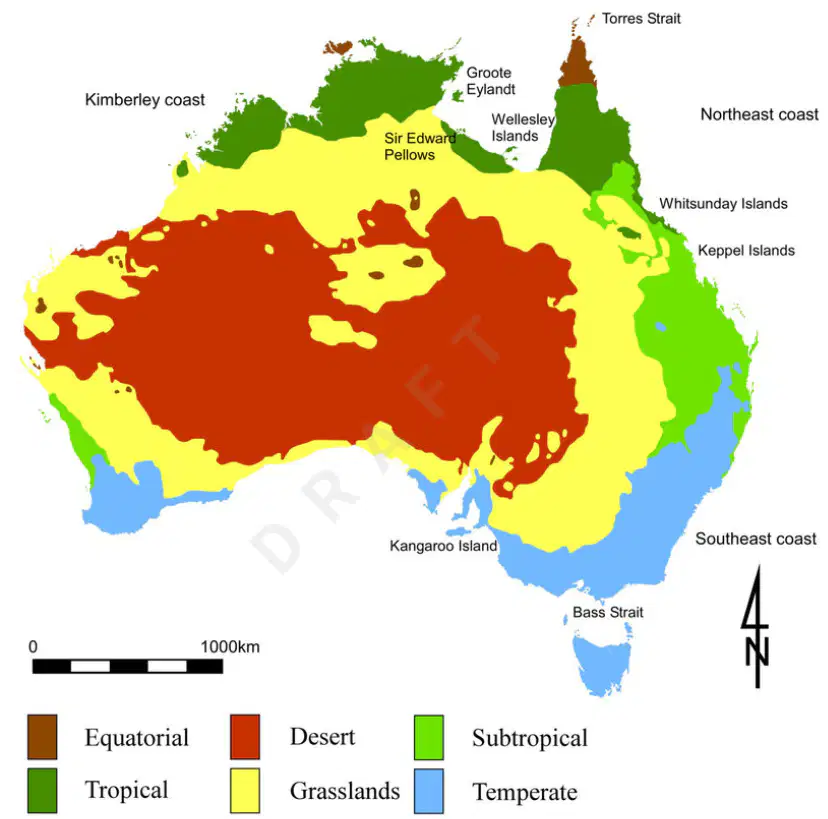
According to the map, which climate region is found along the northeast coast of Australia?
Temperate
Tropical
Desert
Grasslands
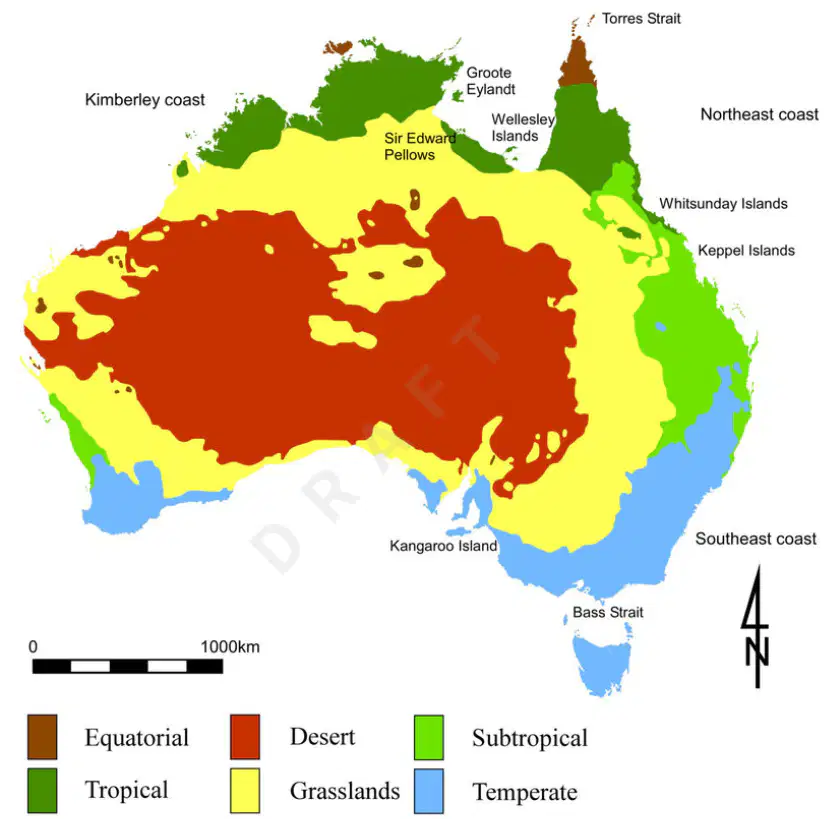
How has the climate regions in Australia influenced the location of urban centers and population distribution?
Urban centers are mostly found in the desert regions.
Urban centers are concentrated along the Eastern and Western coast.
Urban centers are evenly distributed across all climate regions.
Urban centers are mostly found in the grasslands.
The Himalayan mountains create a natural border between --
India and the Middle East
India and the rest of Asia
India and Russia
India and Europe

Using the map of China, what geographical feature is MOST associated with the distribution of major cities shown?
Mountains
Plains
Access to Woodlands
Access to Water
Two human geographic features that helped modern day Australia develop into a strong economy are...
There is a clear pattern of conformity to dominant Australian cultural practices.
Multiculturalism has allowed for the blending of ideas
Migration to Australia has been in decline since 1945.
Australian law encourages segregation of groups.
Migration has greatly affected the culture and new ideas of Australia.
Read the three statements below.
• The Japanese rely on the oceans surrounding the nation for food.
• The Chinese utilize terrace farming in many areas of the country.
• Irrigation systems are widely used throughout India.
Which of the following conclusions can be drawn based on these statements?
Systems of irrigation are used by many civilizations to improve agricultural production.
People have adapted to meet the challenges of building a civilization
Many Asian nations suffer due to a lack of natural resources.
Limited access to water has hindered Asian development.
In which of the following two ways has British colonization affected the culture of Australia?
The British adopted the aboriginal system of land management.
The British imposed European practices such as clearing land for farms and ranches.
The British learned over 250 aboriginal languages.
The British allowed aboriginal people to continue their traditional practices without interference.
The native languages of Australia decreased significantly
What is a traditional economy?
Basing your economy on traditional customs and beliefs
Basing your economy on modern day economics
Having your economy focused on producing weapons
By relying solely on fishing.

What is not true about the city of Shanghai?
The city has been isolated and cut off from trade for the past 500 years
The city has never been isolated to trade for 500 years
The city was where the Chinese army delayed the Japanese army during WWII
Shanghai is an international city, with people from all over the world
Pearl Harbor was bombed by the Japanese on ______
December 7, 1941
December 11, 1941
December 24, 1941
January 2, 1942
Japan began to take over other countries because
they wanted the raw materials for industrialization
they had too big a population to fit in their own country
they wanted to explore the world
they believed their gods told them to
What lead to the surrender of Japan and the end of WWII in the Pacific?
US dropped atomic bombs on 2 Japanese cities.
Russia defeated the Japanese in North Korea.
Japan dropped atomic bombs on Pearl Harbor Naval base.
United States agreed to help rebuild Japan
The aim of the American intervention in Korea was to:
contain the spread of communism and liberate Korea
support the North Korean government
establish a new government in Japan
expand American territory
Which one of these is the Australian flag?



