Worksheets
SCIENCE FINAL
Total questions: 22
Worksheet time: 25mins
What is taxonomy?
The science of classifying and naming organisms
The study of animal behavior
The process of photosynthesis
The measurement of atmospheric pressure
Which of the following lists the levels of classification from the broadest to the most specific?
Kingdom, Phylum, Class, Order, Family, Genus, Species
Species, Genus, Family, Order, Class, Phylum, Kingdom
Phylum, Kingdom, Class, Order, Family, Genus, Species
Order, Family, Genus, Species, Kingdom, Phylum, Class
What is the main difference between prokaryotes and eukaryotes?
Prokaryotes do not have a nucleus, while eukaryotes do
Prokaryotes are multicellular, while eukaryotes are unicellular
Prokaryotes perform photosynthesis, while eukaryotes do not
Prokaryotes are only found in water, while eukaryotes are only found on land
What is the scientific name of the wolf?
Canis lupus
Felis catus
Ursus arctos
Panthera leo

Who are the primary consumers in the food web?
Grasshopper, mice, rabbit
Foxes, owls, birds
Carrots, grasses, grains
Wolves, lions, tigers
Which of the following lists the planets in order from closest to the Sun to furthest away?
Mercury, Venus, Earth, Mars, Jupiter, Saturn, Uranus, Neptune
Venus, Mercury, Earth, Mars, Jupiter, Saturn, Uranus, Neptune
Earth, Mars, Mercury, Venus, Jupiter, Saturn, Uranus, Neptune
Mercury, Earth, Venus, Mars, Jupiter, Saturn, Uranus, Neptune
What is the main force that governs the motion within the solar system?
Gravity
Magnetism
Friction
Electricity

Which planet’s orbit would be the least affected by the Sun’s gravitational pull, based on its distance from the Sun?
Planet A
Planet B
Planet C
All are equally affected
What does it mean for a planet to be in the "habitable zone"?
It is the closest planet to the Sun.
It is at a distance from its star where temperatures allow for liquid water.
It is the largest planet in the solar system.
It is the farthest planet from the Sun.

Why might Mars have the closest conditions to Earth, according to the diagram?
Mars is in the habitable zone at a similar distance as Earth, making it likely to have the right temperature for water and life.
Mars is the largest planet in the solar system.
Mars is the closest planet to the Sun.
Mars has the strongest gravitational pull.


What is the correct scientific format for writing the name of a species?
species Genus (italicized)
Genus Species (all capitalized)
SPECIES genus
Genus species (italicized)
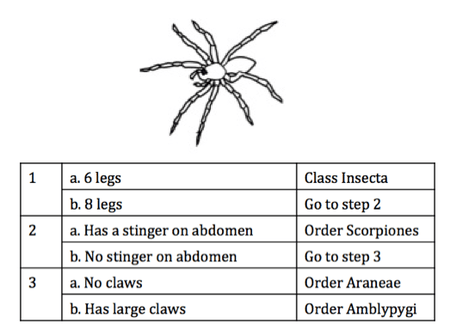

arachnids and insects?