
Font size
 Worksheets
2nd Sem. Review: One Quiz to Rule them ALL
Total questions: 500
Worksheet time: 13hrs 49mins

What do all waves transfer?
Matter
Heat
Electricity
Energy

Which of the following can waves transfer energy through?
solid
liquid
gas
empty space
all of the above
What are the two types of waves?
longitudinal and transverse
sound and light
wavy & slinky

What is the number of complete waves passing a fixed point in a given amount of time?
Amplitude
Intensity
Wavelength
Frequency

What is the frequency of this wave? You must count the number of complete waves.
1 Hz
5 Hz
10 Hz
What is frequency measured in?
Milliseconds
Miles
Hertz
Kilograms
a wavelength refers to...
how long it takes for the wave pattern to repeat.
how strong a wave is.
how long a wave is.
how much energy a wave has.

Which type of waves have the longest wavelength?
Visible light
Radio waves
X-rays
Gamma-Rays

Wavelengths are usually measured in ....
seconds
Hz
inches
meters

Shorter wave lengths can carry more energy. Which of these probably carries the MOST energy:
Infrared light
Visible light
X-rays
UV light

What does #1 represent?
Period
Frequency
Wavelength
Amplitude

What kind of wave is pictured?
compressional wave
transverse wave
sound wave
mechanical wave
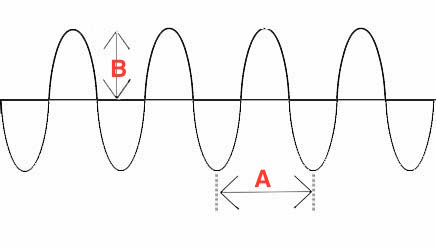
What property of this wave is represented by the letter "A"
amplitude
crest
trough
wavelength

What is the disturbance involving energy transfer from one place to another?
Medium
Amplitude
Wave
Vibration


The diagram shows a cartoon of a sound wave produced while a student is speaking.
What happens to the sound wave when the student speaks louder?
The amplitude increases
the wavelength will double
the speed will increase
the amplitude will decrease
________ travels through solids fastest because the molecules are closer together
sound
light
The distance from the wave crest to the equilibrium Level
Wave
Amplitude
Wave Crest
Wave Trough
Wave Height
The highest part of a wave.
Wave
Amplitude
Wave Crest
Wave Trough
Wave Height

The lowest part of a wave.
Wave
Amplitude
Wave Crest
Wave Trough
Wave Height

distance between two consecutive wave crests or between two consecutive wave troughs.
Wave
Amplitude
Wave Length
Wave Trough
Wave Height
The part of a wave that the particles are more pushed together.
Compression
Rarefaction
Particles
Wave
The part of a wave that the particles are pulled apart
Compression
Rarefaction
Particles
Wave

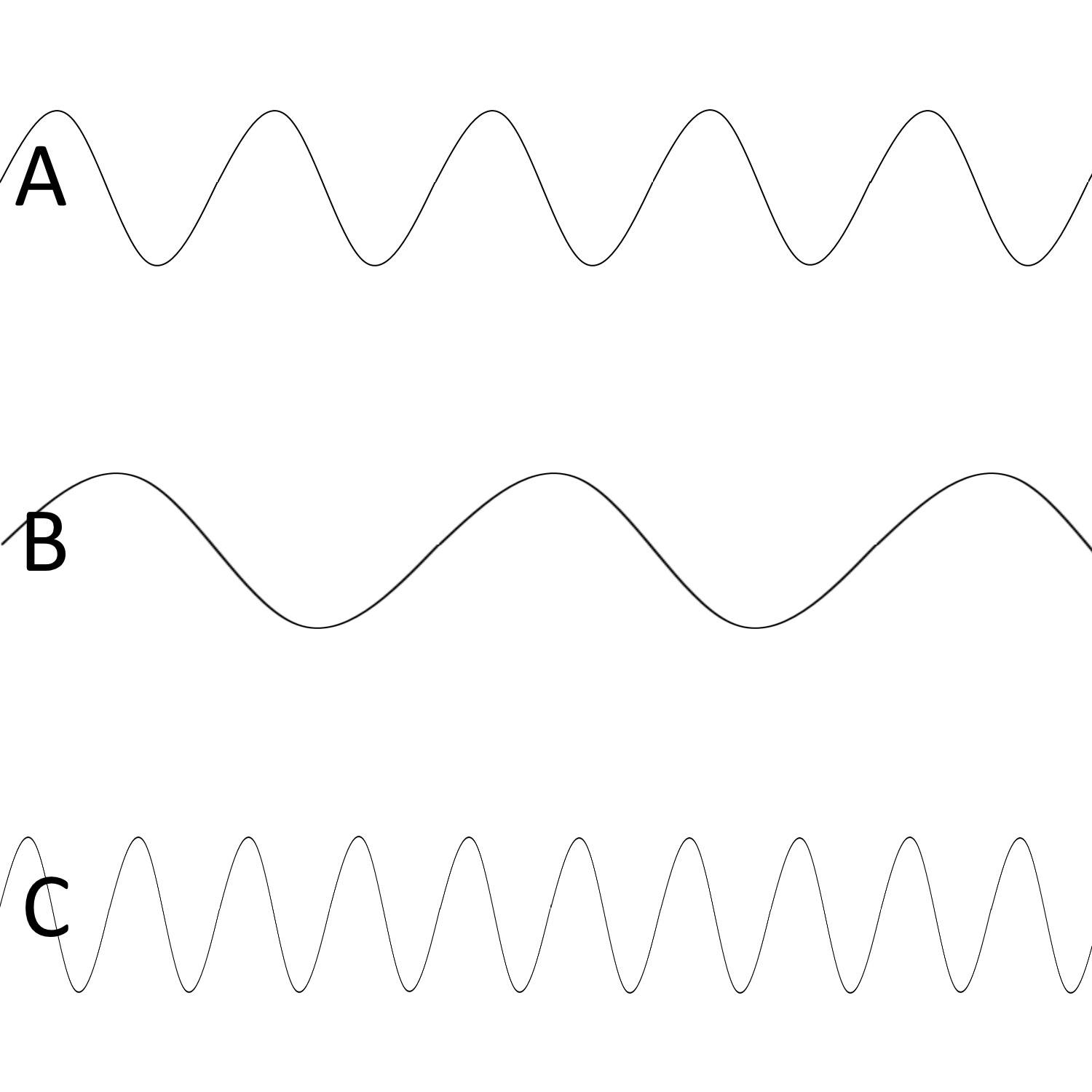
Which transverse wave has the highest frequency?
1
2
3
4
Which diagram shows the wavelength of a wave?


If the wavelength of a wave increased, what would happen to the frequency?
decrease
increase
stay the same
A wave that can travel through matter and empty space is a:
electromagnetic wave
longitudinal wavy
transverse wave
mechanical
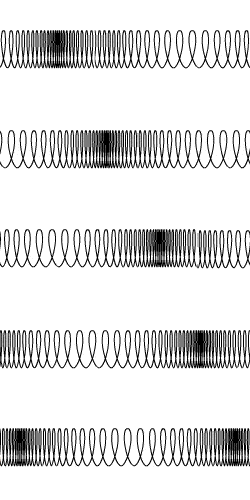
What type of wave is this?
Longitudinal
Transverse
Electromagnetic
x ray


You can't hear sounds in outer space because there is no
medium
light
energy
heat
Which are properties of a mechanical wave?
can be longitudinal or transverse
can move through outer space
must have matter to move
carries energy
What determines what color of light your eyes perceive?
The frequency of the wave
The amplitude of the wave
The intensity of the wave
The type of wave it is
Isaac Newton found that sunlight is a mix of different wavelengths Which evidence supports this?
light is white.
light is found all over the universe
light separates into colors in a prism
light can travel very rapidly through space
A wave is traveling in one medium. Then it begins traveling through another medium and changes direction. What happened?
The wave was absorbed
The wave was transmitted
The wave was refracted
The wave was reflected

Which wave has the most energy?
Wave 1
Wave 2
Wave 3
Wave 4

Which of these waves would be the dimmest?
Wave 1
Wave 2
Wave 3
Wave 4
What makes the sky blue?
Light refracting off the atmosphere
Light reflecting the color of the oceans
The atmosphere absorbed all the colors but blue
The atmosphere transmits the blue light

Identify B
Wavelength
Crest
Amplitude
Trough
If you increase the energy put into a wave how will the change the wave?
Change the crest
Change the trough
Change the type of wave
Change the frequency
What wave has particles that move perpendicularly to the direction of the wave?
Transverse waves
Longitudinal waves
Sound waves
Light waves

What is Letter A?
Crest
Wavelength
Amplitude
Frequency

What is letter B?
Crest
Wavelength
Trough
Frequency

Which letters are pointing to the Amplitude?
B
E
C
F
The wavelength is measured from crest to trough.
True
False
A wave is a repeating back and forth pattern of motion.
True
False
Waves carry matter, not energy.
True
False
A wave has a frequency(f) of 2 waves per second and a wavelength(w) of 5 cm. What is the velocity of the wave? HINT: V = f x w
10cm/s
7cm/s
3cm/s
Not possible
The sound is now a higher note/tone. What changed?
increase in amplitude
decrease in amplitude
increase in frequency
decrease in frequency
The volume of the sound just got softer. What happened to the wave?
increase amplitude
decrease amplitude
increase frequency
decrease frequency
When the frequency changes on a wave, what other property also changes?
amplitude
wavelength
crest
node
A faster frequency has _________ energy.
more
less
the same amount
none
Three different objects are shown in the pictures below. Which of the following refracts light?


Three different objects are shown in the pictures below. Which of the following absorbs all colors of light?
Three different objects are shown in the pictures below. Which of the following reflects all colors of light?
Light from the Sun transfers solar energy to the Earth system. Sunlight travels to Earth as _______ waves.
electromagnetic
seismic
sound
water
Which of the following situations would cause light to refract?
traveling through a vacuum
moving from air to water
moving through the air
passing from one glass block to another
Which of the images best describes the reflection of light?


What is the correct formula for wave speed?
Wave speed = frequency x wavelength
Wave speed = amplitude x wavelength
Wave speed = amplitude x period
Wave speed = frequency x period
As wavelength decreases, the crests of the wave:
become wider
become shorter
get closer together
get farther apart
If a wave has a long wavelength, it will have __________ energy.
High
Medium
Low
If a wave has a short wavelength, it will have __________ energy.
High
Medium
Low
If a wave has a high frequency, it will have __________ energy.
High
Medium
Low
If a wave has a high amplitude, it will have __________ energy.
High
Medium
Low

Which of the following statements can be concluded from the table?
X-Ray waves have a lower frequency than infrared waves.
Microwaves have a smaller wavelength than visible light.
The speed of all electromagnetic waves are equal.
The frequency and wavelengths are equal for each type of radiation.
A wave that vibrates the medium in the same direction it travels
transverse
longitudinal
latitudinal
wave
An area where coils are far apart
rarefaction
raresteak
rarefind
faction
An area where coils are close together
compression
compressor
conductor
composer
Measurement of highest point (or lowest point) in a wave when compared to resting position.
Amplitude
Frequency
Wavelength
Medium

How would part A on this picture be labeled?


At which point is the Rarefaction located?
A
C
D
E
F
At which point is the Crest located?
A
C
D
E
F
At which point is the Wavelength located?
A
C
D
E
F
At which point is the Trough located?
B
D
E
F
G
At which point is the Compression located?
B
D
E
F
G
At which point is the Amplitude located?
B
D
E
F
G

What are the parts of the wave equation?
(Check all that apply)
f = Frequency
v = Velociraptor
λ = Speed
λ = Wavelength
v = Velocity

What is the wave equation?
λ = 2 + 5
v = λ x f
λ = wave + speed
v = y + f
f = h x v
When a crest interferes with another crest to produce a larger amplitude crest what is this process called?
Constructive interference
Destructive interference
When a crest and crest or trough and trough of two different waves interact you _________ the amplitudes.
add
subtract
multiply
divide
What is the process called when a crest interferes with a trough to lessen or cancel the amplitude of a wave.
Constructive interference
Destructive interference
What type of waves are produced whenever two waves of identical frequency interfere with one another while traveling in opposite directions along the same medium, & appear to not move?
Standing
Constructive
Destructive
Transversal
True or false: constructive interference can make sounds much louder.
True
False


The bending of waves around an obstacle
refraction
diffraction
reflection
resonance
Process by which an object is made to vibrate by absorbing energy at it natural frequencies
interference
frequency
standing wave
resonance
medium
a point in a standing wave at which the interfering waves always cancel
node
compression
mechanical wave
rarefaction

In the diagram which letters represent the nodes
A B C
A C E
B D
B D E
A C D

How many antinodes does this standing wave have?
5
6
7
8

What is part B?
Crest
Trough
Rarefaction
Compression
Reflection

What is represented by letter A?
Crest
Trough
Rarefaction
Compression
Wavelength
What is part C?
Crest
Trough
Rarefaction
Compression
Wavelength
What do we call it when a wave changes directions because it is spreading out into a larger space after passing a barrier or through a small opening?
Refraction
Reflection
Rarefaction
Diffraction
Interfraction
What do we call it when a wave encounters a substance & some or all of its energy is transferred into the substance?
Refraction
Reflection
Rarefaction
Diffraction
Absorption
Which statement is true about visible light?
Humans cannot see any light from the electromagnetic spectrum.
Visible light makes up a small part of the electromagnetic spectrum.
Visible light has a frequency equal to that of gamma rays.
Humans can see visible light only as white light.
This occurs when light bounces off a surface
reflection
refraction
absorb
scatter

White light is made up of all of the colors of the rainbow
True
False
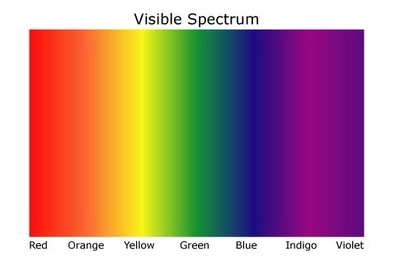
What color of light has the longest wavelength?
red
green
yellow
violet
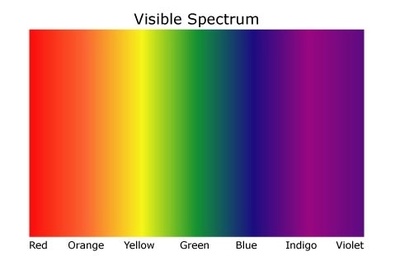
What color of light has the shortest wavelength?
red
indigo
yellow
violet

A student places a pencil in a glass of water and observes that the pencil appears to be broken. Which of these provides the best explanation for why the pencil appears broken?
The pencil absorbs all the light rays that hit it.
Water reflects light rays away from the pencil.
Light rays are bent by the water in the glass
The surface of the water reflects light rays.
What is the saying that can help you remember the order of the visible spectrum?
ROYGBIV
RYOBIVG
ROYBVIG
RIBYOVG
Which color REFLECTS all wavelengths of light?
Red
Black
White
Pink
Which color ABSORBS all wavelengths of light?
Red
Black
White
Pink
In the electromagnetic spectrum, which of the following is true of waves with long wavelengths?
They have high frequencies
They have low frequencies
They have moderate frequencies
They have inconsistent frequencies
The full range of energy in sunlight can be described as
ATP
Visible Light
Electromagnetic Radiation
Ultraviolet Light
What part of the electromagnetic spectrum can be seen by humans?
Visible Light
Microwaves
Ultraviolet Waves
Infrared Waves
A rainbow is sunlight disbursed into a spectrum of colors ranging from red to violet. When you are facing a rainbow, the sun is always behind you, the rain is in the direction of the rainbow, and the arc of the rainbow is directly opposite the sun. Which statement best describes the formation of a rainbow?
Tiny water droplets absorb the light waves that strike them disbursing the light into colored arcs.
Light travels faster after the rain due to increased moisture in the air.
Light in absorbed by the tiny water droplets in the atmosphere.
The water droplets in the air refract the light waves separating the light into colored arcs.
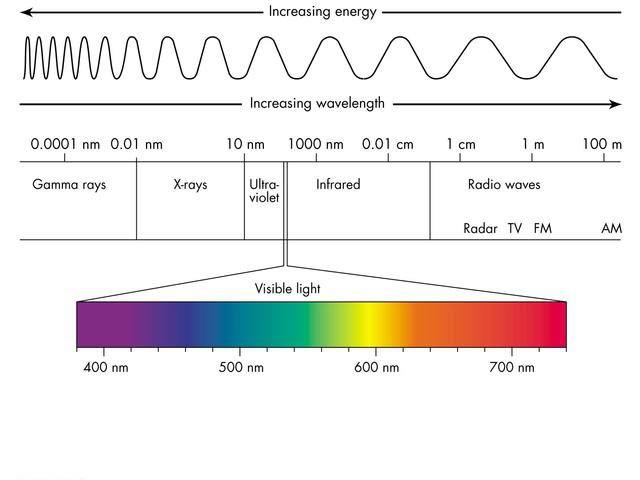
What is the correct order of the visible light spectrum starting with the longer wavelength?
Red, yellow, orange, blue, violet, indigo
Violet, indigo, blue, green, yellow, orange, red
Green, yellow, blue, indigo, red, orange
Red, orange, yellow, green, blue, indigo, violet
The musical note A above middle C has a frequency of 440 Hz. If the wavelength is measured to be 0.80m, what is the speed of the wave?
343 m/s
350 m/s
550 m/s
352 m/s
What is the wavelength of a wave with a speed of 25 m/s and a frequency of 50 Hz?
6250 m
.5 m
75 Hz
75 m
V=fλ
If the frequency is 5 Hz and the wavelength is 2 m, then what is the wave's velocity?
10 m/s
5/2 m/s
2/5 m/s
7 m/s
V=fλ
If the wave velocity is 20 m/s and the wavelength is 2 m, then what is the frequency?
10 Hz
40 Hz
0.1 Hz
Which cell is in charge of creating color in image captured by the eye?
Rod cell
Liver cell
Cone cell

What do you call a push or pull on an object?
Chemical
Force
Magnet
Which force holds us to earth's surface?
Friction
Mass
Gravity
Which force would be created by the rubbing of 2 surfaces together?
Friction
Mass
Gravity
The amount of matter in an object is known as?
Mass
Weight
Volume
At which location would your mass be the greatest?
Earth
Moon
Your mass stays the same everywhere.
Gravity affects which of the following?
Mass
Weight and Mass
Weight
Anything that has mass and takes up space.
mass
matter
volume
Gravitational force exerted on an object.
gravity
weight
mass
Objects in motion tend to stay in motion, objects at rest tend to stay at rest, unless acted upon by a force.
gravity
friction
inertia

To make an object move you must first apply ---
an opposing force
an unbalanced force
a stationary force
a vertical force
A student pushes against a wall with 20 N of force and the wall does not move. In this situation, the wall exerts --
0 N of force
less than 20 N of force
20 N of force
more than 20 N of force
An object's change in position relative to a reference point.
work
force
motion
energy

If the man and the ball travels 90 m in 9 seconds, what is their average speed?
10 m/s
180 m/s
99 m/s
10 meters

This game of tug of war is an example of _________ forces.
unbalanced
balanced
potential
net zero

What will the net force on the soccer ball be?
50 N to the left
50 N to the right
200 N to the left
200 N to the right

What is the net force on the car?
400 N forward (left)
0 N (balanced forces)
200 N forward (left)
200 N backward (right)
7. A car traveling at 90 kilometers/hour when it suddenly stops. The passengers in the car will
continue to move in a straight line and will slide forward in the car.
come to a stop at the same time the car stops
be pushed against the door on the passenger side
be pushed against the door on the driver's side

Person on the left = 45 N
Person on the right = 32 N
What is the net force?
zero N
10 N
77 N
13 N

Which scientist gave us the laws of motion?
George Washington
John Adams
Sir Isaac Newton
Starting point you choose to describe the location (or position) of an object.
Reference Point
Relative Motion
Acceleration
Dimension
Overall force acting on an object when all of the forces on it are combined.
Balanced force
Contact force
Net force
Force
What is the speed formula?
d = s*t
s= time/distance
d= speed/time
s = distance/time
What units is Force measured in?
Grams
Miles
Hours
Newtons
If forces are in the same direction you add all forces together and if they are in opposite directions you will subtract the smaller force from the larger force.
True
False
What type of forces cause objects to move?
balanced forces
unbalanced forces

Examine the image of the forces acting on a cart. Which additional force can be applied to make the cart move in the opposite direction? (Think carefully about each option!!!)
60 N towards the west
40 N towards the west
40 N towards the east
60 N towards the east
A student walks along a sidewalk on his way to school. What is true about this scenario?
The Earth exerts a greater force on the student than the student exerts on the Earth.
The Earth exerts a force on the student, but the student exerts no force on the Earth.
The Earth and the student both exert equal forces on each other.
The Earth exerts no force on the student, but the student exerts a force on the Earth.
If Bob pushes a box north with 40 N of force and Bill helps by pulling the box north with 20 N of force, what is the net force acting on the box?
20 N
60 N
A student performs an investigation by following a procedure, as shown.
The student observes that the card quickly moves out from under the coin, and the coin falls into the cup rather than moving along with the card, as shown.
Which statement explains the observation?
Inertia causes an object to fall to the ground.
An object at rest has the tendency to remain at rest.
Inertia causes an object to change its speed and direction.
An object maintains its position regardless of the force applied to it.
Acceleration is the rate at which velocity changes.
True
False
Which of the following causes people in a moving car to continue moving forward, even when the car stops?
inertia
gravity
friction
tension
A student applies forces to a cart. Which model accurately shows a cart that will remain stationary?


Which of the following is an example of unbalanced forces?
a soccer ball sitting on a field.
a hanger hanging on a rod
a ball thrown up that comes back down.
a parked bus.
A force that occurs when two objects do not physically touch each other
Contact Force
Non-Contact Force
A force that occurs when two objects physically touch each other
Contact Force
Non-Contact Force
If an equal force acts on each of the following objects, which will have the greatest acceleration?
a golf ball (46 g)
a soccer ball (400 g)
a football (450 g)
a baseball (140 g)
Which of the following objects will experience the least gravitational force?
a feather
a stone
a book
a metal ball
If two arm wrestlers exert a force on each other's hands, and the hands don't move, the forces moust be _______________.
balanced
unbalanced
weak
strong
According to the third law of motion, for every action there is ..........
a force sending is backward
an equal and opposite reaction
a greater force pushing on it
a movement in all directions
True or False: Newton’s 2nd Law of motion states that if net force is used on an object, acceleration will happen
True
False
A car is moving at 10m/s, it is using a force of 2730N. What is its mass?
273 kg
27300 kg
0.0036 kg
None of these are correct
What happens when you kick a ball?
The ball exerts a force back to you
The ball doesn't move
Your foot exerts a force on a ball
What type of force is gravity?
A contact force
A non-contact force
A mechanical force
An electromagnetic force
What is inertia?
The tendency of an object to resist changes in its motion
The speed of an object in motion
The force that pulls objects to the ground
The force that moves objects in a circular path
When mass is 1600kg and acceleration is 5m/s2, what is force?
8000 N
320 N
0.003 N
The smaller the mass you have, the (a) force you need to change its motion.
When mass is 10 kg and acceleration is 2 m/s2, what is force? HINT: F = ma
20 N
0.2 N
5 N
The equation for Newton’s 2nd Law is
M = F/A
A = F/M
M = A/F
True or False: Newton’s 2nd Law of motion states that if net force is used on an object, acceleration will happen
True
False
Every action has an equal, but opposite reaction
Newton’s 1st Law of Motion
Newton’s 2nd Law of Motion
The Law of Inertia
Newton’s 3rd Law of Motion
What will have more force?
Mr. Foster dropped all of these things from the same height at the same time.
a marble
a baseball
a bowling ball
a beach ball

What does letter A represent
object providing force
object receiving force
gravity
friction
What does letter C represent
object providing force
object receiving force
gravity
friction
What does letter D represent
object providing force
unbalanced force
gravity
friction

A 50 kg skater pushed by a friend accelerates 5 m/sec2. How much force did the friend apply?
The classes are playing tug of war. Ms. Knight's room pulls to the left with a force of 45 N. Mr. Foster's room pulls to the right with a force of 50 N. What is the net force? And who won?
5N right. Foster's Class won.
5N Left. Knight's class won.
95N and Foster's class won.
95N and Knight's class won.
Check all the options that have an unbalanced force.
A plate sitting on the table.
A person rocking back & forth in a rocking chair.
A ball accelerating down a ramp.
A train traveling at a steady 40 mph.
Leaning against a wall.

How would you solve for the acceleration of a 20 kg box being moved with 50 N?
50N x 20 kg
20 kg / 50N
20 kg + 50N
50N / 20 kg

What is the net force being applied to the crate?
10 N to the left
70 N to the left
10 N to the right
70 N to the right
Check all the examples that demonstrate Newton's 1st Law of Inertia.


How fast would this box be accelerating and in which direction? (Look at the units to decide how to solve)
.67 m/s2 to the left
.67 m/s2 to the right
3.33 m/s2 to the right
3.33 m/s2 to the left

Which law is this demonstrating?
3rd law because they move in opposite directions with the same force.
1st law because the cannon moves slower due to having more mass.
2nd law because the cannon doesn't move until an unbalanced force is applied.
4th law because cannons go boom.
A 9 kg ball is rolling 6 m/s2, so the force applied is ___________ Newtons.
1.5 N
0.67 N

A 4.5 kg tuba is being carried with 18 N so it is accelerating at a rate of ___________ m/s2.
4
81
0.25
A student does an experiment to test Newton's 2nd Law. The student measures the acceleration of each ball after applying 20 N to them. Which ball had the greatest acceleration?

.001 kg

4.8 kg

1.2 kg

2.1 kg
Select what can happen when an unbalanced force is applied.
Increase speed
Stay still
Maintain the same speed
Decrease speed
Change direction
A truck and a car are both broke down on Eagle Parkway. Which one would require the least amount of force to push out of the way and why?
The car, because it has less mass
The car, because it has smaller tires
The truck, because it has more mass
The truck, because it has bigger tires
Which of the following are an example of Newton's 3rd Law of Action-Reaction?
jumping forward off a skateboard that then goes backward
a bowling ball requires more force to throw than a basketball
a rocket taking off by pushing down on Earth to go up
bus riders moving forward in the seat after the bus stops suddenly
What is the mass of a go-cart that is accelerating at 12 m/s2 after being moved by a force of 84 N?
72 kg
7 kg
1008 kg
0.14 kg
A tennis player hits a .04 kg ball so that it accelerates at 80 m/s2. How much force was used to hit the ball?
3.2 N
2000 N
80 N
.0005 N
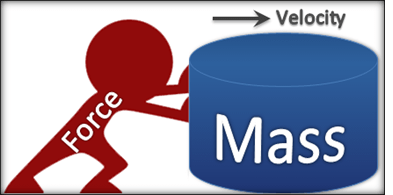
The picture is an example of Newton's...
1st Law
2nd Law
3rd Law

The picture is an example of Newton's...
1st Law
2nd Law
3rd Law
A person’s body is thrown outward as a car rounds a curve on a highway.
Newton's 1st Law
Newton's 2nd Law
Newton's 3rd Law
None of them
What is Newton's 2nd Law?
For every action there is an equal and opposite reaction.
Acceleration depends on two variables, the mass of the object and the amount of force.

The picture shows a spinning water sprinkler.
Water comes through the hose and is sprayed by the sprinkler.
Which principle best explains why the sprinkler spins?
Energy is released when water condenses.
Most substances expand when heated and contract when cooled.
Every action has an equal and opposite reaction.
Solid substances are usually more dense than liquid.

The picture shows a weightlifter holding the barbell over his head.
The force of gravity pulling down on the barbell is 756 newtons.
How many newtons of force are exerted by the weightlifter to hold the barbell up?
No Newtons
756 Newtons
368 Newtons
14767 Newtons

An inflated balloon released from rest moves horizontally.
The law that best explains this event is
Newton's 1st Law
Newton's 2nd Law
Newton's 3rd Law
Law of Gravity

The diagram below shows unequal opposing forces.
Which way will the wagon move?
The cart will move to the right.
The wagon will move to the left.
The wagon will remain stationary.
The wagon will move left and then right and then stop.
Lemonade, coke, and salt water are all examples of _________.
Solutions
Mixtures
Pure Substances
Factors of solubility
A combination of substances that dissolve into one another--they are evenly mixed so that individual parts cannot be seen or separated.
solutions
mixtures
observations

Is Trailmix an example of a Mixture?
Yes
No

Are these Jellybeans an example of a Mixture?
Yes
No
How can we separate a solution?
By freezing it
Melting it.
By heating it so that the solution evaporates.
We can't.

solvent
solute

solvent
solute

The water and oil separate from each other.
Is this an example of a Solution?
Yes
No
This type of mixture has large enough particles that you can see the different types of particles.
Homogeneous
Heterogeneous
Colloid
Solution
A colloid mixture does not have particles large enough to settle to the bottom, but they are large enough to
be filtered out of the solution.
be pulled out by hand.
float to the top.
scatter light waves.
A mixture with such small particles that you cannot see the individual particles.
Suspension
Sublimation
Heterogeneous
Homogeneous
This word means "the same throughout".
Homogeneous Mixture
Heterogeneous Mixture
Suspension Mixture
Compound Mixture
This words means "different throughout".
Homogeneous Mixture
Heterogeneous Mixture
Colloid Solution
Compound Mixture
Which of the following examples is a Heterogeneous mixture?
Tap Water
Beach Sand
Vanilla Cake Mix
Bottle of Cola
Which of the following examples is a Homogeneous mixture?
Tap Water
Beach Sand
Chocolate chip cookie
Mud water
Which of the following examples is a Suspension?
Mud water
Well water
milk
Fog
What is it called when a mixture like muddy water is left alone and the particles settle to the bottom of the mixture?
Suspension
Colloid
Homogeneous mixture
Evaporation
What type of solution would kool-aid be?
Homogeneous
heterogeneous
The solution to all of our problems
Neither

What does this picture represent?
Element
Mixture
Compound

What does this picture represent?
Element
Compound
Mixture

What does this picture represent?
Element
Compound
Mixture

Is salt (NaCl) an element, compound, or mixture?
Element
Compound
Mixture
Combustion
Feels Cold
Melting Ice
Feels Hot
What are TWO descriptions or examples of an endothermic reactions?
Melting Ice
Feels Hot
Combustion
Feels Cold

The table shows the solubility of three different substances in water at the same temperature and pressure. Which of the substances would have the greatest mass dissolved in 100 grams of water at the point of saturation?


A pure substances ________ be broken down into simpler matter using physical methods.
sometimes
can
can not
Homogeneous mixtures are also called _______.
Heterogenous mixtures
Solutions
Problem Solvers
Water
When we made popsicles, & added sugar to room temperature water until the sugar would no longer dissolved, what type of solution did we make?
Dilute Solution
Concentrated Solution
Saturated Solution
Supersaturated Solution
When we added sugar to some warm water from the sink & were able to add more that what the room temperature could hold...what type of solution did we make?
Dilute Solution
Concentrated Solution
Saturated Solution
Supersaturated Solution
A homogeneous mixture has ...
components that are easily seen and sorted.
components that are easily separated by settling filtration.
components that do not separate or are spread out evenly throughout the mixture
a concentration of solute in the mixture.
In a mixture of grape juice, which of these ingredients would be the solvent?
sugar
water
grapes
flavors
Solubility is ...
whether it is a colloid or solution.
how much solvent is in a solute.
how the particles in a solution react to light.
how much solute will dissolve in a solvent.
Mixtures that do not blend smoothly throughout and the individual substances remain distinct
Heterogeneous Mixture
Homogeneous Mixture
Solution
Miscible
A heterogeneous mixture in which the particles will settle out if left undisturbed
Colloids
Suspensions
Miscible
Immiscible
True or False. In a mixture the chemical properties of each substance are lost, and new chemical properties form
True
False
Classify the following as either a heterogeneous or homogeneous mixture: Apple juice (no pulp)
(a)
A green powder is heated & a gas is given off while it turns to a black solid. This describes
Physical Change
Chemical Change
Change in State
Change in Temperature
Which of the following could indicate that a chemical change took place?
Change in color
Production of Energy
Formation of Gas
All are correct
The formation of a solid when two liquids combine is called?
Solidification
Freezing
Precipitate
Solubility
The difference between a Physical change and a Chemical change is…
Physical change is only a change to the outside appearance.
Chemical change is when matter is changed into something new.
Atoms are rearranged in chemical changes & not in physical.
All are correct.
What does a chemical change result in?
A change in state of the substance (ex. liquid to solid)
A change in texture of the substance.
A change in the way atoms are bonded to each other.
A change in the appearance of the substance.

Identify what type of change happening in the picture below...
Chemical Change
Physical Change
Endothermic Reaction
Exothermic Reaction

Identify what type of change happening in the picture below...
Chemical Change
Physical Change
Endothermic Reaction
Exothermic Reaction

Identify what type of change happening in the picture below...
Chemical Reaction
Physical Change
Change in State
Change in appearance only
If the chemical properties of a substance remain unchanged & the appearance or shape of an substance changes it is a...
Chemical Change
Physical Change
Both a physical and chemical change.
Neither a physical or chemical change.
Which of the following is an example of a physical change?
A glass falling and shattering on the floor.
Baking a birthday cake.
Burning a piece of paper.
Baking soda and vinegar mixing together.
When a new substance is formed with different properties than the original substance it is called a...
Chemical change
Physical change
Change in State
Change in appearance only.
Which is not a clue that could indicate a chemical change has occurred?
Change in color
Change in shape
Release of energy
Formation of an odor
During Chemical Reactions, the new substances created are called?
Precipitate
Corrosion
Reactants
Products
During Chemical Reactions, the substances that are used are called?
Precipitate
Corrosion
Reactants
Products

Is this an example of a physical or chemical change?
physical
chemical

Is this an example of a physical or chemical change?
physical
chemical

Is this an example of a physical or chemical change?
physical
chemical

Is this an example of a physical or chemical change?
physical
chemical

Is this an example of a physical or chemical change?
physical
chemical

Is this an example of a physical or chemical change?
physical
chemical

Is this an example of a physical or chemical change?
physical
chemical

Is this an example of a physical or chemical change?
physical
chemical

Is this an example of a physical or chemical change?
physical
chemical

Is this an example of a physical or chemical change?
physical
change
Which of the following is NOT a physical change?
Crushing a can
boiling water
shredding paper
burning paper
Which of the following is NOT a sign of a chemical change?
formation of a precipitate
unexpected color change
unexpected temperature change
change in state of matter
bubbles can be an indication that a reaction has happened and produced a gas, but not always. Which of the following scenarios involve bubbles resulting from a chemical change?
Mixing vinegar and baking soda
Pouring a glass of soda
Boiling water
All of these are examples of chemical change
A chemical reaction ...
forms a new substance
makes a mixture of several substances
always involves flames
all of these choices are true
Which of the following are clues that chemical change may have occurred?
Color change
Bubbles
Pressence of an odor that wasn't there before
All of these could indicate chemical change
Why does the temperature change during a chemical reaction?
Because we have to heat up the chemicals before they can react
Because the reaction will release or absorb heat when bonds are broken, formed or rearranged
Because all reactions produce flames, which are hot
Because electrons keep changing energy levels
Color change can indicate a chemical change, however, it could also be caused by a physical change. In which scenario is the color change caused by a chemical change?
Paint is scraped off of an old cabinet changing the cabinet's color from green to brown
Two clear solutions are mixed and a yellow solid forms
Cream is added to black coffee changing the color to a light brown
All of these are examples of chemical change

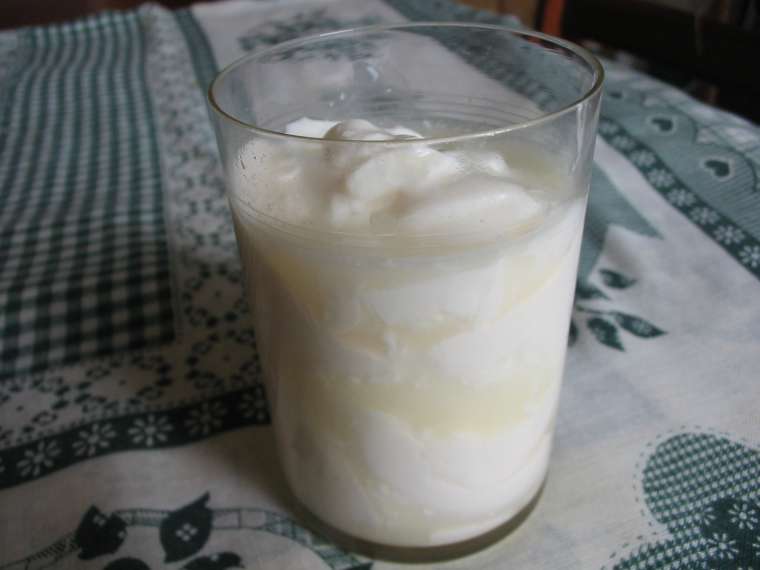


Is melting butter for popcorn a chemical or physical change?
chemical
physical

When you break a cracker into pieces it is a...
Chemical change
Physical change

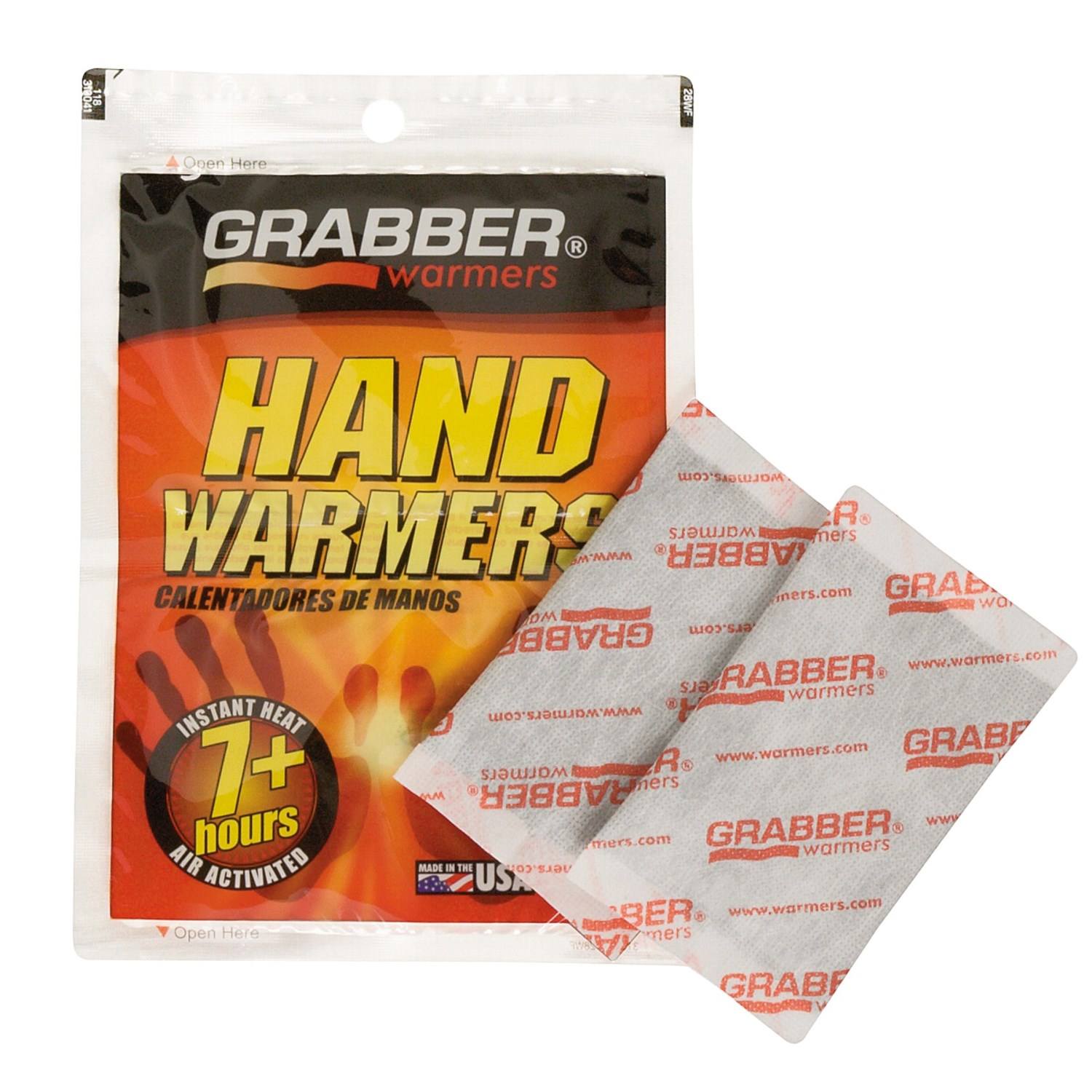

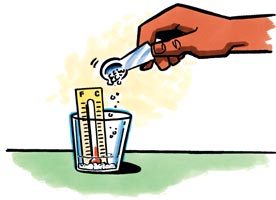
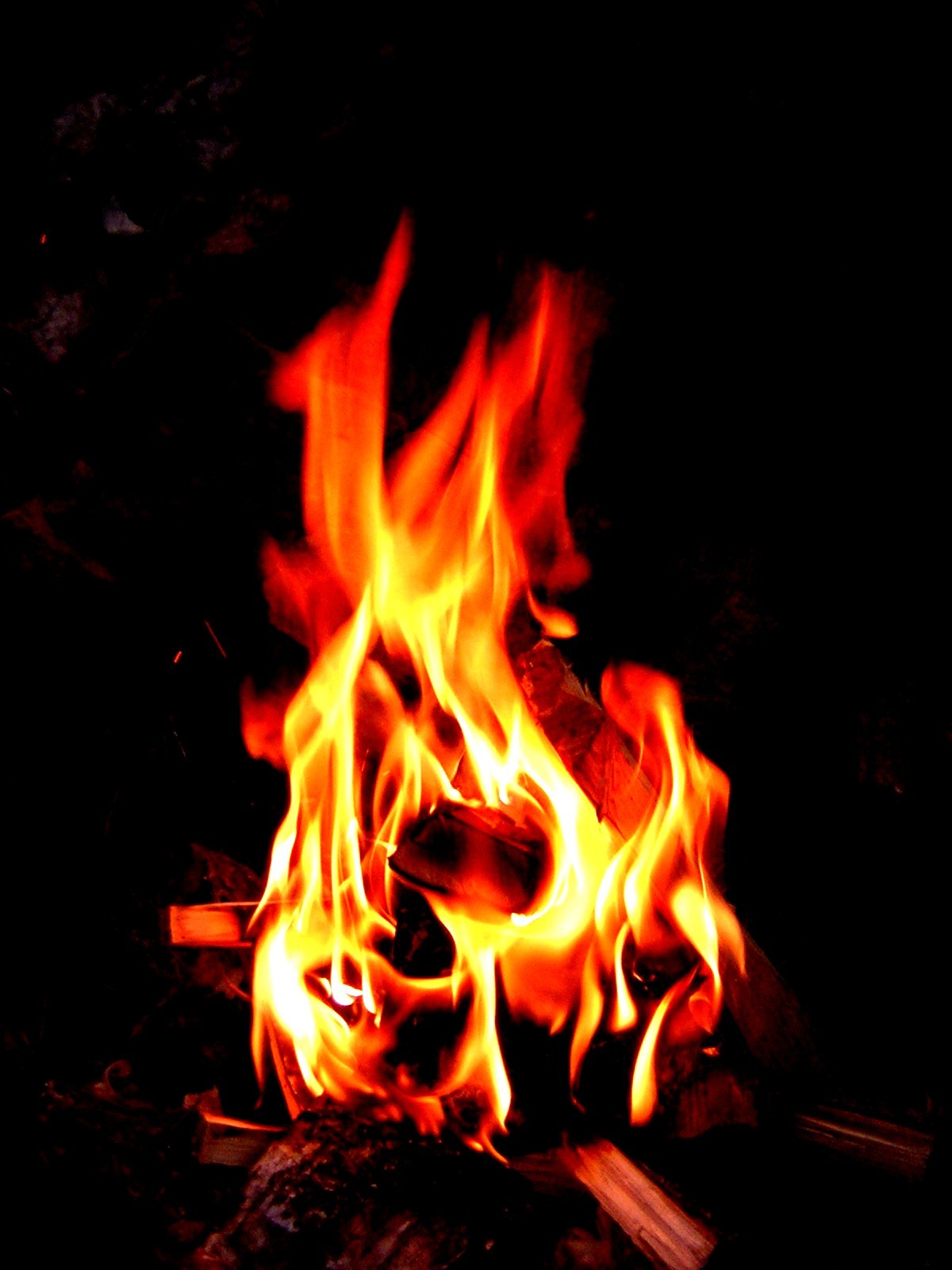
_____ reactions usually feel hot!
endothermic
exothermic
____ reactions usually feel cold.
endothermic
exothermic

Which type of reaction is shown by the graph?
exothermic
endothermic
nuclear
allergic
What would likely happen if you were to touch the flask in which an exothermic reaction was occurring?
The flask would feel cooler
The flask would feel warmer
The flask would feel the same before and after a reaction
None of the above
What instrument would you use to detect an endothermic or exothermic reaction?
triple beam balance
ruler
thermometer

What type of reaction is illustrated by the graph?
exothermic
endothermic
nuclear
Cold Pack
Endothermic
Exothermic
In an endothermic reaction, heat is ...
taken in
given out
5. When ammonium chloride dissolves in water the temperature falls. The type of energy change is described as?
exothermic
activated
decomposition
endothermic
A student mixed two chemicals to allow them to react. The temperature before the reaction was 25 ° C. The temperature after the reaction was 18° C. Which of the following is true?
It is an exothermic reaction
It is an endothermic reaction
H2SO4
How many Aluminum atoms are in Al2O3?
The total number of atoms in Na₂CO₃
Calculate the number of Oxygen atoms in Al(OH)3
1
2
3
4
How many atoms are in 3Al₂(SO₄)₃
51
30
Which choice matches the number of atoms for: 4CF2Cl2
C = 4, F = 4, Cl = 2
C = 1, F = 8, Cl = 8
C = 4, F = 8, Cl = 8
C = 1, F = 4, Cl = 8
How many total atoms are in the compound CH4?
5
4
6
8
Calculate the total atoms for: H2C2H3O2?
1
2
9
4
A subscript will tell you the number of atoms of the element ___ it
after
before
A subscript behind a set of parentheses belongs to
the element right before it
all the elements within the parentheses before it
all the elements in the parenthese after it
the element right after it
How many atoms of carbon are in this compound?
2H2(C3O4N5)2
3
12
6
10
What are the total number of atoms for:
H3O5(CaCl7)2
15
20
24
34
How many total atoms in the following equation?
ClN6Fe2
6
8
10
9
Identify the Coefficient.
3BeH5Si8
5
3
1
8
Identify the subscripts.
4Fe5K2
4
5
2
1
How many total atoms in the following equation?
3He2Ag5
2
21
24
5
How many atoms of Hydrogen are in this equation?
5Cl2H5
10
2
5
25
How many atoms of Iron in the following equation?
C2HAu5
2
0
9
7
How many total atoms in the following equation?
2(H2)3
2
6
7
12
How many Nitrogen atoms are in (NH₄)₂N2CrO₄?
2
4
8
16
Which one is the coefficient 4H2O?
4
H
2
O
three hydrogen (H)
one sulfur (S)
four oxygen (O)
How many atoms are in one formula unit of Zn(C2H3O2)2 ?
8
5
25


Fe + O2 -> Fe2O3
Mg + __HCl ---> MgCl2 + H2
_CF4 + _Br2 -- _CBr4 + _F2
_CH4 + _O2 --> _CO2 + _H2O
_Al +_HCl --> _H2 +_AlCl3
Which is the Law of Conservation of Matter?
matter cannot be created or destroyed, it only rearranges
matter can be created but it cannot be destroyed, it never rearranges
matter can be destroyed but it cannot be created, it usually just rearranges
matter is an unproven theory created by Hans Geiger
_ H2 + O2 -> 2 H2O
2 Na+ _ Cl2 -> 2 NaCl

Identify the Reactants in this equation.
A
B
The tendency for a material to oppose the flow of electrons is _____.
current
resistance
conductor
voltage
Items with opposite charges _____ each other.
attract
repel
move
none of the above
Items with like charges _____ each other.
attract
repel
move
none of the above
Clothes clinging together and lightning are examples of _____.
current electricity
circuit electricity
alternating electricity
static electricity
Resistance is measured in a unit called _____.
ampere
ohm
volt
coulomb
Potential difference is measured in a unit called _____.
ampere
ohm
volt
coulomb
Electric current is measured in a unit called _____.
ampere
ohm
volt
coulomb

Is the symbol for _____.
Light bulb
Resistor
Battery
Switch

Is the symbol for _____.
Light bulb
Resistor
Battery
Switch
A good conductor is a material that does not allow electricity to flow through it.
True
False
A battery is a source of alternating current.
True
False
In a series circuit, all parts of the circuit are connected in a single path.
True
False
Select the items needed to have a complete circuit.
Energy source (battery)
Wires
Energy user (lightbulb)
Voltmeter
Switch
Which of the following are examples of conductors?
Copper
Plastic
Glass
Aluminum foil
Pencil lead
Which of the following are examples of insulators?
Copper
Plastic
Glass
Aluminum foil
Pencil lead
Electricity that flows in only one direction is called _____.
Alternating current (AC)
Direct current (DC)
Electricity that changes direction as it flows is called _____.
Alternating current (AC)
Direct current (DC)
Which of the following charge pairs would repel each other? (Choose all that apply)
positive and negative
negative and negative
positive and positive
negative and positive

What type of circuit is this?
Series
Parallel
Simple
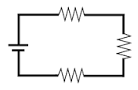
In a series circuit, how is the brightness of a light bulb affected when another bulb is connected?
It gets brighter
It stays the same
It gets dimmer
It goes out
Select the materials that are electrical conductors.


Select the materials that are electrical insulators.


The accumulation of excess electric charge on an object is called
Static Electricity
Electric Discharge
Resistance
Current Electricity

Two balloons are hanging from a stick.
Both balloons have a positive charge.
How would you expect the balloons to move?
there would be no movement
towards each other
away from each other

Two balloons are hanging from a stick.
One balloon has a positive charge and the other has a negative charge.
How would you expect the balloons to move?
there would be no movement
towards each other
away from each other

The ball on the string is being repelled (pushed away) by the metal bar.
What must be the charge on the ball?
positive
neutral
negative
An area over which an electric charge is exerted is called an
conductor
insulator
circuit
electric filed

The comb has been rubbed with a piece of wool fabric and placed next to some scraps of paper.
Some paper moves toward the comb. The movement of the paper is caused by
static electricity
mechanical energy
chemical energy
magnetic attraction
Materials that electrons do NOT flow through such as cloth, rubber, plastic
conductors
insulators
chargers
electrodes
Materials through which electrons flow easily
conductors
insulators
electrodes
chargers
A steady flow of electrons
circuit
current
discharge
oxidation
A continuous conducting path for current.
electrode
circuit
voltaic pile
axon
Electrons move towards the point of ________________ potential.
higher
lower
When dealing with batteries, the negative side is the higher potential.
True
False


A region around a charged particle that can exert a force on another charged particle is called an
electric force.
electric pulse.
electric field.
electric charge.
Charging by ____ occurs when electrons are transferred from one object to another by DIRECT contact.
conduction
induction
friction


The entire region surrounding a magnet is known as the:
Magnetic Domain
Lodestone
A Compass
Magnetic Field
Which metal can be attracted to magnets?
Copper
Aluminum
Iron
Gold

Which type of magnet loses magnetism outside of a magnetic field?
a strong magnet
a temporary magnet
a permanent magnet
an electromagnet

Two like poles are held close to one another within each other's force field. Which statements are TRUE? SELECT ALL THAT APPLY.
The poles will repel when released
The poles will attract when released
The poles have high PE before being released
The poles have low PE before being released
Magnetic field lines that are drawn closer to each other show ___.
a decrease in polarity
an increase polarity
a smaller magnetic force
a greater magnetic force

Which answer describes the pictures correctly?
Both drawings show attraction of magnetic forces.
The left drawing shows repulsion and the right drawing shows attraction of magnetic forces.
Both drawings show repulsion of magnetic forces.
The left drawing shows attraction and the right drawing shows repulsion of magnetic forces.
A magnetic field is a field of force that is produced by moving ________ charges.
northern
positive
gravitational
electric

The magnetic ____________ around a bar magnet is shown above.
legs
flowers
field
direction
The Earth produces its own ________ field.
spectrum
electric
magnetic
progressive
A permanent magnet is a material that produces a ___________________ field without any ___________________ magnetic field being present.
electronic, internal
magnetic, internal
magnetic, external
electronic, external
Every magnet has both a _________ pole and a __________ pole.
North, South
East, West
Positive, Negative
Positive, South
Some objects that normally aren't magnetic can become magnetized when connected to a circuit. Items that are magnetized in this way are called ________.
electromagnets
electrons
electrochromic devices
permanent magnets
Probably the most useful thing about electromagnets is that they can be turned ________ and ________.
on, off
positive, negative
north, south
on, negative
If two magnets are close together, the magnetic force will be ________.
smelly
weak
strong
positive

The compass is a special tool made by elves that can always find Santa.
Their movement creates an electric current and causes each ___________to act like a microscopic magnet.
proton
neutron
electron
crouton
Moving a magnet next to a wire causes ____________.
the wire to catch fire
nonmetals to be repelled
a gravity wave
an electric current
The Earth’s magnetic shield protect life from _____________.
gravity waves
asteroid impacts
aliens
harmful solar radiation

Are like poles or opposite poles facing each other?
like
opposite

Which image has the most potential energy in the system of magnets?
A
B
C
D

Which image has the most potential energy in the system of magnets?
A
B
C
D
When the current stops running through the wire of an electromagnet, the magnetic field that is created
will remain the same
will end
will increase in strength
will stay forever
Which of the following will not make an electromagnet stronger?
a stronger current in the wire
more loops of wire
a switch
wrapping the wire around an object made of iron
A series circuit has ____ path(s) that the electric current can take.
One
Two
More than one
Electricity is the flow of _________.
Protons
Neutrons
Electrons


Which statement is true?
Lights in the series circuit are brighter than the parallel.
Lights in the parallel circuit are brighter than the series.
Both circuits have the same brightness
Neither circuit will light the bulbs

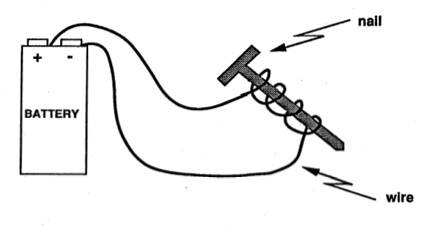
What THREE ways are electromagnets different from permanent magnets?
they can be turned off and on
they can increase in strength by increasing the current in the wire
they are smaller in size
they can change which is the north and south pole
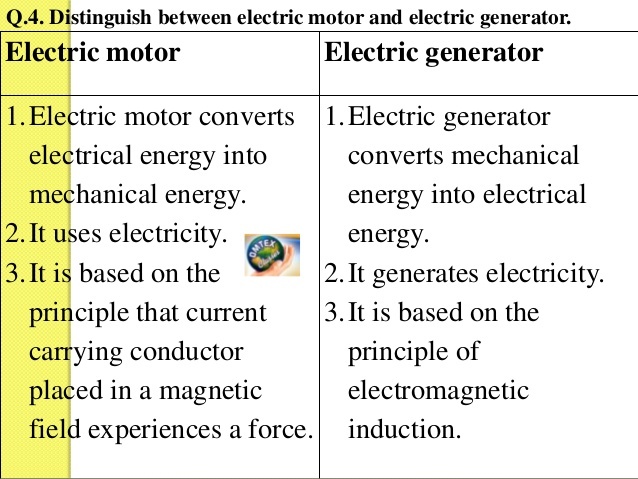
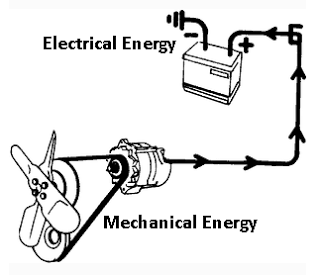
What is the transfer of energy in when you plug in a motor and it spins?
chemical to mechanical
electrical to mechanical
mechanical to electrical
physical to potential

If one of the bulbs in the picture stops working, what will happen?
All of the bulbs will stop working.
The other 2 bulbs will continue to work.
The other bulbs will become brighter.
A device used to open and close a circuit
Button
Switch
Operator
All of the Above
The region in which a magnetic force acts is called a
line of force
pole
magnetic field
field of attractio
An example of a ferromagnetic material is
copper
wood
cheese
nickel
A coiled wire, that carries current is called
an electromagnet
a solenoid
a compass
a ferromagnet
Earth acts like a magnet because its core contains
molton carbon
solid nickel and iron
rocks
molten nickel and iron
Conduction is the transfer of electric charges by
interaction of electric fields
direct contact
rubbing
jumping
An example of static discharge would be
using a compass
an elecromagnet
a lightning bolt
rain

Which position of the two magnets results in the greatest attraction between them?
A
B
C
D
Charging by rubbing is called
friction
induction
conduction
polarization
Current, or the flow of charge through a wire is measured in
volts
amps
Joules
Newtons
This is a measure of electrical resistance
Current
Volt
Ohms
Ampere

Students attached both ends of a long wire to the poles of a battery and wrapped the wire around a spoon. In this arrangement, the spoon is able to pick up five paper clips. The students wrap more wire around the spoon and want to determine if the strength of the magnetic force has increased. Which of the following observations would indicate that wrapping more wire has increased the strength of the electromagnet?
More wire was needed to wrap around the spoon.
The spoon now picks up seven paper clips.
Eventually, the battery runs out of energy.
The ends of the wire must touch the battery's poles.
Students want to investigate how the amount of electric energy delivered to a motor affects its speed. Which of the following procedures will most likely produce the data students need to answer their question?
Measure the rotations per second of a motor when it is connected to one battery, two batteries, and three batteries.
Add larger and larger motors to a battery to determine the size of the largest motor the battery is able to run
Closely observe the rotation of the motor to see if the direction of spin reverses when the poles of the battery are switched
Connect a series of motors to the same battery to figure out how many motors can be run off the same battery.

The illustration shows a hand generator. Turning the handle of the generator spins a magnet and creates an electric current that lights the bulb. Which of the following observations can be used to indicate the strength of the current created by the generator?
The brightness of the bulb
The size of the magnet
The length of the handle
The mass of the generator
What is a current?
A directional flow of electrical charge through an object or medium
Attraction or repulsion that arises between electrically charged particles because of their motion
The size or quantity of something
Attractive or repulsive interactions between any two charged objects
Peter’s teacher tells him that he should not place his electric stereo near the edge of a pool because the water in the pool is a conductor. What does she mean when she says that the water is a conductor?
Water is a type of electrical energy.
Water damages electric circuits.
Electric charges cannot flow without water.
Electric charges move through the water in the pool.
When Bethany walks across a carpet, her socks pick up many negative electric charges. Later in the day, these negative charges are no longer present on her socks. What most likely happened to the negative charges?
The charges disappeared.
The charges transferred to another object.
The charges switched from negative to positive.
The charges broke apart into smaller positive and negative particles.

Current flows from ____potential energy to ____ potential energy.
lower, higher
higher, lower
girl here who
glow her her I
_____ do not allow charge/current to flow.
Coconut Drs
Insulators
Insult oars
Conductors
_____ allow the charge/current to flow.
Coconut Drs
Insulators
Latin sours
Conductors


electrons are transferred as clothes rub against each other in the dryer
a magnet sticking to a metal refrigerator door
a ceiling fan turning on after you flip the wall switch
a dry cell battery lighting up a light bulb

This circuit is...
Series
Parallel
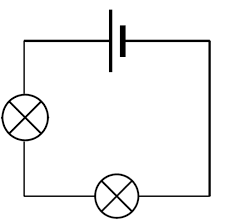
If one of the bulbs in this circuit breaks, the other one will...
Go off
Stay on
Mr. Foster's favorite color:
(a)