wayground logo

Free Printable Worksheets

Font size

S
M
L
XL
Worksheets

Biology Final Exam Review

Total questions: 245

Worksheet time: 4hrs 44mins

Name
Class
Date
1.

When is an ionic bond formed?

a)

when electrons are shared

b)

when protons are shared

c)

when atoms gain or lose electrons and become oppositely charged

d)

when atoms gain or lose a proton and become oppositely charged

2.

Which solution has the highest Hydrogen ion concentration?

a)

pH of 1

b)

pH of 4

c)

pH of 7

d)

pH of 10

3.

Atoms that share electrons are

a)

in a covalent bond

b)

in an ionic bond

c)

usually salts

d)

always metals

4.

What are the reactants in this chemical equation?

a)

CH4 and 2O2

b)

carbon and oxygen

c)

CO2 and 2 H2O

d)

water and methane

5.

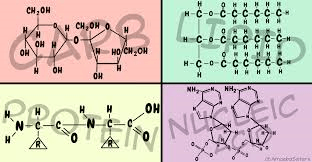
What are the 4 types of carbon-based molecules in organisms?

a)

carbohydrates, lipids, fatty acids, and monomers

b)

polymers, monomers, acids, bases

c)

adhesion, cohesion, evaporative cooling, and high specific heat

d)

nucleic acids, proteins, lipids, and carbohydrates

6.

What are proteins made of?

a)

amino acids

b)

monosaccharides

c)

nucleic acids

d)

fatty acids

7.

Which carbon-based molecule includes sugars and starches?

a)

carbohydrates

b)

lipids

c)

proteins

d)

nucleic acids

8.

What are the products of this reaction?

a)

calcium and oxygen

b)

Ca and CaO

c)

2Ca and O2

d)

2CaO

9.

Which type of carbohydrate is this?

a)

monosaccharide

b)

disaccharide

c)

polysaccharide

d)

glyceride

10.

Plants store glucose as

a)

starch

b)

glycogen

c)

cellulose

d)

chitin

11.

The order of the amino acids in the chain

a)

disulfide cross-link

b)

hydrophobic

c)

primary structure

d)

secondary structure

12.

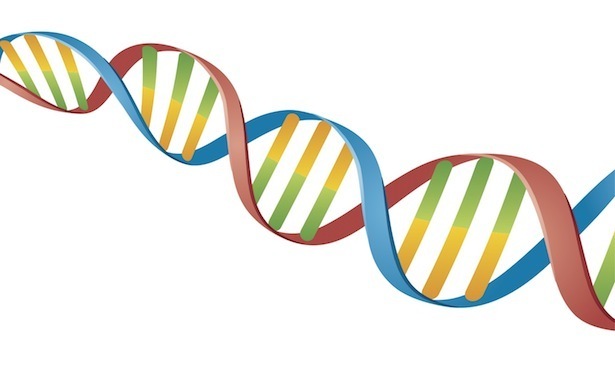
Examples of these biomolecules are DNA and RNA.

a)

Nucleic Acids

b)

Carbohydrates

c)

Lipids

d)

Proteins

13.

Nucleic Acids are made up of subunits called?

a)

Nucleotides

b)

Lipids

c)

Monosaccharides

d)

Subunits

14.

Which is the smallest unit of living things?

a)

cells

b)

atoms

c)

molecules

d)

compounds

15.

What has more OH- than H+?

a)

base

b)

acid

c)

neutral 

d)

enzymes

16.

Which part of the water molecule is slightly positive?

a)

neutron end

b)

oxygen end

c)

hydrogen end

d)

rear end

17.

The 3 particles that make up an atom are

a)

positives, negatives, electrons

b)

protons, neutrons, electrons

c)

neutrons, isotopes, electrons

d)

protons, neutrons, isotopes

18.

Water has a high____, meaning it takes a lot of energy to raise its temperature.

a)

surface tension

b)

polarity

c)

solubility

d)

heat capacity

19.

Macromolecule means:

a)

a very small molecule

b)

a double unit of a molecule

c)

a single unit of a molecule

d)

a very large molecule

20.

___________ are functions of lipids.

a)

storing energy and cell membrane structure

b)

providing actin & myosin

c)

cellulose structure and digestive assistance

d)

storing & transferring genetic info

21.

Which is not a function of a protein?

a)

forms enzymes and hormones

b)

forms receptors on cell membranes

c)

forms antibodies that fight infections

d)

quick energy

22.

A carbohydrate that makes up the exoskeleton of insects.

a)

cellulose

b)

glucose

c)

chitin

d)

starch

23.

Cell membranes are made up of a type of lipid called a ___.

a)

phospholipid

b)

nitrolipid

c)

fatty acid

d)

glycogen

24.

Which of these is a primary energy source for living things?

a)

carbohydrates

b)

lipids

c)

nucleic acids

d)

proteins

25.

The monomers of this macromolecule are fatty acids and glycerol.

a)

carbohydrates

b)

lipids

c)

proteins

d)

nucleic acids

26.

Water moves from roots to leaves due to...

a)

adhesion and cohesion.

b)

transpiration and condensation

c)

respiration and photosynthesis

d)

chloroplast and vacuoles

27.

Polymers are made up of subunits called

a)

monomers

b)

sugars

c)

saccharides

d)

nucleotides

28.

This molecule is a long-term energy storage molecule.

a)

lipid

b)

carbohydrate

c)

nucleic acid

d)

protein

29.

When something is 'water fearing' it is....

a)

Hydrophobic

b)

Hydrophilic 

c)

Hydroelectric 

d)

Hydrochloric

30.

An example of a food with lots of lipids would be?

a)

Bread

b)

Oranges

c)

Butter

d)

Lettuce

31.

An example of a food with lots of protein would be?

a)

Vegetable oil

b)

Banana Bread

c)

Gummy Worms

d)

Pork tenderloin

32.

What is the correct order of organization in living things from simplest to most complex?

a)

a. Organism, cell, tissue, organ, organ system

b)

b. Organ system, organ, tissue, cell, organism

c)

c. Cell, tissue, organ, organ system, organism

d)

d. Cell, organ, tissue, organ, organism, organ system

33.

Which substance (A or B) is the solute in Figure 2.1?

a)

Substance A is the solution and substance B is the solvent

b)

Substance A is the solute because it is smaller than substance B

c)

Substance B is the solute because it is present in smaller amounts

d)

Both substances A and B are solutes

34.

What elements are common to all biomolecules?

a)

Carbon, hydrogen, nitrogen

b)

Carbon, Nitrogen, Phosphorus

c)

Carbon, Hydrogen, Oxygen

d)

Carbon, Hydrogen, Phosphorus

35.

The two types of folding in the secondary structure are?

a)

alpha-helix & beta-pleated sheets

b)

polypeptide & nucleotide

c)

globular & fibrous

36.

Monosaccharides, fatty acid and glycerol, amino acids, and nucleotides are examples of _____________.

a)

Elements

b)

Compounds

c)

Macromolecules

d)

Monomers

37.

When water is added to split a molecule, the reaction is called a __ reaction.

a)

dehydration synthesis

b)

condensation

c)

hydrolysis

d)

super magical

38.

Which describes hydrolysis?

a)

Monomer + Monomer → Polymer + WATER

b)

Polymer + WATER → Monomer + Monomer

c)

BOTH OF THESE SHOW HYDROLYSIS

d)

NEITHER OF THESE

39.

How does your body use lipids?

a)

Primary source of energy

b)

Energy storage and insulation

c)

Speeds up chemical reactions

d)

Defense

40.

Which process bonds monomers together?

a)

Hydrolysis

b)

Water Removal

c)

Dehydration Synthesis

d)

Water Synthesis

41.

The molecule shown is a monomer for which biomolecule?

a)

Carbohydrates

b)

Lipids

c)

Proteins

d)

Nucleic acids

42.

The word saccharide means:

a)

sugar

b)

glucose

c)

sweetener

d)

carbohydrate

43.
_________ are composed out of carbon (C), hydrogen (H), oxygen (O), nitrogen (N), and phosphorus (P)
a)
Carbohydrates
b)
Lipids
c)
Proteins
d)
Nucleic Acids
44.
Lipids are made of... 
a)
C H O
b)
C H O N
c)
C H O N P
d)
C H O N S
45.
Proteins are made of... 
a)
C H O
b)
C H O N
c)
C H O N P
d)
C H O N S
46.
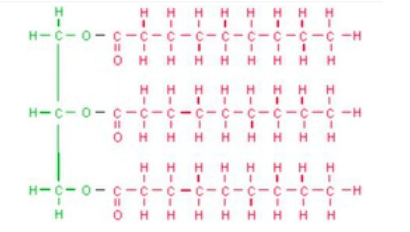
Which macromolecule is this?
a)
carbohydrates
b)
lipids
c)
proteins
d)
nucleic acids
47.
What is the function of a nucleic acid?
a)
Stores genetic information
b)
Stores energy
c)
Quick source of energy
d)
Builds structures
48.

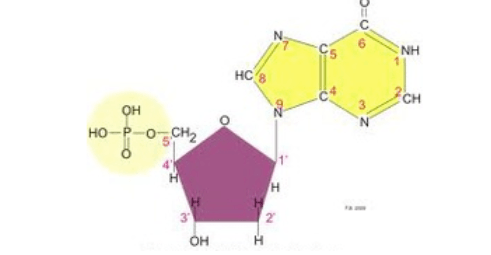
What is the name of the monomer pictured?

a)

amino acid

b)

nucleotide

c)

fatty acid

d)

monosaccharide

49.

The type of fold present in the secondary structure of a protein is mainly due to.....

a)

covalent bonding

between the 'R' side chains

b)

covalent bonding between the polypeptide backbone

c)

hydrogen bonding

between the polypeptide backbone

d)

hydrogen bonding

between the 'R' side chains

50.

The tertiary structure in proteins is primarily due to the interactions between....

a)

the 'R' groups

(side chains)

b)

the polypeptide backbone

(unchanged portion of the monomer)

c)

the sulfur atoms

d)

none of the above

51.

Two or more polypeptides attached together and working as one unit is an example of which type of protein structure?

a)

Primary

b)

Secondary

c)

Tertiary

d)

Quaternary

52.
How many different amino acids are there?
a)
15
b)
20
c)
25
d)
30
53.

When four amino acids are bonded together, (a)   molecules of water formed.

54.
All of the following are characteristics of all living things EXCEPT
a)
Respond to stimulus
b)
Grow and develop
c)
maintain homeostasis
d)
Movement
55.
During ___________, conditions inside our body are kept stable (the same)
a)
homeopathic
b)
Homo sapian
c)
homeostasis
d)
homologous
56.
Multicellular means
a)
made of 3 cells
b)
made of 1 kind of cell
c)
made of only 1 cell
d)
made of 2 or more cells
57.
Which of the following is the correct order of organization in living things from most basic (simple) to most complex?
a)
a.  Organism, cell, tissue, organ, organ system
b)
a.  Organ system, organ, tissue, cell, organism
c)
a.  Cell, tissue, organ, organ system, organism
d)
a.  Cell, organ, tissue, organ, organism, organ system
58.
A group of similar cells that come together to perform a specific function is a/an
a)
organ
b)
organism
c)
organ system
d)
tissue
59.
Which is an example of an organism?
a)
a beetle
b)
a lake
c)
a rock
d)
a shell
60.
A group of different tissues working together to do a job is called a/an _____.
a)
tissue
b)
organ
c)
stem cell
d)
organ system
61.

Justin has learned that the brain, spinal cord, and peripheral nerves work together. What do they combine to form?

a)

A cell

b)

A tissue

c)

An organ

d)

An organ system

62.

What level of organization can be seen here?

a)

Species

b)

Population

c)

Community

d)

Ecosystem

63.

A community is ___________ types of species living together.

a)

Same

b)

Alternating

c)

All

d)

Different

64.
What is an organism whose entire body is only 1 cell known as?
a)
unicellular
b)
multicellular
c)
cell
d)
Homeostasis
65.
Which one of these is NOT one of the characteristics of living things?
a)
All living things are made of cells
b)
All living things reproduce
c)
All living things eat
d)
All living things evolve
66.
An example of a unicellular organism is a...
a)
amoeba
b)
human being
c)
plant
d)
insect
67.
All living organisms are made up of ____.
a)
Cells
b)
Bacteria
c)
Organs
d)
Tissue
68.
A change in an organism's surroundings that causes it to react is called
a)
a stimulus.
b)
a response.
c)
development. 
d)
energy.
69.

Monosaccharides are the building blocks of which group of biomolecules?

a)

protein

b)

lipid

c)

carbohydrate

d)

nucleic acid

70.

Which biomolecules contains your genetic information?

a)

Proteins

b)

Lipids

c)

Carbohydrates

d)

Nucleic Acids

71.

Glycerol and fatty acids are the monomers of _________.

a)

Lipids

b)

Carbohydrates

c)

Proteins

d)

Nucleic Acids

72.

Which biomolecules act as energy storage for the cell and also cushions and insulates organs?

a)

Carbohyrdates

b)

Lipids

c)

Proteins

d)

Nucleic Acids

73.

The monomer pictured is the building block of which biomolecule polymer?

a)

Carbohydrate

b)

Lipid

c)

Protein

d)

Nucleic Acid

74.

What biomolecule is responsible for immune support such as antibodies?

a)

Nucleic Acid

b)

Lipid

c)

Protein

d)

Carbohydrate

75.

How do animals store complex sugars?

a)

In the form of glycogen

b)

In the form of cellulose

c)

In the form of chitin

d)

None of the above

76.

Which triglyceride is solid at room temperature?

a)

Unsaturated

b)

Saturated

c)

Amino Acids

d)

Nucleotide

77.

A table of four types of carbohydrates is shown. Which list correctly matches the functions to the types of carbohydrates

a)

Energy: glycogen and starch

Structure: cellulose and chitin

b)

Energy: cellulose and chitin

Structure: glycogen and starch

c)

Energy: chitin and glycogen

Structure: cellulose and starch

d)

Energy: cellulose and starch

Structure: chitin and glycogen

78.

Which of the following is represented in the image?

a)

Nucleotide

b)

Carbohydrate

c)

Lipid

d)

Protein

79.
Which biomolecule is this a picture of?
a)
Protein
b)
Nucleic Acid
c)
Lipid
d)
Carbohydrate
80.
Which biomolecule is this a picture of?
a)
Protein
b)
Nucleic Acid
c)
Lipid
d)
Carbohydrate
81.
The following figure is illustrating
a)
Dehydration Synthesis
b)
Hydrolysis
82.

A 1-4 glycosidic linkage is formed when monomers of this biomolecule are joined during dehydration synthesis

a)

CARBOHYDRATE

b)

LIPID

c)

PROTEIN

d)

NUCLEIC ACID

83.

This picture represents a member of which biomolecule group?

a)

CARBOHYDRATE

b)

LIPID

c)

PROTEIN

d)

NUCLEIC ACID

84.

This picture represents estrogen, a steroid hormone found in females. It belongs to which biomolecule group?

a)

CARBOHYDRATE

b)

LIPID

c)

PROTEIN

d)

NUCLEIC ACID

85.

Dehydration Synthesis forms Ester Linkages when building this biomolecule

a)

CARBOHYDRATE

b)

LIPID

c)

PROTEIN

d)

NUCLEIC ACID

86.

Amylose is a polymer of which biomolecule?

a)

CARBOHYDRATE

b)

LIPID

c)

PROTEIN

d)

NUCLEIC ACID

87.

Phosphodiester bonds as well as Hydrogen bonds connect these monomers into their polymer form

a)

CARBOHYDRATE

b)

LIPID

c)

PROTEIN

d)

NUCLEIC ACID

88.

Which of the following is considered fully saturated?

a)
b)
c)
d)
89.

Type of bond broken when amino acids released

a)

Ester Linkage

b)

Peptide Bond

c)

Phosphodiester linkage

90.

Specifically, where is the peptide bond in proteins?

4 lines
91.

Where would you find the phosphodiester linkage in nucleic acids?

4 lines
92.
The following figure is illustrating
a)
Dehydration Synthesis
b)
Hydrolysis
c)

Condensation

93.
Water is essential for life. Its special properties make water the single most important molecule in plant life. Which of the following properties of water enables it to move from the roots to the leaves of plants?
a)
Water expands as it freezes.
b)
Water is an excellent solvent.
c)
Water exhibits cohesive behavior.
d)
Water is able to moderate temperature.
94.
Large bodies of water, such as lakes and oceans, do not quickly fluctuate in temperature. What is the reason for this phenomenon?
a)
Water is an acid.
b)
Water is a versatile solvent.
c)
Water has a high heat capacity.
d)
 Water acts as a buffer.
95.
Why does ice stay at the top of oceans instead of sinking to the bottom?
a)
 Ice is colder than liquid water.
b)
Ice is less dense than liquid water.
c)
Ice is more dense than liquid water.
d)
Ice is warmer than liquid water.
96.
Water is often called the "universal solvent" because many substances can be dissolved in water. What property of water allows it to be such a versatile solvent? 
a)
purity
b)
polarity and cohesion
c)
high heat capacity
d)
expansion upon freezing
97.
 Small insects can walk across the surface of calm water. Their feet push the surface of the water down slightly, somewhat like a person walking across a trampoline, but they do not break the surface. What is the best explanation for why this happens?
a)
The insects are light enough so that they do not break the hydrogen bonds holding the water molecules together
b)
The insects actually use their wings to hover slightly above the water's surface and they only skim it with their feet
c)
The insects' feet are non-polar, so they are repelled by the polar water molecules and are pushed away from the water's surface
d)
The insects are small enough to see the individual water molecules, so they are able to step carefully from one molecule to the next
98.
Water makes up approximately 60% of the human body and plays a vital role in regulating body temperature. Which property of water makes it good at regulating temperature?
a)
Water is a good solvent.
b)
Water exhibits strong cohesion.
c)
. Water has an unusual crystalline structure.
d)
Water has a high capacity for heat.
99.
 Many fish and aquatic plants can survive a cold winter because the layer of ice that forms at the top of the lake insulates the water below and prevents the lake from freezing solid. What unique property of water contributes to this effect? 
a)
Water absorbs heat when it evaporates and forms a gas 
b)
 Water expands and becomes less dense when it freezes.
c)
Water molecules completely separate into ions in solutions.
d)
 Water forms hydrogen bonds with ions and other polar substances. 
100.
 Which of the following characteristics of water is not a result of hydrogen bonding?
a)
adhesive strength
b)
capillarity
c)
cohesive strength
d)
All of the above are a result of hydrogen bonding.
101.
What word describes when water is attracted to other substances?
a)
cohesion
b)
adhesion
c)
capillary action
d)
surface tension
102.

Which of the following is LEAST likely to dissolve in water?

a)

nonpolar fats and oils

b)

polar sugar molecules

c)

salt made of a positive sodium ion and a negative chloride ion

d)

all of the substances will dissolve easily in water

103.

This picture shows the polarity of water because

a)

hydrogen holds the shared electrons closer and becomes negative

b)

oxygen holds the shared electrons closer and becomes negative

104.

Match the following

a)

universal solvent

1.

dissolves MANY things

b)

high heat capacity

2.

doesn't change temp. quickly

c)

high heat of vaporization

3.

loses lots of heat as it evaporates

d)

shows capillarity

4.

moves up thin tubes without using energy

105.

A water molecule contains two hydrogen atoms and one oxygen atom. Which of the following statements about water molecules is true?

a)

The oxygen atom has a partial negative charge and the hydrogen atoms have a partial positive charge.

b)

The oxygen atom has a partial positive charge and the hydrogen atoms have a partial negative charge.

c)

All of the atoms have a partial negative charge.

d)

All of the atoms have a partial positive charge.

106.

Substance that is dissolved in a solution

a)

solvent

b)

solute

c)

suspension

d)

solution

107.

The hydrogen atom and oxygen atom do not share the electrons equally, resulting in partial charges at the ends of water molecules. This is known as

a)

Polarity

b)

Cohesion

c)

Adhesion

d)

Heat Capacity

108.
How many elements are in C6H12O6?
a)
1
b)
2
c)
3
d)
4
109.
How many atoms of carbon (C) are in C6H12O6?
a)
3
b)
6
c)
12
d)
24
110.

In the compound magnesium nitrate, Mg(NO3)2, there are ___ oxygen atoms in a formula unit.

a)

1

b)

2

c)

3

d)

5

e)

6

111.
What is the diffusion of water through a selectively permeable membrane?
a)
active transport
b)
osmotic pressure
c)
facilitated diffusion
d)
osmosis
112.
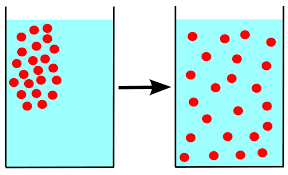
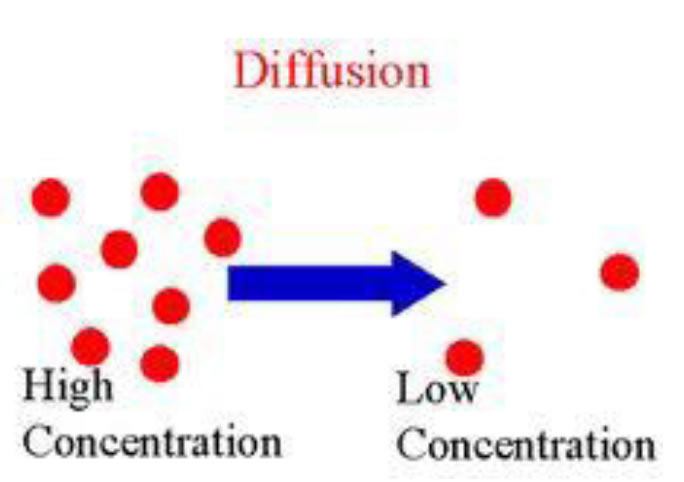
Diffusion is the movement of particles
a)
from low to high concentration
b)
from  high to low concentration
c)
from equilibrium to areas of high concentration
d)
all of the above
113.
The current model of the plasma membrane is called the
a)
hydrophobic layer
b)
transport bilayer
c)
phosphoproteins
d)
fluid mosaic model
114.
What characteristic of the cell membrane allows only certain material to pass through?
a)
selective gating
b)
selective permeability
c)
hydrophilia
d)
selective service
115.
What is the function of cholesterol materials in the cell membrane?
a)
make the membrane thicker
b)
make the membrane more porous
c)
connect the proteins together
d)
make the membrane more stable
116.
Facilitated diffusion requires
a)
no energy
b)
energy
117.
Placing a cell in an isotonic solution causes the cell to
a)
shrink
b)
swell
c)
stay the same
118.
Placing a cell containing 10% salt  into a solution containing 15% salt will cause the cell to
a)
shrink
b)
 swell
c)
stay the same
119.
Placing a cell containing 10% salt into a solution containing 7% salt will cause the cell to 
a)
shrink
b)
swell
c)
stay the same
120.

What type of transport is pictured here?

a)

endocytosis

b)

exocytosis

c)

facilitated diffusion

d)

osmosis

121.

What is the polarity of the different parts of the cell membrane?

a)

the heads are nonpolar; the tails are polar

b)

the heads are polar; the tails are nonpolar

c)

the heads and tails are nonpolar

d)

the heads and tails are polar

122.

What gas can easily move through the cell membrane?

a)

CO2

b)

NO2

c)

CO

d)

NaCHO

123.

Give three examples of passive transport.

a)

diffusion, osmosis, phagocytosis

b)

facilitated diffusion, molecular pumps, osmosis

c)

osmosis, facilitated diffusion, diffusion

d)

exocytosis, molecular pumps, pinocytosis

124.

In a hypertonic solution, water will move ____ the cell, causing the cell to ________.

a)

out of; shrink

b)

out of; swell

c)

into; shrink

d)

into; swell

125.

In a hypotonic solution, water will move ____ the cell, causing the cell to ________.

a)

out of; shrink

b)

out of; swell

c)

into; shrink

d)

into; swell

126.
Moving from areas of LOW concentration to areas of HIGH concentration is called?
a)
Passive Transport
b)
Active Transport
c)
Diffusion
d)
Osmosis
127.
Engulfs large molecules and moves them inside the membrane.
Uses energy.
a)
exocytosis
b)
endocytosis
c)
protein channel 
d)
diffusion
128.
Engulfing a large substance from the inside of the cell to move it outside of the cell. 
Uses energy. 
a)
exocytosis
b)
endocytosis
c)
photosynthesis
d)
diffusion
129.

Which does not require energy?

a)

simple diffusion

b)

facilitated diffusion

c)

passive transport

d)

All are correct

130.
In the picture to the right, which area(s) represent(s) the hydrophobic part of the phospholipid membrane?
a)
Structure A
b)
Structure B
c)
Structures A & B
d)
Neither structure A or B
131.
This cell organelle helps organisms maintain homeostasis by controlling what substances may enter or leave cells.
a)
vacuole
b)
nucleus
c)
cell membrane
d)
cell wall
132.
The cell below is in a _________ solution.
a)
Hypotonic
b)
Hypertonic
c)
Isotonic
133.

The image is a model for which process?

a)

osmosis

b)

cell membrane

c)

diffusion

d)

active transport

134.
Which way is the water moving in this cell?
a)
Water will move out of the cell
b)
Water will move into the cell
135.
Which way is the water moving in this cell?
a)
The water level will increase on the right side
b)
The water level will increase on the left side
c)
The water level on both sides will increase
d)
The water level on both sides will decrease
136.
During pinocytosis, the cell takes in liquids. 
a)
True
b)
False
137.
This type of endocytosis is used by the cell to take in large molecules or food. 
a)
Pinocytosis 
b)
Protein pumps
c)
Phagocytosis
d)
Exocytosis
138.

What are the two types of cell transport?

a)

Passive and Active

b)

Active and Facilitated

c)

Passive and Facilitated

d)

None of the above

139.
When the concentration of particles inside of a cell is the same as the concentration of particles outside of the cell. 
a)
active transport
b)
concentration
c)
diffusion
d)
equilibrium
140.

During Active Transport, what will proteins use to force ions in/out of the cell?

a)

carbohydrates

b)

sugar

c)

ATP

d)

lipids

141.

If kool-aid powder is the solute, then water is the _________ and kool-aid (the drink) is the _________

a)

solution; solvent

b)

solvent; solution

c)

solvent; concentration

d)

concentration; solvent

142.
What do the brown structures represent?
a)
Phospholipids
b)
Glycoproteins
c)
Channel Proteins 
d)
Cyctoskeleton Filaments
143.
Hydrophilic means...
a)
water-loving
b)
water-fearing
c)
nonpolar
d)
lipid soluble
144.

This image is an example of a phospholipid. Which part of a phospholipid is HYDROPHOBIC?

a)

the phosphate "head"

b)

the lipid "tails"

145.

This image is an example of a phospholipid. Which part of a phospholipid is HYDROPHILIC?

a)

the phosphate "head"

b)

the lipid "tails"

146.

Where can PROTEINS be found when part of a plasma membrane?

a)

On the outside of the membrane

b)

On the inside of the membrane

c)

Embedded part of the way into the membrane

d)

Embedded the whole way through the membrane

e)

All of the above

147.

Where can carbohydrates be found when part of a plasma membrane?

a)

On the outside of the membrane

b)

On the inside of the membrane

c)

Embedded part of the way into the membrane

d)

Embedded the whole way through the membrane

e)

All of the above

148.
Movement of particles from high to low concentration. 
a)
Passive Transport
b)
Active Transport
149.
How does a cell maintain homeostasis?
a)
Regulates what enters and leaves the cell
b)
Flexibility
c)
Protective barrier
d)
Structure and support
150.
The movement of molecules against a concentration gradient
a)
simple diffusion
b)
facilitated diffusion
c)
active transport
d)
osmosis
151.
A cell will _____________________ in a hypertonic solution.
a)
swell
b)
shrink
c)
will not change
d)
will explode
152.
What type of solution allows water to enter the plant cell?
a)
hypotonic solution
b)
hypertonic solution
c)
isotonic solution
d)
active transport
153.

Nemo and other ocean dwelling fish cannot survive in freshwater because......

a)

freshwater is hypertonic to Nemo's cells and will result in water leaving them causing the cells to shrink

b)

freshwater is hypotonic to Nemo's cells and will result in water leaving them causing the cells to shrink

c)

freshwater is hypertonic to Nemo's cells and will result in water entering them causing the cells to swell and burst

d)

freshwater is hypotonic to Nemo's cells and will result in water enter them causing the cells to swell and burst

154.

If the dots represent sugar what direction will the water flow?

a)

Into the cell

b)

Out of the cell

c)

Both equally (equilibrium)

155.

What will happen to the cell in the given solution?

a)

Swell up

b)

Shrink

c)

Stay the same

156.

If the % represent % of sugar, what direction will water flow?

a)

Into the cell

b)

Out of the cell

c)

Both equally (equilibrium)

157.

What best describes the solution the cell is in?

a)

Hypotonic Solution

b)

Hypertonic Solution

c)

Isotonic Solution

158.
In this picture, which way will the water move?
a)
Water will move into the cell
b)
Water will move out of the cell
c)
Water will move in and out of the cell
d)
Water will not move
159.
In this picture, how do you classify the solution?
a)
The solution is hypotonic
b)
The solution is hypertonic
c)
The solution is isotonic
d)
The solution is my tonic
160.
Flammable materials, like alcohol, should never be dispensed or used near
a)
an open door
b)
an open flame
c)
another student
d)
 a sink
161.
If a laboratory fire erupts, immediately
a)
notify your instructor
b)
 run for the fire extinguisher
c)
throw water on the fire
d)
 open the windows
162.
Approved eye protection devices (such as goggles) are worn in the laboratory
a)
 to avoid eye strain
b)
to improve your vision
c)
only if you don’t have corrective glasses
d)
 any time chemicals, heat or glassware are used
163.
If you wear contact lenses in the school laboratory
a)
take them out before starting the lab
b)
you do not have to wear protective goggles
c)
 advise your science instructor that you wear contact lenses
d)
 keep the information to yourself
164.
 If you do not understand a direction or part of a lab procedure, you should 
a)
skip it and go on to the next part.
b)
ask the instructor before proceeding
c)
try several methods until something works
d)
figure it out as you do the lab
165.
 After completing an experiment, all chemical wastes should be
a)
taken home
b)
dumped in the sink
c)
disposed of according to your instructor’s directions
d)
left at your lab station for the next class
166.
 If a lab experiment is not completed, you should 
a)
make up some results
b)
come in during lunch and finish while eating lunch
c)
sneak in after school and work alone
d)
discuss the issue with your instructor
167.
You are heating a substance in a test tube. Always point the open end of the tube 
a)
away from all people
b)
toward another classmate
c)
toward your lab partner
d)
toward yourself
168.
You are heating a piece of glass and now want to pick it up. You should 
a)
pour cold water on it
b)
use tongs
c)
pick up the end that looks cooler
d)
use a rag or paper towels
169.
You have been injured in the laboratory (cut, burn, etc.). First you should
a)
apply first aid yourself
b)
tell the science instructor at once
c)
see a doctor after school
d)
visit the school nurse after class
170.
When gathering glassware and equipment for an experiment, you should
a)
 All of the choices
b)
clean any glassware that appears dirty
c)
examine all glassware to check for chips or cracks
d)
read all directions carefully to know what equipment is necessary
171.
 Personal eyeglasses provide as much protection as
a)
none of these answers
b)
splashproof chemical goggles
c)
safety glasses
d)
a face shield
172.
Long hair in the laboratory must be 
a)
tied back or kept entirely out of the way with a hair band, hairpins, or other confining device
b)
always neatly groomed
c)
held away from the experiment with one hand
d)
cut short
173.
In a laboratory, the following should not be worn. 
a)
all of the answers
b)
dangling jewelry
c)
sandals
d)
loose clothing
174.
 The following footwear is best in the laboratory. 
a)
shoes appropriate for the weather
b)
open-toed shoes
c)
closed-toed shoes
d)
sandals
175.
 Horseplay or practical jokes in the laboratory are 
a)
okay if you are working alone
b)
not dangerous
c)
okay
d)
always against the rules
176.
If a piece of equipment is not working properly, stop, turn it off, and tell 
a)
the science instructor
b)
your best friend in the class
c)
the custodian
d)
your lab partner
177.
If an acid is splashed on your skin, wash at once with 
a)
weak base
b)
soap
c)
plenty of water
d)
oil
178.
When you finish working with chemicals, biological specimens, and other lab substances, always 
a)
wipe your hands on your clothes
b)
wipe your hands on a towel
c)
wash your hands thoroughly with soap and water
d)
treat your hands with skin lotion
179.
Hot glass looks the same as cold glass.
a)
True
b)
False
180.
Return all unused chemicals to their original containers.
a)
True
b)
False
181.
All chemicals in the lab are to be considered dangerous
a)
True
b)
False
182.
Work areas should be kept clean and tidy
a)
True
b)
False
183.
Pipets are used to measure and dispense small amounts of liquids. You should draw the liquid into the pipet using your mouth.
a)
True
b)
False
184.
Laboratory work can be started immediately upon entering the laboratory even if the instructor is not yet present
a)
True
b)
False
185.
Never remove chemicals or other equipment from the laboratory.
a)
True
b)
False
186.
Chipped or cracked glassware is okay to use.
a)
True
b)
False
187.
Read all procedures thoroughly before entering the laboratory
a)
True
b)
False
188.
All unauthorized experiments are prohibited.
a)
True
b)
False
189.
Laboratory aprons should be worn during all lab activities.
a)
True
b)
False
190.
You are allowed to enter the chemical preparation/storage area any time you need to get an item
a)
True
b)
False
191.
It’s okay to pick up broken glass with your bare hands as long as the glass is placed in the trash.
a)
True
b)
False
192.
Never leave a lit burner unattended.
a)
True
b)
False
193.
What is measured with a graduated cylinder?
a)
Passage of time
b)
Distance from one thing to another
c)
Weight of an object
d)
Volume of liquid
194.
What is this?
a)
Measuring tube
b)
Test tube
c)
Graduated Cylinder
d)
Pipette
195.
What is used to protect your eyes from chemicals, broken glass, and fire?
a)
Fire blanket
b)
Eye wash
c)
Goggles
d)
Flask
196.
What is used to hold test tubes?
a)
Test tube rack
b)
Magnifying glass
c)
Petri dish
d)
Funnel
197.

Name the tool

a)

crucible tongs

b)

beaker tongs

c)

forceps

d)

tweezers

198.
The _________________ is used to simply hold or approximately measure a liquid.
a)
scale
b)
test tube
c)
beaker
d)
thermometer
199.
This piece of equipment is used to mix liquids together.
a)
glass stirring rod
b)
scalpel
c)
probe
d)
test tube
200.
If a beaker is hot what should be used to hold it?
a)
test tube holder
b)
metal tongs
c)
forceps
d)
test tube rack
201.
Identify the equipment shown here:
a)
graduated cylinder
b)
Erlenmeyer flask
c)
beaker
d)
volumetric flask
202.
Identify the equipment shown here:
a)
ring stand
b)
iron ring
c)
utility clamp
d)
test tube holder
test tube holder
203.
Identify the equipment shown here:
a)
concave glass
b)
convex glass
c)
watch glass
d)
glass plate
204.
Identify the equipment shown here:
a)
test tube clamp
b)
iron ring
c)
utility clamp
d)
test tube holder
205.
Identify the equipment shown here:
a)
wire gauze
b)
flame spreader
c)
sieve
d)
mesh
206.
Identify the equipment shown here:
a)
test tube holder
b)
iron rod
c)
iron ring
d)
ring stand
207.
Identify the equipment shown here:
a)
beaker
b)
Erlenmeyer flask
c)
Florence flask
d)
volumetric flask
208.
Identify the equipment shown here:
a)
striker
b)
test tube holder
c)
flame snuffer
d)
utility clamp
209.
Name this item. 
a)
Telescope
b)
Thermometer
c)
Eye Wash
d)
Pipette Pump
210.
Name this item
a)
Balance
b)
pH Meter
c)
Digital Thermometer
d)
Spectrometer
211.
Name this item 
a)
Spatula 
b)
Stirring rod 
c)
Thermometer 
d)
Tongs
212.
Name this item 
a)
Ring stand 
b)
Graduated cylinder 
c)
Evaporating dish 
d)
Watch glass
213.
Name this item
a)
weighing boat 
b)
funnel 
c)
wash bottle 
d)
Erlenmeyer flask 
214.
Identify the image.
a)
ring stand
b)
scoopula
c)
wire scoop
d)
crucible
215.
Name the lab equipment.
a)
Ring Stand
b)
Flask
c)
Beaker
d)
Bunsen Burner
216.
It is used to measure mass.
a)
test tube
b)
meter stick
c)
beaker tongs
d)
triple beam balance
217.
It is used to hold a flask, a beaker, on a stand.
a)
test tube brush
b)
spring scale
c)
ring clamp
d)
graduated cylinder
218.
It is used for transferring a small amount of liquid.
a)
pipette
b)
beaker
c)
funnel
d)
wire gauze
219.
It used for measuring temperature
a)
balance
b)
thermometer
c)
graduated cylinder
d)
bunsen burner
220.
It is used for heating
a)
florence flask
b)
meter stick
c)
bunsen burner
d)
test tube clamp
221.
It is used to protect the eyes
a)
ring stand
b)
wire gauze
c)
goggles
d)
tweezers
222.
Identify the following lab equipment:
a)
hot plate
b)
electronic balance
c)
bunsen burner
d)
scales
223.
You have accidentally broken a test tube and spilled a chemical on the table. Which of the following best explains what you should do?
a)
Quickly dispose of the glass, wipe up the spill with the nearest cloth, and hope nobody notices.
b)
Throw the glass into the nearest trash bin and let the spill air-dry.
c)
Use water and paper towels to clean up the spill; place the broken test tube in the disposal container specified for sharp objects.
d)
Caution your lab partners to avoid the area while you inform the teacher of the small accident.
224.
If you do not understand a direction or part of a lab procedure, you should
a)
figure it out as you do the lab
b)
try several methods until something works
c)
skip it and go to the next part
d)
ask your instructor
225.
This objects helps to pour and guide materials into a container.
a)
funnel
b)
metric ruler
c)
test tube
d)
beaker
226.
This tool is used to accurately measure the mass of a substance.
a)
electric scale
b)
graduated cylinder
c)
metric ruler
d)
beaker
227.
Prokaryotic and eukaryotic cells have many differences, but they also share some common features.  Which of the following may be found in either type of cell?
a)
Golgi bodies
b)
ribosomes
c)
mitochondria
d)
nucleus
228.
Which is true of prokaryotic and eukaryotic cells?
a)
Prokaryotic cells are larger than eukaryotic cells.
b)
Eukaryotic cells do not have nuclei, and prokaryotic cells do have nuclei.
c)
Prokaryotic cells lack membrane-bound organelles, and eukaryotic cells contain membrane-bound organelles.
d)
Eukaryotic cells are simpler than prokaryotic cells.
229.
Proteins are produced at which cellular structures?
a)
nuclei
b)
ribosomes
c)
mitochondria
d)
chloroplasts
230.
What is the difference between rough and smooth ER?
a)
There is no difference.
b)
Plants have rough ER, animals have smooth ER.
c)
What type of injuries the Doctors treat.
d)
Rough has ribosomes, smooth does not.
231.

Identify the organelles in the animal cell diagram.

232.

Look at the diagram of the prokaryotic cell. Click on the structure that represents the flagella of bacteria cells.

233.

This organelle is responsible for using glucose and oxygen to produce ATP energy for the cell:

a)

ribosome

b)

chloroplast

c)

mitochondria

d)

golgi apparatus

234.

A student views an organism under a microscope. The organism is made of one cell and it does not have a nucleus. This organism is most likely...

a)

a plant

b)

an animal

c)

a bacteria

d)

a protist

235.

Which organelle hugs the nucleus and has ribosomes attached to it?

a)
Mitochondria
b)

Rough ER

c)
Golgi Apparatus
d)
Lysosome
236.

Short numerous hair-like projections that move in wave patterns for movement.

a)
Cilia
b)
Flagella
c)
Pseudopodia
d)
Microtubules
237.

These organelles break down

wastes

a)

Lysosomes

b)

Chloroplasts

c)

Golgi Apparatus

d)

Ribosomes

238.

This is a large sac that holds food, water, and waste.

a)

Vacuole

b)

Smooth Endoplasmic Reticulum

c)

Golgi Apparatus

d)

Cell Wall

239.

Match the following

a)

Mitochondria

1.

provides energy to the cell

b)

chloroplast

2.

captures sunlight; makes energy in cell

c)

cell wall

3.

strong, rigid outer layer of plant cell

d)

vacuole

4.

stores nutrients, wastes and water

240.
The Golgi apparatus _____.
a)
packages cell products for export
b)
eliminates waste
c)
stores DNA
d)
makes energy
241.

Which photo shows the mitochondrion of the cell?

a)
b)
c)
d)
242.

All the organelles in a cell work together to help the cell and the whole organism function. Some diseases are caused by the failure of one type of organelle. Read the description below of an example of this type of disease. A mosaic is a picture made up of small colored pieces. Mosaic viruses cause plant leaves to look like mosaic art. A mixture of dark and light green patches appear on the leaves. The light green patches are not able to capture much energy from sunlight. Which organelle is affected by mosaic viruses?

a)

cell membrane

b)

mitochondrion

c)

chloroplast

d)

cell wall

243.

Terry and James are partners in a mystery lab. The boys have a compound light microscope and several unlabeled slides. Their task is to find out everything they can about the samples on the slides. Terry puts a slide on the microscope stage and focuses the lenses on the sample. He can see that the sample is made up of tiny cells.

Terry wishes he could magnify the cells even more so he could see more details. He suggests, “If we had an electron microscope, we could see all of the cells inside these cells, and even the cells inside those smaller cells!” James disagrees with Terry's thinking. What is wrong with Terry’s suggestion?

a)

It is not possible to see anything smaller than a cell with a microscope.

b)

Electron microscopes are not as powerful as compound light microscopes.

c)

Cells are the basic unit of life and they do not have more cells inside them.

d)

Terry could see the cells inside these cells if he focused the microscope's lenses properly.

244.
The _____________ is like JELL-O, and is a gel-like fluid that fills plant and animal cells, and is where the organelles are found.
a)
Cytoplasm
b)
Cell Membrane
c)
Cell Wall
d)
JELL-O
245.

Cells only come ___

a)

from prokaryotes

b)

from other cells dividing

c)

from fungi

d)

from eukaryotes